
Native American Heritage Month 2026

November is Native American Heritage Month: This month and every month, celebrating the ingenuity, culture, and resiliency of Native communities.

November is Native American Heritage Month: This month and every month, celebrating the ingenuity, culture, and resiliency of Native communities.

November is Boekenmaand in Antwerpen!
Antwerpen is dé boekenstad van Vlaanderen en dat beleef je tijdens November Boekenmaand. Voor het zesde jaar op rij zetten de Antwerpse bibliotheken, literaire huizen, boekhandels, musea en tal van andere literaire partners hun deuren open en verbazen ze jou met een divers programma van activiteiten. De hele maand november staat in het teken van het boek en (voor)leesplezier. De uitgelezen kans om je in bibliotheken, boekhandels, musea, culturele centra en tal van andere plaatsen, literair te laten verwennen. Nog méér dan anders. Bovendien vullen we je weekends met bruisende activiteiten en kan je je favoriete auteurs ontmoeten. In 2026 is ook Boektopia van de partij met een echte boekenbeurs.
Links:
November Boekenmaand
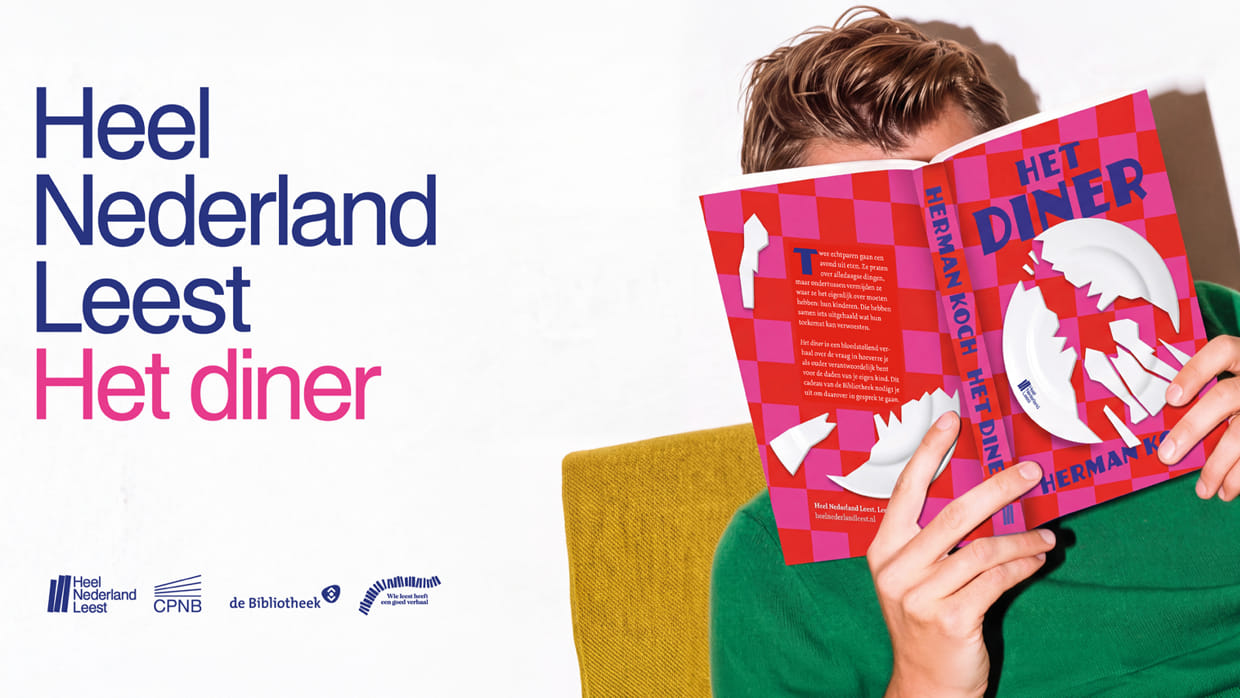
Heel Nederland Leest, dat tot 2023 Nederland Leest heette, is een campagne ter bevordering van het lezen van boeken en vindt jaarlijks plaats in de maand november.
Vanaf 1 november 2026 haal je Het diner gratis op in de bibliotheek, ook als je nog geen lid bent. Hetzelfde boek lezen brengt mensen samen. Daarom lezen we in november 2026 met heel Nederland Het diner van Herman Koch. Tijdens deze maand organiseren Hebban, de grootste leescommunity van Nederland, en diverse bibliotheken leuke activiteiten rond dit boek. Lees jij mee? Op zondag 8 november komt de radio-omroep VPRO met een primeur: veertig bekende Nederlanders lezen live, in negen uur, de volledige roman ‘Het diner’ van Herman Koch voor. Onder anderen Özcan Akyol, Daphne Bunskoek, Gijs Scholten van Aschat, Isabelle Kafando, Maarten Heijmans en Herman Koch zelf doen mee aan ‘De nationale leesmarathon‘, dat onderdeel is van de landelijke bibliotheekcampagne ‘Heel Nederland Leest’. De presentatie is in handen van journalist en presentator Pieter van der Wielen. De volledige leesmarathon is van 12:00 tot 21:00 live te streamen op NPO Start, NPO 2 Extra en het YouTube-kanaal van de VPRO. Het programma is daarna heel november te zien via NPO Start.
Links:
Heel Nederland Leest
Zaterdag; Wat eten we vandaag?; Burgerperspectieven; De prijs van ongelijkheid; Belasting; Scholieren protesten; Halloween; Wereldstedendag; Dark Matter Day.

Wat eten we vandaag?:

Knipselkrant:
Agenda:
Weer:
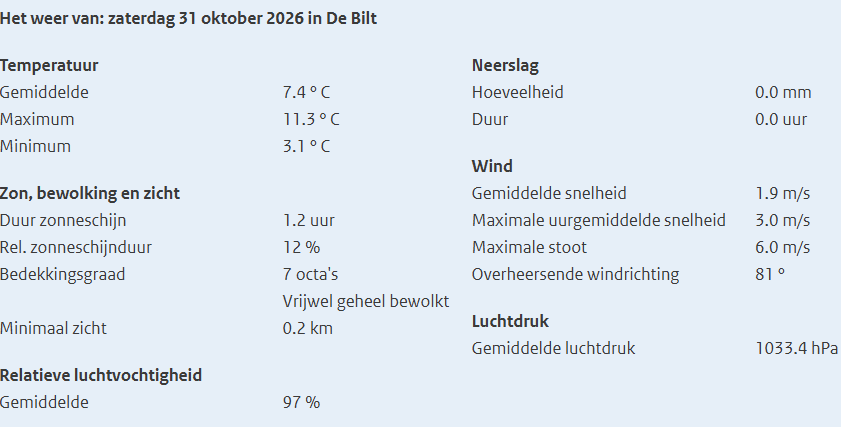
Links:
In de geschiedenis
Links:
Wikipedia
Met boeren, bedrijven, overheden en particulieren in 1 jaar 1 miljoen wilgen planten, onder het motto Het kan als je het wilg.
Urgenda is op 31 oktober 2026 gestart met een campagne om in één jaar een miljoen extra wilgen te planten. Onder het motto ‘Het kan als je het wilg’ – afgeleid van de vaste uitspraak van haar onlangs overleden oprichtster Marjan Minnesma – worden boeren, bedrijven, overheden en particulieren uitgenodigd om mee te planten. De wilg is de beste boom voor insecten en vroege bijen, groeit snel, is gratis en past overal. Tijdens de jaarlijkse Boomtop ontving Minister van Landbouw, Visserij, Voedselzekerheid en Natuur Jaimi van Essen een tak van een wilg uit de tuin van Minnesma, met de oproep om haar boodschap ook in Den Haag wortel te laten schieten. De actie rondom de wilgen loopt een heel jaar. De snoei- en plantperiode voor wilgen ligt tussen half november en half maart. Wie mee wil doen kan in die periode zelf een wilgentak afzagen en planten. Takken kunnen ook worden opgehaald (of gebracht) bij een van de vele bomenhubs van Meer Bomen Nu. Geen ruimte voor een wilg? Dan is doneren, vrijwilligerswerk doen of de gemeente of een bedrijf vragen om wilgen te planten, ook een mooie bijdrage. De wilg is een van de meest soortenrijke bomen in ons land, en biedt onderdak en voedsel aan honderden soorten insecten, maar ook aan zwammen, vogels, salamanders, vleermuizen en marterachtigen. Doordat een wilg vroeg bloeit, is het een onmisbare voedingsbron voor vroege bijen. Wilgen worden vaak geplant om erosie aan oevers tegen te gaan. Ze bieden beschutting en voedsel aan vee, voorkomen verwaaiing van voedingsstoffen, houden vocht vast in de bodem, zorgen voor verkoeling en nemen CO2 op. Bovendien zijn ze makkelijk en gratis te stekken: een tak in de grond steken is genoeg. Geen wonder dat ze onlosmakelijk verbonden zijn met het Hollandse landschap.
Links:
Het kan als je het wilg : Eén miljoen wilgen in één jaar

On and around October 31st, the world will celebrate the historic hunt for the unseen—something that scientists refer to as dark matter.
Since 2017, more than 350 global, regional, and local events have been held on and around October 31 by institutions and individuals looking to engage the public in discussions about what we already know about dark matter and the many experiments seeking to solve its mysteries. Scientists believe that dark matter, which we have so far only detected through its gravity-based effects in space, makes up about a quarter (26.8 percent) of the total mass and energy of the universe, and something that is driving the universe’s accelerating expansion—which scientists call dark energy—accounts for another 68.3 percent. The ordinary matter, like stars and planets and galaxies, makes up just 4.9 percent of the total mass and energy of the universe.

Een natuurwerkdag is een (tweetal) dag(en) waarop vrijwilligers onder deskundige leiding natuurbeheerwerk verrichten in het landschap, behalve natuurwerkdagen worden in sommige gebieden ook werkweekends en werkweken georganiseerd.
Aan de jaarlijks terugkerende Landelijke Natuurwerkdag in Nederland doen de meeste grote organisaties op het gebied van natuur- en landschapsbeheer mee. Deze dag vindt elk jaar op de eerste zaterdag van november plaats. Meer dan tienduizend mensen zijn dan verspreid over honderden locaties door het hele land actief in de natuur. De werkzaamheden bestaan onder andere uit snoeien, plaggen, hooien, boompjes steken of zagen, poelen schoonmaken en sloten uitbaggeren.
Links:
Natuurwerkdag

The United Nations General Assembly designated 31 October as World Cities Day, by its resolution 68/239, the Day is expected to greatly promote the international community’s interest in global urbanization, push forward cooperation among countries in meeting opportunities addressing challenges of urbanization and contributing to sustainable urban development around the world.
Urbanization provides the potential for new forms of social inclusion, including greater equality, access to services and new opportunities, and engagement and mobilization that reflects the diversity of cities, countries and the globe. Yet too often this is not the shape of urban development. Inequality and exclusion abound, often at rates greater than the national average, at the expense of sustainable development that delivers for all. Urban October was launched by UN-Habitat in 2014 to emphasize the world’s urban challenges and engage the international community towards the New Urban Agenda. Sustainable Development Goal 11, which formulates the ambition to make cities and human settlements inclusive, safe, resilient and sustainable – underlying the relevance of UN-Habitat’s mission. Inequalities in cities have grown since 1980. The world largest cities are also often the most unequal, and this year’s theme is embraced by the action and implementation of the New Urban Agenda, which is putting the topic of inclusive cities as one of the main pillars for the urban shift. In October 2016, the HABITAT III Conference, held in Quito, adopted a new framework, which will set the world on a course towards sustainable urban development by rethinking how cities are planned, managed and inhabited. The New Urban Agenda will set the pace on how to deal with the challenges of urbanization in the next two decades, and is seen as an extension of the 2030 Agenda for Sustainable Development, agreed on by the 193 Member States of the UN in September 2015. Cities are projected to house 70% of the world’s population by 2050, facing unprecedented challenges in the context of climate change. By 2030, an estimated 60% of people will live in urban areas, with up to 60% of urban dwellers under 18. Despite progress towards Sustainable Development Goals, cities, particularly in the Global South, continue to grapple with poverty, inequality, and environmental degradation, necessitating urgent action. Experts emphasize the importance of involving youth in urban decision-making to harness their creativity and drive sustainable development.
On 31 October 2026, the Global Observance of World Cities Day takes place in Fuzhou, China, under the theme “Regenerating the City: Adequate Housing for All.” The 2026 observance focuses on urban regeneration as a catalyst for achieving adequate housing for all and on how area-based regeneration, combined with housing and informal-settlement strategies, can create more inclusive and climate-resilient neighbourhoods. Cities around the world are confronting interconnected pressures, including housing affordability challenges, ageing neighbourhoods and infrastructure, underutilized urban land, climate-related risks and widening social inequalities. According to the World Cities Day 2026 Concept Note, up to 3.4 billion people lack access to adequate housing, secure tenure, basic services or affordable living conditions. Urban regeneration offers an opportunity to address these challenges by improving existing urban areas while expanding access to adequate housing and ensuring that no one is left behind. The 2026 theme emphasizes integrated approaches that connect affordable housing with improvements to public space, infrastructure, connectivity and climate resilience. It also places particular importance on participatory and community-led regeneration, together with safeguards that can prevent displacement and ensure that existing residents benefit from improvements to their homes and neighbourhoods. World Cities Day 2026 will provide a platform for national and local governments, United Nations entities, international organizations, academia, the private sector and communities to exchange experiences, showcase innovative practices and identify practical solutions. The official 2026 programme framework runs from 31 October to 2 November 2026 at the Fuzhou Strait International Conference and Exhibition Center and includes an opening ceremony, thematic forums, side events, exhibitions and city tours. The Global Observance is jointly organized by the Ministry of Housing and Urban-Rural Development of the People’s Republic of China, the Fujian Provincial People’s Government and UN-Habitat, and is hosted by the Fuzhou Municipal People’s
Links:
Wor
Vrijdag; Wat eten we vandaag?; El Niño; US, EU, Rusland; Dierenleed; Persvrijheid; Dag van de Checklists; KNMI Code Geel.
Wat eten we vandaag?:

Knipselkrant:
Agenda:
Weer:
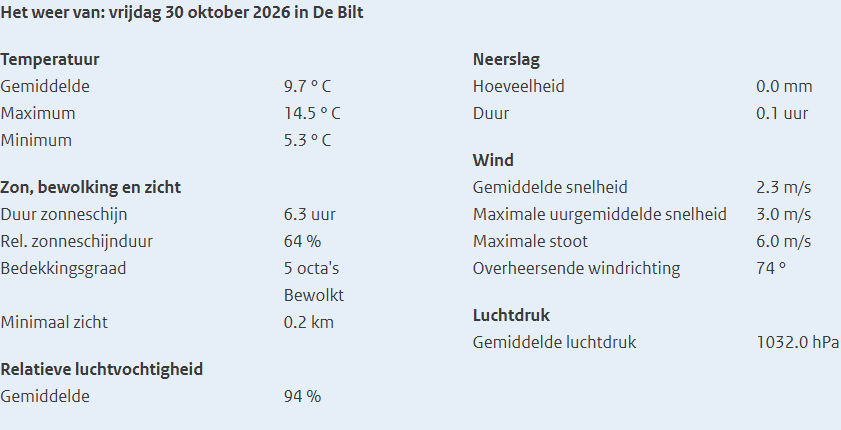
Links:
In de geschiedenis