Omarmprijs 2026 – uitreiking (TV AT5)

Omarmprijs

Wie wint dit jaar de Omarmprijs?

PACT voor Amsterdam biedt een podium aan al die mooie grote en kleine initiatieven die zich inzetten tegen armoede in de stad, de Omarmprijs is er om hen te waarderen én zichtbaar te maken. Want armoede bestrijden doen we samen: bewoners, initiatieven, gemeente én bedrijven. Zodat iedereen in Amsterdam kan blijven meedoen.

tijdlijn

Links:
Omarmprijs

#RSFIndex2026 World Press Freedom Index 2026 – publication

World Press Freedom Index

2026 RSF Index: press freedom at a 25-year low, for the first time in the history of the Reporters Without Borders (RSF) World Press Freedom Index, over half of the world’s countries now fall into the “difficult” or “very serious” categories for press freedom.

In 25 years, the average score of all 180 countries and territories surveyed in the Index has never been so low. Since 2001, the expansion of increasingly restrictive legal arsenals — particularly those linked to national security policies — has been steadily eroding the right to information, even in democratic countries. The Index’s legal indicator has declined the most over the past year, a clear sign that journalism is increasingly criminalised worldwide. In the Americas, the situation has evolved significantly, with the United States dropping seven places and several Latin American countries sliding deeper into a spiral of violence and repression.

Links:
World Press Freedom Index 2026

Dag van de Persvrijheid / World Press Freedom Day 2026

The “Nuclear Energy Paradox”- Investigating nuclear imaginaries in energy projections – publication

Nuclear energy paradox

The paper ‘The “Nuclear Energy Paradox”- Investigating nuclear imaginaries in energy projections‘ investigates the “nuclear energy paradox” which shows the recurring divergence between historical projections and actual developments.

A data compilation of long-term energy projections from international organizations such as the IAEA and the IEA as well as energy system models like GCAM and MESSAGE, as used in the IPCC, reveal a recurring pattern of high-growth projections for nuclear power. Decades of high-growth projections for nuclear power from (inter-)national agencies and from academia can be observed. Actual development shows divergence between projections and reality. A recurring pattern of overestimation can be identified, which we call the “nuclear energy paradox”. The paradox is rooted in nuclear imaginaries like the plutonium economy and/or hopes of mass production of, e.g., SMRs. Recent energy scenarios are still driven by narratives that are based on certain nuclear imaginaries.

Links:
Warum Kernenergie scheitert • Nukleares Paradox & Falsche Prognosen?

Day in Memory of the Victims of Earthquakes 2026

Day in Memory of the Victims of Earthquakes

In April 2025, the United Nations General Assembly designated 29 April as the International Day in Memory of the Victims of Earthquakes inviting all Member States, organizations of the United Nations system and other relevant international organizations to collaborate on the commemoration.

In doing so, the General Assembly reaffirmed its commitment to the 2030 Agenda for Sustainable Development and recalled the Sendai Framework for Disaster Risk Reduction 2015–2030, recognizing that disasters continue to undermine sustainable development. These commitments underscore that understanding disaster risk, strengthening prevention and mitigation, and improving preparedness and effective response are essential to protecting lives and achieving the Sustainable Development Goals by 2030. Earthquakes are among the deadliest natural hazards, often striking without warning and causing devastating loss of life and long lasting social, economic, and psychological harm. Recent earthquakes in countries such as Myanmar and Afghanistan are stark reminders of how these events can destroy infrastructure, displace entire communities, and affect generations long after the ground stops shaking. Their impact is severe and measurable. Since 1900, there have been at least 12 major earthquakes, each of which killed more than 50,000 people. Earthquakes also have substantial economic consequences, accounting for more than a quarter of global disaster losses and causing trillions of dollars in damage over recent decades. Beyond direct destruction, they can trigger fires, tsunamis, and landslides, compounding damage across housing, health, education, and livelihoods. Earthquake risk is driven by factors such as rapid urbanization in seismic areas, weak or ageing infrastructure, poverty, inequality, and poor enforcement of building codes—making risk informed development and resilient infrastructure essential. In acknowledgement of the grave consequences of these disasters, the United Nations has established the International Day in Memory of the Victims of Earthquakes, observed annually on 29 April, and tasked the United Nations Office for Disaster Risk Reduction (UNDRR) with facilitating its observance. The Day provides a moment to remember those lost and renew commitment to prevention, preparedness, and building back better, in line with the priorities of the Sendai Framework for Disaster Risk Reduction.

Links:
When the ground shakes: Remembering victims and reducing future loss

2026-04-29, Lief dagboek

Woensdag; Wat eten we vandaag?; Trump-WK; Tegelwippen; Global Sumud Flotilla; A3veen.nl oprichting; OPCW dag; European State of the Climate; Day in Memory of the Victims of Earthquakes; Kerkklokken luiden voor 420 gewortelde kinderen; Molukse KNIL militairen.

Deze afbeelding heeft een leeg alt-attribuut; de bestandsnaam is dagboek.png

Wat eten we vandaag?:

Klik op afbeelding voor origineel

Knipselkrant:


Agenda:

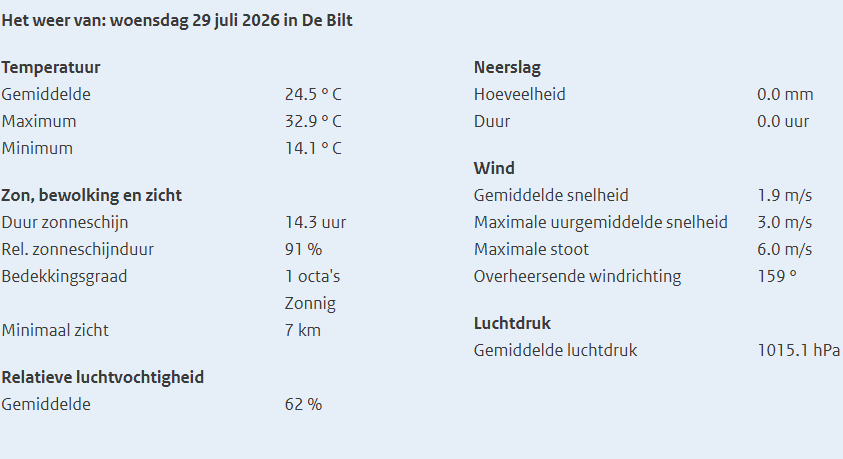
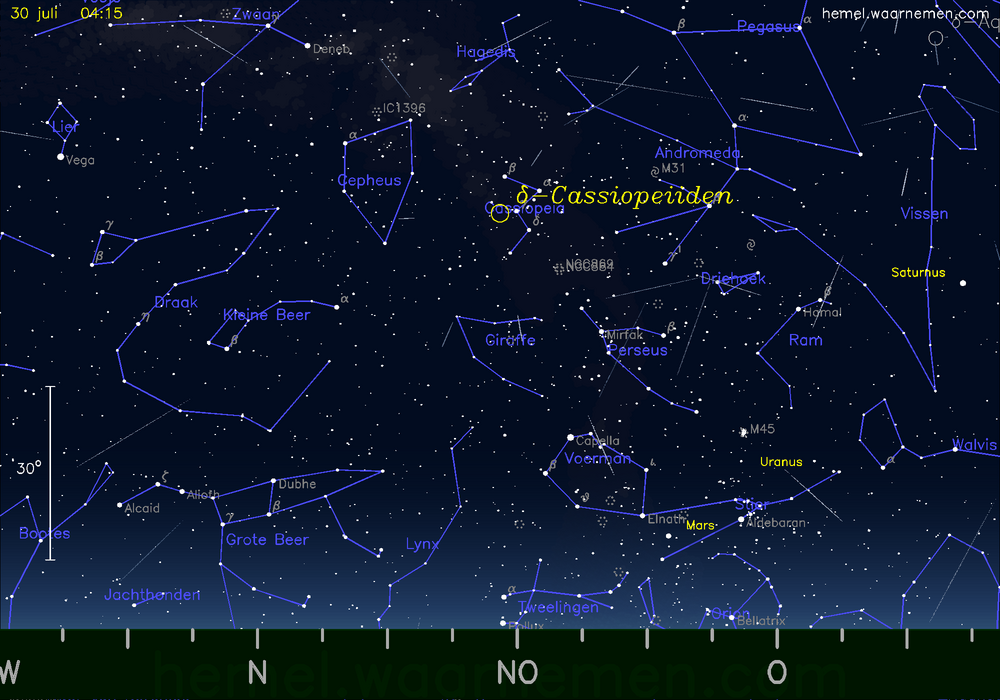
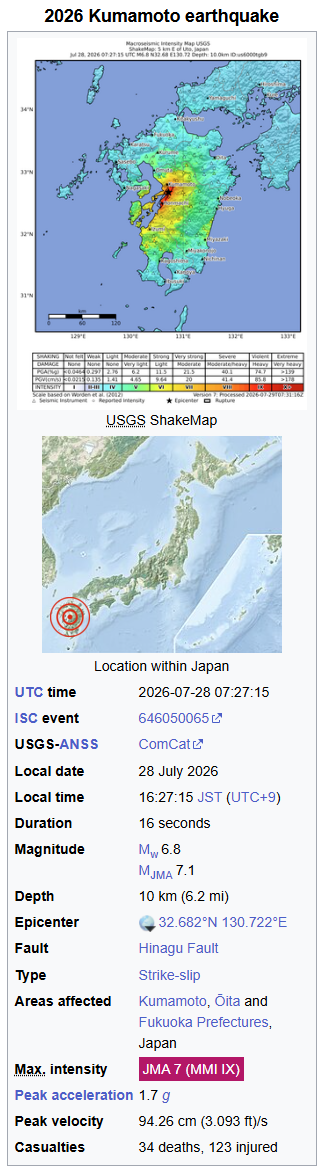
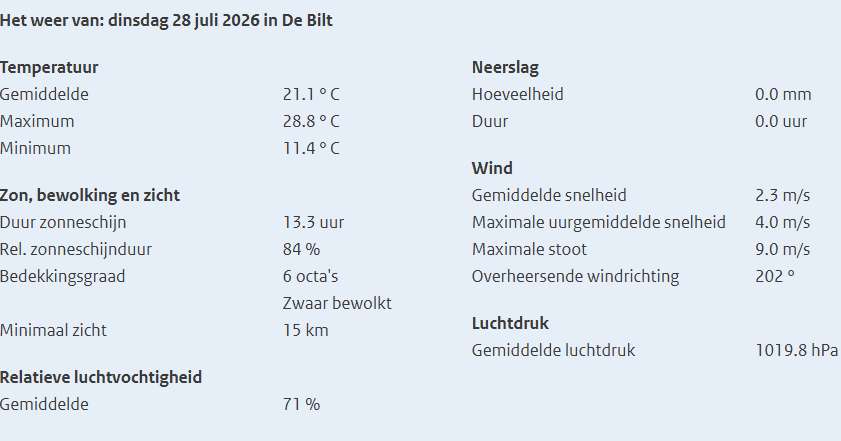
Weer:

Links:
In de geschiedenis

OPCW dag 2026

De Organisatie voor het Verbod op Chemische Wapens (Engels: Organisation for the Prohibition of Chemical Weapons en afgekort tot OPCW) is een autonome internationale, multilaterale organisatie die haar zetel heeft in Den Haag en trad in werking op 29 april 1997.

De organisatie werkt samen met de Verenigde Naties. De Organisatie voor het Verbod op Chemische Wapens werd op 11 oktober 2013 de Nobelprijs voor de Vrede toegekend “voor haar grote inspanningen om chemische wapens te elimineren”. De OPCW is opgericht om chemische wapens te (doen) vernietigen en te voorkomen dat ze ooit nog gebruikt zullen worden. De OPCW is het uitvoerend orgaan van het Verdrag chemische wapens (Chemical Weapons Convention, afkorting CWC) dat in 1997 van kracht werd. In dit verdrag staat dat lidstaten al hun chemische wapens (op een milieuvriendelijke manier) moeten vernietigen, net als de installaties waar de wapens werden geproduceerd. Ook dienen de landen fabrieken waar met bepaalde chemische stoffen wordt gewerkt op te geven aan de OPCW en hun chemische industrieën te onderwerpen aan regelmatige inspecties.

Links:
OPCW

Liberties’ #MediaFreedomReport2026: ​EU Media Freedom Worsens Amid Political Inertia to Implement New Rules – publication

Liberties Media Freedom Report 2026.

Media freedom worsened in 2025 despite new legislation, as journalists attacks rose, public broadcasters faced political pressure, and governments dragged their feet on enforcement.

Media freedom and pluralism in the European Union (EU) in 2025 continued to be plagued by longstanding concerns, finds the Liberties Media Freedom Report 2026. The adoption of new EU rules, including the European Media Freedom Act (EMFA) and the Anti-SLAPP Directive, promised improvement; however, slow and often superficial implementation rendered their impact negligible. The overarching trends of previous years, including rising media ownership concentration, opaque ownership structures, the politicisation of state advertising and political interference in public service media and regulators, remained pervasive issues throughout the Union, with certain areas even declining. This Report is the fifth annual report on media freedom in the EU produced by the Civil Liberties Union for Europe (Liberties). It is based on data and input from nearly 40 member and partner organisations from 22 EU Member States. As in previous editions, this Report covers three primary areas: media freedom and pluralism, safety and protection of journalists, freedom of expression and access to information, as well as an additional section on European legislation related to media freedom and pluralism.

Links:
EU Media Freedom Worsens Amid Political Inertia to Implement New Rules

#LaatZeBlijven Kerkklokken luiden voor 420 gewortelde kinderen in Nederland

420 gewortelde kinderen in Nederland

Op woensdag 29 april 2026 van 16:20 tot 16:25 luiden meer dan 700 klokken door heel Nederland voor gewortelde kinderen die in onzekerheid leven over hun toekomst in Nederland, daarmee is het oorspronkelijke doel van 420 klokken – één klok voor ieder geworteld kind in Nederland – ruim overstegen.

Met de landelijke actie vragen de deelnemende kerken aandacht voor kinderen die in Nederland zijn opgegroeid, hier naar school gaan en geworteld zijn in de samenleving, maar ondanks jarenlang verblijf nog altijd te maken hebben met onzekerheid over hun verblijfsstatus. Aan de landelijke overheid wordt om een structurele en rechtvaardige oplossing gevraagd voor alle gewortelde kinderen die slachtoffer zijn geworden van jarenlange trage procedures. Het argument dat procedures sneller moeten is inmiddels deels ondervangen door het Europese migratiepact, dat inmiddels door de Tweede Kamer is aangenomen en moet leiden tot snellere procedures in de toekomst. Met het klokkenluiden wordt letterlijk en figuurlijk de stem van deze kinderen versterkt. Waar hun stem in het publieke en politieke debat vaak te zacht blijft om gehoord te worden, kunnen kerken die stem helpen dragen door op hetzelfde moment hun klokken te luiden. De organisatie: “Kinderen die hier geworteld zijn, verdienen het om gezien en gehoord te worden. Met deze actie geven kerken in heel Nederland een krachtig en hoorbaar signaal van medemenselijkheid, rechtvaardigheid en solidariteit.” De symboliek van het tijdstip is bewust gekozen: 16:20 uur (‘twintig over vier’) verwijst naar de 420 gewortelde kinderen voor wie aandacht wordt gevraagd. Met deze actie willen de initiatiefnemers laten zien dat de samenleving niet stil blijft, zolang kinderen die hier thuis zijn in onzekerheid leven.

Links:
Heel Nederland luidt de klok voor gewortelde kinderen!

Meer dan 800 kerken luidden klokken voor de Babayants in Kampen