
Thuis-pagina

...welkom bij A3veen.nl.

Dinsdag; Wat eten we vandaag?; Werelddag voor Audiovisueel Erfgoed; Amsterdam jubileum.

Wat eten we vandaag?:

Knipselkrant:
Agenda:
Weer:
Links:
In de geschiedenis

The World Day for Audiovisual Heritage (WDAH) – 27 October – is key initiative for both UNESCO and the Coordinating Council of Audiovisual Archives Associations (CCAAA) to honor audiovisual preservation professionals and institutions that safeguard our heritage for future generations.
Audiovisual archives tell us stories about people’s lives and cultures from all over the world. They represent a priceless heritage which is an affirmation of our collective memory and a valuable source of knowledge since they reflect the cultural, social and linguistic diversity of our communities. They help us grow and comprehend the world we all share. Conserving this heritage and ensuring it remains accessible to the public and future generations is a vital goal for all memory institutions, as well as the public at large. The WDAH provides an occasion to raise general awareness of the need to take urgent measures and to acknowledge the importance of audiovisual documents. It serves as an opportunity for Member States to evaluate their performance with respect to implementing the 2015 Recommendation Concerning the Preservation of, and Access to, Documentary Heritage, Including in Digital Form, and it promotes the free flow of ideas by word and image as a representation of our shared heritage and memory. In so doing, the Day highlights the role of heritage in building the defenses of peace in people’s minds. Through initiatives such as the World Day for Audiovisual Heritage, the Memory of the World Programme, and UNESCO Archives project “Digitizing our shared UNESCO history“, the work of preservation professionals is encouraged, in order to manage the range of technical, political, social, financial and other factors that threaten the safeguarding of our audiovisual heritage. World Day for Audiovisual Heritage 2026 theme is “Your Window to the World”, highlighting the essential role of audiovisual heritage in connecting and understanding societies across the world.
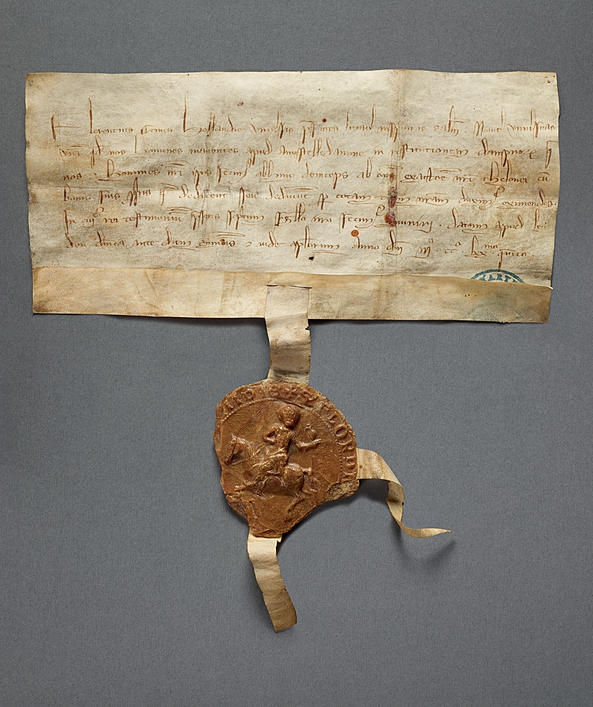
De oudste vermelding van Amsterdam is in een document van 27 oktober 1275, waarin graaf Floris V de bewoners tolvrijheid verleent.
Amsterdam is de (titulaire) hoofdstad en naar inwonertal de grootste gemeente van Nederland. De stad, in het Amsterdams ook Mokum genoemd (afkomstig uit het Jiddisch), ligt in de provincie Noord-Holland, aan het IJ, het Noordzeekanaal en de monding van de Amstel. De gemeente Amsterdam telt 942.504 inwoners (1 januari 2026, CBS). Het aantal verschillende nationaliteiten in de gemeente behoort tot de hoogste ter wereld. Over de precieze datum waarop Amsterdam stadsrechten verkreeg is onzekerheid. Een van de mogelijkheden is dat de Utrechtse bisschop Guy van Avesnes de plaats in 1300-1301 stadsrechten heeft verleend, dit omdat hij in een handvest uit die tijd spreekt over ‘onsen poiteren van Aemstelredamme’ (Onze poorters van Amsterdam). Hij noemt de burgers expliciet ‘poorters’, hetgeen erop wijst dat er stadsrechten waren vergeven. Doch over het exacte tijdstip van de toekenning is weinig meer te zeggen dan dat het tijdstip rond of kort na 1300 ligt. In 1342 kreeg Amsterdam een nieuw stadsrecht van de Hollandse graaf Willem IV. Amsterdam dankt zijn naam aan de ligging bij een in de 13e eeuw aangelegde dam in de Amstel. De stad werd in 1345 door het Mirakel van Amsterdam een pelgrimsoord en groeide in de Gouden Eeuw uit tot een van de belangrijkste haven- en handelssteden ter wereld. Een toestroom van buitenlanders uit vooral de Zuidelijke Nederlanden, Duitsland en de Scandinavische landen leidde vanaf het eind van de 16e eeuw tot stadsuitbreidingen, waaronder de laatste grachten van de fortificatie die nu als grachtengordel bekend is en in 2010 is toegevoegd aan de UNESCO-Werelderfgoedlijst. Bezienswaardigheden en attracties in Amsterdam zijn het Rijksmuseum, het Stedelijk Museum, het Van Gogh Museum en Het Scheepvaartmuseum, het Anne Frank Huis, het Concertgebouw, Muziekgebouw aan ’t IJ en EYE Filmmuseum, dierentuin Artis, de Wallen en (voor buitenlandse bezoekers) de coffeeshops. De stad telt twee universiteiten en meerdere hogescholen.
Links:
Wikipedia
Maandag; Wat eten we vandaag?; Protesten Europa; Intersex Awareness Day; Geen kernafval in onze grond, geen kerncentrale in Groningen.
Wat eten we vandaag?:
Knipselkrant:
Agenda:
Weer:
Links:
In de geschiedenis
Links:
Wikipedia
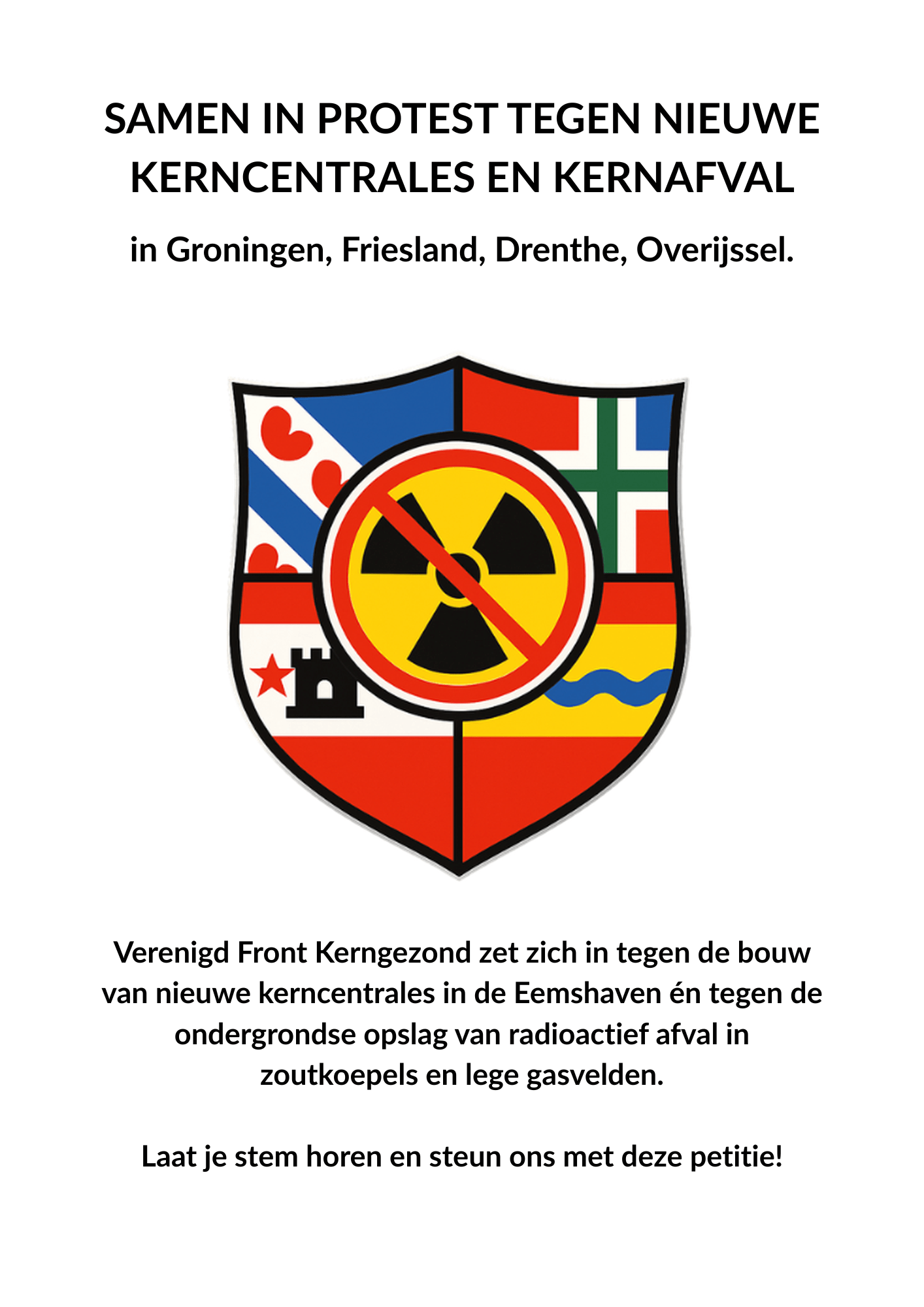
Inwoners van Groningen, Friesland, Drenthe en Overijssel hebben zich verenigd tegen de opslag van kernafval in zoutkoepels en lege gasvelden, én tegen de komst van nieuwe kerncentrales in de Eemshaven.
De Nederlandse overheid overweegt opnieuw om radioactief afval op te slaan in zoutkoepels en lege gasvelden in Groningen, Friesland, Drenthe en Overijssel. Ook worden er locaties onderzocht voor nieuwe kerncentrales, waaronder twee in de Eemshaven (Groningen). Een gebied dat al decennialang te maken heeft met aardbevingen door gaswinning. Een kerncentrale bouwen op een plek waar de bodem al aantoonbaar instabiel is onverantwoord. De plannen voor nieuwe kerncentrales worden gepresenteerd als noodzakelijk voor een duurzame, onafhankelijke energievoorziening. Maar die beweringen kloppen niet. Kernenergie wordt door de overheid “duurzaam” genoemd omdat er tijdens de stroomproductie weinig CO₂ vrijkomt. Maar duurzaam betekent dat een bron zich vanzelf aanvult, zonder mens en milieu blijvend te belasten en dat is bij kernenergie geen van beide het geval: uranium is een eindige, gedolven grondstof, en de winning ervan is zwaar vervuilend. Bovendien wordt Nederland er ook niet “onafhankelijk” door. Nederland heeft geen eigen uranium en blijft dus altijd afhankelijk van import, net als bij gas en olie. Zelfs als alle vier geplande kerncentrales er daadwerkelijk komen, verwacht men dat kernenergie in 2050 niet meer dan 10 tot 14,5% van de Nederlandse elektriciteitsbehoefte zal leveren. Ondertussen blijft de berging van kernafval ook een onopgelost probleem. Er bestaat wereldwijd nog geen structurele oplossing voor de veilige, langdurige opslag ervan. Het radioactieve afval blijft voor tienduizenden jaren gevaarlijk, en belast daarmee honderden generaties na ons met de gevolgen. De gevolgen zijn onomkeerbaar.
Links:
Geen kernafval in onze grond, geen kerncentrale in Groningen – petitie

Intersex Awareness Day is an internationally observed awareness day each October 26, designed to highlight human rights issues faced by intersex people.
Intersex Awareness Day is an international day of grass-roots action to end shame, secrecy and unwanted genital cosmetic surgeries on intersex children. The day also provides an opportunity for reflection and political action. Between October 26 and November 8, intersex organizations bring attention to the challenges intersex individuals face, culminating in the Intersex Day of Remembrance on November 8, the birthday of Herculine Barbin, also sometimes known as Intersex Solidarity Day.
Links:
Intersex Day
Zondag; Wat eten we vandaag?; Protesten Europa; Wintertijd; .
Wat eten we vandaag?:
Knipselkrant:
Agenda:
Weer:
Links:
In de geschiedenis
Links:
Wikipedia