Intergovernmental Panel on Climate Change Plenary Meeting 2025

The Intergovernmental Panel on Climate Change (IPCC) is an intergovernmental body of the United Nations, its job is to advance scientific knowledge about climate change caused by human activities.

The World Meteorological Organization (WMO) and the United Nations Environment Programme (UNEP) set up the IPCC in 1988. The United Nations endorsed the creation of the IPCC later that year. It has a secretariat in Geneva, Switzerland, hosted by the WMO. It has 195 member states who govern the IPCC. The member states elect a bureau of scientists to serve through an assessment cycle. A cycle is usually six to seven years. The bureau selects experts in their fields to prepare IPCC reports. There is a formal nomination process by governments and observer organizations to find these experts. The IPCC has three working groups and a task force, which carry out its scientific work. The IPCC informs governments about the state of knowledge of climate change. It does this by examining all the relevant scientific literature on the subject. This includes the natural, economic and social impacts and risks. It also covers possible response options. The IPCC does not conduct its own original research. It aims to be objective and comprehensive. Thousands of scientists and other experts volunteer to review the publications. They compile key findings into “Assessment Reports” for policymakers and the general public; Experts have described this work as the biggest peer review process in the scientific community. Leading climate scientists and all member governments endorse the IPCC’s findings. This underscores that the IPCC is a well-respected authority on climate change.

Governments, civil society organizations, and the media regularly quote from the panel’s reports. IPCC reports play a key role in the annual climate negotiations held by the United Nations Framework Convention on Climate Change (UNFCCC). The IPCC Fifth Assessment Report was an important influence on the landmark Paris Agreement in 2015. The IPCC shared the 2007 Nobel Peace Prize with Al Gore for contributions to the understanding of climate change. The seventh assessment cycle of the IPCC began in 2023. In August 2021, the IPCC published its Working Group I contribution to the Sixth Assessment Report on the physical science basis of climate change. The Guardian described this report as the “starkest warning yet” of “major inevitable and irreversible climate changes”. Many newspapers around the world echoed this theme. In February 2022, the IPCC released its Working Group II report on impacts and adaptation. It published Working Group III’s “mitigation of climate change” contribution to the Sixth Assessment in April 2022. The Sixth Assessment Report concluded with a Synthesis Report in March 2023. During the period of the Sixth Assessment Report, the IPCC released three special reports. The first and most influential was the Special Report on Global Warming of 1.5°C in 2018. In 2019 the Special Report on Climate Change and Land, and the Special Report on the Ocean and Cryosphere in a Changing Climate came out. The IPCC also updated its methodologies in 2019. So the sixth assessment cycle was the most ambitious in the IPCC’s history.

In 2025, the IPCC will be meeting in Hangzhou, China, from 24 to 28 February to agree on the outlines of the three Working Group contributions to the Seventh Assessment Report (AR7) and the Methodology Report on Carbon Dioxide Removal Technologies, Carbon Capture Utilization and Storage. During the IPCC’s 62nd Plenary Session hosted by the People’s Republic of China, the Panel will consider the draft outlines of the three Working Group contributions to the Seventh Assessment Report and the draft outline of the Methodology Report on Carbon Dioxide Removal Technologies, Carbon Capture Utilization and Storage, and the respective timelines and budgets for these reports. In addition, government delegates of the 195-member country Panel will be updated on the broad draft outline of the AR7 Synthesis Report. The agenda of the week-long Plenary also includes the IPCC workplan and budget, among other business.

Links:
Upcoming IPCC Plenary meeting in Hangzhou

Amerikaanse regering verbiedt wetenschappers deelname aan klimaatpanel IPPC

Vroege Vogels Radio | 23 februari 2025 (Radio 1 NPO)

Vroege Vogels is een live-radioprogramma, tv-programma en online community van BNNVARA over natuur en milieu.

In het radioprogramma wordt het gesproken woord omlijst door licht klassieke muziek en salonmuziek. Het radioprogramma werd in 1978 voor het eerst uitgezonden door de VARA en is een van de langst lopende en best beluisterde radioprogramma’s van de publieke omroep. Het wordt elke zondagmorgen uitgezonden tussen 07:00 en 10:00 op NPO Radio 1. De beginmuziek is een bewerking van Vivaldi’s “Piccolo Concerto in C major” (RV 443).

Strandopruimers zetten zich elke week in om alle troep bij de Kwade Hoek op te ruimen. Op Terschelling opent de ‘Walk of Grief‘, waar je verlies kunt verwerken in de natuur. Zondag gaan de Duitsers naar de stembus, wat voor invloed hebben deze verkiezingen op het klimaat? En verder: Frits Portielje pionier in de dierpsychologie, bossen vol boomklevers, planten die nu in bloei staan, de Green Musketeers en vogels tellen op het Haringvliet. De column is deze week van Bibi Dumon Tak.

Links:
Vroege Vogels (na afloop terugluisteren)

NPO Radio 1 live stream

ALS Sunrise Walk 2025

Met de ALS Sunrise Walk wordt de ziekte Amyotrofe laterale sclerose (ALS) in het licht gezet tijdens een nachtwandeling in Utrecht.

In 2025 worden opnieuw de straten van Utrecht verlicht! Loop mee met de ALS Sunrise Walk en zet ALS in het licht. De vierde editie van de ALS Sunrise Walk vindt plaats in de nacht van vrijdag 7 op zaterdag 8 maart 2025. Duizenden deelnemers lopen in Utrecht – dé stad waar het onderzoek naar ALS, PSMA en PLS plaatsvindt en waar dagelijks hard gewerkt wordt aan de oplossing voor deze meedogenloze ziekten vanuit het ALS Centrum (UMC Utrecht) – de zonsopgang tegemoet en wordt geld ingezameld voor onderzoek naar ALS, en de aanverwante ziekten PSMA en PLS. Als de krachten worden gebundeld kan genezing van ALS, PSMA en PLS mogelijk worden. Om dit te bewerkstelligen worden mensen en partijen samengebracht om zoveel mogelijk geld op te halen. Geld dat nodig is om de doelen te behalen. Je loopt in het donker een afstand van 25, 15 of 5 kilometer. De 5 kilometerroute is rolstoeltoegankelijk. Neem lampjes mee en versier je kleding, zodat je samen met de andere deelnemers ALS op een mooie manier in het licht zet.

Links:
ALS Sunrise Walk

2025-02-20, Lief dagboek

Donderdag; Wat eten we vandaag?; ‘coup’ van Elon Musk in VS bedreigt Europa; 2024 YR4 wordt politiek; Zijn de ultrarijken de nieuwe f*scisten?; Gaza−Israël oorlog 2023 – …; Windows and Office for free?; Global Information Governance Day; Werelddag van de Sociale Rechtvaardigheid; Nederlandse belangen centraal in ontwikkelingshulp; Babelsberger Sternennächte.

Deze afbeelding heeft een leeg alt-attribuut; de bestandsnaam is dagboek.png

Wat eten we vandaag?:

Klik op afbeelding voor origineel

Knipselkrant:


Agenda:

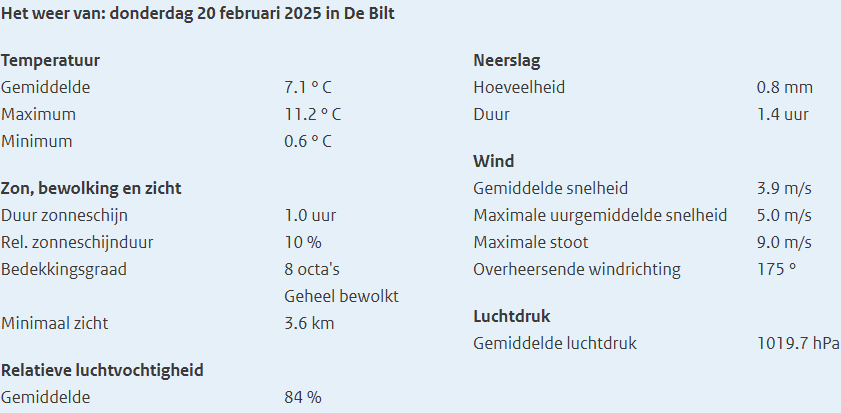
Weer:

Links:
In de geschiedenis

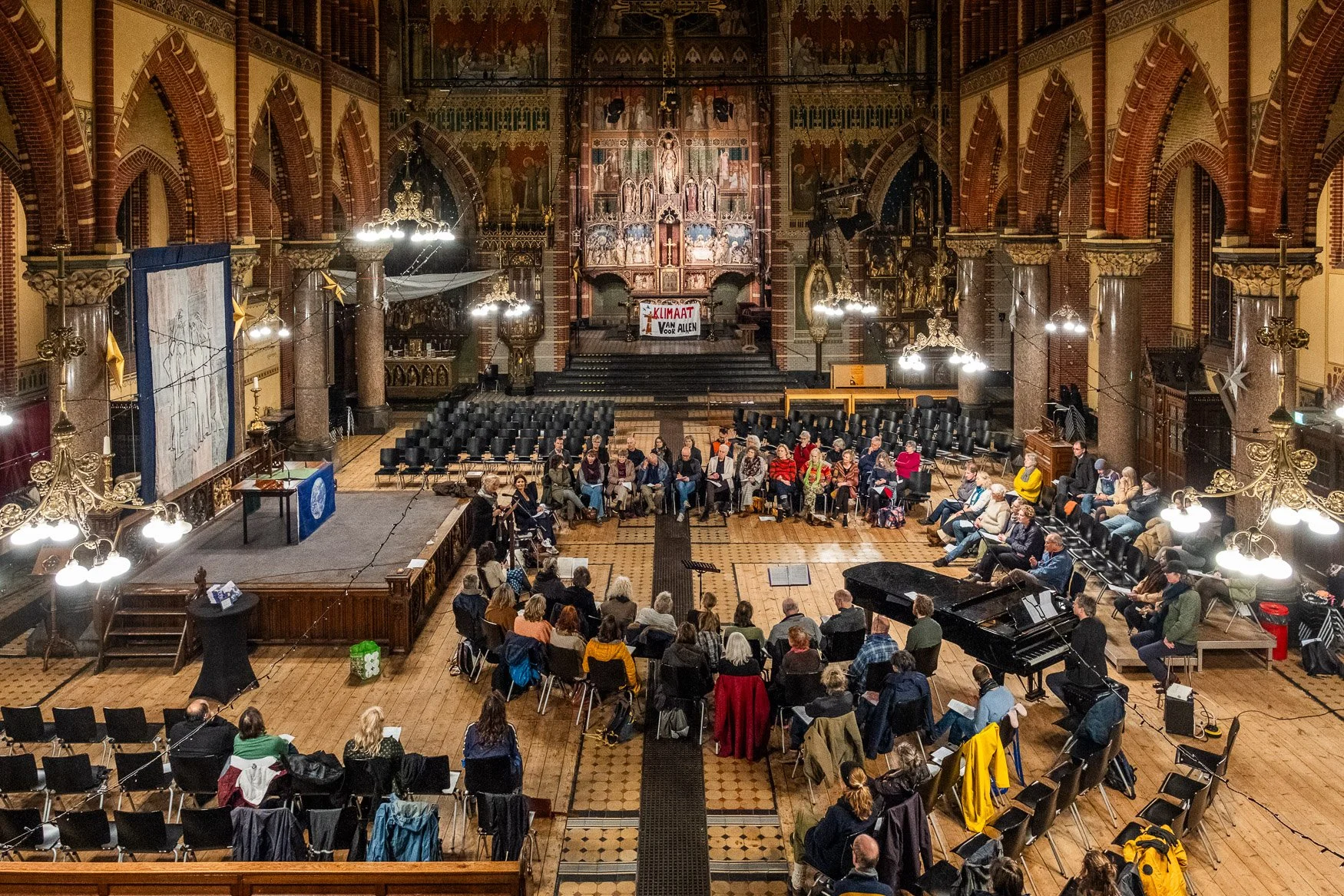
Klimaatwake


Maandelijkse Klimaatwakes om elkaar vast te houden.

Zorgen delen, hoe doe je dat? Al die angstaanjagende berichten over de opwarming van de aarde tot je nemen? Hoe ga je verder met je dagelijks leven, als je weet dat elders op de wereld verschrikkelijke bosbranden gaande zijn? Bosbranden gaande zijn? Kan dat eigenlijk? Niet wegkijken van al die gevolgen van de klimaatcrisis en toch iets van levensgeluk vasthouden? Het leven ondanks alles blijven vieren? Velen van ons hebben besloten om zich in te zetten om de klimaatcrisis aan te pakken. Dat kan zijn door plantaardig te eten, of minder plastic te gebruiken. Anderen gaan het gesprek aan in hun omgeving om bewustwording te vergroten. Of gaan over tot actie, samen met één van de milieu-organisaties als Milieudefensie, Greenpeace of Extinction Rebellion.

Voor zoveel mogelijk mensen die boos, bezorgd of verdrietig zijn over het klimaat en geïnspireerd zijn om iets te veranderen aan de toestand van het klimaat. Activisten, bezorgde mensen, religieus en niet-religieus, jongeren en volwassenen. Bezoekers van de Klimaatwakes zoeken inspiratie om zich actief in te zetten. Samen delen waar je bang voor bent, omdat je niet wilt wegkijken, maar klimaat-rampen onder ogen zien, geeft troost. Soms merk je dat je inzet tegen de klimaatcrisis je kan vervreemden of isoleren van je vrienden of familie. Of je kan je verdrietig en gefrustreerd voelen dat er zo slecht geluisterd wordt door overheid en bedrijven. De Klimaatwakes zijn een plek waar zorgen over de toekomst van de aarde gedeeld kunnen worden.

Links:
Klimaatwake

World Day of Social Justice / Werelddag van de Sociale Rechtvaardigheid 2025

World Day of Social Justice (Social Justice Equality Day) is an international day recognizing the need to promote social justice, which includes efforts to tackle issues such as povertyexclusiongender equalityunemploymenthuman rights, and social protections.

Many organizations, including the UN, American Library Association (ALA), and the International Labour Organization, make statements on the importance of social justice for people. Many organizations also present plans for greater social justice by tackling poverty, social and economic exclusion and unemployment. The United Nations General Assembly has decided to observe 20 February annually, approved on 26 November 2007 and starting in 2009, as the World Day of Social Justice. The Declaration focuses on guaranteeing fair outcomes for all through employment, social protection, social dialogue, and fundamental principles and rights. Social justice is an underlying principle for peaceful and prosperous coexistence within and among nations. For the United Nations, the pursuit of social justice for all is at the core of our global mission to promote development and human dignity. The adoption by the International Labour Organization of the Declaration on Social Justice for a Fair Globalization is just one recent example of the UN System’s commitment to social justice. The Declaration focuses on guaranteeing fair outcomes for all, through employment, social protection, social dialogue, and fundamental principles and rights at work.

Links:
World Day of Social Justice

Seventh session of the UN Environment Assembly (UNEA-7)

The seventh session of the United Nations Environment Assembly (UNEA-7) will take place from 8 to 12 December 2025 at the United Nations Environment Programme (UNEP) headquarters in Nairobi, Kenya.

The United Nations Environment Assembly (UNEA) is the world’s highest-level decision-making body for matters related to the environment, with a universal membership of all 193 Member StatesIt sets the global environmental agenda, provides overarching policy guidance, and defines policy responses to address emerging environmental challenges. It undertakes policy review, dialogue and the exchange of experiences, sets the strategic guidance on the future direction of the UN Environment Programme (UNEP), and fosters partnerships for achieving environmental goals and resource mobilization. 2025 theme “Advancing sustainable solutions for a resilient planet.

Links:
United Nations Environment Assembly


Babelsberger Sternennächte – Das Alter von Sternen – und wie man es bestimmt | Dr. David Gruner (TV webcast)

Die Leibniz-Instituts für Astrophysik Potsdam (AIP) Babelsberger Sternennächte finden online statt, in der Regel gibt es immer am 3. Donnerstag im Monat einen neuen Vortrag einer Wissenschaftlerin oder eines Wissenschaftlers des AIP, der ab 20 Uhr auf dem YouTube-Kanal von Urknall, Weltall und das Leben ausgestrahlt wird.

Wie alt Sterne eigentlich sind, ist oft gar nicht so einfach zu beantworten, da sich das Alter eines Sterns nicht einfach messen lässt. Stattdessen nutzen Forschende direkt messbare Eigenschaften der Sterne, die sich im Laufe eines Sternenlebens deutlich und systematisch verändern. Im Vortrag geht David Gruner auf verschiedene Methoden und Messgrößen ein, die zur Altersbestimmung von Sternen herangezogen werden. Das Sternalter ist u.a. auch deshalb so interessant, weil sich Leben in Milliarden von Jahren entwickelt und wir so mehr über die Wahrscheinlichkeit von Leben auf Planeten um ferne Sterne erfahren können.

Links:
Babelsberger Sternennächte

Babelsberger Sternennächte – playlist

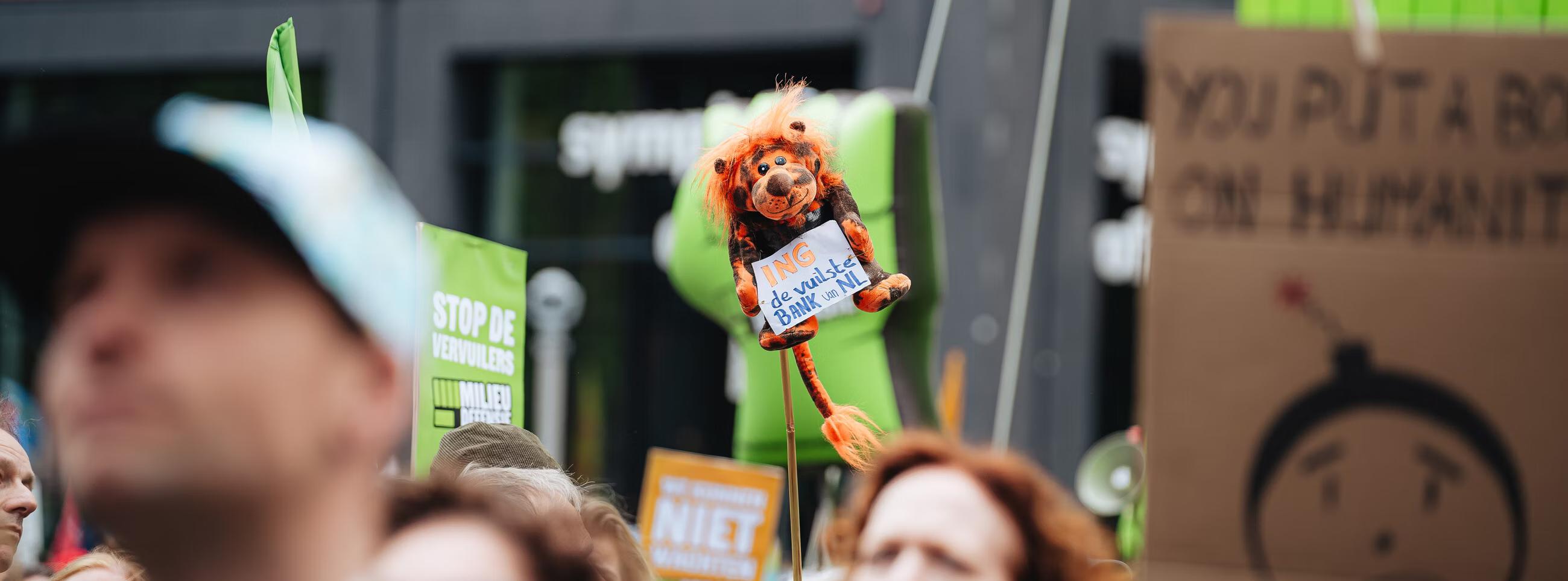
Klimaatzaak : Rechtszaak van Milieudefensie tegen ING

Samen met mede-eisers, advocaten, klimaatwetenschappers en iedereen die zich aansluit laat Milieudefensie luid en duidelijk horen: genoeg is genoeg!

ING blijft maar geld steken in vervuilende bedrijven, zelfs in olie- en gasbedrijven die nieuwe projecten starten. Daarom bezorgt Milieudefensie ING een dik pakket bewijsstukken, samen met de eisen. Zo laten ze zien hoe ING de klimaatcrisis verergert en dat de bank verantwoordelijkheid moet nemen.

Links:
Belangrijkste internationale controleur: klimaatbeleid ING is in lijn met ‘Parijs’. Toch zet Milieudefensie rechtszaak door / SBTi is een pion van vervuilende bedrijven aan het worden

Agenda – Niet Met Mijn Geld