Aantal mensen op de vlucht door oorlog op schokkend hoogtepunt in tien jaar – UNHCR / Global Trends report 2024 – publication

Het aantal mensen dat wereldwijd gedwongen op de vlucht is door oorlog, geweld en vervolging is onhoudbaar hoog, vooral nu humanitaire financiering opdroogt.

Het enige lichtpuntje is de toename van het aantal mensen dat terugkeert, met name naar Syrië, aldus UNHCR, de VN-Vluchtelingenorganisatie. Volgens het jaarlijkse Global Trends Report van UNHCR waren er eind april 2025 wereldwijd 122,1 miljoen mensen gedwongen op de vlucht, een stijging ten opzichte van 120 miljoen een jaar eerder. Dit betekent een decennium van jaarlijkse stijgingen in het aantal vluchtelingen en anderen die hun huis moesten ontvluchten. De belangrijkste oorzaken blijven grote conflicten zoals in SoedanMyanmar en Oekraïne, en het voortdurende onvermogen om het geweld te stoppen.

Links:
Aantal mensen op de vlucht door oorlog op schokkend hoogtepunt in tien jaar – UNHCR

VN: meer vluchtelingen dan vorig jaar, financiering daalt

Just Peace Festival

Van 12 tot 26 juni 2025 verandert Den Haag in een open podium: het Just Peace Festival, met onder meer uitdagende dialogen, indrukwekkende expo’s, meeslepende films, muziek en dans.

Het Just Peace Festival is een open platform, waarin dialoog, kunst, en activisme samenkomen om nieuwe benaderingen voor vrede te verkennen. Dit festival is het hoogtepunt van het Road to Summit-programma in Den Haag. Road to Summit is een stadbreed programma dat in januari is gelanceerd door de Gemeente Den Haag. Het brengt een breed scala aan activiteiten en evenementen samen die de thema’s vrede en rechtvaardigheid belichten in aanloop naar de NAVO-top in Den Haag in juni. Alle Just Peace Festival-activiteiten blijven bereikbaar tijdens de NAVO-top. Je moet wel rekening houden met langere reistijden. Van dinsdag 24 tot en met woensdag 25 juni ontvangt Den Haag de NAVO-top. In die periode worden extra veiligheids- en verkeers­maatregelen genomen in de hele Randstad om delegaties veilig tussen Schiphol en het World Forum te vervoeren.

Links:
Just Peace Festival

EFFecting Change: Pride in Digital Freedom (TV webcast)

This Pride season, our panel explores how emerging laws and platform policies affect the digital privacy and free expression rights of the LGBT+ community, and how this echoes the experience of marginalized people across the world.

Join our panel featuring EFF Senior Staff Technologist Daly Barnett, EFF Legislative Activist Rindala Alajaji, Chosen Family Law Center Senior Legal Director Andy Izenson, and Woodhull Freedom Foundation Chief Operations Officer Mandy Salley while they discuss what is happening and what should change to protect digital freedom.

Links:
Pride in Digital Freedom

Wereldwijde mars naar Gaza / Global March To Gaza

Een wereldwijde coalitie van al 22 landen over de hele wereld, bestaande uit duizenden wereldburgers, grassroots-groepen en NGO’s, is verontwaardigd over het lijden van het Palestijnse volk, over de genocide in Gaza en over de voortdurende bezetting van Palestina en wil dat uiten middels een protestmars van 48 kilometer naar de grens van Gaza.

Deze wereldwijde beweging is ontstaan ​​uit een initiatief van verschillende personen die een mars voor wereldburgers wilden organiseren aan de grens met Rafah, omdat we de wrede behandeling van Palestijnen in Gaza niet langer kunnen verdragen. De beweging werd gelijktijdig in verschillende landen opgezet – toen de organisatoren elkaar leerden kennen en besloten om hun krachten te bundelen om zich te verenigen. Er zijn twee afzonderlijke wereldwijde marsinitiatieven. De mars vindt plaats op 15 juni 2025, verzamelen vanaf 12 juni in Cairo, Egypte. De organisatie staat in contact met de Egyptische autoriteiten, het was echter van tevoren duidelijk dat de Egyptische overheid geen vergunning zou geven. Een mars is ook een demonstratie en dat is verboden in Egypte. Mensen uit iedere gemeenschap, stad en land ter wereld worden gevraagd om zich aan te sluiten bij de Global March To Gaza. Ook al kun je niet naar Egypte komen, toon dan toch jouw steun door de Mars te volgen op sociale media, neem contact op met je staatsdepartementen en ambassades, spreek je uit over de groepen die deze beweging van mensen proberen te saboteren en te stoppen. Deelnemers van de Mars roepen op tot:

● Onmiddellijke en permanente opening van de grensovergang bij Rafah
● Veilige levering van humanitaire hulp onder de autonomie van de VN en humanitaire organisaties
● Volledige terugtrekking van Israëlische troepen uit Palestina
● Wederopbouw van Gaza onder internationaal toezicht
● Einde van de illegale bezetting van Palestina

Links:
Wereldwijde mars naar Gaza

Mars naar Gaza: deelnemers opgepakt in Egypte en uitgezet

Cairo authorities detain, deport dozens of foreign nationals entering Egypt for Global March to Gaza

Tussen oorlog en vrede

Aan de vooravond van de NAVO-top een gesprek over vrede, veiligheid en de militarisering van onze samenleving.

Op 24 juni begint de NAVO-top in Den Haag. Daar bespreken de staatshoofden en regeringsleiders van NAVO-landen onder andere de veiligheid in de wereld. Veiligheid die volgens velen onder steeds grotere druk staat. Mede als reactie hierop wil Europa de komende jaren 800 miljard euro extra investeren in de Europese defensie-industrie. In dit programma gaan we in gesprek over het nut van deze reusachtige investeringen en wat de kosten hiervan zijn voor de samenleving. Maar we gaan ook in gesprek over wat die veiligheidsdreiging eigenlijk is en hoe we ons hier dan op kunnen voorbereiden. Praten we niet teveel oorlogstaal en zijn er alternatieven om deze veiligheidscrisis af te wenden? Denk en praat mee over de tijd waar we ons nu in begeven.

Links:
Tussen oorlog en vrede

Inside Amsterdam’s high-stakes experiment to create fair welfare AI – publication

The Dutch city of Amsterdam thought it could break a decade-long trend of implementing discriminatory algorithms, its failure raises the question: can these programs ever be fair?

There’s an ongoing debate about whether algorithms can ever be fair when tasked with making decisions that shape people’s lives. Over the past several years of efforts to use artificial intelligence in this way, examples of collateral damage have mounted: nonwhite job applicants weeded out of job application pools in the US, families being wrongly flagged for child abuse investigations in Japan, and low-income residents being denied food subsidies in India. Proponents of these assessment systems argue that they can create more efficient public services by doing more with less and, in the case of welfare systems specifically, reclaim money that is allegedly being lost from the public purse. In practice, many were poorly designed from the start. They sometimes factor in personal characteristics in a way that leads to discrimination, and sometimes they have been deployed without testing for bias or effectiveness. In general, they offer few options for people to challenge—or even understand—the automated actions directly affecting how they live.

When Amsterdam set out to create an AI model to detect potential welfare fraud, officials thought it could break a decade-plus trend of discriminatory algorithms that had harmed people all over the world. City officials in the welfare department believed they could build technology that would prevent fraud while protecting citizens’ rights. They followed these emerging best practices and invested a vast amount of time and money in a project that eventually processed live welfare applications. But in their pilot, they found that the system they’d developed was still not fair and effective. Why? Lighthouse Reports, MIT Technology Review, and the Dutch newspaper Trouw have gained unprecedented access to the system to try to find out. In response to a public records request, the city disclosed multiple versions of the algorithm and data on how it evaluated real-world welfare applicants, offering us unique insight into whether, under the best possible conditions, algorithmic systems can deliver on their ambitious promises.  

Links:
Inside Amsterdam’s high-stakes experiment to create fair welfare AI

Amsterdam wilde met AI de bijstand eerlijker en efficiënter maken. Het liep anders

2025-06-11, Lief dagboek

Woensdag; Wat eten we vandaag?; No Kings – Mass Protest; Freedom Flotilla Ship Madleen; Rode Lijn 2.0; UN Ocean Conference; Staking spoorwegpersoneel NS; Nederlandse universiteiten vs Israël; Day of Play; AMOC; Holland Festival; Buitenspeeldag; Bellingcat Open Source Challenges.

Deze afbeelding heeft een leeg alt-attribuut; de bestandsnaam is dagboek.png

Wat eten we vandaag?:

Klik op afbeelding voor origineel

Knipselkrant:


Agenda:

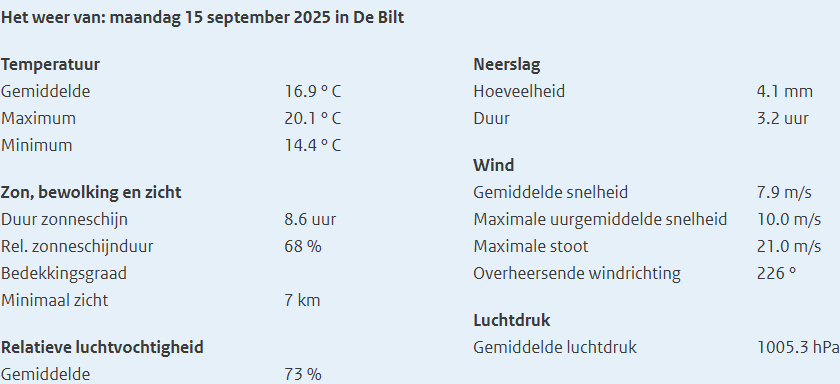
Weer:

Links:
In de geschiedenis

Day of Play 2025

The Day of Play, observed on 11 June, creates a unifying moment at global, national, and local levels to elevate the importance of play.

It signals a call for policies, training, and funding to get play integrated into education and community settings worldwide. Beyond mere recreation, it is a universal language spoken by people of all ages, transcending national, cultural, and socio-economic boundaries. This shared passion fosters a sense of community and national pride. It also fosters resilience, creativity, and innovation in individuals. For children in particular, play helps build relationships and improves control, overcome trauma, and problem-solving. It helps children develop the cognitive, physical, creative, social, and emotional skills they need to thrive in a rapidly changing world. Restricting opportunities for play directly impedes a child’s well-being and development. In educational settings, play-based learning has been recognized as an effective approach to engage students actively in the learning process. It helps make learning more enjoyable and relevant, thereby enhancing motivation and retention of information. Moreover, play is considered to have a positive impact on promoting tolerance, resilience, and facilitating social inclusionconflict prevention, and peacebuilding. In recognition of this, the United Nations Convention on the Rights of the Child has enshrined play as a fundamental right of every child under Article 31. The international day creates a unifying moment at global, national, and local levels to elevate the importance of play. It signals a call for policies, training, and funding to get play integrated into education and community settings worldwide.

Children learn best through play. Play creates powerful learning opportunities across all areas of development – intellectual, social, emotional and physical. Through play, children learn to forge connections with others, build a wide range of leadership skills, develop resilience, navigate relationships and social challenges as well as conquer their fears. When children play, they feel safe. Children play to make sense of the world around them. More generally, play provides a platform for children to express and develop imagination and creativity, which are key skills critical for the technology-driven and innovative world we live in. Playful interactions contribute to the well-being and positive mental health of parents, caregivers and children. When humanitarian crises turn a child’s world upside down, it is in play that children can both find safety and respite from adverse experience while also being able to explore and process their experiences with the world. When children are driven from their homes by war, conflict, and displacement, access to nurturing relationships with parents/caregivers and peers are critical buffers from the effects of violence, distress and other adverse experiences. Play comforts and soothes children. To encourage playful interactions between parents/caregivers and children, governments and other stakeholders need to create an enabling environment. The theme for 2025 International Day of Play is “Choose Play – Every Day”. The theme is a reminder for all of us – governments, businesses, schools and families – to take decisions that embrace and prioritize play for children.

Links:
International Day of Play 11 June

#nzon2025 Noorderzon Festival of Performing Arts & Society 2025

Noorderzon is een jaarlijkse elfdaagse internationale kunstenmanifestatie die plaatsvindt in het Noorderplantsoen en op diverse nabijgelegen locaties in en rondom het centrum van Groningen.

Noorderzon combineert hedendaagse podiumkunsten met een toegankelijk zomerfestival in het Noorderplantsoen. Bezoekers komen niet alleen voor de culturele voorstellingen, maar ook voor de foodtrucks en het samenzijn in het park. Een bijzonder kenmerk van Noorderzon zijn de containervoorstellingen, kleinschalige optredens in compacte ruimtes die populair zijn bij bezoekers vanwege hun intieme sfeer, deze voorstellingen zijn een vast onderdeel van het festivalprogramma.

Links:
Noorderzon

Studium Generale op Noorderzon