The 28th Session of the International Seabed Authority – Part I

The International Seabed Authority (ISA) (French: Autorité internationale des fonds marins) is a Kingston, Jamaica-based intergovernmental body of 167 member states and the European Union established under the 1982 UN Convention on the Law of the Sea (UNCLOS) and its 1994 Agreement on Implementation.

The ISA’s dual mission is to authorize and control development of mineral related operations in the international seabed considered the “common heritage of all mankind” and also protect the ecosystem of the seabed, ocean floor and subsoil in “The Area” beyond national jurisdiction. The ISA is to safeguard the international deep sea, the waters below 200 meters, where photosynthesis is hampered by inadequate light. Governing approximately half of the total area of the world’s oceans, the ISA is to exercise oversight of activities that might threaten biological diversity and harm the marine environment. The Authority operates as an autonomous international organization with its own Assembly, Council and Secretariat.

Since the ISA’s inception in 1994, the Authority has approved over two dozen ocean floor mining exploration contracts in the Atlantic, Pacific and Indian Oceans, with the majority of contracts for exploration in the Clarion-Clipperton Zone between Hawaii and Mexico, where polymetallic nodules contain copper, cobalt and other minerals used to power electric batteries. To date, the Authority has not authorized any commercial mining contracts as it deliberates over regulations amid global calls for a moratorium on deep sea mining. Scientists and environmentalists warn such mining could wreak havoc on the ocean as a carbon sink home to rare and diverse species. The ISA is funded by UNCLOS members and mining contractors and led by Secretary-General Michael Lodge, a British barrister who oversees a 47-member administrative body and has come under criticism for close ties to the mining industry and support for deep sea robotic exploration to develop renewable energy.

The United Nations High Seas Treaty is a legally binding instrument for the conservation and sustainable use of marine biological diversity in areas beyond national jurisdiction. It is an agreement under the UNCLOS and is also known as the Biodiversity Beyond National Jurisdiction treaty or the BBNJ treaty. The text was finalised during an intergovernmental conference at the UN on 4 March 2023 and adopted on 19 June 2023. Both states and regional economic integration organizations can become parties to the treaty.

The treaty addresses four themes:

(1) Marine genetic resources (MGRs), including the fair and equitable sharing of benefits;

(2) area-based management tools (ABMTs), including marine protected areas (MPAs);

(3) environmental impact assessments (EIAs); and (iv) Capacity building and transfer of marine technology (CB&TMT). The area-based management tools and environmental impact assessments relate mainly to conservation and sustainable use of marine biodiversity, while the marine genetic resources and capacity building and transfer of marine technology include issues of economic justice and equity.

Greenpeace called it “the biggest conservation victory ever”. The main achievement is the new possibility to create marine protected areas in international waters. By doing so the agreement now makes it possible to protect 30% of the oceans by 2030 (part of the 30 by 30 target). Though the agreement does not directly address climate change, it also serves as a step towards protecting the ecosystems that store carbon in sediments. The treaty has 75 articles and its main purpose is “to take stewardship of the world’s oceans for present and future generations, care for and protect the marine environment and ensure its responsible use, maintain the integrity of undersea ecosystems and conserve marine biological diversity’s inherent value”.

The treaty recognizes traditional knowledge. It has articles regarding the principle “polluter-pays”, and different impacts of human activities including areas beyond the national jurisdiction of the countries making those activities. The agreement was adopted by the 193 United Nations Member States. Before the treaty can enter into force, it needs to be ratified by at least 60 UN member states. This process is likely to take some time. The former treaty, UNCLOS, was adopted in 1982 and entered into force in 1994. In 2023, UNCLOS is ratified by 167 states and the European Union; however, some states, including the United States, have yet to sign and ratify it.

On 4 March 2023, history was made when the world’s governments finalized a brand new United Nations Treaty that will protect marine life in half the planet that makes up the High Seas – the immense ocean area that lies beyond countries’ national waters. On 19 June 2023, the final High Seas Treaty text was formally adopted. For the High Seas Treaty to have an impact on the water, it must be signed and ratified by at least 60 countries so it can enter into force and become binding international law. The more countries that ratify the Treaty, the more effective it will be. The High Seas Alliance calls on governments to fast-track ratification so the Treaty comes into force in 2025.

The High Seas Treaty opens for signature at the United Nations on 20 September 2023 and will remain open for two years. By signing, governments mark their commitment to ratify the Treaty. The ratification process happens nationally. Once governments have formally consented to the new international law, they need to ensure their own domestic laws are consistent with it. The 60th country to ratify will trigger a 120-day countdown, after which the High Seas Treaty will enter into force. Governments that have ratified the Treaty will meet regularly to agree urgent measures to protect High Seas life, such as establishing marine protected areas and ensuring transparent environmental impact assessments of potentially harmful activities.

Links:
The 28th Session of the International Seabed Authority

Beyond borders: Why new ‘high seas’ treaty is critical for the world

Time is running out for our blue planet -petition | UN Ocean Treaty opens for country signatures – Greenpeace comment

Aanval van Azerbeidzjan op Nagorno-Karabach in 2023

Aan de aanval van Azerbeidzjan op Nagorno-Karabach in 2023 ging een humanitaire crisis van negen maanden vooraf, waarin de enige toegangsweg tot de enclave Nagorno-Karabach, de Laçın-corridor, geblokkeerd was, waardoor er ernstige schaarste aan voedsel, medicijnen en andere goederen ontstond in de enclave.

Nagorno-Karabach is een enclave binnen Azerbeidzjan met één corridor naar Armenië. Formeel behoort dit gebied bij Azerbeidzjan, maar de facto is het sinds het einde van de Sovjet-Unie onafhankelijk. De bevolking bestaat voor het merendeel uit etnische Armeniërs. Op 19 september 2023 braken er gevechten tussen gewapende troepen van Azerbeidzjan en Nagorno-Karabach uit. Aan het eind van die dag werden er 25 doden en 138 gewonden gemeld door de enclave. Er volgde vanuit Westerse landen scherpe kritiek op de Azerbeidzjaanse operatie. Rusland sprak zijn zorgen uit om de escalatie en riep op de wapens neer te leggen. Op 20 september werd op instigatie van Rusland overeengekomen dezelfde dag nog een staakt-het-vuren in te laten gaan op het middaguur die dag (UTC+4). Voorwaarde zou zijn dat het Karabachse leger zal ontwapenen.

Op 21 september begonnen de onderhandelingen tussen de autoriteiten van Azerbeidzjan en Nagorno-Karabach over de toekomst van de regio. Uit vrees voor vervolging en etnische zuiveringen door Azerbeidzjan kwam een vluchtelingenstroom van tienduizenden etnische Armeniërs op gang richting Armenië via de Laçın-corridor, die hiervoor was opengesteld door de Azerbeidzjaanse autoriteiten. Anderhalve week na het Azerbeidsjzaans offensief waren volgens Armeense overheidsmedewerkers ruim 100.000 van de naar schatting 120.000 etnische Armeense bewoners uit Nagorno-Karabach gevlucht. De zelfverklaarde republiek Nagorno-Karabach zal per 1 januari 2024 ophouden te bestaan, zo heeft het bestuur van de Armeense enclave in Azerbeidzjan op 28 september 2023 bekendgemaakt.

Links:
Azerbeidzjan valt betwiste regio Nagorno-Karabach aan, volgens lokale autoriteiten zijn al 25 mensen omgekomen, onder wie enkele burgers

Strijd om Nagorno-Karabach

2023 SDG Summit

The 2023 SDG Summit will take place on 18-19 September 2023 in New York, it will mark the beginning of a new phase of accelerated progress towards the Sustainable Development Goals with high-level political guidance on transformative and accelerated actions leading up to 2030.

Convened by the President of the General Assembly, the Summit will mark the half-way point to the deadline set for achieving the 2030 Agenda and the Sustainable Development Goals. It will be the centerpiece of the High-level Week of the General Assembly. It will respond to the impact of multiple and interlocking crises facing the world and is expected to reignite a sense of hope, optimism, and enthusiasm for the 2030 Agenda.

Links:
2023 SDG Summit

Dag van de Vrede / Day of Peace 2023

De Dag van de Vrede of Wereld Vrede Dag is een jaarlijkse dag ter attentie van de vrede, op 21 september, uitgeroepen door de Verenigde Naties (VN), sinds 1981 (resolutie 36/67).

Het doel is een wereldwijde dag van wapenstilstand en geweldloosheid. De Internationale Dag van de Vrede die door de VN wordt georganiseerd valt samen met de Algemene Vergadering, ieder jaar in september. Sinds 2001 vindt de dag jaarlijks plaats op 21 september (resolutie 55/282).

Thema 2023: “Actions for Peace: Our Ambition for the #GlobalGoals”.

Links:
International Day of Peace

Solar cycle 25

Solar cycle 25 is a solar cycle pattern of sunspot activity, it began in December 2019, with a smoothed minimum sunspot number of 1.8 and is expected to continue until about 2030.

Links:
“Solar Cycle Prediction”. NASA Marshall Space Flight Center

“Solar Cycle Progression”. NOAA Space Weather Prediction Center

“Solar Cycle Prediction”. Solar Cycle Science

NOAA / NWS Space Weather Prediction Center

GEOS imager

Zon

Giant solar eruption seen by Solar Orbiter / Gigantische Eruption auf der Sonne – Mindestens 3.5 Millionen Kilometer Ausdehnung

Minor R1 radio blackout in progress (≥M1 – current: M1.58)

Moderate M2.3 flare from sunspot region 12964

Solar Cycle 25: The Overachiever

Solar cycle: What is it and why does it matter?

Gigantische Struktur auf der Sonne entstanden – Steht ein Sonnensturm bevor?

Parker Solar Probe

Zonnekijkdag

Solar Cycle 25 Progression

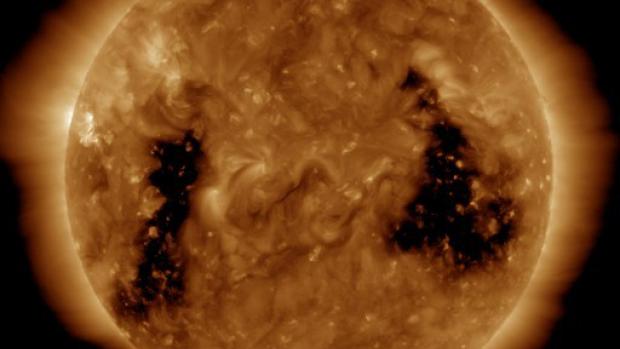
Coronal hole faces Earth

Solar Cycle 25 – NASA

Sunspot Detectives – Zooniverse

Solar maximum: What is it and when will it occur?

NOAA Forecasts Severe Solar Storm; Media Availability Scheduled for Friday, May 10 [2024]

NASA, NOAA Announce That the Sun Has Reached the Solar Maximum Period

Solar Cycle 25 – NASA Science

Agenda – Geomagnetic Storm G4 (Severe)

X-class Flare Activity Observed – 18 January 2026

#IWDP #IDSL Week of Deaf People / Day of Sign Languages 2023

The Week of Deaf People has been celebrated during the last full week of September to recognise that deaf people have our own communities, our own cultures, our own languages, sign languages, which unite them all.

The UN General Assembly has proclaimed 23 September as the International Day of Sign Languages in order to raise awareness of the importance of sign language in the full realization of the human rights of people who are deaf. The resolution establishing the day acknowledges that early access to sign language and services in sign language, including quality education available in sign language, is vital to the growth and development of the deaf individual and critical to the achievement of the internationally agreed development goals. It recognizes the importance of preserving sign languages as part of linguistic and cultural diversity. It also emphasizes the principle of “nothing about us without us” in terms of working with deaf communities.

Theme for 2023: A World Where Deaf People Everywhere Can Sign Anywhere!

Links:
#IWDP #IDSL Week of Deaf People / Day of Sign Languages 2023

We Sign for Human Rights

Day of Sign Languages / Dag van Gebarentalen

2016-07-15, Halfdoof

OV Protest

OV-protest op 23 september 2023: Nee tegen de spitsheffing.

Enkele maanden geleden verscheen in De Volkskrant een interview waarin NS-baas Wouter Koolmees uitlegde dat hij vanaf 2026 een spitsheffing wil invoeren: een verhoging van de prijs van een treinkaartje op basis van het moment waarop je reist. Zo wil hij ervoor zorgen dat het in de spits rustiger wordt. Koolmees wilde geen harde getallen noemen, maar het zou hoe dan ook gaan om ‘tientallen procenten’. ‘Vrijwillig past niemand zijn gedrag aan’, zei hij. Een spitsheffing raakt vooral werkende mensen. Zij hebben geen keuze: zij moeten in de spits naar hun werk! In augustus werd bekend dat de NS in de onderhandelingen met het ministerie van Infrastructuur en Waterstaat toestemming heeft gekregen om niet alleen een spitsheffing in te voeren, maar ook om de prijzen te verhogen met zeven procent bovenop de geschatte inflatie!

Het probleem is niet het gedrag van reizigers, maar de manier hoe de NS sinds de jaren negentig is uitgekleed. Het bedrijf werd verzelfstandigd, ProRail werd losgekoppeld en een systeem van aanbestedingen en concurrentie werd geïntroduceerd. Een spitsheffing gaat de problemen niet oplossen, maar zal wel reizigers raken in hun portemonnee. Als dit onderwerp niet controversieel wordt verklaard, zal de uitkomst van de onderhandelingen tussen het demissionaire kabinet en de NS op 26 september worden behandeld door de Tweede Kamer. De toekomst van het openbaar vervoer gaat ons allemaal aan! Als gevolg van de klimaatcrisis zal het OV bovendien alleen maar belangrijker worden.

Iedereen moet van zich laten horen! Daarom wordt op 23 september 2023 een demonstratie op het Jaarbeursplein in Utrecht georganiseerd:
– Weg met de spitsheffing!
– Weg met de prijsverhogingen!
– Verbeter de arbeidsomstandigheden van het spoorpersoneel! Beperk de gevolgen van onregelmatig werk door verkorting van de werkweek met behoud van loon, meer vrije weekenden en garanties met betrekking tot verlof. Pak de oorzaken van ziekte-uitval aan.
– Goed, toegankelijk en gratis openbaar vervoer! Eenmaking en nationalisering van het spoor met voldoende investeringen!

https://a3veen.tumblr.com/post/728913567236194304/hoop-op-een-teleurstellende-prinsjesdag

Links:
OV-protest

Provincies: kabinet moet enorme prijsstijging regionaal vervoer voorkomen

Parker Solar Probe

De Parker Solar Probe, eerder bekend als Solar Probe+ of Solar Probe Plus, is een Amerikaanse missie naar de Zon door een onbemand ruimtevaartuig.

Deze ruimtesonde werd op 12 augustus 2018 in opdracht van NASA door United Launch Alliance gelanceerd, en zal in de loop van zeven jaar 24 maal langs de Zon vliegen, deels dichterbij dan ooit gedaan is, en daarbij de corona van de Zon observeren. De Parker Solar Probe is onderdeel van het HELEX (Heliophysics Explorers)-onderzoeksprogramma, samen met de Solar Orbiter van de Europese Ruimtevaartorganisatie die naar verwachting in 2019 gelanceerd zal worden. De missie werd eerder “Solar Probe Plus” genoemd omdat het ontwerp is gebaseerd op een eerder ontwerp uit 2005 dat kortweg “Solar Probe” heette. Op 31 mei 2017 werd de ruimtesonde hernoemd naar Eugene Parker, een astrofysicus van de Universiteit van Chicago.

Links:
NASA’s Parker Solar Probe

NASA spacecraft hopes to catch a solar flare as it zips past the sun

International SUNday 2018

Solar cycle 25

Zon