Vroege Vogels Radio | 17 september 2023 (Radio NPO 1)

Vroege Vogels is een live-radioprogramma, tv-programma en online community van BNNVARA over natuur en milieu.

In het radioprogramma wordt het gesproken woord omlijst door licht klassieke muziek en salonmuziek. Het radioprogramma werd in 1978 voor het eerst uitgezonden door de VARA en is een van de langst lopende en best beluisterde radioprogramma’s van de publieke omroep. Het wordt elke zondagmorgen uitgezonden tussen 07:00 en 10:00 op NPO Radio 1. De beginmuziek is een bewerking van Vivaldi’s “Piccolo Concerto in C major” (RV 443).

Vroege Vogels Radio op NPO Radio 1 wordt zondag 17 september 2023 gepresenteerd door Menno Bentveld vanuit Naturalis. Vanuit museum Naturalis te Leiden wordt een nieuw initiatief gelanceerd om zoveel mogelijk leerlingen in het basisonderwijs kennis te laten maken met tien dieren en planten in hun eigen omgeving: Expeditie 10. En verder in de uitzending: vleermuizen op het schoolplein, egels tellen in de nacht en speurtocht naar schadelijke stoffen. De column is deze week van Jelle Reumer.

Links:
Vroege Vogels (na afloop terugluisteren)

Vroege Vogels presenteert Expeditie 10

NPO Radio 1 live stream

International Astronautical Congress 2023

Every year, the International Astronautical Federation with the support of the International Academy of Astronautics and the International Institute of Space Law (IISL), holds the International Astronautical Congress (IAC) which is hosted by one of the national society members of the IAF.

They are an annual meeting of the actors in the discipline of space, and are generally held in late September or early October. They consist of plenary sessions, lectures and meetings. The IAC is attended by the agency heads and senior executives of the world’s space agencies. As the Second World War came to an end, the United States and the Soviet Union held different and competing political worldviews. As the Cold War began to take shape, communication between the two countries became less frequent.

Both countries turned their focus to achieving military superiority over the other. Six years after the Iron Curtain fell, the International Astronautical Federation (IAF) was formed by scientists from all over Europe in the field of space research in order to collaborate once more. During the years of the Space Race, the IAF was one of the few forums where members of both East and West Europe could meet during the annual International Astronautical Congresses.

Links:
International Astronautical Congress

SDG Digital Day 2023

The International Telecommunication Union (ITU), the United Nations Development Programme (UNDP) and partners from the United Nations system and beyond will convene on 17 September 2023 for SDG Digital Day in New York.

SDG Digital Day aims to put data and digital technologies front and centre to catalyse greater action on all 17 – from eradicating poverty and reducing inequalities to ensuring access to clean water and sanitation and providing affordable and clean energy for everyone worldwide. The SDGs – also known as the Global Goals – form the backbone of the United Nations’ 193 Member States agenda to make our planet peaceful, prosperous, and safe for all people. The SDG Digital Day will target participants of the UN General Assembly and will be open to external participants, including international organizations and UN system agencies, development organizations, private-sector stakeholders, as well as civil society including youth, and academic leaders. Participants will take stock of achievements and gaps in delivering on the Global Goals and provide digital solutions to help achieve them by 2030. Learn more about the 17 SDGs and their 169 targets.

SDG Digital Day will:

  • Demonstrate how data and digital technologies can be leveraged to accelerate progress towards all SDGs and associated targets.
  • Showcase high-impact, sustainable, digital-based solutions with game-changing potential to accelerate progress on the SDGs.
  • Mobilize new commitments for the SDGs, leveraging ITU’s online pledging platform for the Partner2Connect (P2C) Digital Coalition.
  • Provide clear pathways to scale collaboration and transformative action.
  • Engage youth as both solution providers and solution partners to win the SDG race by 2030.

The SDG Digital Day – powered by ITU and UNDP, for the UN System – will be co-led by Member States, SDG Advocates, and P2C Champions, and with the support of the Boston Consulting Group (BCG) as our SDG Digital Day Knowledge Partner.

Links:
SDG Digital Day

World Patient Safety Day / Werelddag voor Patiëntveiligheid 2023

Patient safety is a discipline that emphasizes safety in health care through the prevention, reduction, reporting, and analysis of medical error that often leads to adverse effects.

The frequency and magnitude of avoidable adverse events experienced by patients was not well known until the 1990s, when multiple countries reported staggering numbers of patients harmed and killed by medical errors. Recognizing that healthcare errors impact 1 in every 10 patients around the world, the World Health Organization calls patient safety an endemic concern. Indeed, patient safety has emerged as a distinct healthcare discipline supported by an immature yet developing scientific framework. There is a significant transdisciplinary body of theoretical and research literature that informs the science of patient safety.

No one should be harmed in health care. Yet thousands of patients across the world suffer avoidable harm, or are put at risk of injury, while receiving health care every single day. The 72nd World Health Assembly adopted resolution WHA 72.6 ‘Global action on patient safety’ on 25 May 2019. The resolution recognizes patient safety as a global health priority and endorses the establishment of World Patient Safety Day to be observed annually on 17 September.

World Patient Safety Day calls for global solidarity and concerted action by all countries and international partners to improve patient safety. Furthermore, the Day brings together patients, families, caregivers, communities, health workers, health care leaders and policy-makers to show their commitment to patient safety. The theme of the very first World Patient Safety Day in 2019 was aimed at establishing the legacy of the day and highlighting the importance of prioritizing and addressing patient safety globally by all stakeholders. From 2020 and in the coming years, a new theme will be selected each year, raising awareness and promoting positive change around patient safety priority areas.

Links:
World Patient Safety Day

Double Asteroid Redirection Test #DARTMission #PlanetaryDefender #PlanetaryDefense DART mission

Double Asteroid Redirection Test (DART) is a NASA space mission aimed at testing a method of planetary defense against near-Earth objects (NEO).

It will deliberately crash a space probe into the double asteroid Didymos to test whether the kinetic effect of a spacecraft impact could successfully deflect an asteroid on a collision course with Earth. DART is a joint project between NASA and the Johns Hopkins Applied Physics Laboratory (APL), administered by NASA’s Planetary Defense Coordination Office, with several NASA laboratories and offices providing technical support. International partners, such as the space agencies of Europe, Italy, and Japan, are contributing to related or subsequent projects. In August 2018, NASA approved the project to start the final design and assembly phase. The launch is planned for on 24 November 2021, at 06:20 UTC, with collision slated for September 26, 2022, 23:14 (UTC).


Infograph

Links:
DART Mission

Double Asteroid Redirection Test (DART) Mission

Agenda – DARTMission

Collision : Watch Party & Live Stream

AsteroidDay

New Post-DART Collision Period for the Didymos System: Evidence for Anomalous Orbital Decay

#FridaysForFuture Schoolstrike for climate

The school strike for climate (Swedish: Skolstrejk för klimatet, also known variously as Fridays for Future (FFF), Youth for Climate and Youth Strike 4 Climate) is an international movement of school students who take time off from class to participate in demonstrations to demand action to prevent further global warming and climate change.

Publicity and widespread organising began after Swedish schoolgirl, Greta Thunberg, staged a protest in August 2018 outside the Swedish Riksdag (parliament), holding a sign that read “Skolstrejk för klimatet” (“School strike for the climate”). A global strike on 15 March 2019 gathered more than one million strikers in 2,200 strikes organised in 125 countries. On 24 May 2019, in the second global strike, 1,600 events across 150 countries drew hundreds of thousands of protesters. The events were timed to coincide with the 2019 European Parliament election. The 2019 Global Week for Future was a series of 4,500 strikes across over 150 countries, focused around Friday 20 September and Friday 27 September. Likely the largest climate strikes in world history, the 20 September strikes gathered roughly 4 million protesters, many of them schoolchildren, including 1.4 million in Germany. On 27 September, an estimated two million people participated in demonstrations worldwide, including over one million protesters in Italy and several hundred thousand protesters in Canada.

Links:
Youth4Climate

SchoolStrike4Climate

Schoolstaking voor het klimaat / Fridays for Future

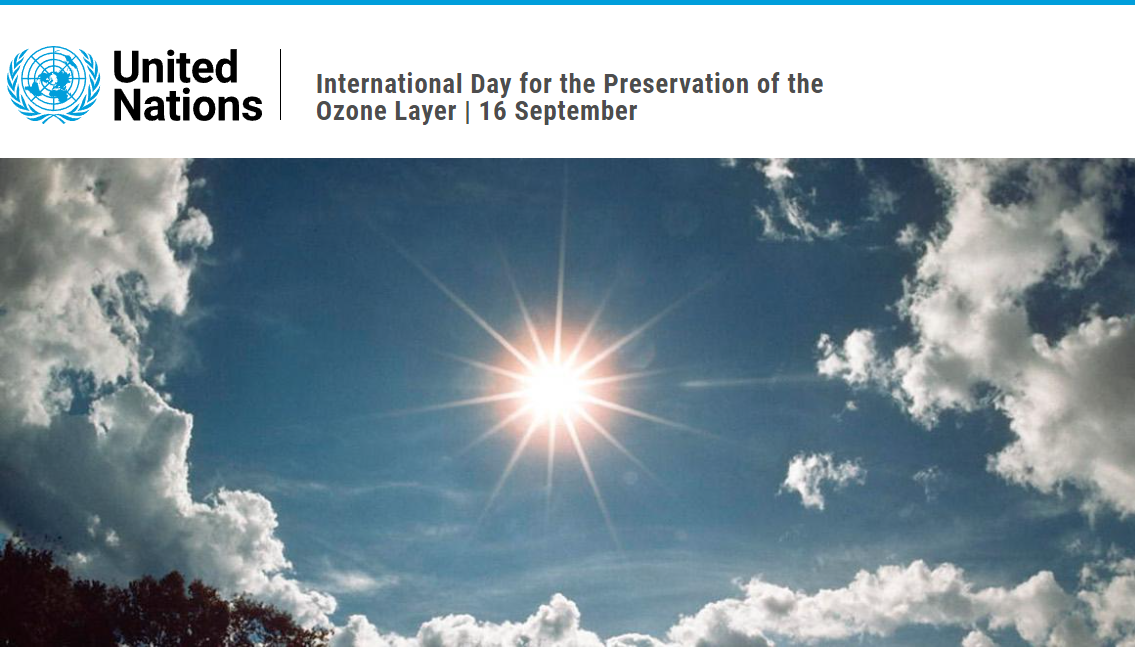
Dag voor het Behoud van de Ozonlaag / Day for the Preservation of the Ozone Layer 2023

De ozonlaag is een dun laagje gas dat ligt tussen de 15 en 50 kilometer hoogte en als een ring om onze aarde zit met als belangrijkste eigenschap; het beschermt ons tegen de schadelijke straling (ultraviolette straling) die afkomstig is van de zon.

Zonder de ozonlaag is leven op aarde niet mogelijk. Door vervuiling wordt de ozonlaag steeds dunner. Hierdoor lopen mensen meer kans op huidkanker en staar. Om gezamenlijk te proberen het ozongat niet groter te laten worden werd op 22 maart 1985 het Verdrag van Wenen aangenomen dat door 28 landen ondertekend. Op 16 september 1987 heeft dit geleid tot het opstellen van het Montrealprotocol (Montreal Protocol on Substances that Deplete the Ozone Layer). Het is geratificeerd door elke lidstaat van de Verenigde Naties (197); de Europese Unie, alle 193 leden van de Verenigde Naties, Vaticaanstad, Cookeilanden en Niue. Het Montrealprotocol laat zien dat mondiaal afspraken maken over het milieubeleid duidelijk zin heeft. We moeten nog wel een tijd wachten voordat de ozonlaag helemaal hersteld is maar vermoedelijk zal tegen 2050 de ozonlaag hersteld zijn tot het niveau van 1960. Plak er nog een 20 tot 30 jaar aan vast en dan moet de ozonlaag toch praktisch hersteld zijn. Ozongat boven Antarctica zal dan ook dicht zijn.

Links:
Day for the Preservation of the Ozone Layer, 16 September