World Immunization Week 2024

World Immunization Week is a global public health campaign to raise awareness and increase rates of immunization against vaccine-preventable diseases around the world, it takes place each year during the last week of April (24th – 30th).

Immunization can protect against 25 different infectious agents or diseases, from infancy to old age, including diphtheria, measles, pertussis, polio, tetanus and COVID-19. The World Health Organization (WHO) estimates active immunization currently averts 2 to 3 million deaths every year. However, 22.6 million infants worldwide are still missing out on basic vaccines, mostly in developing countries. Inadequate immunization coverage rates often result from limited resources, competing health priorities, poor management of health systems and inadequate surveillance. The ultimate goal of World Immunization Week is for more people – and their communities – to be protected from vaccine-preventable diseases. World Immunization Week sprung out of the efforts taking place across different countries and regions for a week-long immunization awareness commemoration. World Immunization Week is one of eleven official campaigns marked by the WHO, along with World Health Day, World Blood Donor Day, World No Tobacco Day, World Tuberculosis Day, World Malaria Day, World Patient Safety Day, World Hepatitis Day, World Antimicrobial Awareness Week, World Chagas Disease Day and World AIDS Day.

Links:
24 to 30 April is World Immunization Week

Humanly Possible: Saving lives through immunization

Uitbraken kinkhoest, mazelen en bof door niet vaccineren van kinderen

2024-04-12, Lief dagboek

Vrijdag; Wat eten we vandaag?: Peter Higgs; Eiwittransitie; Europese Parlementsverkiezingen; Day for Street Children; Dag van de Ruimtevaart; Klimaatzaak; Kappen Met Kolen.

Deze afbeelding heeft een leeg alt-attribuut; de bestandsnaam is dagboek.png

Wat eten we vandaag?:

Tomatensoep, klik op afbeelding voor origineel

Knipselkrant:


Agenda:

Weer:

Deze afbeelding heeft een leeg alt-attribuut; de bestandsnaam is 50813896361_463cbfec7c.jpg

Links:
In de geschiedenis

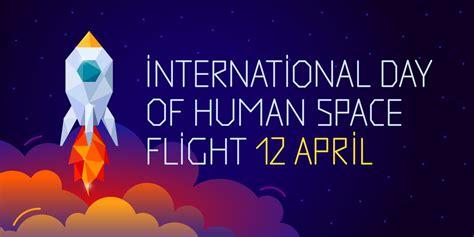
#HumanSpaceFlightDay / Dag van de Ruimtevaart 2024

The UN General Assembly, in its resolution A/RES/65/271 of 7 April 2011, declared 12 April as the International Day of Human Space Flight “to celebrate each year at the international level the beginning of the space era for mankind, reaffirming the important contribution of space science and technology in achieving sustainable development goals and increasing the well-being of States and peoples, as well as ensuring the realization of their aspiration to maintain outer space for peaceful purposes.”

12 April 1961 was the date of the first human space flight, carried out by Yuri Gagarin, a Soviet citizen. This historic event opened the way for space exploration for the benefit of all humanity. The General Assembly expressed its deep conviction of the common interest of mankind in promoting and expanding the exploration and use of outer space, as the province of all mankind, for peaceful purposes and in continuing efforts to extend to all States the benefits derived there from.

Links:
Day of Human Space Flight 12 April

World Space Week

Megaraket na 10 jaar startklaar: ‘Laat op het feestje, maar de slingers hangen nog’

#StreetChildrenDay Day for Street Children 2024


April 12th is Day for Street Children: a special day recognising the strength and resilience of millions of street children around the world.

Celebrated globally since 2012, it is an opportunity to recognise their humanity, dignity and defiance in the face of unimaginable hardships. The Consortium for Street Children wants to rally governments and individuals worldwide to work together to ensure their rights are protected no matter who they are and where they live. Join the quest to recognise the potential in every street child.

Links:
International Day for Street Children

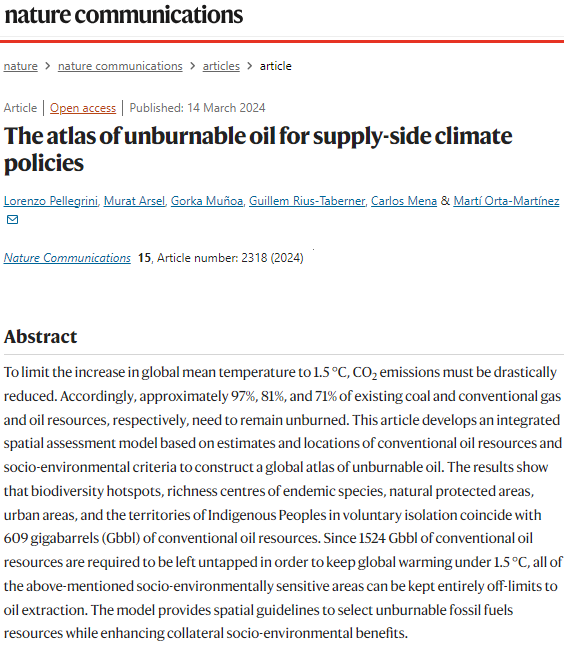
The atlas of unburnable oil for supply-side climate policies – publication

To limit the increase in global mean temperature to 1.5 °C, CO2 emissions must be drastically reduced, accordingly, approximately 97%, 81%, and 71% of existing coal and conventional gas and oil resources, respectively, need to remain unburned.

The article “The atlas of unburnable oil for supply-side climate policies” develops an integrated spatial assessment model based on estimates and locations of conventional oil resources and socio-environmental criteria to construct a global atlas of unburnable oil. The results show that biodiversity hotspots, richness centres of endemic species, natural protected areas, urban areas, and the territories of Indigenous Peoples in voluntary isolation coincide with 609 gigabarrels (Gbbl) of conventional oil resources. Since 1524 Gbbl of conventional oil resources are required to be left untapped in order to keep global warming under 1.5 °C, all of the above-mentioned socio-environmentally sensitive areas can be kept entirely off-limits to oil extraction. The model provides spatial guidelines to select unburnable fossil fuels resources while enhancing collateral socio-environmental benefits.

Links:
Olie- en gasreserves zeepbel? ‘Laten zitten als we klimaatdoelen willen halen’

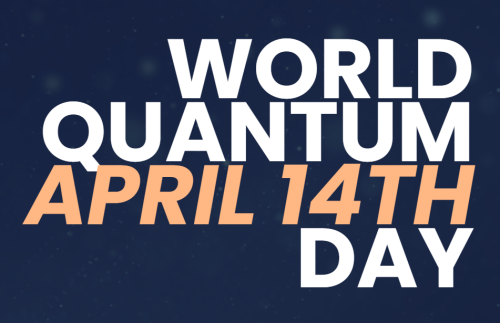
#WorldQuantumDay Wereld Quantum Dag 2024

Wereld Quantum Dag (WQD), ook wel Wereldkwantumdag en World Quantum Day, is een internationaal evenement dat elk jaar op 14 april wordt gevierd en heeft als doel het publieke begrip van kwantumwetenschap en kwantumtechnologie over de hele wereld te bevorderen.

De datum 14 april werd gekozen omdat “4.14” de afgeronde eerste 3 cijfers van de constante van Planck zijn (4,14×10⁻¹⁵ eV·s), die een belangrijke rol speelt in kwantummechanische effecten. Het wereldwijde initiatief wordt ondersteund door het Wereld Quantum Dag coördinatie team, samen met vertegenwoordigers uit meer dan 65 landen.

Links:
World Quantum Day

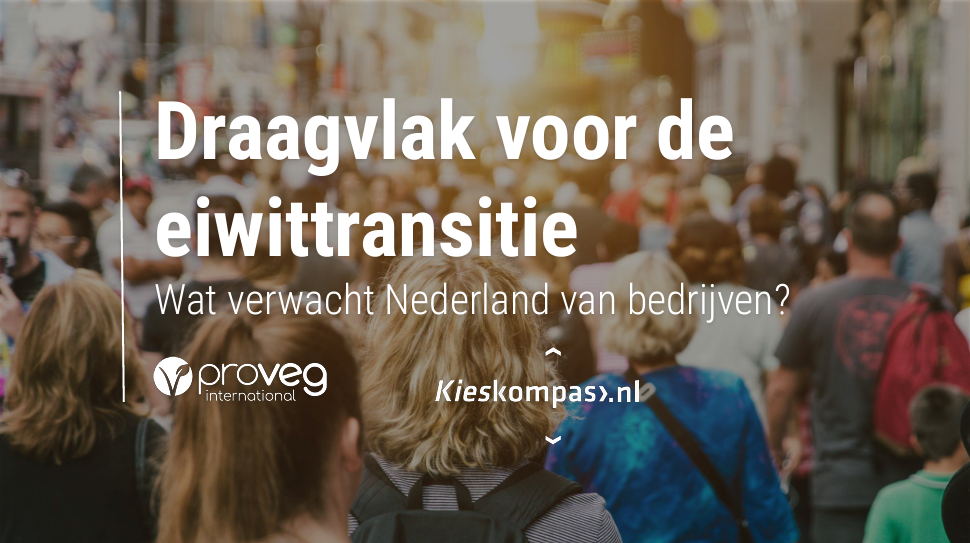
Draagvlak voor de eiwittransitie – publicatie

De meeste Nederlanders staan positief tegenover de transitie naar een meer plantaardig voedingspatroon en verwachten dat supermarkten, cateraars en voedselfabrikanten hiervoor stappen ondernemen, zoals het goedkoper maken van plantaardige producten en het vervangen van dierlijke ingrediënten door plantaardige.

Dat blijkt uit het rapport “Draagvlak voor de eiwittransitie” van ProVeg in samenwerking met Kieskompas. Kieskompas legde voor dit onderzoek vragen voor aan ruim 9000 stemgerechtigde Nederlanders. Deze toetsen in hoeverre de deelnemers voorstander zijn van de eiwittransitie en de maatregelen die genomen kunnen worden om die te bevorderen. Hieruit blijkt een breed draagvlak voor uiteenlopende interventies die supermarkten, foodservice bedrijven en voedselfabrikanten kunnen inzetten om de overgang naar een meer plantaardig voedingspatroon te versnellen.

Links:
Meerderheid Nederlanders wil dat voedselbedrijven zich inzetten voor de eiwittransitie

Eiwittransitie: Nederlanders verwachten inzet van foodbedrijven

2024-04-11, Lief dagboek

Donderdag; Wat eten we vandaag?: Tax The Rich; Assange; Wereld Parkinson Dag; A3 verhuist naar Amsterdam; Aardbeving Aardgaswinning Groningen; Food for Thought; Mijn Europa?.

Deze afbeelding heeft een leeg alt-attribuut; de bestandsnaam is dagboek.png

Wat eten we vandaag?:

Goulashsoep, klik op afbeelding voor origineel

Knipselkrant:


Agenda:

Weer:

Deze afbeelding heeft een leeg alt-attribuut; de bestandsnaam is 50813896361_463cbfec7c.jpg

Links:
In de geschiedenis