
In de geschiedenis
Links:
Wikipedia

Links:
Wikipedia

With ever-growing needs for minerals that are critical for renewable energy technologies, Secretary-General António Guterres is leveraging the United Nations’ convening power to bring together a diverse group of governments and other stakeholders across the entire minerals value chain to develop a set of global common and voluntary principles to safeguard environmental and social standards and embed justice, in the energy transition.
A Panel on Critical Energy Transition Minerals — co-chaired by Ambassador Nozipho Joyce Mxakato-Diseko of South Africa and Director-General for Energy Ditte Juul Jørgensen of the European Commission — will address issues relating to equity, transparency, investment, sustainability and human rights. Limiting global warming to 1.5 degrees Celsius, to avert the worst impacts of climate change, will depend on the sufficient, reliable and affordable supply of critical energy transition minerals such as copper, lithium, nickel, cobalt and rare earth elements, which are essential components of clean energy technologies – from wind turbines and solar panels to electric vehicles and battery storage. At COP28, governments agreed to triple renewable energy capacity by 2030. There is no pathway to achieving this goal without a significant increase of supply of critical energy transition minerals. According to the International Energy Agency, mineral demand for clean energy applications is set to grow by three and a half times by 2030 on the pathway to reaching global net zero carbon dioxide emissions by 2050. Developing countries with large reserves of critical energy transition minerals have an opportunity to transform and diversify their economies, create green jobs, and foster sustainable local development. However, mineral resource development has not always met this promise.
Without proper management, increased demand for these minerals risks perpetuating commodity dependence, exacerbating geopolitical tensions, and poses environmental and social challenges with adverse impacts on sustainable development including on livelihoods, the environment, health, human security and human rights. Responding to calls from developing countries for globally agreed guidance to ensure responsible, fair and just value chains, the UN-convened Panel brings together governments, intergovernmental and international organizations, industry, and civil society to build trust, guide the just transition and accelerate the race to renewables. The panel builds on existing UN initiatives, particularly the Working Group on Transforming the Extractive Industries for Sustainable Development and its flagship initiative on ‘Harnessing Critical Energy Transition Minerals for Sustainable Development’ and will draw from existing standards and initiatives to strengthen and consolidate existing efforts.
Links:
UN Secretary-General appoints Panel on Critical Energy Transition Minerals
Agenda 30-11-2023 – #COP28 2023 United Nations Climate Change Conference
Lost in Europe, a cross-border journalism project investigating missing child migrants in Europe has uncovered a shocking figure of 51,433 children who disappeared after arriving in European countries between 2021 and 2023.
Over the past few months, Lost in Europe has gathered data from various European countries, focusing on the disappearances of unaccompanied minors. Specifically, their analysis encompasses 2021, 2022, and 2023, categorising the missing minors by their country of origin, gender, and age. Out of 27 EU countries, plus Moldova, Norway, the UK, and Switzerland, only 20 responded to their inquiries, and just 13 provided data. According to the available data, Italy has the highest number of registered missing unaccompanied minors, with 22,899, followed by Austria (20,077), Belgium (2,241), Germany (2,005), and Switzerland (1,226). The number of missing children may be even higher because the data is often inconsistent and incomplete, and many countries in Europe do not even collect data on missing unaccompanied minors. These figures have been described as “worrying” by Aagje Ieven, Secretary General of Missing Children Europe.
“The increased number of reports on missing unaccompanied minors serves as a sharp reminder of the giant iceberg that looms beneath the surface,” Ieven told Lost in Europe. Previously, in 2021, Lost in Europe found that at least 18,000 unaccompanied minors had disappeared after arriving in Europe between 2018 and 2020. Their latest data in 2024 shows that the numbers have substantially increased. Lost in Europe’s findings are published today in multiple European media such as NRC, CNN, ANSA, ARD/rbb, De Standaard, Knack, Noteworthy, and Εfimerida ton Syntakto. These shocking findings underscore the seriousness of the issue, with thousands of children missing and their whereabouts unknown. Stay tuned for updates as Lost in Europe continues to delve into the complexities of this issue. Access to the data gathered by Lost in Europe can be found via this public Excel link, which clearly outlines all the data.
Links:
More than 50,000 unaccompanied child migrants have gone missing after arriving in Europe

In 1993 riepen de Verenigde Naties de datum 3 mei uit tot de jaarlijkse Dag van de Persvrijheid om de beginselen van de persvrijheid onder de aandacht van het publiek en regeringsleider
Nog veel journalisten worden immers om hun uitingen bedreigd, mishandeld, vermoord of in gevangenschap genomen. Het idee voor deze Internationale Dag van de Persvrijheid was afkomstig van de Algemene Conferentie van de UNESCO van 1991. Daar werd erkend dat een vrije, pluriforme en onafhankelijke pers een essentiëel onderdeel is van elke democratische samenleving.
World Press Freedom Day Conference
2024 World Press Freedom Index – journalism under political pressure
Emerg
Extinction Rebellion (XR) breidt Stop Fossiele Subsidies acties uit naar Europa en blokkeert op zaterdag 4 mei 2024 een essentiële verkeersader in Brussel.
Op zaterdag 4 mei bundelen klimaatactivisten uit Nederland en België hun krachten en blokkeren samen een belangrijke verkeersader in Brussel om een eind aan de fossiele subsidies te eisen. Sinds 6 april wordt in heel Europa op elke eerste zaterdag van de maand actie gevoerd tegen de gigantische belastingkortingen die overheden en de EU verstrekken aan de fossiele industrie. In de EU gaat dit om een bedrag van minstens €400 miljard euro per jaar. Steeds meer mensen komen in opstand tegen de jaarlijks honderden miljarden euro Europese fossiele subsidies waarmee de klimaat- en ecologische crisis wordt aangejaagd. Op 6 april voerden klimaatactivisten in 13 landen in Europa actie, het begin van een enorme internationale beweging die nationale overheden en de EU tot de orde roept. Op zaterdag 4 mei 2024 vertrekken bussen gevuld met bezorgde burgers vanuit heel Nederland naar de hoofdstad van de EU voor een blokkade samen met XR België. Begin februari presenteerde de Nederlandse overheid afbouwplannen voor de fossiele subsidies. Er was beloofd om met drie scenario’s van 2, 5 en 7 jaar te komen, maar er werd uiteindelijk slechts één teleurstellend scenario gepresenteerd, waarin de afbouw niet voor 2030 of zelfs 2035 gerealiseerd wordt. De overheid beweert dat een groot deel van de fossiele subsidies moeilijk af te bouwen zijn door Europese afspraken. XR stelt dat enkele Europese landen samen de koploper-positie moeten pakken en direct gezamenlijk moeten starten met het afbouwen van deze fossiele subsidies, zodat de rest van de EU hun voorbeeld kan volgen. Voortbouwend op het succes van de A12-blokkades bundelen 30 klimaatbewegingen uit 15 Europese landen nu hun krachten. Klimaatactivisten in heel Europa strijden in de eerste United for Climate Justice (UCJ) campagne tegen de Europese fossiele subsidies. Ze eisen van hun overheden en van de EU dat er per direct een eind komt aan alle fossiele subsidies.
Op 200 km van de A12 in Den Haag blokkeren we vandaag de tunnelbak van de Rue Belliard in Brussel. Daar eisen we samen met bewegingen uit heel Europa een eind aan alle Europese fossiele subsidies. Alleen in Europa al gaat dat om minstens 400 miljard euro per jaar. pic.twitter.com/57lL8LV6Ep
— Extinction Rebellion Nederland (@NLRebellion) May 4, 2024
Links:
Extinction Rebellen Nederland en België blokkeren Brussel
Klimaatenquête: meeste Nederlanders tegen fossiele subsidies
Oproep om niet te maaien in mei: ‘Weg met netheidssyndroom’.
In de Verenigde Staten, België en het Verenigd Koninkrijk kennen ze het al langer: de actie ‘Maai mei niet’. De Bijenstichting, Flora van Nederland en Stichting Steenbreek roepen op om ook in Nederland niet te maaien in mei. Honderden gemeentes en duizenden tuineigenaren laten daar hun grasmaaier in mei even binnen staan zodat de natuur haar gang kan gaan. Gevolg: planten en bloemen komen door het gazon naar boven en bijen, kevers, vlinders en hommels hebben daardoor meer voedsel tot hun beschikking.
Lin
The Ultimate Guide to No Mow May

Samen één maand geen sociale media, wat zou dat met jou doen?
Grote kans dat jij meer tijd doorbrengt op sociale media dan je eigenlijk zou willen. En je bent niet de enige. Meer dan 4 miljoen Nederlanders zijn namelijk ontevreden over hun sociale mediagebruik en willen er regelmatig mee stoppen, blijkt uit het onderzoek ‘Social media onderzoek 2024‘. Om jou dat extra zetje te geven organiseert Collectief Hier Mei Social Vrij. Een maand geen sociale media is een ideale manier om even afstand te nemen, nieuwe gewoontes te ontwikkelen en simpelweg te ervaren wat het met je doet. De usual suspects zijn natuurlijk Tiktok, Twitter, Facebook, Instagram, BeReal en LinkedIn. Voor de meesten vallen YouTube, Pinterest & Snap hier ook onder, afhankelijk van hoe je het gebruikt. En sommigen zullen WhatsApp aan het lijstje willen toevoegen. Wat Collectief Hier betreft is het niet zwart-wit. Het is jouw uitdaging. Als je eerlijk naar je eigen gewoontes en je schermtijd kijkt, weet jij het antwoord waarschijnlijk wel! Er zijn nogal wat voordelen. Je zult waarschijnlijk minder stress ervaren, meer tijd overhouden, beter slapen, meer echte verbindingen aangaan met vrienden, echt aanwezig zijn als je met je partner of kinderen bent en met meer focus werken. Het mooie is: ieders ervaring is anders. Ga de uitdaging aan en ontdek wat een maand lang zonder social media jou brengt!
Links:
Mei Social Vrij
Mei Social Vrij: Leg jij vanaf morgen een maand je telefoon weg?
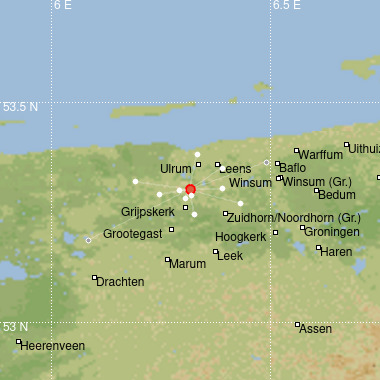
Datum en tijd (UTC):
2024-04-29 22:48:45
Latitude:
53.302 °
Longitude:
6.316 °
Diepte:
3.0 km
Type:
Geïnduceerde aardbeving
Plaats:
Kommerzijl
Magnitude:
1.8
Links:
KNMI
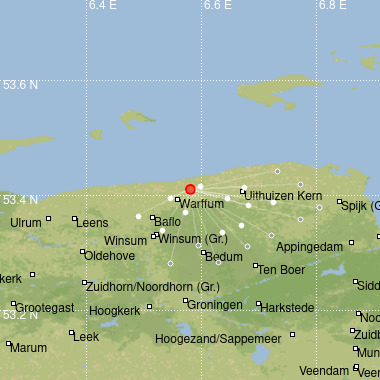
Datum en tijd (UTC):
2024-04-29 11:42:14
Latitude:
53.409 °
Longitude:
6.580 °
Diepte:
3.0 km
Type:
Geïnduceerde aardbeving
Plaats:
Usquert
Magnitude:
1.5
Links:
KNMI
Maandag; Wat eten we vandaag?: Aardbeving Groningen; studentenprotesten USA tegen Gaza oorlog; A3veen.nl – dag van oprichting; OPCW dag; Liberties’ Media Freedom Report; Radar: Het medicijntekort; Cruiseschepen op LNG ‘schoon’?.

Wat eten we vandaag?:

Knipselkrant:
Agenda:
Weer:

Links:
In de geschiedenis