NASA’s Europa Clipper Mission

Europa Clipper (previously known as Europa Multiple Flyby Mission) is a space probe in development by NASA.

Planned for launch aboard a Falcon Heavy in October 2024 (the 21-day launch window period opens on October 10, 2024), the spacecraft is being developed to study the Galilean moon Europa through a series of flybys while in orbit around Jupiter, it is the largest spacecraft NASA has ever developed for a planetary mission. This mission is a scheduled flight of the Planetary Science Division, designated a Large Strategic Science Mission, and funded under the Planetary Missions Program Office‘s Solar System Exploration program as its second flight. It is also supported by the new Ocean Worlds Exploration Program. Europa Clipper will perform follow-up studies to those made by the Galileo spacecraft during its eight years (1995 – 2003) in Jupiter orbit, which indicated the existence of a subsurface ocean underneath Europa’s ice crust. Plans to send a spacecraft to Europa were initially conceived with projects such as Europa Orbiter and Jupiter Icy Moons Orbiter, in which a spacecraft would be injected into orbit around Europa. However, due to the adverse effects of radiation from Jupiter’s magnetosphere in Europa orbit, it was decided that it would be safer to inject a spacecraft into an elliptical orbit around Jupiter and make 44 close flybys of the moon instead. The mission began as a joint investigation between the Jet Propulsion Laboratory (JPL) and the Applied Physics Laboratory (APL), and will be built with a scientific payload of nine instruments contributed by JPL, APL, Southwest Research Institute, University of Texas at Austin, Arizona State University and University of Colorado Boulder. The upcoming mission complements ESA‘s Jupiter Icy Moons Explorer launched in 2023, which will fly-by Europa twice and Callisto multiple times before moving into orbit around Ganymede. The spacecraft will use gravity assists from Mars in February 2025 and Earth in December 2026, before arriving at Europa in April 2030. NASA will provide live coverage of prelaunch and launch activities for Europa Clipper, the agency’s mission to explore Jupiter’s icy moon Europa. NASA now is targeting launch no earlier than 18:06 CEST, Monday, Oct. 14, on a SpaceX Falcon Heavy rocket from Launch Complex 39A at NASA’s Kennedy Space Center in Florida.

Links:
NASA’s Europa Clipper Mission

Europa Clipper

The search for life on Jupiter’s moon Europa – the Europa Clipper Mission

8 Things to Know About NASA’s Mission to an Ocean Moon of Jupiter

NASA, SpaceX Secure Europa Clipper Ahead of Hurricane (Milton)

Julian Assange : UK court extradition decision

Links:
The International Federation of Journalists, representing more than 600,000 journalists worldwide, calls for Julian Assange’s immediate release

We are deeply frustrated by the hurdles our staff & other trial observers have faced

Julian Assange can appeal his extradition to the U.S., a British court has ruled

Julian Assange wins High Court bid to appeal against extradition to US over spying charges

#GenerationRestoration Wereld Milieu Dag / World Environment Day 2024

Door UNEP, het milieuprogramma van de Verenigde Naties, is 5 juni ingesteld als ‘Wereldmilieudag‘ (World Environment Day).

Wereldmilieudag wordt sinds 1973 jaarlijks door de Verenigde Naties georganiseerd. De inzet is om overheden en bevolking stil te laten staan bij ons milieu. Deze speciale dag moet het bewustzijn hierover verbeteren. Er is voor 5 juni gekozen omdat op die dag in 1972 de internationale milieuconferentie begon die ook bekendstaat als het United Nations Environment Programme. Elk jaar organiseert een bepaalde gaststad in steeds weer een ander land de vergadering. Deze dag heeft verwantschap met de Dag van de Aarde.

Links:
World Environment Day 5 June

World Environment Day

#worldenvironmentday – LinkedIn

Al een jaar lang hitterecords: 1,5 graden opwarming komt gevaarlijk dichtbij

Special Address on Climate Action by Secretary-General António Guterres / There is an exit off ‘the highway to climate hell’, Guterres insists

Dag van de Jazz / #JazzDay 2024 (TV webcast)

Jazz is een op improvisatie gebaseerde muziekstijl die beïnvloed is door West-Afrikaanse ritmes en ontstaan is in New Orleans uit een kruisbestuiving van ragtime en blues, folk, negrospirituals en Franse marsmuziek.

Oorspronkelijk betekende het woord jazz een “zeer energieke dans”. Jazz werd in de beginjaren door het grote publiek niet erg geaccepteerd, vooral omdat deze soort muziek geassocieerd werd met losse zeden en een lage sociale status. Toen blanke en gemengde jazzorkesten vanaf de jaren 1930 deze muziek begonnen te spelen, werd het ook voor blanken een aanvaarde vorm van entertainment. De swingperiode die toen begon betekende een hoogtepunt in de populariteit van jazz, iets dat voornamelijk te danken was aan het feit dat jazz toen nog steeds uitsluitend dansmuziek was. Toen jazz vanaf de jaren vijftig evolueerde naar meer experimentele muzikale vormen, en vanwege de opkomst van opwindende dansmuziek zoals rock-‘n-roll, ging de verkoop van jazzplaten sterk achteruit. De jazz is echter gebleven, en blijft zich vernieuwen. Dit artikel geeft een overzicht van de jazzgeschiedenis vanaf ragtime en hotjazz tot de fusionstijlen van de laatste decennia. In 2011 besloot UNESCO dat het tijd werd voor een Internationale Dag van de Jazz (International Jazz Day) om ook de jeugd te enthousiasmeren voor deze inspirerende muziekstroming. De drijvende krachten achter Internationale Jazz Day zijn Audrey Azoulay, UNESCO-directeur-generaal, en de legendarische jazzpianist en componist Herbie Hancock. Het doel van deze dag is de positieve boodschap van jazz te verspreiden. Jazz inspireer(t)de wereldwijd miljoenen mensen die op zoek waren (zijn) naar vrijheid, respect voor mensenrechten en menselijke waardigheid. Jazz gaat over verbinding en kracht. Welke sleutelrol vervult jazz in onze maatschappij?

  •     biedt kansen voor meer wederzijds begrip en tolerantie
  •     bevordert de dialoog tussen culturen
  •     werkt als katalysator voor vrede en eenheid
  •     vermindert spanningen tussen individuen, groepen en gemeenschappen
  •     bevordert gendergelijkheid en diversiteit
  •     versterkt de rol van de jeugd in de sociale verandering
  •     stimuleert artistieke vernieuwing, improvisatie en nieuwe vormen van expressie
  •     stimuleert de interculturele dialoog en vergemakkelijkt de integratie van jongeren
  •     staat voor gelijkheid, vrijheid en broederschap


Links:
International Jazz Day

UNESCO International Jazz Day

2024-04-27, Lief dagboek

Zaterdag; Wat eten we vandaag?: Koningsdag / Koningsnacht; Gaza−Israël oorlog van 2023 / Pro-Palestina-demonstranten blokkeren Piet Heinkade; CPAC Hungary; Wereld Tapir Dag; INGFossielVrijmarkt.

Deze afbeelding heeft een leeg alt-attribuut; de bestandsnaam is dagboek.png

Wat eten we vandaag?:

Zuurkoolrijst opgewarmd, klik op afbeelding voor origineel

Knipselkrant:


Agenda:

Weer:

Deze afbeelding heeft een leeg alt-attribuut; de bestandsnaam is 50813896361_463cbfec7c.jpg

Links:
In de geschiedenis

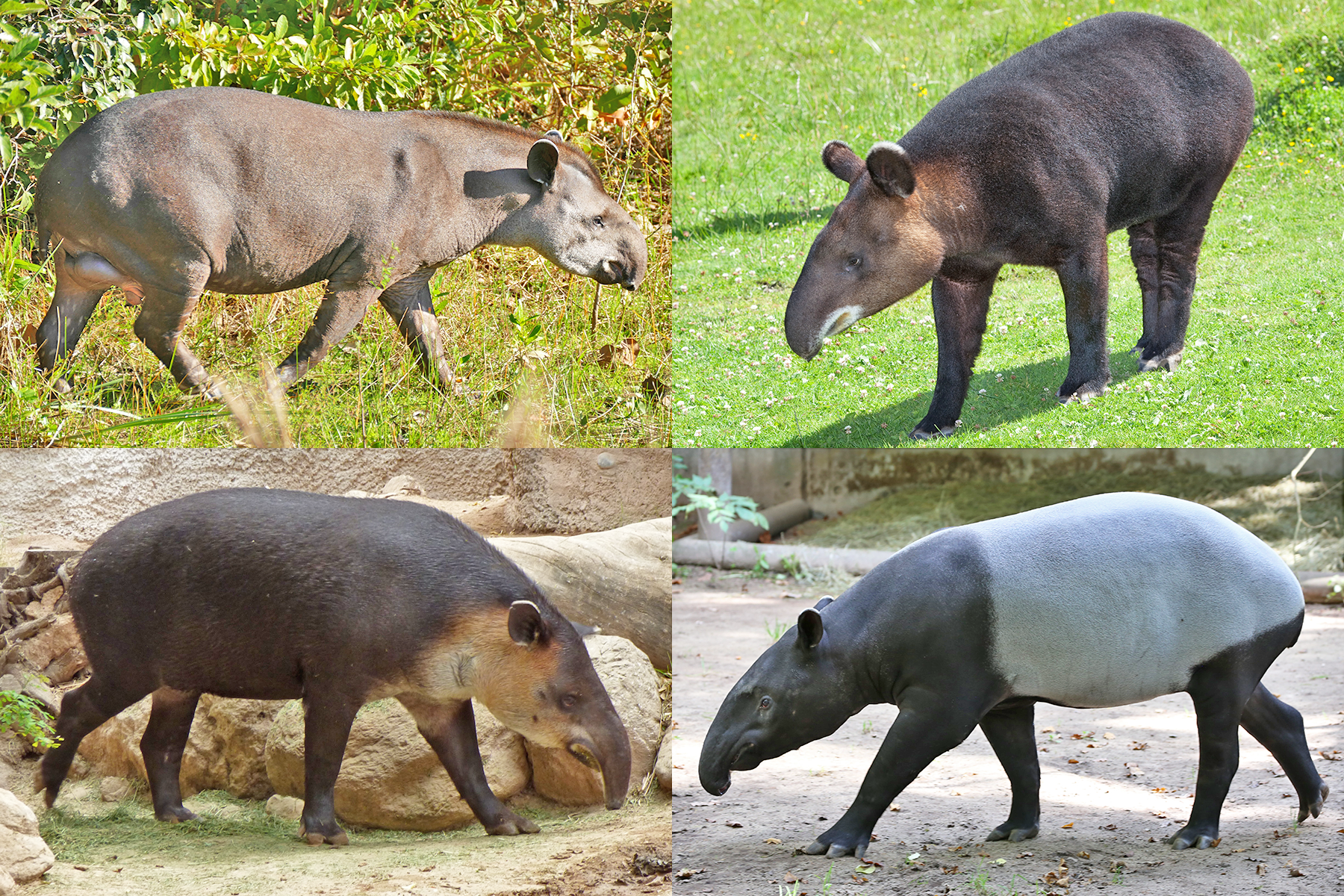
World Tapir Day / Wereld Tapir Dag 2024

By 蕭漫 – Own work based onBernard DUPONT from FRANCEDavid SifryGreg Goebel from Loveland CO, USARufus46, CC BY-SA 4.0

World Tapir Day is celebrated on 27 April each year and exists to raise awareness about the species of tapir that inhabit Central and South America and Southeast Asia and to raise funds to purchase land to protect it from human encroachment.

Tapirs are large herbivorous mammals that inhabit jungle and forest regions of South America, Central America, and Southeast Asia. As large herbivores, tapirs are invariably the first species affected by human encroachment into their territory, and amongst the last to return to regrowth forest. They require substantial tracts of undisturbed land to maintain a genetically-diverse population. Tapirs inhabit jungles, grasslands, swamps and cloud forests, yet each is threatened by human activity – be that mining, palm oil plantations, roads or settlements. They form an important part of the ecosystem as seed dispersers, and form one of the oldest surviving genera in the animal kingdom. Despite their size, history and ecological importance, tapirs remain one of the least recognised species of animals. In comparison with other animals, tapirs feature little in the collective consciousness and are frequently misidentified by zoo visitors.

Even in their home ranges, tapirs receive little attention, with exotic species featuring more prominently in zoos, children’s books and the media. The plight of tapirs is symbolic for the wider threat to their habitats specifically, and the world’s ecology in general. The decline of tapir populations is indicative of the general health of their ranges; their disappearance from their home ranges often marks a point of ‘no return’ for the natural environment. The destruction of forests into small, isolated enclaves and the encroachment of human activity into pristine forests affects all native species. However, as the largest – yet perhaps the quietest – of animals in their ranges, tapirs disappear without trace with countless other species. All tapirs are endangered species. Saving tapirs helps to save the rainforest. Saving rainforests helps to save the planet and prevent climate change.

Links:
World Tapir Day: Discovering earth’s prehistoric wanderers

Morsecode dag 2024

Morse is een communicatiecode, bestaande uit met tussenpozen uitgezonden signalen, die letters, leestekens en cijfers vertegenwoordigen.

De code werd in 1835 uitgevonden en ontwikkeld door Samuel Morse met het doel deze te gebruiken voor de telegrafie. Bij de telegraaf kon men alleen maar kiezen uit twee toestanden: sleutel naar beneden (= stroom) of sleutel niet bediend (= geen stroom) en tijdsduur (kort of lang). Telegrafie wordt algemeen beschouwd als een voorloper van de latere digitale communicatie.

Links:
Internationale dag van de morsecode

Journalist casualties in the Israel-Gaza war – publication

The Israel-Gaza war has taken a severe toll on journalists since Hamas launched its unprecedented attack against Israel on October 7 and Israel declared war on the militant Palestinian group, launching strikes on the blockaded Gaza Strip.

The Committee to Protect Journalists (CPJ) is investigating all reports of journalists and media workers killed, injured, or missing in the war, which has led to the deadliest period for journalists since CPJ began gathering data in 1992. As of April 26, 2024, CPJ’s preliminary investigations showed at least 97 journalists and media workers were among the more than 35,000 killed since the war began on October 7—with more than 34,000 Palestinian deaths in Gaza and the West Bank and 1,200 deaths in Israel. The Israel Defense Forces (IDF) told Reuters and Agence France Press news agencies in October that it could not guarantee the safety of their journalists operating in the Gaza Strip, after they had sought assurances that their journalists would not be targeted by Israeli strikes, according to a Reuters report. Journalists in Gaza face particularly high risks as they try to cover the conflict during the Israeli ground assault, including devastating Israeli airstrikes, disrupted communications, supply shortages, and extensive power outages. As of April 25, 2024:

CPJ is also investigating numerous unconfirmed reports of other journalists being killed, missing, detained, hurt, or threatened, and of damage to media offices and journalists’ homes. The list published here includes names based on information obtained from CPJ’s sources in the region and media reports. It includes all journalists* involved in news-gathering activity. It is unclear whether all of these journalists were covering the conflict at the time of their deaths, but CPJ has included them in our count as we investigate their circumstances. The list is being updated on a regular basis.

Links:
Journalist casualties in the Israel-Gaza war

Mehdi, Greta, Bassem & Zeteo Contributors Commemorate Palestinian Journalists Killed in Gaza