Babelsberger Sternennächte – Exoplaneten-Atmosphären – Licht lesbar machen | Dr. Daniel Sablowski (TV webcast)
Babelsberger Sternennächte

Die Leibniz-Instituts für Astrophysik Potsdam (AIP) Babelsberger Sternennächte finden online statt, in der Regel gibt es immer am 3. Donnerstag im Monat einen neuen Vortrag einer Wissenschaftlerin oder eines Wissenschaftlers des AIP, der ab 20 Uhr auf dem YouTube-Kanal von Urknall, Weltall und das Leben ausgestrahlt wird.

Die beobachtende Astrophysik lebt von der Analyse des Lichts – der elektromagnetischen Strahlung, die uns von den Objekten des Weltraums erreicht. Mit Hilfe der Spektralanalyse wird das Licht in seine Wellenlängen zerlegt, sodass es quantitativ ausgewertet werden kann. Doch wie funktioniert ein solches Messgerät und welche Variationen davon werden in der Astronomie eingesetzt? Ergänzt mit kleinen Experimenten spannt der Vortrag den Bogen von der Funktionsweise eines Beugungsgitters bis zur 3D und Echelle-Spektroskopie.

Links:
Babelsberger Sternennächte

Babelsberger Sternennächte – playlist

#WorldRedheadDay #InternationalRedHeadDay 2026

WorldRedheadDay

Every year on May 26th, people around the globe celebrate World Redhead Day—a day dedicated to embracing the uniqueness of redheads and highlighting the beauty of being different.

As a natural redhead, I’ve spent my life being noticed before I’ve even spoken a word. And while much of that attention is well-meaning—even admiring—it has also come with assumptions, stereotypes, and moments of feeling different in ways I didn’t always welcome. Growing up as a redhead often meant being the target of familiar jokes and playful teasing—comments about fiery tempers, having no soul, or comparisons to fictional characters. While usually intended as harmless fun, those remarks could make me feel like a caricature, boxed into a stereotype that didn’t reflect who I truly was. These moments, though not meant to hurt, were constant reminders that standing out can also mean being misunderstood.

Red is the rarest hair color, with only 2 percent of the world’s population having it. Most redheads are of northern or western European ancestry; the highest percentage of redheads come from Scotland, followed by Ireland. Besides celebrating red hair, the day raises awareness about the stigma associated with red hair, and the discrimination that redheads sometimes face. Redheads are often stereotyped as having a fiery temper. There even is Kick a Ginger Day, which has led to some children being bullied. In ancient Greece, some redheads were considered to be vampires. Many redheads were killed in Europe between the fifteenth and eighteenth centuries because they were perceived to be associated with witchcraft.

Red hair is caused by a mutated MC1R gene. If both parents carry this gene—even if they don’t have red hair themselves—their child has a one in four chance of being born with red hair. Those with red hair actually have less hair on their heads. A redhead has on average 90,000 strands of hair on their head, while blondes have about 110,000, and brunettes have 140,000. What redheads lack in number they make up in thickness, though, as strands of red hair are thicker than the strands of other colors. Red hair also strongly holds its pigment; it is hard to dye red hair a different color unless it is bleached first.

Most people with red hair also have brown eyes, although a few have blue eyes. There is also some indication that those with red hair are more likely to be left-handed. Those with red hair may also be more sensitive to hot and cold pain, and to pain during surgery. As redheads go through life, their hair begins to fade, turning blond, then white, but never being grey. With such beauty and uniqueness associated with redheads, it is only fitting that the world celebrates them today.

Links:
Celebrating World Redhead Day: Embracing Every Shade of Diversity

2026-05-25, Lief dagboek

Maandag; Wat eten we vandaag?; World Fish Migration Day; Cooper’s Hill Cheese-Rolling and Wake; European Week Against Cancer; Solidarity with the Peoples of Non-Self-Governing Territories.

Deze afbeelding heeft een leeg alt-attribuut; de bestandsnaam is dagboek.png

Wat eten we vandaag?:

Klik op afbeelding voor origineel

Knipselkrant:

Agenda:

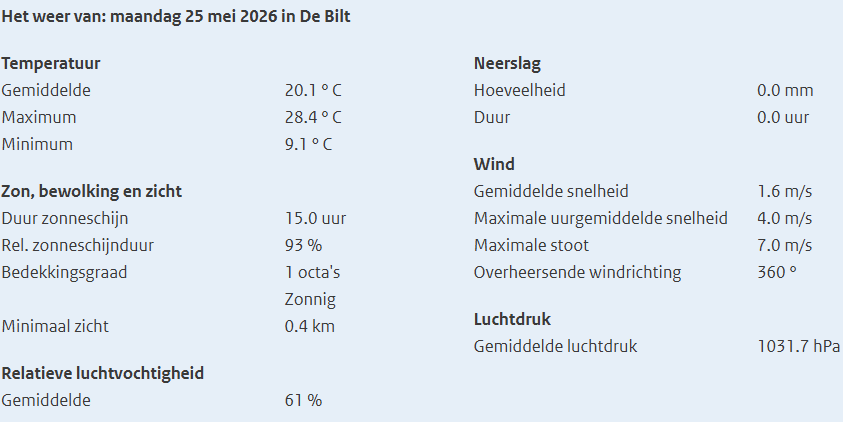
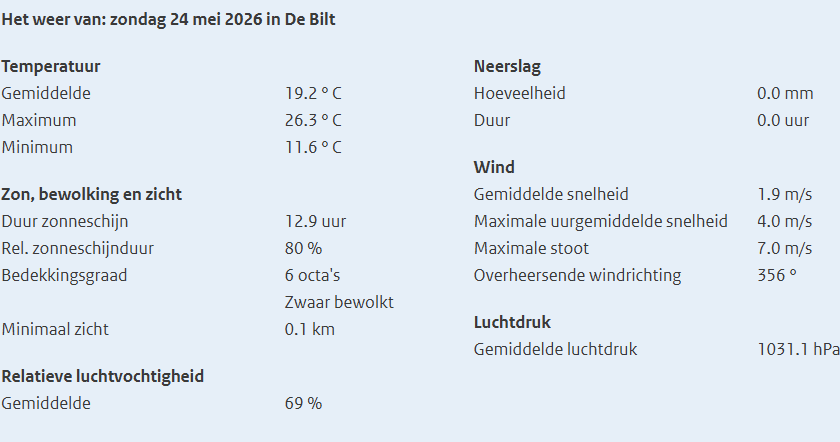
Weer:

Links:
In de geschiedenis

European Week Against Cancer 2026

The European Week Against Cancer (EWAC), an initiative from the Association of European Cancer Leagues (ECL) that takes place between 25 and 31 May each year to raise awareness about the importance of cancer prevention and care.
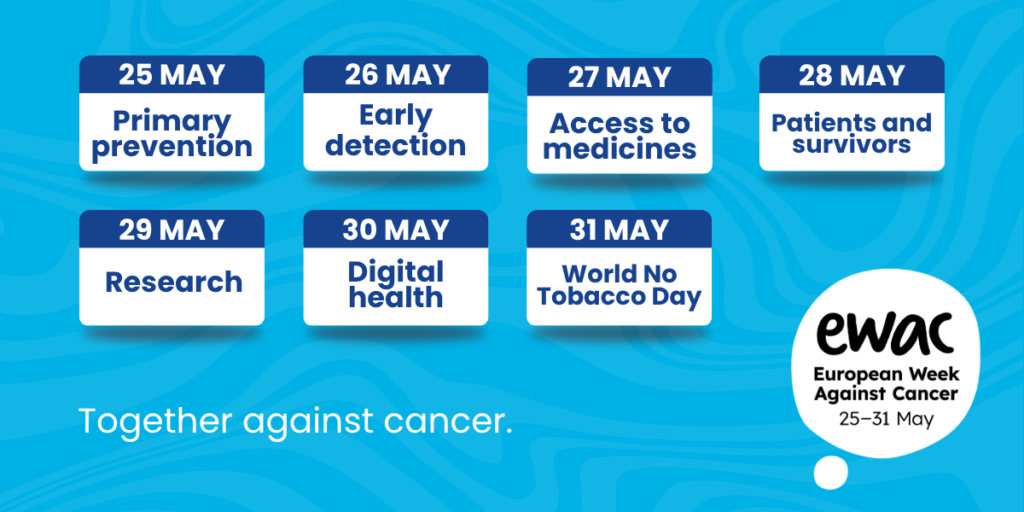
Cancer continues to affect thousands of people across Europe every year. Cancer claimed the lives of an estimated 1.3 million people in 2022 alone, making it the leading cause of death for people aged under 65 in Europe. Together, we can reverse this trend. Where you live should not determine your risk of cancer or your chances of surviving it. Cancer affects everyone, but the differences in how it is prevented, diagnosed, and treated remain deeply unequal across Europe. Theme European Week Against Cancer 2026 is ‘Together against cancer inequalities’, a call to end inequalities in access to prevention, early detection, treatment and care for all. Cancer leagues and partners across Europe are coming together to promote the European Week Against Cancer both online and in communities across the continent, and we invite you to be a part of it. Each day of the week spotlights a key theme, covering the full cancer care journey, from prevention and early prevention to treatment, patient support, survivorship, and cancer research. Together, these themes reflect the many ways we can reduce the burden of cancer.

European Week Against Cancer 2026

Links:
European Week Against Cancer 2026

Week of Solidarity with the Peoples of Non-Self-Governing Territories 2026

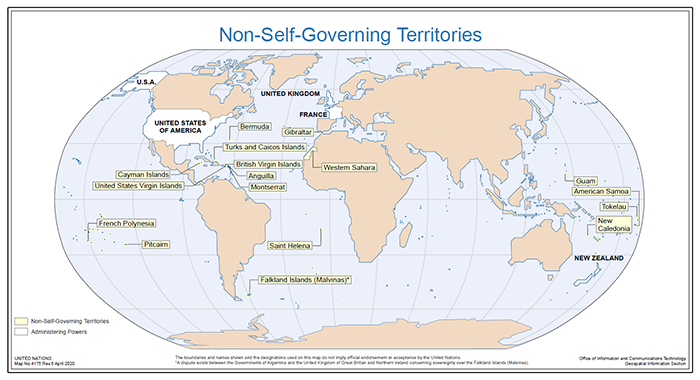
Map of Non-Self-Governing Territories

In the UN Charter, a Non-Self-Governing Territory is defined as a territory “whose people have not yet attained a full measure of self-government.”

In 1946, several UN Member States identified a number of territories under their administration that were not self-governing and placed them on a UN list. Countries administering Non-Self-Governing Territories are called administering Powers. As a result of the decolonization process over the years, most of the territories were removed from the list. Chapter XI of the UN Charter – the Declaration regarding Non-Self-Governing Territories – provides that Member States administering Territories, which have not attained self-government recognize “that the interests of the inhabitants of these territories are paramount” and accept as a “sacred trust” the obligation to promote their well-being. Furthermore, administering Powers, in addition to ensuring the political, economic, social and educational advancement of the peoples, undertake to assist them in developing self-government and free political institutions. Administering Powers also have an obligation to transmit regularly to the Secretary-General information on the economic, social and educational conditions in the territories under their administration. In a later agreement, the UN General Assembly, by its resolution 54/91 of 6 December 1999, urged the administering Powers concerned to take effective measures to safeguard and guarantee the inalienable rights of the peoples of the Non-Self-Governing Territories to their natural resources, including land, and to establish and maintain control over the future development of those resources, and requested the administering Powers to take all necessary steps to protect the property rights of the peoples of those territories. It also urged all States, directly and through their action in the specialized agencies and other organizations of the United Nations system, to provide moral and material assistance to the peoples of the Non-Self-Governing Territories. Through the same resolution, the General Assembly requested the annual observance of the Week of Solidarity with the Peoples of Non-Self-Governing Territories. In 2026, there are 17 Non-Self-Governing Territories remaining.

Links:
Week of Solidarity with the Peoples of Non-Self-Governing Territories

Vroege Vogels TV | 24 mei 2026 | Grienden van de Oude Maas (TV NPO 2)

Vroege Vogels is een live-radioprogramma, tv-programma en online community van BNNVARA over natuur en milieu.

In het radioprogramma wordt het gesproken woord omlijst door licht klassieke muziek en salonmuziek. Het radioprogramma werd in 1978 voor het eerst uitgezonden door de VARA en is een van de langst lopende en best beluisterde radioprogramma’s van de publieke omroep. Het wordt elke zondagmorgen uitgezonden tussen 07:00 en 10:00 op NPO Radio 1. De beginmuziek is een bewerking van Vivaldi’s “Piccolo Concerto in C major” (RV 443). De tv editie wordt uitgezonden via NPO 2 op zondag, vaak rond een thema.

Langs de oevers van de Oude Maas zijn oude wilgenbossen bewaard gebleven. Waar vroeger wilgen werden geknot voor hakhout, liggen nu bossen vol cultuurhistorie en natuur. Het riviergetij zorgt voor bloeiende zomerklokjes en spindotterbloemen, en ook de boomkronen van rottende wilgen blijken ideale plekken voor planten om te ontkiemen. Menno Bentveld ziet een bever zwemmen in de Rhoonse Grienden. Ook laat de zeldzame matkop zich zien in de bomen van Klein Profijt. Rond de bloeiende wilgen vliegen zweefvliegen en bijen, en zelfs de ruwe boomschors biedt onderdak aan piepkleine wilgenslakjes.

Links:
Vroege Vogels

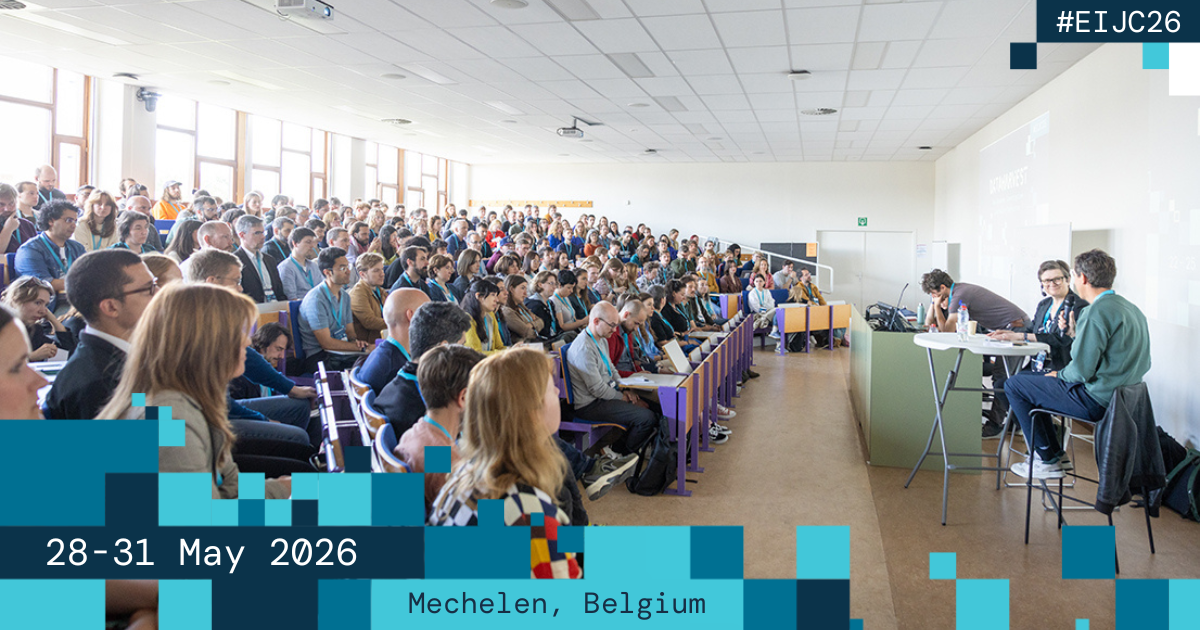
#EIJC26 Dataharvest : The European Investigative Journalism Conference 2026

Dataharvest

Dataharvest – The European Investigative Journalism Conference is a meeting point where networks are established and nurtured, data and documents shared, cross-border projects conceived and teams established.

The conference days are all about learning, inspiration and getting some work done and is like a European editorial meeting: Participants develop story ideas, get together in new networks to work on a common story or sit down with coders and designers to analyze and present a new data set. Editors talk about how to best structure the work process or how to best protect freedom of expression in practice.

Links:
Dataharvest