World Maritime Day 2024

International shipping transports more than 80 per cent of global trade to peoples and communities all over the world.

Shipping is the most efficient and cost-effective method of international transportation for most goods; it provides a dependable, low-cost means of transporting goods globally, facilitating commerce and helping to create prosperity among nations and peoples. The world relies on a safe, secure and efficient international shipping industry, which is an essential component of any programme for future sustainable green economic growth in a sustainable manner. The promotion of sustainable shipping and sustainable maritime development is one of the major priorities of the International Maritime Organization (IMO) in the coming years. Therefore, energy efficiency, new technology and innovation, maritime education and training, maritime security, maritime traffic management and the development of the maritime infrastructure: the development and implementation of global standards covering these and other issues will underpin IMO’s commitment to provide the institutional framework necessary for a green and sustainable global maritime transportation system.

2024 theme, ‘Navigating the future: safety first!’ reflects the IMO’s work to enhance maritime safety and security, in tandem with the protection of the marine environment, whilst ensuring its regulatory development process safely anticipates the fast pace of technological change and innovation. The theme provides the opportunity to focus on the full range of safety regulatory implications arising from new and adapted technologies and the introduction of alternative fuels including measures to reduce GHG emissions from ships, as IMO strives to ensure the safety and efficiency of shipping are maintained, and potentially improved, so that the flow of seaborne international trade continues to be smooth and efficient. The theme also links to the UN 2030 Agenda for Sustainable Development and the Sustainable Development Goals (SDGs), particularly SDG 7 on ensuring access to affordable, reliable, sustainable and modern energy by facilitating access to clean energy research and technology; SDG 8 on promoting sustained, inclusive and sustainable economic growth, full and productive employment and decent work for all; SDG 9 on building resilient infrastructure, promoting inclusive and sustainable industrialization and fostering innovation; SDG 13 on taking urgent action to combat climate change and its impacts; and SDG 14 on conserving and sustainably using the oceans, seas and marine resources for sustainable development. A celebratory parallel event is expected to be held in Spain from 20 to 22 October 2024. Further details will be provided upon availability.

Links:
World Maritime Day

International Convention for the Prevention of Pollution from Ships (MARPOL)

The International Ship and Port Facility Security Code

SOLAS Convention

Reports of the Secretary-General on Oceans and the law of the sea

Day of Awareness of Food Loss and Waste 2024

The fifth observance of the Day of Awareness of Food Loss and Waste will highlight the critical need for financing to bolster efforts to reduce food loss and waste, contribute to achieving climate goals and advancing the 2030 Agenda for Sustainable Development.

Enormous amounts of resources – land, water, energy, and labour – are used to produce food. When food is lost or wasted, these resources go to waste, impacting the efficiency of food production. A global virtual event will be convened by FAO and UNEP to mark this fifth observance. Reducing food losses and waste is essential in a world where the number of people affected by hunger has been slowly on the rise since 2014, and tons and tons of edible food are lost and/or wasted every day. The Day of Awareness of Food Loss and Waste is an opportunity to call to action both the public (national or local authorities) and the private sector (businesses and individuals), to prioritise actions and move ahead with innovation to reduce food loss and waste towards restoring and building back better and resilient-ready, food systems. Food loss and waste undermine the sustainability of our food systems. When food is lost or wasted, all the resources that were used to produce this food – including water, land, energy, labour and capital – go to waste.

In addition, the disposal of food loss and waste in landfills, leads to greenhouse gas emissions, contributing to climate change. Food loss and waste can also negatively impact food security and food availability, and contribute to increasing the cost of food. Our food systems cannot be resilient if they are not sustainable, hence the need to focus on the adoption of integrated approaches designed to reduce food loss and waste. Actions are required globally and locally to maximise the use of the food we produce. The introduction of technologies, innovative solutions (including e-commerce platforms for marketing, retractable mobile food processing systems), new ways of working and good practices to manage food quality and reduce food loss and waste are key to implementing this transformative change. To reach target 1, 2, and 3 of Sustainable Development Goal 12 (SDG) in 2030, there is an urgent need to accelerate action to reduce food loss and waste.

Links:
International Day of Awareness of Food Loss and Waste 2024

#ZeroHunger Wereldvoedseldag / #WorldFoodDay

#verspillingsvrij Verspillingsvrije Week

Day of Awareness on Food Loss and Waste Reduction

HCC Kennisdag / Modelspoorbeurs 2024

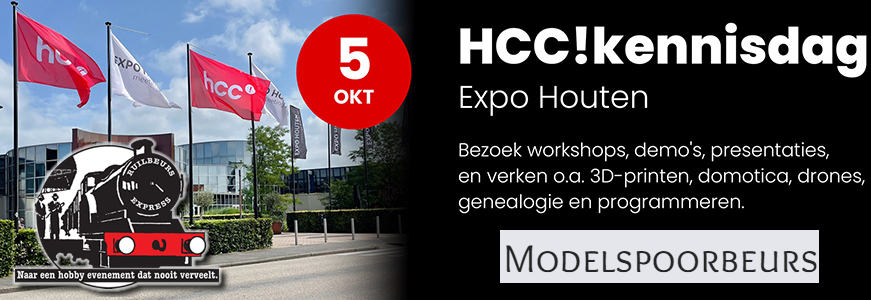
Ontdek de wereld van digitale innovatie op de HCC!kennisdag met presentaties, workshops, korting op specials plus gratis toegang voor HCC-leden, deze keer bovendien de presentatie van de HCC!scheurkalender 2025.

Bezoek workshops, demo’s en presentaties, en verken onderwerpen als 3D-printen, domotica, drones, genealogie en programmeren. Voor jong en oud, met iets interessants voor iedereen. Het belooft voor jong en oud een interactieve en leerzame dag te worden. Kom langs en vlieg – onder begeleiding – met een van onze kleine drones in de vliegkooi. Of kom naar de stand van HCC!apple. Hier kun je naast de helpdesk ook kennismaken met enkele mogelijkheden van een betaalbare VR-bril. HCC!programmeren is weer met de kleurenleds aanwezig. Verder veel informatie over het zelf maken van programma’s. Deze dag is een goede gelegenheid om vragen te stellen en kennis uit te wisselen. En natuurlijk ben je ook van harte welkom tijdens de vele presentaties. Dit keer onder andere een presentatie over Digitale fraude: wat is het, hoe herken je het en wat kun je ertegen doen? de HCC!kennisdag wil deelnemers bewust maken van de gevaren van digitale fraude. Verder leer je hoe je fraude kunt herkennen en voorkomen en wat je moet doen als je toch slachtoffer wordt. Heel interessant! En natuurlijk ben je ook van harte welkom tijdens de vele presentaties en workshops. Deze zijn te volgen in de verschillende zalen op de bovenverdieping en deze keer ook toegankelijk voor niet-leden. Op de benedenverdieping presenteren de diverse Interessegroepen zich. Daarnaast is er de Modelspoorbeurs, waar je alles kunt vinden op Modelspoorgebied.

Links:
HCC Kennisdag

Modelspoorbeurs

Kolencentrale dicht? CO2-rechten uit de markt! – petitie

De oproep van WISE aan de overheid: Haal de CO2-rechten van de Amercentrale uit de markt!

Alleen als er naast het sluiten van de centrale ook de rechten worden vernietigd heb je échte klimaatwinst. Kolencentrales moeten zo snel mogelijk sluiten om nog onder de 1,5 graad Celsius opwarming te blijven. Door de ‘wet verbod op kolen’ sluiten al onze kolencentrales in 2030, en de Amercentrale al in 2025. Maar als niet óók de CO2-rechten uit de markt gehaald worden, worden die gewoon door bedrijven elders gebruikt om uit te stoten. Dat kan toch niet de bedoeling zijn?!

Links:
Kolencentrale dicht? CO2-rechten uit de markt!

Landelijke protestactie tegen uitstoot van RWE’s Amercentrale

Nog geen groene groei industrie – publicatie

Landelijke protestactie tegen uitstoot van RWE’s Amercentrale

WISE, Kappen met Kolen, Extinction Rebellion en Comité Schone Lucht organiseren op zaterdag 28 september 2024 een landelijke protestactie bij de Amercentrale in Geertruidenberg, fiets mee vanaf Breda of kom op eigen gelegenheid naar de centrale.

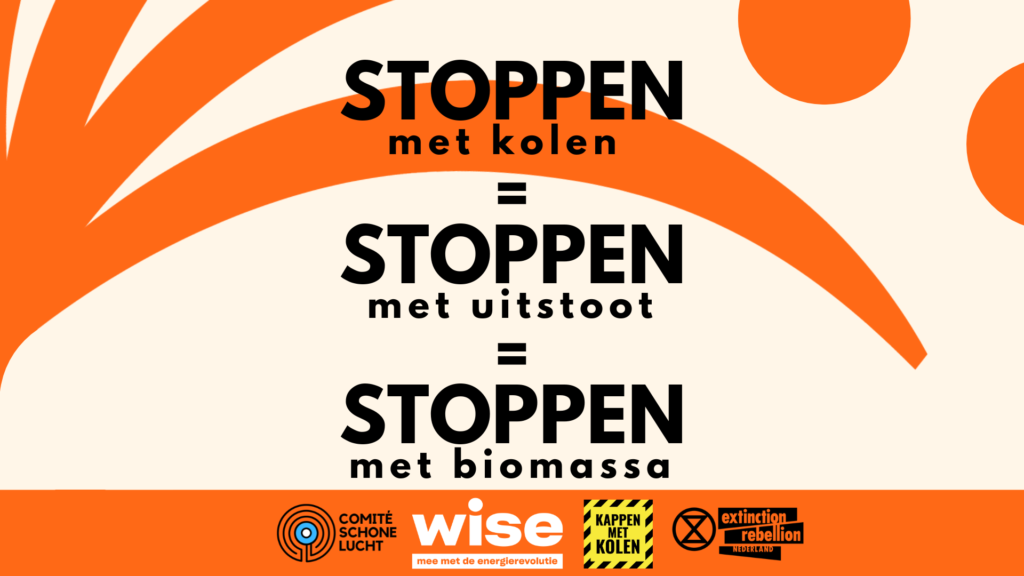
Op 1 januari 2025 stopt de Amercentrale met het stoken van kolen, vanwege de ‘wet verbod op kolen’. Veel mensen denken dat er hierdoor minder CO2-uitstoot is. Maar helaas is dat niet waar! Niet alleen gaat de centrale over op biomassa, ook blijven de uitstootrechten op de markt. Door de werking van het Europese emissiehandelssysteem (ETS) kunnen de uitstootrechten gewoon gebruikt worden door andere bedrijven voor hun uitstoot. In plaats van dat de kolencentrale sluit en daarmee de uitstoot stopt, gaat die juist dubbel zo hard door. WISE, Kappen met Kolen, Extinction Rebellion en Comité Schone Lucht vragen, net als de Europese Commissie, de Nederlandse overheid om de ETS-rechten van de Amercentrale van de markt te halen. Zo zal de uitstoot pas echt omlaag gaan. Stoppen met kolen, is stoppen met de uitstootrechten en stoppen met biomassa. Dit is beter voor het klimaat, de natuur én onze gezondheid. Fiets mee voor een echte klimaatoplossing. Half oktober 2024 debatteert de Tweede Kamer over verduurzaming en WISE, Kappen met Kolen, Extinction Rebellion en Comité Schone Lucht willen laten zien dat alleen het stoppen met kolen stoken half werk is. Geef gehoor aan de oproep van de Europese Commissie om ook de kolenrechten uit de markt te halen. Verzamelen vanaf 12:00 bij Breda Centraal Station en om 12:30 fietsen naar de centrale. Om 14:00 aankomst bij de Amercentrale en hier zijn drankjes, hapjes, speeches en muziek. Rond 15:30 weer terugfietsen. Aanmelden wordt gewaardeerd.

Links:
Landelijke protestactie tegen uitstoot van RWE’s Amercentrale

Kolencentrale dicht? CO2-rechten uit de markt! – petitie

#WorldTourismDay 2024 #WTD2024

The World Tourism Day is celebrated on September 27, 2023. September 27 was chosen as on that day in 1970, the Statutes of the United Nations World Tourism Organization (UNWTO) were adopted.

Tourism is one of the world’s most important economic sectors. It employs one in every ten people on Earth and provides livelihoods to hundreds of millions more. For some countries, it can represent over 20 percent of their GDP. It allows people to experience some of the world’s cultural and natural riches and brings people closer to each other, highlighting our common humanity. Tourism is an essential pillar of the 2030 Agenda for Sustainable Development and the commitment to the Sustainable Development Goals, especially goals 8, 12, and 14. It serves as a first entry point to the world of work, especially for women, youth, migrant workers, and rural populations in developing and least developed countries (LDCs). Women represent a majority of the tourism sector workforce, while half of that workforce is under 25 years of age. Moreover, in many parts of the world, the protection of biodiversity and conservation rely heavily on the tourism sector and the revenue it generates.

The constant growth of the tourism sector during the last six decades reflects more progressive access to tourism thanks to the decline in the cost of transport and the world-wide growth of the middle classes. The recognition of the right to holidays in the Universal Declaration of Human Rights, and the improved adoption of labor rights in many countries have also supported its development. These factors also serve as a backdrop for the resilience shown by tourism in recent years. The sector has experienced almost uninterrupted growth despite challenges such as the global economic crisis and natural disasters.

The many important contributions of tourism encouraged the UNWTO to institute World Tourism Day in a meeting that took place in Spain, commencing the first celebration of the observance in the year 1980. This date was chosen to coincide with an important milestone in world tourism: the 10th anniversary of the adoption of the UNWTO Statutes on 27 September 1970. Afterwards, during its 70th session in 2015, the United Nations General Assembly designated 2017 as the International Year of Sustainable Tourism for Development (resolution A/RES/70/193), in which it encouraged support for sustainable tourism as a means of promoting and accelerating sustainable development, especially poverty eradication.

World Tourism Day 2024, under the theme “Tourism and Peace“, wants to highlight the vital role of this sector in fostering peace and understanding between nations and cultures and in supporting reconciliation processes. Tourism, often highlighted for its role in economic development, also plays a significant role in fostering peace. On a global level, where nations are interconnected and interdependent, Tourism, an industry made by people and for people, emerges as a compelling and dynamic force to defy stereotypes and challenge prejudices. This sector can be perceived as the epitome of intercultural dialogue; it allows meeting the “other”, learning about different cultures, hearing foreign languages, tasting exotic flavours, bonding with other human beings, and building tolerance. In essence, it is a mind-broadening educational and spiritual experience.

Links:
World Tourism Day

Canarias tiene un límite / Protest against Canary Islands’ ‘unsustainable’ tourism model / Protest tegen massatoerisme

Extinction Rebellion blokkeert sluizen bij IJmuiden tegen aankomst cruiseschip Jewel of the Seas

Bewoners van Spaanse eilanden zijn massatoerisme zat: ‘Waar gaan wíj wonen?’

Kinderboekenweek 2024

De Kinderboekenweek is sinds 1955 een jaarlijks terugkerende campagne ter promotie van het kinderboek geschreven in de Nederlandse taal.

De jaarlijkse periode, met een duur van tien dagen, wordt georganiseerd door de Stichting Collectieve Propaganda van het Nederlandse Boek (CPNB). Tijdens de Kinderboekenweek vinden diverse activiteiten plaats. Zo geven participerende boekwinkels bij besteding van een bepaald bedrag aan kinderboeken (vanaf 2023 € 13,50) het Kinderboekenweekgeschenk. Tevens is het Prentenboek van de Kinderboekenweek te koop, wordt er een lied (songtekst en bladmuziek van ‘Lekker eigenwijs’) uitgebracht door Kinderen voor Kinderen en wordt een gedicht aangewezen als officieel gedicht van de Kinderboekenweek. Verder worden er prijzen uitgereikt, waaronder de Gouden en Zilveren Griffels, en worden er onder andere lespakketten en lijsten met thematitels samengesteld voor in het onderwijs. De week wordt doorgaans afgetrapt met het Kinderboekenbal. Aan iedere Kinderboekenweek wordt een bepaald thema toegewezen, Kinderboekenweek 2024 thema: Lekker eigenwijs!

Links:
Kinderboekenweek

Vroege Vogels Radio | 29 september 2024 (Radio 1 NPO)

Vroege Vogels is een live-radioprogramma, tv-programma en online community van BNNVARA over natuur en milieu.

In het radioprogramma wordt het gesproken woord omlijst door licht klassieke muziek en salonmuziek. Het radioprogramma werd in 1978 voor het eerst uitgezonden door de VARA en is een van de langst lopende en best beluisterde radioprogramma’s van de publieke omroep. Het wordt elke zondagmorgen uitgezonden tussen 07:00 en 10:00 op NPO Radio 1. De beginmuziek is een bewerking van Vivaldi’s “Piccolo Concerto in C major” (RV 443).

De bidsprinkhaan heeft zich nu ook in Nederland gevestigd. We nemen een kijkje bij een populatie in Limburg. Ton van der Ham vertelt over het Zembla-onderzoek naar hoe kankerverwekkend glyfosaat is en welke boom wordt verkozen tot Boom van het Jaar? Verder ook in de uitzending: onderzoek naar grassen, David van Gennep van Stichting Aap, moestuinieren en een tentoonstelling over Rosa Bonheur. De column is deze week van Jelle Reumer.

Links:
Vroege Vogels (na afloop terugluisteren)

NPO Radio 1 live stream