World Science Day for Peace and Development / Wereldwetenschapdag voor Vrede en Ontwikkeling 2024

World Science Day for Peace and Development highlights the important role that science has in society and is celebrated each year on November 10, it also highlights the need to engage the wider public in debates on emerging scientific issues.

World Science Day was proclaimed by the United Nations Educational, Scientific and Cultural Organization (UNESCO) in 2001 and celebrated for the first time in 2002. By linking science more closely with society, World Science Day aims to ensure that citizens are kept informed of developments in science. It also underscores the role scientists play in broadening our understanding of the planet we call home and in making our societies more sustainable.
The objectives of World Science Day for Peace and Development are to:

  • Strengthen public awareness on the role of science for peaceful and sustainable societies;
  • Promote national and international solidarity for shared science between countries;
  • Renew national and international commitment for the use of science for the benefit of societies;
  • Draw attention to the challenges faced by science and raising support for the scientific endeavour.

Individuals and institutions around the world are encouraged to organize an event or activity on World Science Day, including government officials, students, the media and school pupils. World Science Day for Peace and Development has generated many concrete projects, programmes and funding for science around the world. It has also helped foster cooperation between scientists living in regions marred by conflict, one example being the UNESCO-supported creation of the Israeli-Palestinian Science Organization (IPSO). 2024 Theme: Youth at the forefront.

Links:
World Science Day for Peace and Development

Week of Science and Peace 2024

2024-11-09, Lief dagboek

Zaterdag; 50 jaar Simplisties Verbond; UN Climate Change Conference COP29; Meld onveiligheid in Amsterdam door Maccabi supporters ; ING fossiel; Val Berlijnse Muur; Carl Sagan Prize; Dag van de Uitvinders.

Deze afbeelding heeft een leeg alt-attribuut; de bestandsnaam is dagboek.png

Knipselkrant:


Agenda:

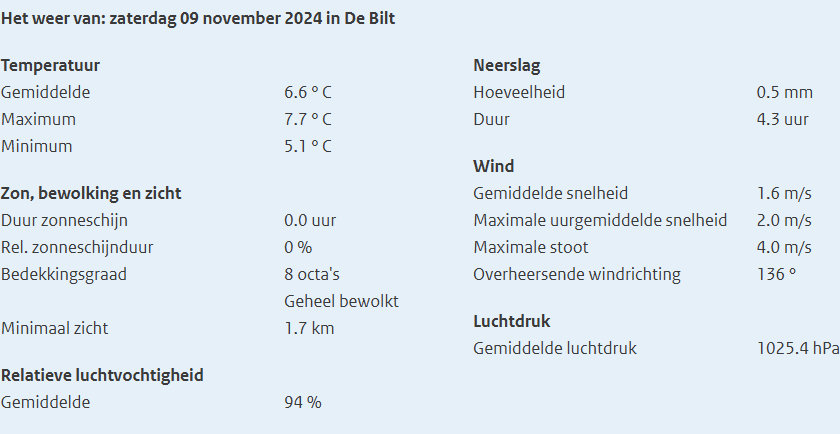
Weer:

Links:
In de geschiedenis

Carl Sagan – birthday (1934) / Carl Sagan Prize for Science Popularization 2024

Carl Edward Sagan (/ˈseɪɡən/; November 9, 1934 – December 20, 1996) was an American astronomer, cosmologist, astrophysicist, astrobiologist, author, science popularizer, and science communicator in astronomy and other natural sciences.

He is best known for his work as a science popularizer and communicator. His best known scientific contribution is research on extraterrestrial life, including experimental demonstration of the production of amino acids from basic chemicals by radiation. Sagan assembled the first physical messages sent into space: the Pioneer plaque and the Voyager Golden Record, universal messages that could potentially be understood by any extraterrestrial intelligence that might find them. Sagan argued the now accepted hypothesis that the high surface temperatures of Venus can be attributed to and calculated using the greenhouse effect.

Sagan published more than 600 scientific papers and articles and was author, co-author or editor of more than 20 books. He wrote many popular science books, such as The Dragons of Eden, Broca’s Brain and Pale Blue Dot, and narrated and co-wrote the award-winning 1980 television series Cosmos: A Personal Voyage (+ deel 1). The most widely watched series in the history of American public television, Cosmos has been seen by at least 500 million people across 60 different countries. The book Cosmos was published to accompany the series. He also wrote the science fiction novel Contact, the basis for a 1997 film of the same name. His papers, containing 595,000 items, are archived at The Library of Congress.

Sagan advocated scientific skeptical inquiry and the scientific method, pioneered exobiology and promoted the Search for Extra-Terrestrial Intelligence (SETI). He spent most of his career as a professor of astronomy at Cornell University, where he directed the Laboratory for Planetary Studies. Sagan and his works received numerous awards and honors, including the NASA Distinguished Public Service Medal, the National Academy of Sciences Public Welfare Medal, the Pulitzer Prize for General Non-Fiction for his book The Dragons of Eden, and, regarding Cosmos: A Personal Voyage, two Emmy Awards, the Peabody Award, and the Hugo Award. He married three times and had five children. After suffering from myelodysplasia, Sagan died of pneumonia at the age of 62, on December 20, 1996.

Links:
Carl Sagan Prize for Science Popularization

Eerste uitzending van het Simplisties Verbond (1974)

Eerste uitzending van het Simplisties Verbond (6 november 1974), in 2024 vijftig jaar geleden.

Het Simplisties Verbond is een min of meer fictieve organisatie, ontsproten aan het brein van het komieke duo Van Kooten en De Bie, die als directeuren van het verbond heer Koot en heer Bie genoemd werden. Hoewel het fictief was, stond er op veel producten van het duo toch aangegeven dat het auteursrecht aan het Simplisties Verbond toebehoorde. Het logo van het Simplisties Verbond is de mattenklopper.

Links:
Exact 50 jaar geleden richtten Kees van Kooten en Wim de Bie het Simplisties Verbond op

Van Kooten en De Bie: Vijftig jaar Simplisties Verbond (TV NPO 3 / NPO Start/Plus)

Toen werd nu – start serie (TV NPO 3 / NPO Start/Plus)

Wim de Bie sterfdag (2023)

Imaging Ultraweak Photon Emission from Living and Dead Mice and from Plants under Stress – publication


Über die “Aura” von Mensch und Tier ist schon viel spekuliert worden, umgibt uns wirklich eine bestimmte Strahlung, ein Leuchten, das wir einfach nicht sehen können?

Forschende aus Kanada sind dieser Frage mit empfindlichsten Messinstrumenten nachgegangen. In esoterischen Kreisen sind sich viele Menschen einig: Menschen und Tiere werden von einem energetischen Kranz umgeben, unserer “Aus-Strahlung”, die von besonders sensiblen Wesen wahrgenommen werden kann, die “Aura”. Als Diagnose bei Epilepsie oder Migräne ist die Aura auch in der Wissenschaft präsent. In Bezug auf die “Ausstrahlung” von Mensch und Tier tat sich die Wissenschaft allerdings bisher schwer – einfach deshalb, weil nichts gemessen werden konnte. Dies hat sich nun mit empfindlicheren Messgeräten geändert, wie Forschende des Human Health Therapeutics Research Center des National Research Council of Canada (NRC) herausgefunden haben. Sie untersuchten dazu die sogenannte ultraschwache Photonenemission (UPE), neben Schwarzkörperstrahlung und Biolumineszenz die dritte Art von Lichtemissionen, die von lebenden Systemen ausgeht.


Links:
Die “Aura” von Lebewesen und Pflanzen – gibt es sie doch?

Val Berlijnse Muur (1989) 2024

Door Jess & Peter uit Geneva, Switzerland – Flickr, CC BY 2.0

De Berlijnse Muur viel op 9 november 1989.

Onder de Berlijnse Muur verstaat men een 100 m brede constructie van opeenvolgende obstakels die van 13 augustus 1961 tot 9 november 1989 West- en Oost-Berlijn van elkaar scheidde. De Berlijnse Muur was 45,3 km lang en een onderdeel van de Duits-Duitse grens. De Berlijnse Muur was het bekendste symbool van de Koude Oorlog en de deling van Duitsland.

Links:
Berlijnse Muur

Hoe de Berlijnse Muur de Sovjet-Unie overeind hield

Groot Dictee der Nederlandse Taal 2024 (Radio 1 NPO)

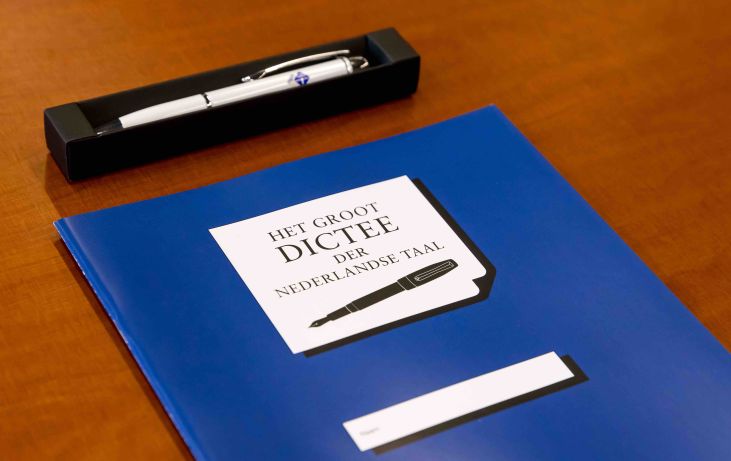
Het Groot Dictee der Nederlandse Taal is een wedstrijd in het correct spellen van de Nederlandse taal.

Het dictee werd van 1990 tot en met 2016 jaarlijks in de derde week van december gelijktijdig in Nederland en in België via de televisie werd uitgezonden, sinds 2018 wordt het dictee via de radio uitgezonden, door NPO Radio 1. Via de site van NPO Radio 1 en via NPO 1 Extra wordt het dictee met beeld uitgezonden. Op zaterdag 9 november 2024 wordt het Groot Dictee uitgezonden vanuit de Centrale Bibliotheek in Rotterdam, waar twintig Taalstaat-luisteraars het opnemen tegen twintig prominenten. De schrijver van het dictee is taalkundige, cabaretier en tv-presentator Wim Daniëls. Gerdi Verbeet, oud-voorzitter van de Tweede Kamer, leest het voor. En zoals altijd is de presentatie van het programma in handen van Frits Spits. Onze Taal is verantwoordelijk voor het nakijken en de jurering van het dictee.

Links:
Groot Dictee der Nederlandse Taal

Groot Dictee kent twee winnaars (!Spoiler!)