Wereld Wezendag / UN #WorldOrphansDay 2024
World Orphans Day

Two observances named World Orphans Day have been established to raise awareness of their plight; the first is observed on April 20 and the second on the second Monday of November.

Losing both parents is one of the worst things that can happen to a child. There are hundreds of millions of orphans in the world who need someone to take care of them. In common usage, an orphan is a child who has lost both parents. However, some organizations, including UNICEF and UNAIDS, label children who have lost one parents as orphans, too. The number of double orphans, i.e. those who have lost both parents, is relatively low in developed countries; the highest numbers of orphans exist in countries affected by extreme poverty, wars, and epidemics. Regions with the highest percentage of orphans are Africa (almost 12% of all children), Latin America & the Caribbean (about 7.5% of all children), and Asia (6.5% of all children).

According to statistics, every 19 seconds somewhere in the world, a child is orphaned, and 99% of orphans are never adopted. Most countries with high numbers of orphans usually don’t have a good system in place to support all orphaned children. Thousands of orphans across the globe live as street children devoid of parental care and vulnerable to abuse and exploitation. Orphans raised in orphanages often struggle to adjust to adult life once released from the orphanage because they lack education, resources, and skills to support themselves. As a result, many of them become homeless and commit crimes to survive, or even end up committing suicide.

Since governments of poor countries devastated by wars and epidemics are unable to provide orphans with proper care, international organizations have to step in. There are a lot of organizations and programs supporting orphans worldwide. Two of them have established a World Orphans Day. World Orphans Day celebrated on April 20 was founded by Worldwide Organization for Charity (WOC), previously known as World Orphan Center. The organization is working to support orphans, underprivileged children and widows with the ultimate goal of making them self-reliant through various support schemes, ranging from coverage of living expenses to adoption.

World Orphans Day celebrated on the second Monday of November was launched in 2006 by the Stars Foundation, a Nashville-based organization comprised of the entertainment industry, dignitaries, and media and sports personalities that seeks to raise money to help orphans, children in foster care, street children, and other vulnerable children. Both World Orphans Days aim to raise awareness about orphans worldwide and encourage people to support orphans any way they can. Of course, giving an orphan a new loving family is the best way to change their life for the better, but we realize that adoption isn’t for everyone. There are a lot of other ways to help orphans: you can donate to an organization that supports orphans, volunteer at an orphanage, organize an awareness event in your community, and spread the word on social media with the hashtag #WorldOrphansDay.

Links:
The Stars Foundation

The Sky at Night – Ancestral Skies (TV BBC Four)

The Sky at Night is a monthly documentary television programme on astronomy produced by the BBC.

The show had the same permanent presenter, Patrick Moore, from its first broadcast on 24 April 1957 until 7 January 2013. The latter date was a posthumous broadcast, which followed Moore’s death on 9 December 2012. This made it the longest-running programme with the same presenter in television history. Many early episodes are missing, either because the tapes were wiped, thrown out, or because the episode was broadcast live and never recorded in the first place.

Beginning with the 3 February 2013 edition, the show was co-presented by Lucie Green and Chris Lintott. Since December 2013 Maggie Aderin-Pocock has been a presenter. The programme’s opening and closing theme music is “At the Castle Gate”, from the incidental music to Pelléas et Mélisande, written in 1905 by Jean Sibelius, performed by the Royal Philharmonic Orchestra and conducted by Sir Thomas Beecham.

This episode:
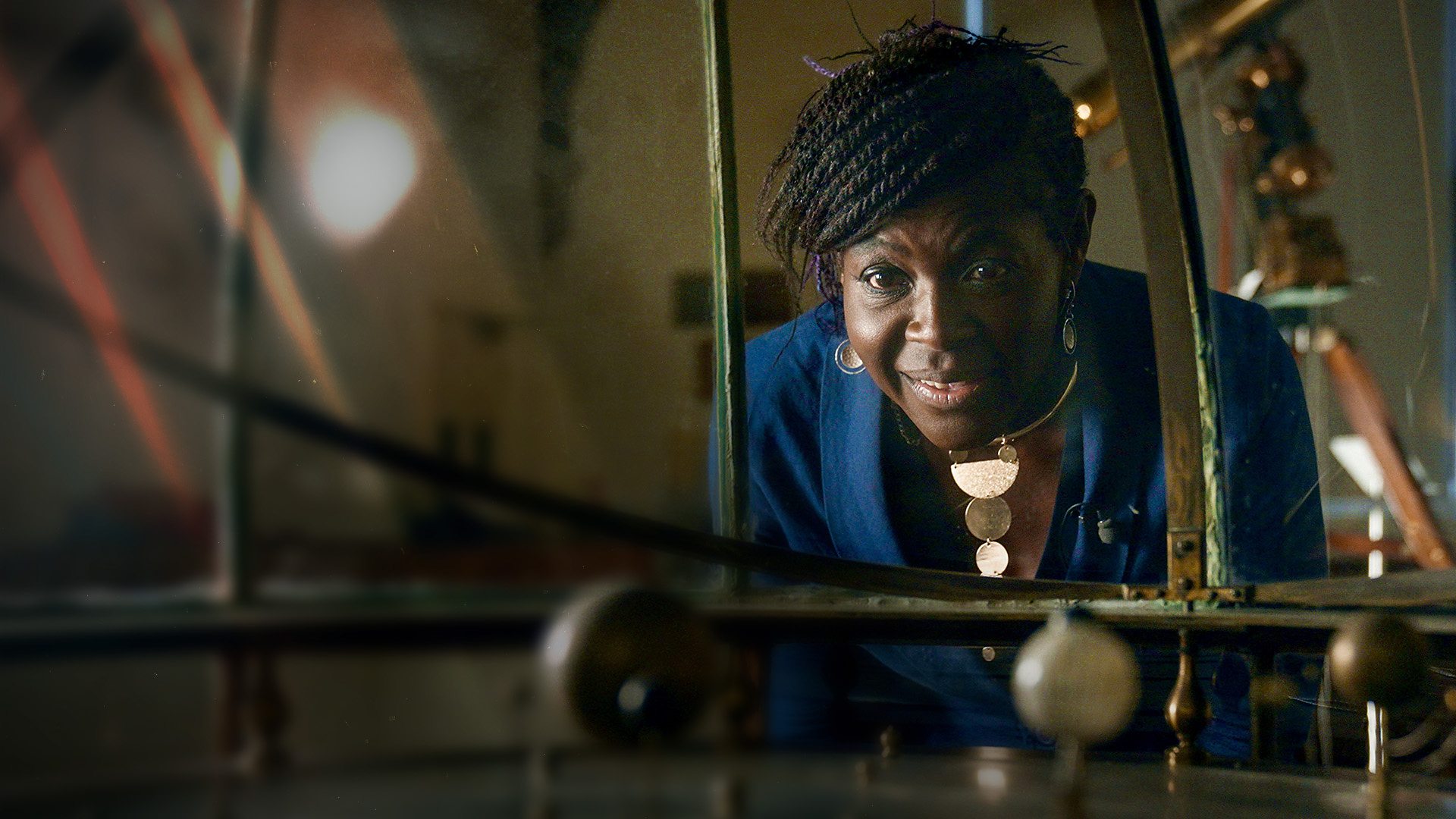
This month, The Sky at Night teams up with BBC Ideas to discover the secrets of archaeology and astronomy and to reflect on our ancestral skies. Throughout history and across the world, humanity has looked up and marvelled at the night sky. From ancient civilizations who were guided by the sun, moon and stars, to modern astronomers uncovering the universe’s history, we have always found deep meaning in our dark skies. But is modern civilisation putting this important link at risk? Out on Cornwall’s beautiful Bodmin Moor, George Dransfield meets up with archaeoastronomer Carolyn Kennett at an ancient archaeological site. The Goodaver stone circle is steeped in history, but it has been cut off from the public and researchers like Carolyn for decades. But times are changing. The site will open to the public in November, and Carolyn and fellow archaeoastronomers are finally able to assess the stones against the horizon and understand how they are aligned to the sun, moon and stars.

What new stories about ancient peoples and their relationship to the night sky will be discovered? Chris Lintott and Maggie Aderin-Pocock are also finding out about archaeology in Cambridge – but not necessarily the archaeology you would expect. At the Whipple Museum of the History of Science, Maggie links up with Australian space archaeologist Dr Alice Gorman to look at what we should be preserving of our history in space so far. From satellites to moon landing sites, what will future generations want to see to help them understand our early history of our journey into space? Meanwhile, Chris heads to the Department of Archaeology to find out about the surprising and fascinating field of Galactic Archaeology, which takes inspiration from archaeology to try and solve the mystery of our galaxy’s history – using only what we can see today.

Chris meets anthropologist and evolutionary biologist Professor Robert Foley and astrophysicist Dr Payel Das, who are part of a team that has been using phylogenetic trees – models normally used for evolution – for modelling the evolution of galaxies. Each generation of stars within a galaxy forms from material polluted with elements produced by previous generations, opening up the possibility of understanding their shared history. Finally, Pete Lawrence is at the Exmoor Dark Skies Festival, where he is meeting Jo Richardson. While Pete waits for night to fall, he talks to Jo about the importance of maintaining our view of the night sky and how modern lighting is affecting the health and well-being of humans and other animals. But will the clouds clear and provide the spectacular view dark skies sites can offer? Don’t miss this captivating exploration of our shared history and the stars, as we discover where archaeology and astronomy meet to illuminate the profound connections that shape our understanding of both the universe and ourselves!

Links:
The Sky at Night

Gemeente Amsterdam EXTRA Raadsvergadering : Actualiteit inzake de openbare orde en veiligheid vanaf 6 november (TV AT5 / Gemeente Amsterdam live)

Het spoeddebat in de gemeenteraad over de gebeurtenissen in aanloop naar en na de voetbalwedstrijd Ajax-Maccabi Tel Aviv, begint op 12 november 2024 om 12:00.

Burgemeester Halsema komt voordien met een feitenrelaas over de gebeurtenissen. Halsema zal onder meer moeten uitleggen hoe het kan dat Israëlische supporters, ondanks de grote politiemacht, op meerdere plekken in de stad konden worden belaagd en mishandeld. Ook zal ze antwoord moeten geven op de vraag of de gewelddadigheden te voorzien waren. Of de gemeente bijvoorbeeld is gewaarschuwd door Israël, zoals Israëlische media beweren. Daarnaast is er kritiek op dat het aandeel dat de Maccabi-fans in het geheel hadden, wordt onderbelicht. Naast de mishandelingen van Israëliërs vorige week, zijn er filmpjes dat ook de uitsupporters zich hebben misdragen. Op beelden die rondgaan op sociale media is te zien dat Israëlische supporters provocerende leuzen scanderen en rondlopen met ijzeren pijpen, stokken en riemen.

Links:
EXTRA Raadsvergadering : Actualiteit inzake de openbare orde en veiligheid vanaf 6 november

Demonstratie aangekondigd bij Stopera tijdens spoeddebat

Raadsbrief feitenrelaas geweldincidenten

AT5 live stream / Gemeente Amsterdam live

Vrijgezellendag / Singles’ Day / Bachelor’s Day / Guanggun Jie 2024

Vrijgezellendag of Guanggun Jie (Vereenvoudigde Chinese karakters 光棍节; pinyin: Guānggùn Jié; Wade–Giles: Kuang-kun chieh letterlijk ‘enkelvoud’ feestdag) is een populaire feestdag bij Chinese jongeren die er trots op zijn dat ze vrijgezel zijn en dat willen vieren.

Het festival gaat door op 11 november (11/11) omdat het nummer één symbool staat voor alleen zijn. De feestdag is geleidelijk aan een van de grootste online winkeldagen geworden. Vrijgezellendag of Singles’ Day is ontstaan in 1993 in de Universiteit van Nanking en werd initieel gevierd in verschillende universiteiten van de staat in de jaren 90. De dag kreeg de naam Vrijgezellendag dankzij de vier enen in de datum. Toen de studenten afstudeerden zetten ze de traditie verder in het maatschappelijke leven. Sindsdien heeft de feestdag veel online populariteit gekregen en wordt zelfs gevierd door jongeren buiten China. Vrijgezellendag biedt alleenstaanden de kans om met vrijgezelle vrienden te vieren. Hoewel er initieel enkel jonge mannen bij betrokken waren- vandaar de naam ‘Bachelor’s Day’, wordt de dag nu ook gevierd door vrouwen. Er worden blind dates gehouden om vrijgezellen de kans te geven een relatie te hebben, en sommige scholen organiseren zelfs speciale bijeenkomsten om de dag te vieren. Hierdoor is het zelfbeklag en de overdreven bescheiden houding die bij vrijgezelle universiteitsstudenten vaak voorkwam verminderd en heeft de viering een positievere connotatie gekregen.

Links:
Singles Day 2024

Week of Science and Peace 2024

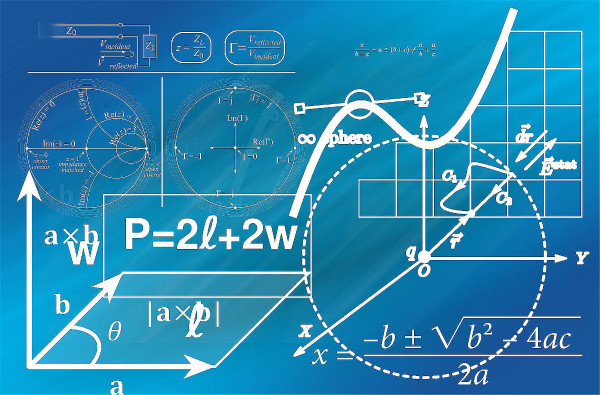
The annual observance of the Week of Science and Peace is making an important contribution to the promotion of peace, the Week encourages greater academic exchanges on a subject of universal importance while also generating greater awareness of the relationship of science and peace among the general public.

Based on observances of Science and Peace Week to date, it may be expected that participation each year will increase, contributing to greater international understanding and opportunities for co-operation in the applications of science for the promotion of peace throughout the year. The Week of Science and Peace was first observed during 1986 as part of the observance of the International Year of Peace. The organization of events and activities for the week was undertaken as a non-governmental initiative; the secretariat for the International Year of Peace was informed of the preparatory activities and the final summary of events that occurred during the week. The organizers sought to encourage the broadest possible international participation in the observance.

Based on the success of the 1986 observance, the organizers continued their efforts in successive years. In recognition of the value of the annual observance, the General Assembly adopted resolution 43/61 in December 1988, which proclaims the “International Week of Science and Peace”, to take place each year during the week in which 11 November falls. The General Assembly urged Member States and intergovernmental and non-governmental organizations to encourage relevant institutions, associations and individuals to sponsor events and activities related to the study and dissemination of information on the links between progress in science and technology and maintenance of peace and security; urged Member States to promote international co-operation among scientists and required the Secretary-General to report to the General Assembly as its forty-fifth session on the activities and initiatives of Member States and interested organizations in connection with the week.

Links:
Week of Science and Peace

World Science Day for Peace and Development / Wereldwetenschapdag voor Vrede en Ontwikkeling 2024

Open science

Achter de frontlinie: de grenzen van klimaatjournalistiek (TV PdZ live cast)

In Frontlinie vertelt journalist Bram Vermeulen verdiepende en onthullende verhalen uit het buitenland, die ook jou aangaan.

Hoe gaan we om met een crisis waar we allemaal onderdeel van zijn? Op de eerste dag van de Klimaattop organiseert de redactie van VPRO’s Frontlinie samen met Pakhuis de Zwijger een avond over de grenzen van klimaatjournalistiek. Waar lopen klimaatjournalisten tegenaan? Hoe hou je het onderwerp klimaatverandering op de journalistieke agenda? Waar eindigt journalistiek en begint activisme? Een avond waarin klimaatjournalisten reflecteren op het belangrijkste onderwerp van deze generatie. Met Emil van Oers (NOS), Dorien Pels (Trouw), Maarten Keulemans (Volkskrant), Bart Verheggen (KNMI, ex RTL-nieuws), Jill Peeters (DPG Media) en Bram Vermeulen (VPRO). De avond wordt geleid door Eveline van Rijswijk.

Links:
Achter de frontlinie: de grenzen van klimaatjournalistiek

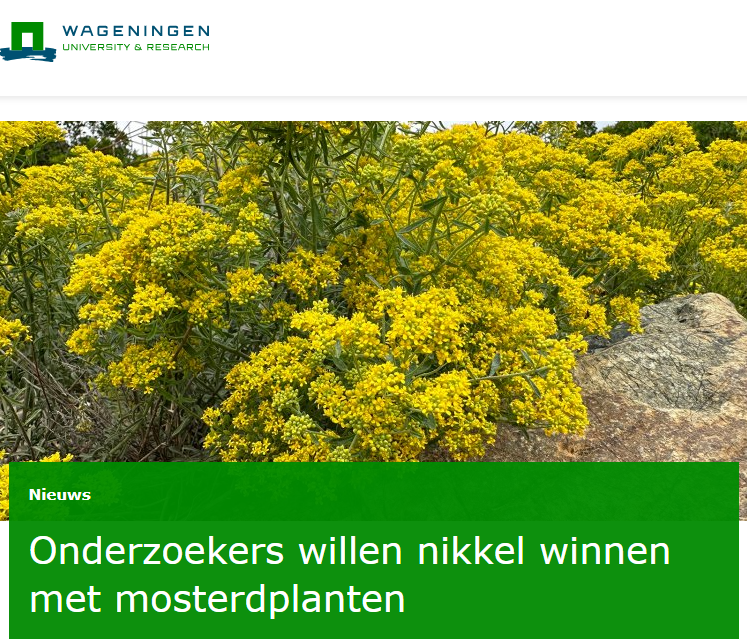
Onderzoekers willen nikkel winnen met mosterdplanten – publicatie

Een internationaal team van onderzoekers onderzoekt hoe planten kunnen worden gebruikt om nikkel te winnen.

Nikkel is een metaal dat essentieel is voor de productie van lithiumbatterijen. Het onderzoek heeft een subsidie ontvangen van omgerekend 1,35 miljoen euro van de Amerikaanse Department of Energy. Het onderzoek richt zich op twee planten uit de mosterdfamilie die bekend staan om hun vermogen om metaal uit de bodem te halen en op te nemen in hun eigen weefsel, een proces dat ook wel bekend staat als fytomining. Het nikkel kan vervolgens uit het metaalrijke plantenweefsel worden geoogst en vervolgens worden gebruikt voor industriële doeleinden.

Links:
Onderzoekers willen nikkel winnen met mosterdplanten

Batterijen zonder vervuilende mijnbouw: planten halen nikkel uit de bodem

Soil Phytomining: Recent Developments—A Review

2024-11-10, Lief dagboek

Zondag; Wat eten we vandaag?; World NET – NEC Cancer Day; DagVanDeMantelzorg; Wereldwetenschapdag voor Vrede en Ontwikkeling; Ogoni9 memorial; Vroege Vogels.

Deze afbeelding heeft een leeg alt-attribuut; de bestandsnaam is dagboek.png

Wat eten we vandaag:

Klik op afbeelding voor origineel

Knipselkrant:


Agenda:

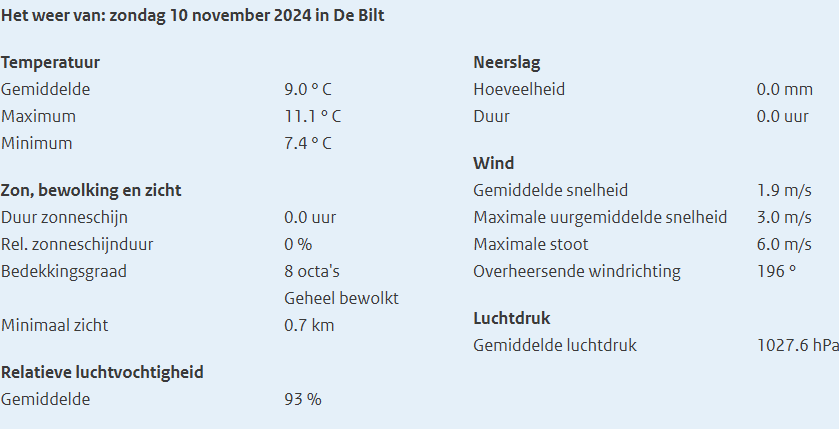
Weer:

Links:
In de geschiedenis

World NET – NEC Cancer Day 2024

World NET – NEC Cancer Day is an annual event held on the 10th of November, created to increase awareness of Neuroendocrine Tumor (NET) and Neuroendocrine Carcinoma (NEC) cancers and to provide a voice to the NET community for improved diagnostics, treatments, information, care and research.

World NET Cancer Day is about drawing attention to this uncommon form of cancer and starting a global conversation amongst communities, medical professionals and governments – #LetsTalkAboutNets. On November 10, INCA members from around the globe partner with local cafes and communities to promote the ‘Let’s Talk About NETs’ branded cups to increase community awareness about this often misdiagnosed form of cancer.

Links:
World NET Cancer Day

Stichting NET-groep

#Ogoni9 memorial 2024

The Ogoni Nine were a group of nine activists from the Ogoni region of Nigeria who opposed the operating practices of the Royal Dutch Shell oil corporation.

Their members included outspoken author and playwright Ken Saro-Wiwa, Saturday Dobee, Nordu Eawo, Daniel Gbooko, Paul Levera, Felix Nuate, Baribor Bera, Barinem Kiobel, and John Kpuine (Tripathi, p.189), who were executed by hanging in 1995 by the military dictatorship of General Sani Abacha and buried in Port Harcourt Cemetery. The executions provoked international condemnation and led to the increasing treatment of Nigeria as a pariah state until General Abacha’s mysterious death in 1998. Saro-Wiwa had previously been a critic of the Royal Dutch Shell oil corporation, and had been imprisoned for a year prior to the executions in November 1995. At least two witnesses who testified that Saro-Wiwa was involved in the murders of the Ogoni elders later recanted, stating that they had been bribed with money and offers of jobs with Shell to give false testimony – in the presence of Shell’s lawyer.

Links:
Wiwa family lawsuits against Royal Dutch Shell

The story of the Ogoni

Who killed Ken Saro Wiwa and Ogoni Nine | Gen. Sani Abacha or Shell Nigeria

Eindvonnis in de rechtzaak van vier van de weduwen van de negen in 1995 in Nigeria ter dood veroordeelde mannen ( #Ogoni9 ) tegen vennootschappen uit de Shell-Groep

Het is 25 jaar geleden dat de Ogoni Negen in Nigeria werden opgehangen