
In de geschiedenis
Links:
Wikipedia

Links:
Wikipedia
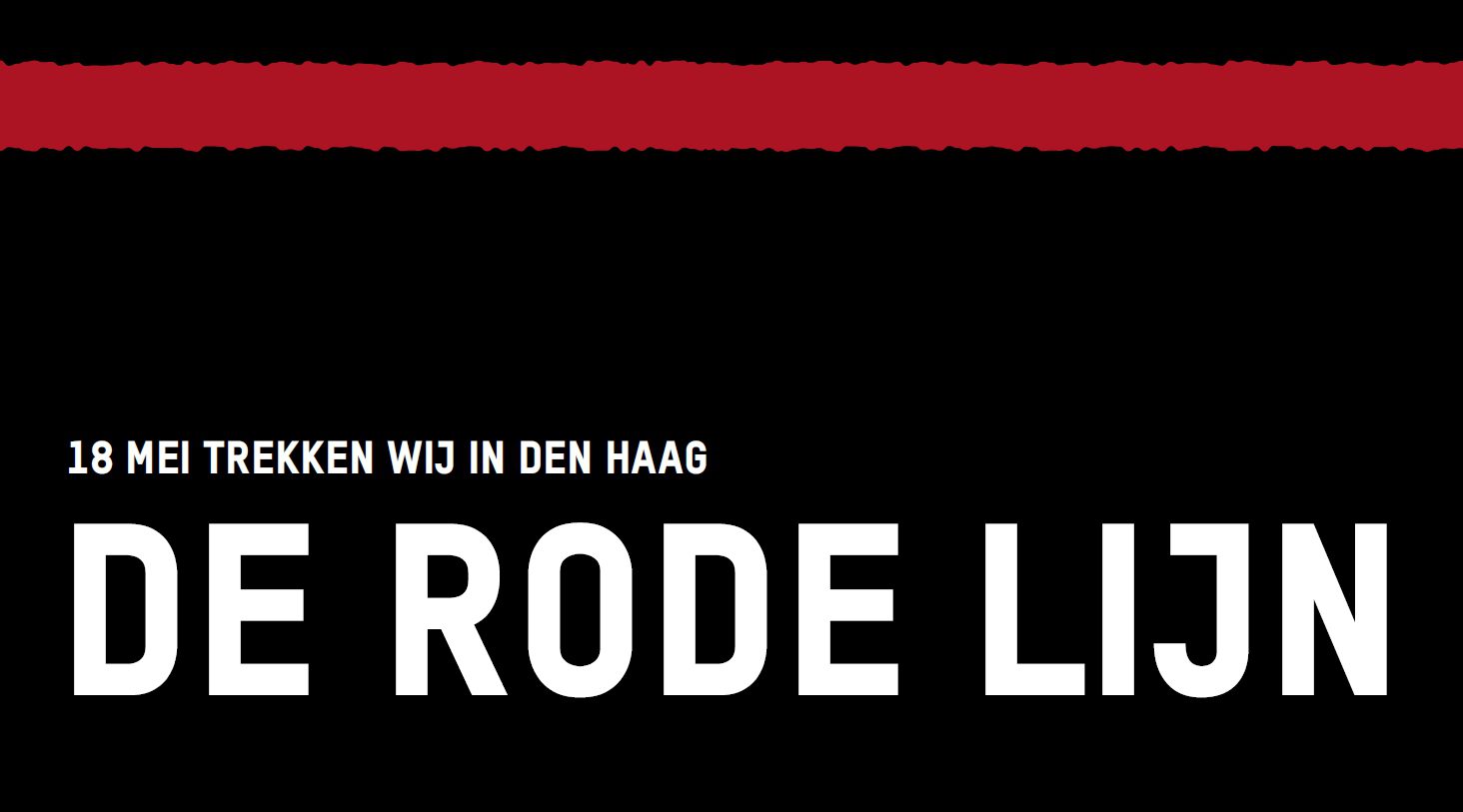
Kom 18 mei 2025 naar Den Haag, trek de rode lijn en eis met Amnesty, Artsen zonder Grenzen, BDS, Oxfam Novib, Palestijnse Gemeenschap Nederland, PAX, Plant een Olijfboom, Save the Children en The Rights Forum een einde aan Nederlandse medeplichtigheid aan Israëls oorlogsmisdaden.
Het kabinet-Schoof zakt ver door een morele én juridische ondergrens. Ondanks Israëls voortdurende schendingen van het oorlogsrecht, trekt onze regering geen rode lijn en weigert deze actie te ondernemen om straffeloosheid en medeplichtigheid te stoppen. Daarmee negeert de regering ook de oproep van een grote meerderheid van Nederlanders. Dat kan niet worden geaccepteerd. Er wordt een menselijke ketting gevormd in Den Haag met deelnemers in rode kleding om de rode lijn zichtbaar en krachtig te maken. Aanmelden gewenst.
Links:
Premier Schoof: als u geen rode lijn trekt, dan doen wij het
Wij trekken een rode lijn! Samen voor internationale solidariteit
Trek zondag met ons een Rode Lijn door Den Haag, of trek die vanuit huis
Donderdag; World Dark Sky Week; Wereldproefdierendag.

Knipselkrant:
Agenda:
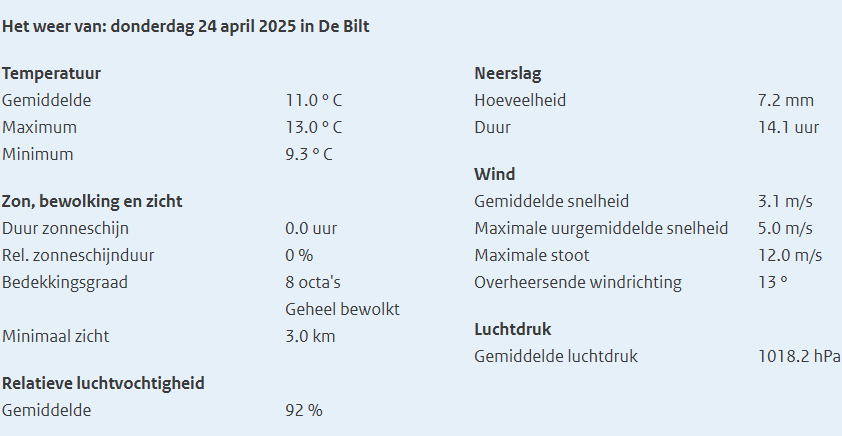
Weer:
Links:
In de geschiedenis

The United Nations Permanent Forum on Indigenous Issues (UNPFII or PFII) is the UN’s central coordinating body for matters relating to the concerns and rights of the world’s indigenous peoples.
There are more than 370 million indigenous people (also known as native, original, aboriginal and first peoples) in some 70 countries worldwide. The forum was created on 28 July 2000 by resolution 2000/22, as an outcome of the UN’s International Year for the World’s Indigenous People in 1993, within the first International Decade of the World’s Indigenous People (1995–2004). It is an advisory body within the framework of the United Nations System that reports to the UN‘s Economic and Social Council (ECOSOC). More specifically, the Permanent Forum:
The first meeting of the Permanent Forum was held in May 2002, with yearly sessions thereafter. The Forum usually meets for 10 days each year, at the UN Headquarters in New York. According to the ECOSOC resolution E/2000/22, the Forum may also meet at the UN Office in Geneva or at such other place that it decides. In addition to the six mandated areas (economic and social development, culture, the environment, education, health and human rights), each session is thematically focused on a specific issue. The Permanent Forum is one of three UN bodies that is mandated to deal specifically with Indigenous Peoples’ issues. The others are the Expert Mechanism on the Rights of Indigenous Peoples and the Special Rapporteur on the rights of Indigenous Peoples. The Permanent Forum’s engagement and role in promoting Indigenous Peoples’ rights are made possible through the Trust Fund on Indigenous Issues, which overall facilitates follow-up to the Forum’s recommendations, awareness raising and outreach on Indigenous issues as well as representation and participation of Permanent Forum members at international meetings of significance for its mandate. In addition, the Trust Fund provides support for the implementation of the United Nations Declaration on the Rights of Indigenous Peoples. DESA is charged with the overall management of the Trust Fund, which is placed under the Indigenous Peoples and Development Branch-Secretariat of the Permanent Forum on Indigenous Issues.
2025 Theme: “Implementing the United Nations Declaration on the Rights of Indigenous Peoples within United Nations Member States and the United Nations system, including identifying good practices and addressing challenges”
Links:
UNPFII Twenty-fourth Session: 21 April – 2 May 2025
United Nations Permanent Forum on Indigenous Issues (UNPFII)
Phan and Goto used sky surveys from two infrared space telescopes launched 23 years apart: the Infrared Astronomy Satellite (IRAS), a NASA-Netherlands-U.K. satellite launched in 1983; and AKARI, a Japanese satellite launched in 2006. Because of Planet Nine’s long orbit, the researchers hypothesized that the time gap between the two data sets would be enough to see the potential planet move incrementally across the night sky. From an initial catalog of about 2 million objects within the IRAS and AKARI data sets, the researchers whittled down to pairs of dots of light whose spacing could be explained by a moving planet with a Planet Nine–like mass and distance. Then, they removed known sources such as stars, sources that didn’t move over time, and sources with too much noise, such as those near the bright galactic center. When 13 pairs remained, they checked each by eye. Only one candidate pair survived the scrutiny. The two dots had matching colors and brightnesses—a sign they were the same object.
Links:
Astronomers searching for Planet Nine find possible hints of different planet
Evidence of controversial Planet 9 uncovered in sky surveys taken 23 years apart
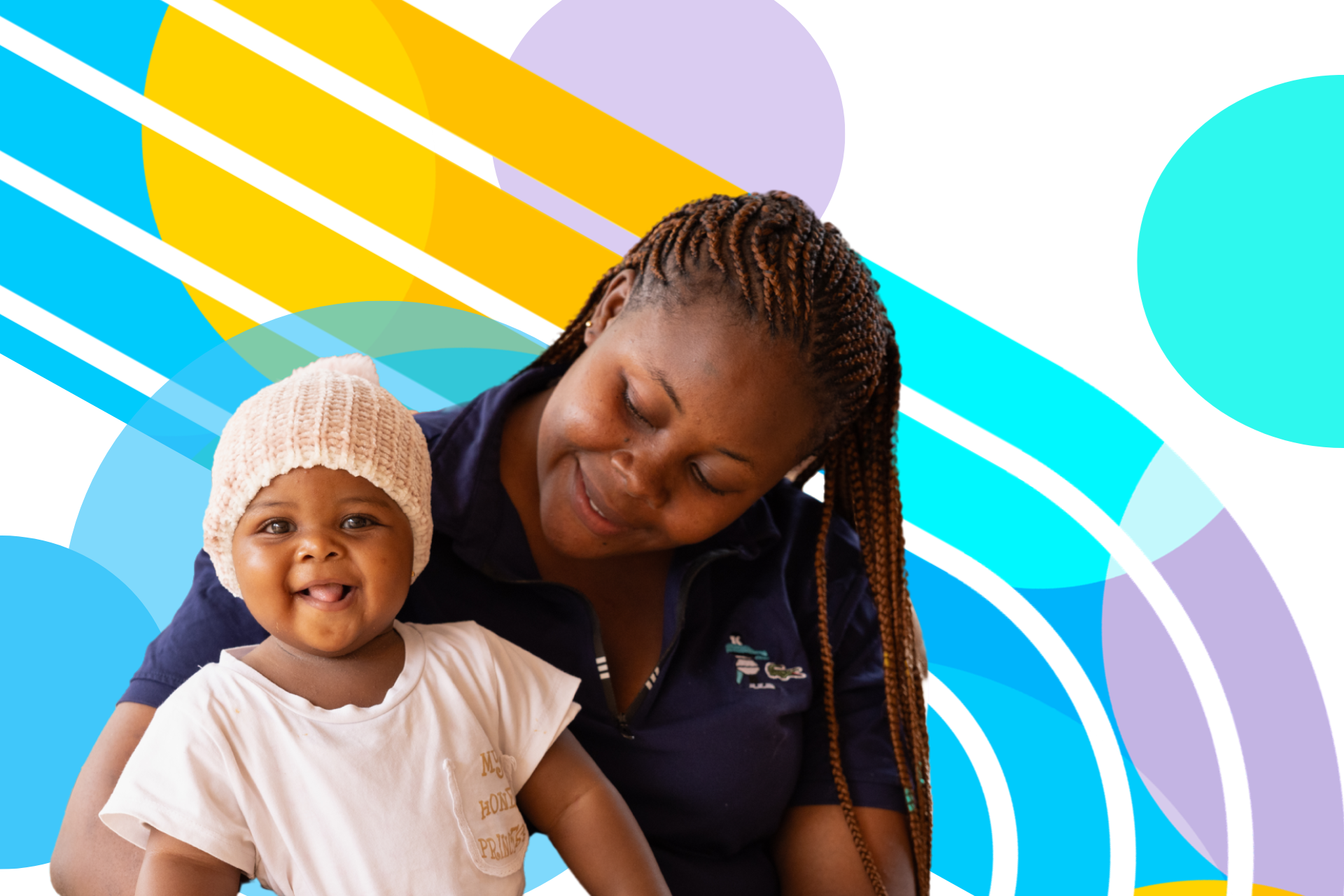
World Immunization Week is a global public health campaign to raise awareness and increase rates of immunization against vaccine-preventable diseases around the world, it takes place each year during the last week of April (24th – 30th).
Immunization can protect against 25 different infectious agents or diseases, from infancy to old age, including diphtheria, measles, pertussis, polio, tetanus and COVID-19. The World Health Organization (WHO) estimates active immunization currently averts 2 to 3 million deaths every year. However, 22.6 million infants worldwide are still missing out on basic vaccines, mostly in developing countries. Inadequate immunization coverage rates often result from limited resources, competing health priorities, poor management of health systems and inadequate surveillance. The goal of World Immunization Week is to raise public awareness of how immunization saves lives, and support people everywhere to get the vaccinations needed against deadly diseases for themselves and their children. World Immunization Week sprung out of the efforts taking place across different countries and regions for a week-long immunization awareness commemoration. World Immunization Week is one of eleven official campaigns marked by the WHO, along with World Health Day, World Blood Donor Day, World No Tobacco Day, World Tuberculosis Day, World Malaria Day, World Patient Safety Day, World Hepatitis Day, World Antimicrobial Awareness Week, World Chagas Disease Day and World AIDS Day.
Links:
World Immunization Week 2025
Woensdag; Wat eten we vandaag?; Wereldboekendag.
Wat eten we vandaag?:

Knipselkrant:
Agenda – Wereldboekendag / World Book and Copyright Day / William Shakespeare – geboortedag (1564) en sterfdag (1616) 2025 www.a3veen.nl/event/wereld…
— A3veen.nl (@a3veen.bsky.social) 24 april 2025 om 00:35
[image or embed]
Agenda:
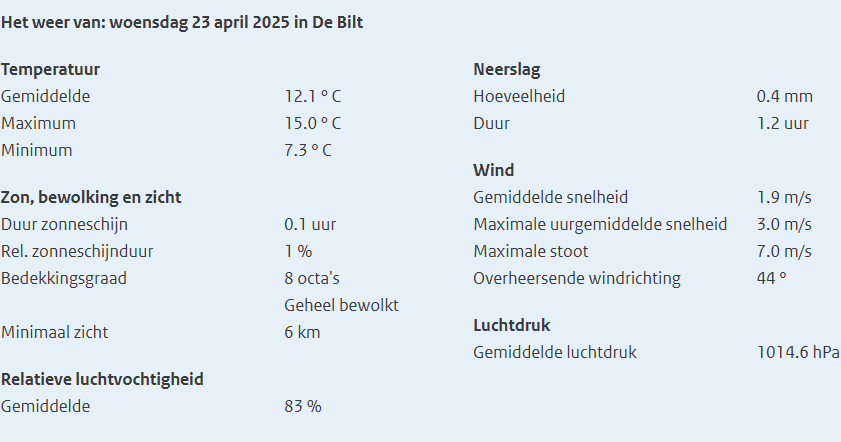
Weer:
Links:
In de geschiedenis

Wereldboekendag
De dag werd voor het eerst gehouden in 1995. De datum 23 april werd gekozen omdat deze dag in Spanje al sinds 1923 in het teken stond van boeken. Op die dag werd de schrijver Miguel de Cervantes geëerd. Dit werd later ook opgenomen in de Spaanse viering van Sint Jorisdag (eveneens op 23 april). Een andere reden om 23 april als datum te kiezen was omdat dit de geboorte- en sterfdag was van William Shakespeare, Miguel de Cervantes, Garcilaso de la Vega en Josep Pla. Het Verenigd Koninkrijk en Ierland hanteren als enigen een andere datum voor wereldboekendag
Links:
Worl
Links:
Wikipedia
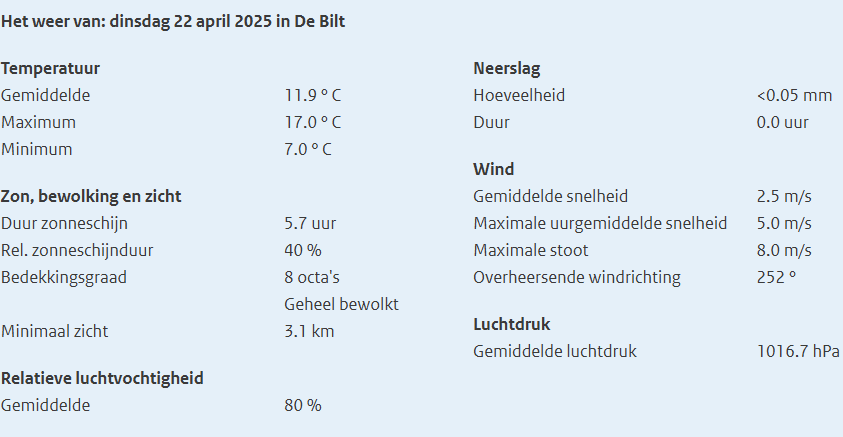
Dinsdag; Week van de Valpreventie; Zaaidag voor bijen en vlinders.
Wat eten we vandaag?:
Knipselkrant:
Agenda:
Weer:
Links:
In de geschiedenis