Russia’s ‘Ghost Detainees’: The Investigation That Cost Viktoriia Roshchyna Her Life – publication
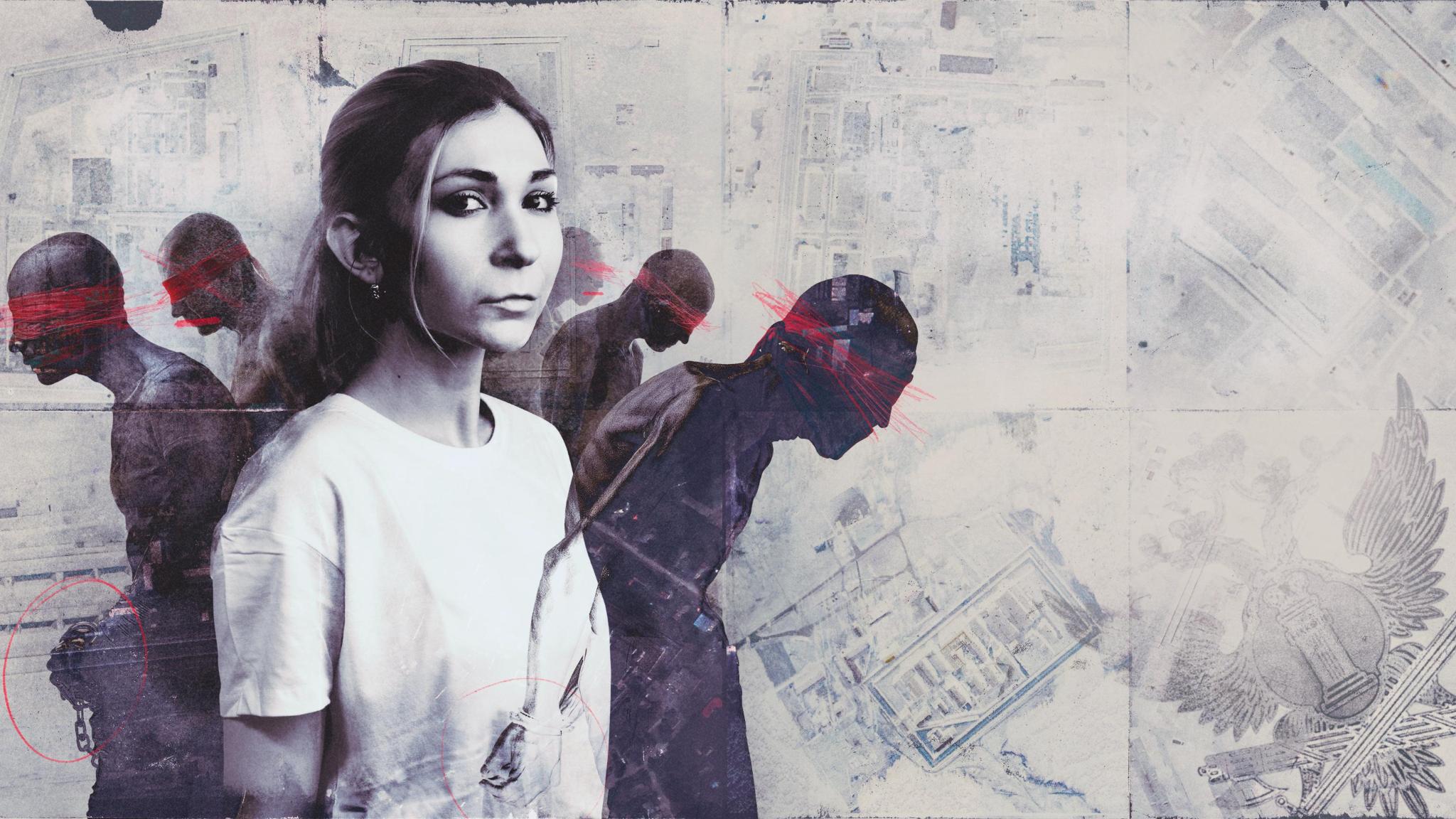
Forbidden Stories investigated the detention and death of Ukrainian journalist Viktoriia Roshchyna, which came on the heels of a reporting trip to Zaporizhzhia aimed at telling the stories of Ukrainian civilians unlawfully held by Russia.

Viktoriia Roshchyna was pronounced dead in Russian captivity in October 2024, after being secretly held for months in Russian-occupied Ukraine and a Russian prison. In February 2025, her body was repatriated. The body of Viktoriia Roshchyna was returned to Ukraine in February 2025; the body showed marks of torture and was returned without some organs. Forbidden Stories was able to consult with two of Viktoriia’s sources in Russian-held Ukraine, and with her editor, who confirmed she had traveled to Zaporizhzhia to investigate the torture of civilians in informal detention centers. Viktoriia had begun to list the names of Russian occupiers responsible for detention and torture, including FSB agents.

Links:
Russia’s ‘Ghost Detainees’: The Investigation That Cost Viktoriia Roshchyna Her Life

The Viktoriia project

Liberties’ Media Freedom Report 2025: ​Deepening Crisis In Media Freedom Across the EU Puts Democracy At Risk -publication

Media freedom is crumbling across the EU, according to Liberties’ Media Freedom Report 2025, a collaboration of more than 40 human rights organisations from across the EU.

In 2024, many governments influenced the media by allocating state funding to government-friendly outlets and using public service media for their communication tools; journalists faced widespread threats and violence, with female journalists targeted the most, and were denied requests for information by public officials; and weak media ownership transparency resulted in concentrated media ownership, Liberties Media Freedom Report 2025 (Report) finds. This Report is the fourth annual report on media freedom in the European Union (EU) produced by the Civil Liberties Union for Europe (Liberties). It is based on data and input from 43 member and partner organisations from 21 EU Member States. As in previous editions, this Report covers four primary areas: media freedom and pluralism, safety and protection of journalists, freedom of expression and access to information, and European legislation related to media freedom and pluralism.

Links:
Liberties’ Media Freedom Report 2025: ​Deepening Crisis In Media Freedom Across the EU Puts Democracy At Risk

2025-04-29, Lief dagboek

Dinsdag; Afscheid; Wat eten we vandaag?; Liberties’ Media Freedom Report.

Deze afbeelding heeft een leeg alt-attribuut; de bestandsnaam is dagboek.png

Afscheid:

Klik op afbeelding voor origineel

Op 29 april 2025 werd de moeder van A3 vanuit het afscheidshuis te Sappemeer overgebracht naar het crematorium in Appingedam vervoerd.

Klik op afbeelding voor origineel

In het crematorium werd tijdens een uitvaartdienst afscheid genomen.

Wat eten we vandaag?:

Klik op afbeelding voor origineel

Agenda:

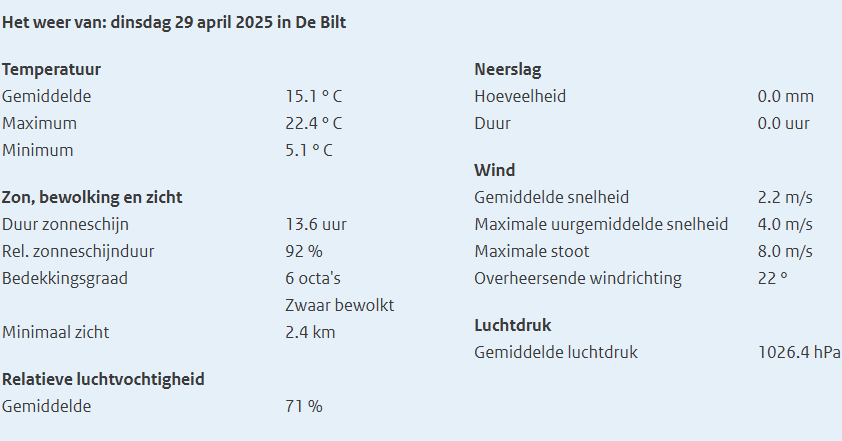
Weer:

Links:
In de geschiedenis

#ForwardForAnimals Start campaign calls for legislative proposals on animal welfare by 2026

Forward for Animals

There are strong ethical, economical and ecological reasons to modernise animal welfare policy, Forward for Animals calls on the EU’s decision makers to support an ambitious and timely proposal for all species on farms in 2026.

Forward for Animals, campaign from the Eurogroup for Animals network, looks to expose the reality of animals on farms in the EU, debunk myths from the industry, and provide positive solutions for all stakeholders. On farms across Europe, millions of animals are suffering from neglect and cruelty. The laws that protect them have not been thoroughly reviewed for over 40 years, leaving them not fit for purpose, and leaving sentient beings unprotected. The European Commission launched a much-needed revision of the animal welfare legislation five years ago, with a promise to publicly present the proposal by 2024. Disappointingly, the commitment to modernise the rules has continually been pushed back and delayed. Responding to increasing pressure to deliver the proposals, Commissioner for Animal Welfare Oliver Várhelyi promised updated legislation for animals on farms by 2026. He committed to ensuring this legislation will modernise existing EU animal welfare standards, and finally deliver on the promise to ban cages in farming. These laws must reflect citizen mandates, the evidence and consensus of the scientific community, and a firm and real commitment to end unnecessary animal suffering across the farming, transport, trade, science, and the environmental spaces. The campaign highlights that dignity, kindness, compassion and safety should be basic rights for all sentient beings in Europe. Therefore the EU should enshrine these principles in policy, ensuring a progressive and fair society for humans and animals alike. Later in the year, citizens will have the opportunity to participate and voice their support for the campaign.

Links:
Forward for Animals

#IWMD25 Workers’ Memorial Day / World Day for Safety and Health at Work / Gedenkdag voor Arbeidsslachtoffers / Dag voor Veiligheid en Gezondheid op het Werk 2025

World Day for Safety and Health at Work is a UN international day that is celebrated every April 28, it is concerned about safe work and awareness of the dimensions and consequences of work-related accidents and diseases; to place occupational safety and health (OSH) on the international and national agendas; and to provide support to the national efforts for the improvement of national OSH systems and programmes in line with relevant international labor standards.

It coincides with Workers’ Memorial Day and the Canadian National Day of Mourning. World Day for Safety and Health at Work was first celebrated by the International Labour Organization in 2003. Workers’ Memorial Day, also known as International Workers’ Memorial Day or International Commemoration Day for Dead and Injured, takes place annually around the world on April 28, an international day of remembrance and action for workers killed, disabled, injured, or made unwell by their work. In Canada, it is commemorated as the National Day of Mourning. Workers’ Memorial Day is an opportunity to highlight the preventable nature of most workplace incidents and ill health and to promote campaigns and union organization in the fight for improvements in workplace safety. The slogan for the day is Remember the dead – Fight for the living. Although April 28 is used as the focal point for remembrance and a day of international solidarity, campaigning and other related activities continue throughout the year right around the world.

Links:
World Day for Safety and Health at Work

World Day for Safety and Health at Work 28 April

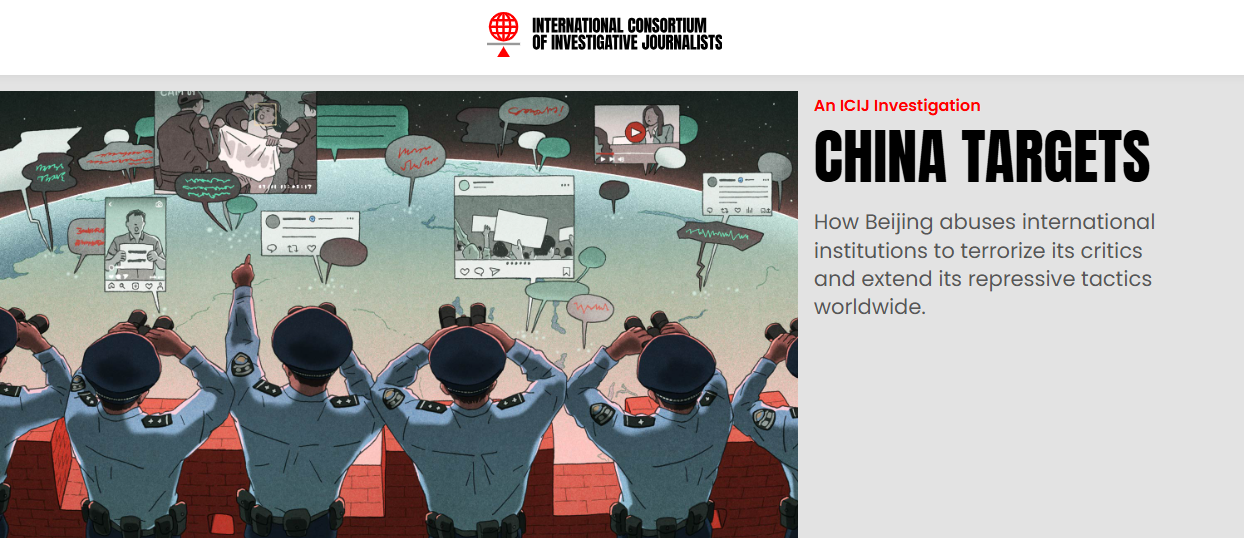
China Targets investigation – publication

How Beijing abuses international institutions to terrorize its critics and extend its repressive tactics worldwide.

China Targets is a cross-border investigation led by the International Consortium of Investigative Journalists (ICIJ) that uncovers the sprawling scope and terrifying tactics of Beijing’s campaign to target regime critics living overseas. The 10-month investigation also reveals how the United Nations has become a staging ground for China’s transnational repression under Xi Jinping’s regime — and how Chinese authorities abuse Interpol red notices for political ends. ICIJ and 42 media partners interviewed 105 people in 23 countries who have been targeted by Chinese authorities in recent years for criticizing the government’s policies in public and privately. These individuals include Chinese and Hong Kong political dissidents as well as members of oppressed Uyghur and Tibetan minorities. Reporters took extraordinary security measures to protect the identities of the victims — many of whom asked to remain anonymous for fear of retaliation against them or their families — and to corroborate evidence of the state-sponsored harassment. ICIJ and its partners studied internal government documents, examined secret audio and video recordings of police interrogations, and pored over confidential U.N. and Interpol records, court filings and intelligence reports to analyze Beijing’s authoritarian reach. Previously unseen Chinese government records spanning from 2001 to 2020, including an internal police textbook and confidential security guidelines, provided a unique glimpse into China’s playbook for cracking down on dissent. These closely guarded documents detailed — in the Chinese authorities’ own words — how domestic security officers should identify and control targets. The security guidelines established a template for repression that Chinese authorities use today on victims overseas, ICIJ found.

Half of the 105 targets interviewed by ICIJ and its media partners stated that family members in China had been intimidated and interrogated by police or state security officials. Several said the intimidation came just hours after the targets had participated in protests or public events overseas. Sixty of the victims believed they had been followed or were being surveilled in their adopted country. Twenty-two victims said they received physical threats or were assaulted by civilians who openly supported the Chinese Communist Party (CCP). Nineteen said they had received suspicious emails or experienced hacking attempts, including by state actors. Previous ICIJ investigations exposed Beijing’s repressive policies against Muslim minorities inside China — part of the government’s sweeping program of mass surveillance and population control. China Targets documents how, under Xi, authorities have exported and expanded some of those repressive tactics, in an effort to neutralize individuals perceived as threats to national security even though they are outside the country’s borders. The disarming effect of this state-sponsored intimidation is so powerful that many activists and ethnic minorities overseas have stopped their advocacy, fearing their families back home could be harmed or imprisoned.

ICIJ discovered that not even Geneva — which the United Nations calls the “capital of peace” due to its role as the European headquarters of the U.N. and international organizations dedicated to diplomacy and human rights — was beyond the Chinese government’s frightening reach. Human rights activists and lawyers told ICIJ they had been surveilled, harassed or intimidated by people they believe to be Chinese diplomats or government proxies, including delegates from nongovernmental organizations. The U.N. grants thousands of NGOs “consultative status” — offering the groups certain privileges with the expectation that they act without government interference. But an ICIJ analysis of 106 such NGOs from mainland China, Hong Kong, Macau and Taiwan revealed that 59 are closely connected to the Chinese government or the Communist Party. Chinese authorities also abuse Interpol, the world’s largest mechanism for police cooperation, ICIJ and its partners found. Through Interpol, China pursues dissidents, powerful businesspeople and Uyghur rights advocates, in apparent violation of Interpol’s rules. Many targets discovered they were wanted only after being stopped at a border control. China Targets reveals the scope of crackdowns on protesters during Xi Jinping’s foreign travels. During at least seven of Xi’s 31 overseas visits between 2019 and 2024, local law enforcement infringed on dozens of protesters’ rights to shield the Chinese president from dissent, detaining or arresting activists, often for spurious reasons. In the cases ICIJ analyzed, the campaign to silence opponents of the Communist Party appears to have involved local law enforcement in host countries, revealing the extent to which China wields its political and economic power to pressure foreign governments and institutions to bend to its will.

Links:
Inside China’s machinery of repression — and how it crushes dissent around the world

2025-04-28, Lief dagboek

Maandag; Wat eten we vandaag?; Tapas; Gedenkdag voor Arbeidsslachtoffers / Dag voor Veiligheid en Gezondheid op het Werk; Forward For Animals.

Deze afbeelding heeft een leeg alt-attribuut; de bestandsnaam is dagboek.png

Wat eten we vandaag?:

Klik op afbeelding voor origineel

Tapas:

Klik op afbeelding voor origineel

Met directe familie werd door A3 aan het Zuidlaardermeer tapas gegeten.

Knipselkrant:

Agenda:

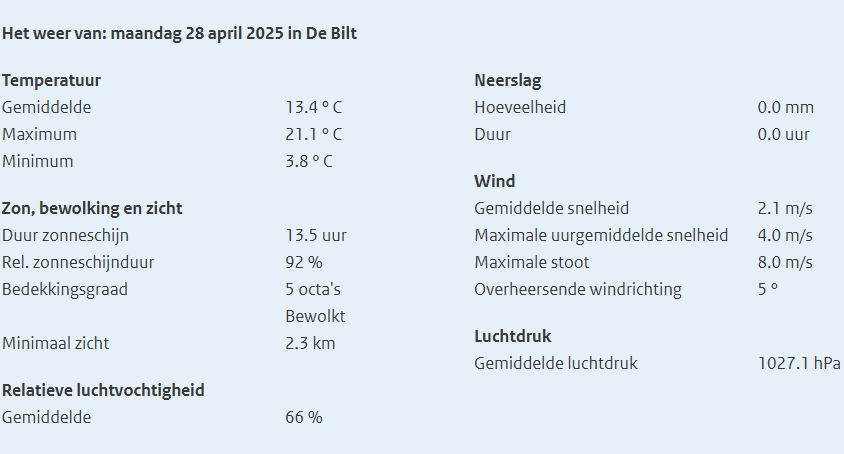
Weer:

Links:
In de geschiedenis