#IWMD25 Workers’ Memorial Day / World Day for Safety and Health at Work / Gedenkdag voor Arbeidsslachtoffers / Dag voor Veiligheid en Gezondheid op het Werk 2025

World Day for Safety and Health at Work is a UN international day that is celebrated every April 28, it is concerned about safe work and awareness of the dimensions and consequences of work-related accidents and diseases; to place occupational safety and health (OSH) on the international and national agendas; and to provide support to the national efforts for the improvement of national OSH systems and programmes in line with relevant international labor standards.

It coincides with Workers’ Memorial Day and the Canadian National Day of Mourning. World Day for Safety and Health at Work was first celebrated by the International Labour Organization in 2003. Workers’ Memorial Day, also known as International Workers’ Memorial Day or International Commemoration Day for Dead and Injured, takes place annually around the world on April 28, an international day of remembrance and action for workers killed, disabled, injured, or made unwell by their work. In Canada, it is commemorated as the National Day of Mourning. Workers’ Memorial Day is an opportunity to highlight the preventable nature of most workplace incidents and ill health and to promote campaigns and union organization in the fight for improvements in workplace safety. The slogan for the day is Remember the dead – Fight for the living. Although April 28 is used as the focal point for remembrance and a day of international solidarity, campaigning and other related activities continue throughout the year right around the world.

Links:
World Day for Safety and Health at Work

World Day for Safety and Health at Work 28 April

China Targets investigation – publication

How Beijing abuses international institutions to terrorize its critics and extend its repressive tactics worldwide.

China Targets is a cross-border investigation led by the International Consortium of Investigative Journalists (ICIJ) that uncovers the sprawling scope and terrifying tactics of Beijing’s campaign to target regime critics living overseas. The 10-month investigation also reveals how the United Nations has become a staging ground for China’s transnational repression under Xi Jinping’s regime — and how Chinese authorities abuse Interpol red notices for political ends. ICIJ and 42 media partners interviewed 105 people in 23 countries who have been targeted by Chinese authorities in recent years for criticizing the government’s policies in public and privately. These individuals include Chinese and Hong Kong political dissidents as well as members of oppressed Uyghur and Tibetan minorities. Reporters took extraordinary security measures to protect the identities of the victims — many of whom asked to remain anonymous for fear of retaliation against them or their families — and to corroborate evidence of the state-sponsored harassment. ICIJ and its partners studied internal government documents, examined secret audio and video recordings of police interrogations, and pored over confidential U.N. and Interpol records, court filings and intelligence reports to analyze Beijing’s authoritarian reach. Previously unseen Chinese government records spanning from 2001 to 2020, including an internal police textbook and confidential security guidelines, provided a unique glimpse into China’s playbook for cracking down on dissent. These closely guarded documents detailed — in the Chinese authorities’ own words — how domestic security officers should identify and control targets. The security guidelines established a template for repression that Chinese authorities use today on victims overseas, ICIJ found.

Half of the 105 targets interviewed by ICIJ and its media partners stated that family members in China had been intimidated and interrogated by police or state security officials. Several said the intimidation came just hours after the targets had participated in protests or public events overseas. Sixty of the victims believed they had been followed or were being surveilled in their adopted country. Twenty-two victims said they received physical threats or were assaulted by civilians who openly supported the Chinese Communist Party (CCP). Nineteen said they had received suspicious emails or experienced hacking attempts, including by state actors. Previous ICIJ investigations exposed Beijing’s repressive policies against Muslim minorities inside China — part of the government’s sweeping program of mass surveillance and population control. China Targets documents how, under Xi, authorities have exported and expanded some of those repressive tactics, in an effort to neutralize individuals perceived as threats to national security even though they are outside the country’s borders. The disarming effect of this state-sponsored intimidation is so powerful that many activists and ethnic minorities overseas have stopped their advocacy, fearing their families back home could be harmed or imprisoned.

ICIJ discovered that not even Geneva — which the United Nations calls the “capital of peace” due to its role as the European headquarters of the U.N. and international organizations dedicated to diplomacy and human rights — was beyond the Chinese government’s frightening reach. Human rights activists and lawyers told ICIJ they had been surveilled, harassed or intimidated by people they believe to be Chinese diplomats or government proxies, including delegates from nongovernmental organizations. The U.N. grants thousands of NGOs “consultative status” — offering the groups certain privileges with the expectation that they act without government interference. But an ICIJ analysis of 106 such NGOs from mainland China, Hong Kong, Macau and Taiwan revealed that 59 are closely connected to the Chinese government or the Communist Party. Chinese authorities also abuse Interpol, the world’s largest mechanism for police cooperation, ICIJ and its partners found. Through Interpol, China pursues dissidents, powerful businesspeople and Uyghur rights advocates, in apparent violation of Interpol’s rules. Many targets discovered they were wanted only after being stopped at a border control. China Targets reveals the scope of crackdowns on protesters during Xi Jinping’s foreign travels. During at least seven of Xi’s 31 overseas visits between 2019 and 2024, local law enforcement infringed on dozens of protesters’ rights to shield the Chinese president from dissent, detaining or arresting activists, often for spurious reasons. In the cases ICIJ analyzed, the campaign to silence opponents of the Communist Party appears to have involved local law enforcement in host countries, revealing the extent to which China wields its political and economic power to pressure foreign governments and institutions to bend to its will.

Links:
Inside China’s machinery of repression — and how it crushes dissent around the world

2025-04-28, Lief dagboek

Maandag; Wat eten we vandaag?; Tapas; Gedenkdag voor Arbeidsslachtoffers / Dag voor Veiligheid en Gezondheid op het Werk; Forward For Animals.

Deze afbeelding heeft een leeg alt-attribuut; de bestandsnaam is dagboek.png

Wat eten we vandaag?:

Klik op afbeelding voor origineel

Tapas:

Klik op afbeelding voor origineel

Met directe familie werd door A3 aan het Zuidlaardermeer tapas gegeten.

Knipselkrant:

Agenda:

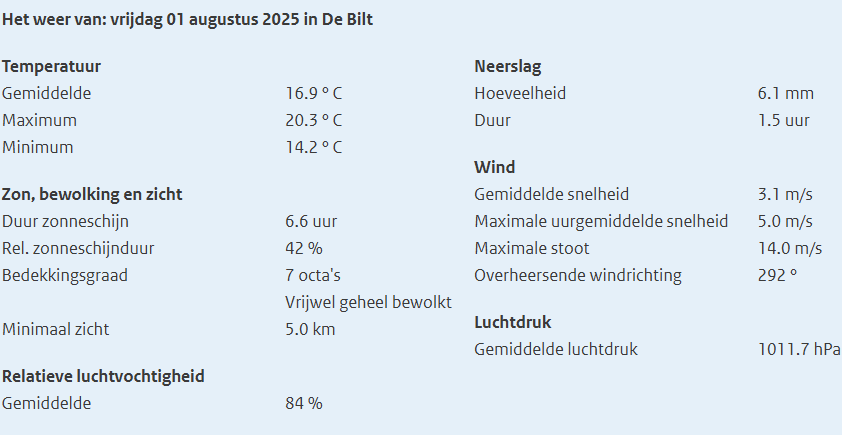
Weer:

Links:
In de geschiedenis

Vroege Vogels TV | 27 april 2025 | Slikken van Voorne (TV NPO 2)

Vroege Vogels is een live-radioprogramma, tv-programma en online community van BNNVARA over natuur en milieu.

In het radioprogramma wordt het gesproken woord omlijst door licht klassieke muziek en salonmuziek. Het radioprogramma werd in 1978 voor het eerst uitgezonden door de VARA en is een van de langst lopende en best beluisterde radioprogramma’s van de publieke omroep. Het wordt elke zondagmorgen uitgezonden tussen 07:00 en 10:00 op NPO Radio 1. De beginmuziek is een bewerking van Vivaldi’s “Piccolo Concerto in C major” (RV 443). De tv editie wordt uitgezonden via NPO 2 op zondag, vaak rond een thema.

Waar ooit de Maas de zee instroomde, vormt zich nu een klein waddengebied vol leven: de Slikken van Voorne. De badgasten die per tram vanuit Rotterdam kwamen, zijn ingeruild voor moerasvogels op het Groene Strand. We zien veel bijzondere kevers, pluizen uilenballen om verborgen muizen te ontdekken en volgen meeuwen die vlak langs de windmolens van de Maasvlakte scheren. In het Oostvoornse Meer zien we brilduikers, middelste zaagbekken en een hele groep dodaars. Menno Bentveld gaat in het pikkedonker nog op zoek naar konijnen. En dat allemaal onder de rook van de Rotterdamse haven.

Links:
Vroege Vogels (na afloop terugkijken)

Vroege Vogels Radio | 27 april 2025 (Radio 1 NPO)

Vroege Vogels is een live-radioprogramma, tv-programma en online community van BNNVARA over natuur en milieu.

In het radioprogramma wordt het gesproken woord omlijst door licht klassieke muziek en salonmuziek. Het radioprogramma werd in 1978 voor het eerst uitgezonden door de VARA en is een van de langst lopende en best beluisterde radioprogramma’s van de publieke omroep. Het wordt elke zondagmorgen uitgezonden tussen 07:00 en 10:00 op NPO Radio 1. De beginmuziek is een bewerking van Vivaldi’s “Piccolo Concerto in C major” (RV 443).

Welke vogels doen mee aan het Nationaal Vogelconcert in het Utrechtse Griftpark? Primeur op website van Beleef de Lente: de eerste zoogdier-livestream van een woelmuis. Er is een nieuwe techniek om plastic uit het water te halen. En verder: koekoekgeluiden, kleine valeriaan, Kids Repair Cafe, Je hond eet je niet op, stikstof en hoogleraar Haasnoot over klimaatadaptatie. De column is deze week van Bibi Dumon Tak.

Links:
Vroege Vogels (na afloop terugluisteren)

World Tapir Day / Wereld Tapir Dag 2025

By 蕭漫 – Own work based onBernard DUPONT from FRANCEDavid SifryGreg Goebel from Loveland CO, USARufus46, CC BY-SA 4.0

World Tapir Day is celebrated on 27 April each year and exists to raise awareness about the species of tapir that inhabit Central and South America and Southeast Asia and to raise funds to purchase land to protect it from human encroachment.

Tapirs are large herbivorous mammals that inhabit jungle and forest regions of South America, Central America, and Southeast Asia. As large herbivores, tapirs are invariably the first species affected by human encroachment into their territory, and amongst the last to return to regrowth forest. They require substantial tracts of undisturbed land to maintain a genetically-diverse population. Tapirs inhabit jungles, grasslands, swamps and cloud forests, yet each is threatened by human activity – be that mining, palm oil plantations, roads or settlements. They form an important part of the ecosystem as seed dispersers, and form one of the oldest surviving genera in the animal kingdom. Despite their size, history and ecological importance, tapirs remain one of the least recognised species of animals. In comparison with other animals, tapirs feature little in the collective consciousness and are frequently misidentified by zoo visitors.

Even in their home ranges, tapirs receive little attention, with exotic species featuring more prominently in zoos, children’s books and the media. The plight of tapirs is symbolic for the wider threat to their habitats specifically, and the world’s ecology in general. The decline of tapir populations is indicative of the general health of their ranges; their disappearance from their home ranges often marks a point of ‘no return’ for the natural environment. The destruction of forests into small, isolated enclaves and the encroachment of human activity into pristine forests affects all native species. However, as the largest – yet perhaps the quietest – of animals in their ranges, tapirs disappear without trace with countless other species. All tapirs are endangered species. Saving tapirs helps to save the rainforest. Saving rainforests helps to save the planet and prevent climate change.

Links:
World Tapir Day: Discovering earth’s prehistoric wanderers