#fbm26 Frankfurter Buchmesse 2026

Frankfurter Buchmesse

Die Frankfurter Buchmesse (Boekenbeurs Frankfurt) ist eine internationale Buchmesse, die jährlich im Oktober auf dem Gelände der Messe Frankfurt stattfindet.

Sie wurde 1949 vom Börsenverein des Deutschen Buchhandels gegründet. Seit 1976 wurden regionale und thematische Schwerpunkte gebildet; seit 1988 stellt sie in jedem Jahr die Literatur und Kultur eines Gastlandes besonders heraus. Während der Buchmesse werden der Deutsche Buchpreis, der Friedenspreis des Deutschen Buchhandels, der Deutsche Jugendliteraturpreis und viele andere Branchenauszeichnungen verliehen. Die Frankfurter Buchmesse hat eine mehr als 500-jährige Tradition. Eine Buchmesse in Frankfurt am Main gab es schon in der frühen Neuzeit, nachdem Johannes Gutenberg in Mainz, nur wenige Kilometer von Frankfurt entfernt, den Buchdruck revolutioniert hatte und die Buchdrucker Johannes Fust, Peter Schöffer und Konrad Henckis die Frankfurter Messe zum Umschlagsort des den Handschriftenhandel ablösenden Verlagsbuchhandels machten. Die Buchmesse dient als Fachmesse in erster Linie Verlegern, Literaturagenten,  Buchhändlern, Bibliothekaren, Wissenschaftlern, Illustratoren, Dienstleistern, Filmproduzenten, Übersetzern, Druckern, Verbänden, Künstlern, Autoren, Antiquaren, aber auch Software- und Multimedia-Anbietern zur Vorstellung ihres Angebots und dem Abschluss von Geschäften. Der Handel mit Buchlizenzen und -rechten findet in einem eigenen Agentencenter statt. Dieses sogenannte B2B-Geschäft zwischen Unternehmen steht im Mittelpunkt der Messe, die sich erst in zweiter Linie an das allgemeine Publikum richtet, dem nur an den letzten beiden Messetagen Zugang gewährt wird.

Daneben wird die Messe zunehmend als Produktionsort für Rundfunksendungen genutzt. Hörfunk- und Fernsehsender veranstalten während der Messetage auf einer eigenen Bühne Gesprächssendungen, die vielfach live übertragen oder im Internet gestreamt werden, wie zum Beispiel die Lesebühne von ARD, ZDF und 3sat. Die Frankfurter Buchmesse fördert in Zusammenarbeit mit dem Auswärtigen Amt, dem Goethe-Institut und anderen Institutionen die Übersetzung deutscher Literatur im Ausland. Dazu werden jedes Jahr rund 25 Beteiligungen an Buchmessen in aller Welt organisiert. Zur Übersetzungsförderung wurden seit Anfang der 1990er Jahre in Zusammenarbeit mit dem Goethe- Institut Buchinformationszentren gegründet, die inzwischen allerdings unter der Bezeichnung German Book Office stark in die Vertriebsarbeit der Messe eingebunden sind. Derzeit gibt es ständige Präsenzen in New York, Peking, Moskau, Bukarest und New Delhi. Darüber hinaus existieren Stipendienprogramme wie das vom Auswärtigen Amt finanzierte Einladungsprogramm für Verleger aus Afrika, Asien und Lateinamerika und das Frankfurt Fellowship, das sich an den verlegerischen Nachwuchs richtet. Zum 50. Jubiläum der Buchmesse wurde 1998 das Programm Städte der Zuflucht lanciert, das, unterstützt von der Stadt Frankfurt, verfolgten Schriftstellern für jeweils ein Jahr den Aufenthalt in Frankfurt ermöglicht. Da die Bekanntgabe des Gewinners des Nobelpreises für Literatur häufig in die Messewoche fällt oder ihr kurz vorausgeht, ist die Buchmesse traditionell auch das erste größere Forum des Verlages, der die Werke des neuen Nobelpreisträgers im Programm hat.

Links:
Frankfurter Buchmesse
Frankfurt Kids

Het Buitenspeelalarm 07-10-2026

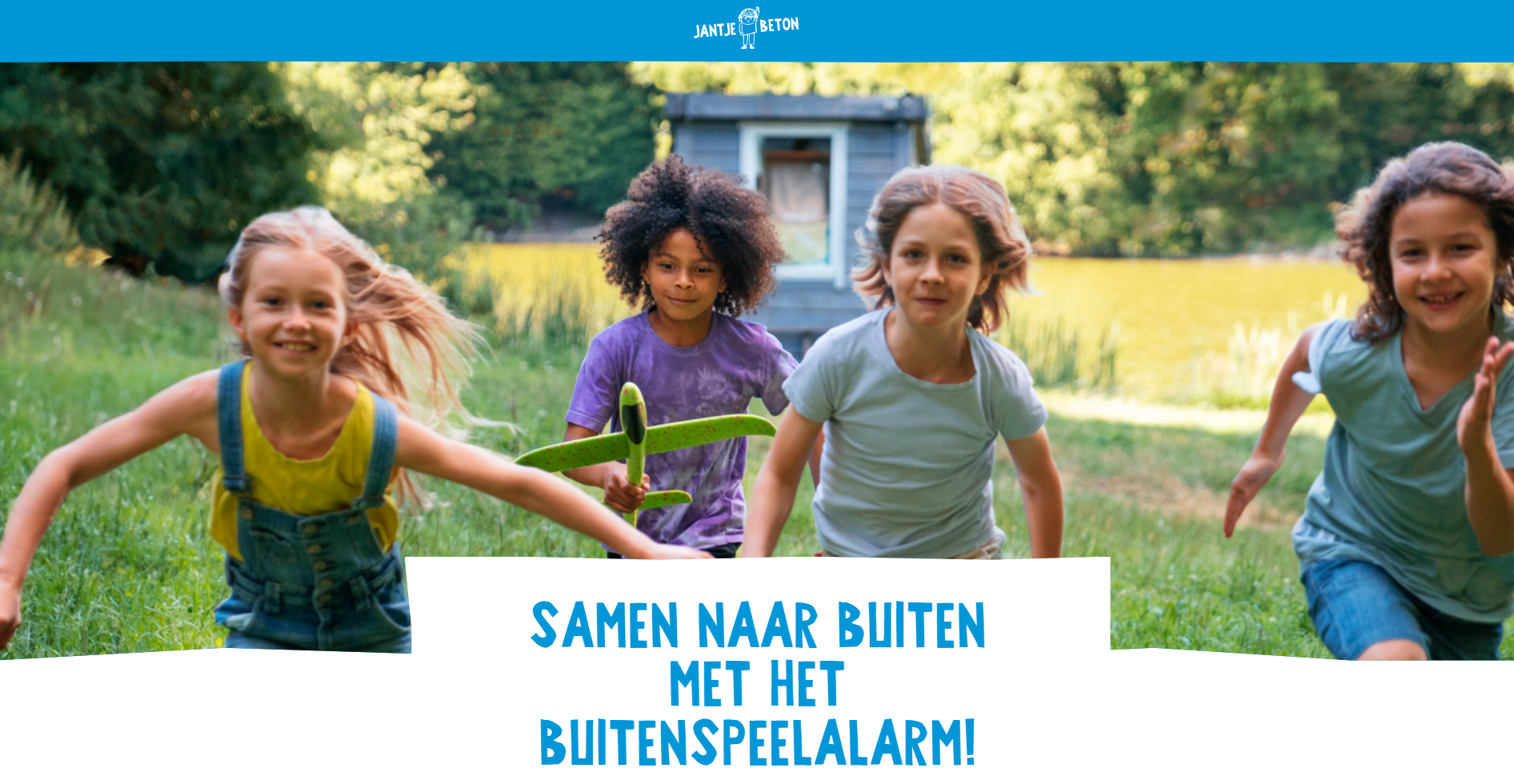
Jantje Beton, een organisatie die zich inzet voor jeugdvoorzieningen in Nederland, organiseert de campagne ‘Het Buitenspeelalarm’ op iedere eerste woensdag van de maand.

Bijna 400.000 kinderen in Nederland spelen nooit buiten. Er ontstaat een generatie aan binnenzitters. Dat is niet gezond. Jantje Beton maakt zich zorgen en slaat alarm! Niet-buitenspelen is een groot probleem. Hoe maak je vriendjes in je buurt als je nooit naar buiten gaat? Te veel binnenzitten zorgt voor overgewicht, slechtziendheid, depressiviteit en slapeloosheid onder kinderen. Dit moet veranderen. Daarom slaat Jantje Beton elke eerste woensdag van de maand het Buitenspeelalarm! Volg Jantje Beton op socials of meld je aan voor de nieuwsbrief om maandelijks het Buitenspeelalarm en een gratis buitenspeeltip te ontvangen. Ga mee naar buiten en laat kinderen spelen!

Links:
Het Buitenspeelalarm

Het nummer ‘Koekoek’ wil kinderen stimuleren naar buiten te gaan

Symposium Harmful Policing

Dutch Surveillance Studies

The lethal violence being perpetrated by ICE in the United States and the death of a migrant worker in French police custody have caused widespread outrage and reinvigorated concerns about harmful policing and disproportionate uses of force.

Whilst police violence is often viewed as a physical force, the increased digitization of policing produces new forms of harm. By connecting both dimensions, this symposium aims to contribute to the interplay between technology, policing and harm. Research into ‘traditional’ forms of police violence tend to focus on physical force, less-than-lethal weaponry, crowd control and fatal incidents. The digitization of policing brings about the potential for a new range of harms, such as through facial and speech recognition software, algorithmic decision-making, risk-profiling and online surveillance. Moreover, the usage of digital technologies can influence discriminatory practices such as stop-and-searches and other traditional forms of police violence. Harmful policing manifests itself in a wide range of lived experiences and employs a diverse, increasingly digitalizing, set of methods and applications. In this symposium we explore the interactions between digital policing and physical manifestations of police violence, and ask if our algorithmic society calls for redefining police violence and the use of force. How are people impacted by digital police violence? Does digital policing influence and intertwine with traditional modes of police violence and, if so, how? But also: which tools can foster police transparency and accountability that earn public trust and reduce harmful policing? The symposium is a prelude to an international exhibition on building public truths and fatal police violence in het Nieuwe Instituut in Rotterdam, opening in 2027. The symposium provides a platform for researchers, practitioners, activists, and experts through experience to come together and reflect on police violence, its temporal and systematic effects, material and digital technologies, lived experiences of policing, and the harms of digitalized police practices.

Links:
Symposium Harmful Policing

Kanker in 2045: verwachting voor incidentie en sterfte – publicatie

Kanker in 2045: verwachting voor incidentie en sterfte

Aantal kankerdiagnoses stijgt tot 2045 naar bijna 170.000 per jaar, vergrijzing zorgt voor meer kanker, maar preventie kan de toekomstige ontwikkeling beïnvloeden.

Het jaarlijkse aantal nieuwe kankerdiagnoses in Nederland stijgt naar verwachting van ruim 136.000 in 2025 naar bijna 170.000 in 2045. Ook het aantal mensen dat aan kanker overlijdt neemt toe: van ruim 46.000 in 2024 naar ruim 57.000 in 2045. De toename van het aantal ouderen in Nederland is hiervoor de belangrijkste verklaring. Dat blijkt uit toekomstverkenningen van Integraal Kankercentrum Nederland (IKNL). Al jaren is kanker een van de ziekten met de grootste ziektelast in Nederland. Kanker heeft niet alleen een enorme impact op patiënten en hun naasten, maar ook op de maatschappij en de zorg. Deze toekomstverkenning maakt zichtbaar hoe het aantal kankerdiagnoses en sterfgevallen door kanker zich in de komende twintig jaar kan ontwikkelen. Deze cijfers vormen belangrijke input voor plannen om de zorgvraag zo goed mogelijk op te vangen en de impact van kanker te verminderen.

Links:
Aantal kankerdiagnoses stijgt tot 2045 naar bijna 170.000 per jaar

World Cotton Day 2026

World Cotton Day

Cotton is one of the most common fabrics in our wardrobes: it is comfortable, hypoallergenic, breathable and durable.

But cotton represents so much more than just a commodity. This natural fabric is a life-changing product worldwide that sustains 32 million growers (almost half of them women) and benefits over 100 million families across 80 countries in 5 continents. This means that, behind any cotton clothing, following back its trade chain, there is a personal story. It is true that cotton is really important to developed economies, but for least-developed and developing countries, it is a safety-net. Cotton is a major source of livelihoods and incomes for many rural smallholders and laborers, including women, providing employment and income to some of the poorest rural areas in the world. On this official UN World Cotton Day, the United Nations wants to raise visibility of the cotton sector and awareness of the critical role that it plays in economic development, international trade and poverty alleviation. The observance also aims to highlight the importance of sustained, inclusive and sustainable economic growth, full and productive employment and decent work for all.

Links:
World Cotton Day

#WDDW World Day for Decent Work / Werelddag voor Fatsoenlijk Werk 2026

International Trade Union Confederation

October 7, is the World Day for Decent Work, during that day trade unions, union federations and other workers associations develop their actions to promote the idea of Decent Work.

Actions vary from street demonstrations to music events or conferences held in many countries. The United Nations Economic and Social Council has given a General Comment that defines “decent work” and requires satisfaction of Article 7 of the International Covenant on Economic, Social and Cultural Rights: decent work is employment that “respects the fundamental rights of the human person as well as the rights of workers in terms of conditions of work safety and remuneration. … respect for the physical and mental integrity of the worker in the exercise of his/her employment. According to the International Labour Organization (ILO), decent work involves opportunities for work that are productive and deliver a fair income, security in the workplace and social protection for families, better prospects for personal development and social integration, freedom for people to express their concerns, organize and participate in the decisions that affect their lives and equality of opportunity and treatment for all women and men. The ILO is developing an agenda for the community of work, represented by its tripartite constituents, to mobilize their considerable resources to create those opportunities and to help reduce and eradicate poverty. The ILO Decent Work Agenda is the balanced and integrated programmatic approach to pursue the objectives of full and productive employment and decent work for all at global, regional, national, sectoral and local levels. It has four pillars: standards and rights at work, employment creation and enterprise development, social protection and social dialogue.
The Sustainable Development Goals also proclaims decent work for sustainable economic growth.

Links:
World Day for Decent Work: For democracy that delivers decent work

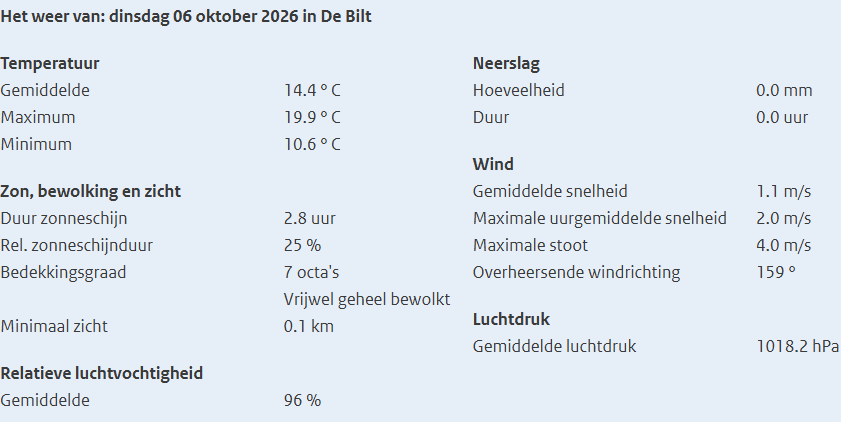
2026-10-06, Lief dagboek

Dinsdag; Wat eten we vandaag?; Groene lijst: Klimaatzaak tegen de EU; Dierendag; Geodiversity Day; Diversity Day; Wereld Cerebrale Parese Dag; Natuurlijk kan het slimmer; Are more young people getting cancer?; Nobel Prize in Physics.

Deze afbeelding heeft een leeg alt-attribuut; de bestandsnaam is dagboek.png

Wat eten we vandaag?:

Klik op afbeelding voor origineel

Knipselkrant:


Agenda:

Weer:

Links:
In de geschiedenis

Blaauw Lecture 2026

Blaauw Lecture

Every year, the Kapteyn Astronomical Institute organizes the Blaauw Lecture, a lecture by an internationally renowned astronomer which everyone, including the general public, can attend. The level of the lecture is such that everyone should be able to understand it.

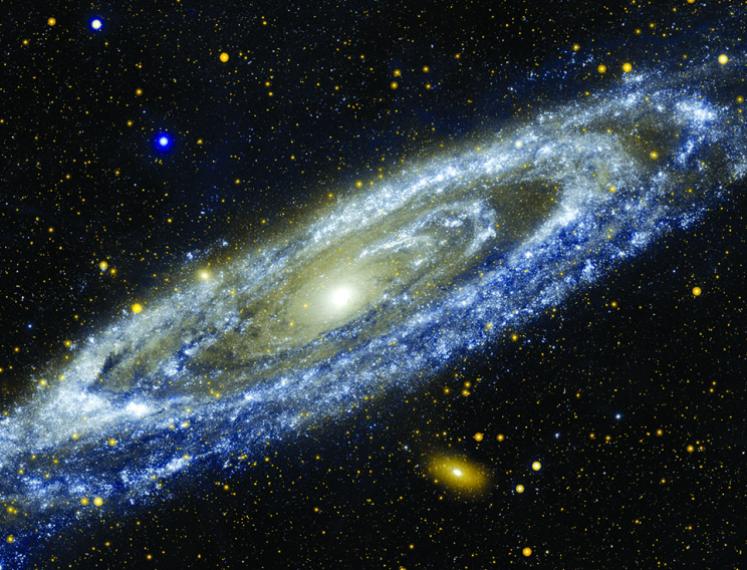
Professor Evan Skillman of the University of Minnesota in Minneapolis, the US, will give the Blaauw Lecture in 2026, the title is: Our Fascinating Neighbor the Andromeda Galaxy. The Andromeda spiral galaxy, also known as Messier 31 (M31), is the closest large galaxy to our own Milky Way. It is one of a few galaxies that is identifiable with the naked eye. Over the last three decades, many observational studies, primarily with the Hubble Space Telescope, have given us a very detailed picture of the past, the present, and even the future of M31. Given its proximity, M31 provides a great opportunity to better understand fundamental astrophysical processes like star formation and stellar evolution. In this Blaauw Lecture, astronomer Evan Skillman describes many of the recent discoveries that have been made through observations of M31. For example, Hubble observations of M31 provide us with the best measurement of what fraction of stars end their lives as supernovae. Hubble observations also revealed that M31 is on a collision course with our own Milky Way galaxy.

Links:
Blaauw Lecture 2026

Our Fascinating Neighbor the Andromeda Galaxy