A’damAdemt : Amsterdam nicotinevrij in 2040

a'dam ademt

a'dam ademt

Nicotine, daar zit een luchtje aan.

Nicotine is nog steeds een van de grootste aanjagers van gezondheidsschade en ongelijkheid in Amsterdam. Met verslavende producten en uitgekiende marketing richt de industrie zich bewust op kwetsbare groepen. Anno 2025 sterven jaarlijks 20.000 mensen in Nederland door roken, dat is gemiddeld 1 persoon elke 26 minuten… Amsterdam Ademt accepteert dit niet en gaat voor een toekomst zonder nicotine. Amsterdam is in 2040 (bijna) nicotinevrij. Dit vraagt om lef en samenwerking in de nieuwe alliantie Amsterdam Ademt: een krachtig en invloedrijk netwerk van Amsterdamse organisaties en bedrijven die zich tot doel hebben gesteld om nicotinegebruik een halt toe te roepen. De ambitie: kinderen geboren vanaf 2022 groeien op zonder blootstelling aan nicotine. In 2040, als zij 18 zijn, is Amsterdam nicotinevrij. Dit betekent geen verkooppunten in de buurt van jongeren, geen nicotinereclame, geen nicotineafval op straat.

Links:
Amsterdam nicotinevrij in 2040

Amsterdam Ademt!

Roeterstraat eerste rookvrije straat in de stad: ”Top, zeker voor opgroeiende kinderen”

Tunable Einstein-Bohr Recoiling-Slit Gedankenexperiment at the Quantum Limit – publication

The double-slit experiment demonstrates the quantum nature of reality

A groundbreaking experiment recreates Einstein’s 1927 thought challenge, confirming fundamental quantum principle.

In the study ‘Tunable Einstein-Bohr Recoiling-Slit Gedankenexperiment at the Quantum Limit‘ that brings a definitive close to one of the most famous debates in modern physics, a team of Chinese scientists has experimentally validated Niels Bohr’s core quantum principle, demonstrating that a particle’s path and its wave-like behavior are fundamentally mutually exclusive – a notion Albert Einstein famously resisted. The research, led by Professor Pan Jianwei, a pioneering quantum physicist often referred to as China’s “father of quantum,” and his team at the University of Science and Technology of China (USTC), successfully recreated and executed a thought experiment proposed by Einstein nearly a century ago. Their findings provide strong evidence that Bohr’s interpretation of quantum mechanics accurately describes the nature of reality at the subatomic level. The dispute dates back to the 1927 Solvay Conference in Brussels, where the foundations of quantum mechanics were being forged. Einstein, deeply skeptical of the theory’s probabilistic and seemingly incomplete nature, challenged Bohr’s concept of “complementarity.” Bohr argued that quantum objects possess complementary properties, such as being a particle (with a definite path) and a wave (producing an interference pattern), but that these properties cannot be observed simultaneously. The very act of measurement, Bohr claimed, forces the object into one state or the other. Einstein devised a clever thought experiment, a modification of the classic double-slit experiment, aiming to prove that a sufficiently precise measurement could, in theory, reveal both the particle’s trajectory and its wave interference pattern, thereby contradicting Bohr’s principle.

For decades, Einstein’s challenge remained a theoretical puzzle. The USTC team has now turned it into a physical reality. They constructed an advanced apparatus of extreme sensitivity, capable of detecting the minuscule momentum transfer of a single photon. By meticulously carrying out the experiment, the researchers demonstrated that any attempt to determine which path a particle takes through the apparatus inevitably disturbs the system, destroying the delicate wave interference pattern. Conversely, observing the clear interference pattern necessitates abandoning all information about the individual particle’s path. “The results are unequivocal,” the research indicates. “They confirm Bohr’s original assertion that these dual properties are complementary and cannot be observed concurrently.” This finding underscores a fundamental limit to measurement and observation inherent in the quantum world – a limit Bohr embraced but Einstein found deeply unsatisfying, prompting his famous remark, “God does not play dice with the universe.” This experimental validation is seen as a significant milestone. It conclusively settles the theoretical disagreement in favor of Bohr’s Copenhagen interpretation, confirming that the paradoxical behavior of quantum particles is not due to experimental shortcomings but is a core feature of reality itself. The work not only honors a century of philosophical and scientific inquiry but also demonstrates the advanced capabilities of China’s research teams in pushing the boundaries of fundamental physics. By answering a question posed by Einstein himself, Professor Pan’s team has provided a crucial empirical cornerstone for our understanding of the quantum realm.

Links:
Chinese Physicists Settle Einstein and Bohr’s Quantum Debate

Quantum experiment settles a century-old row between Einstein and Bohr

2025-12-01, Lief dagboek

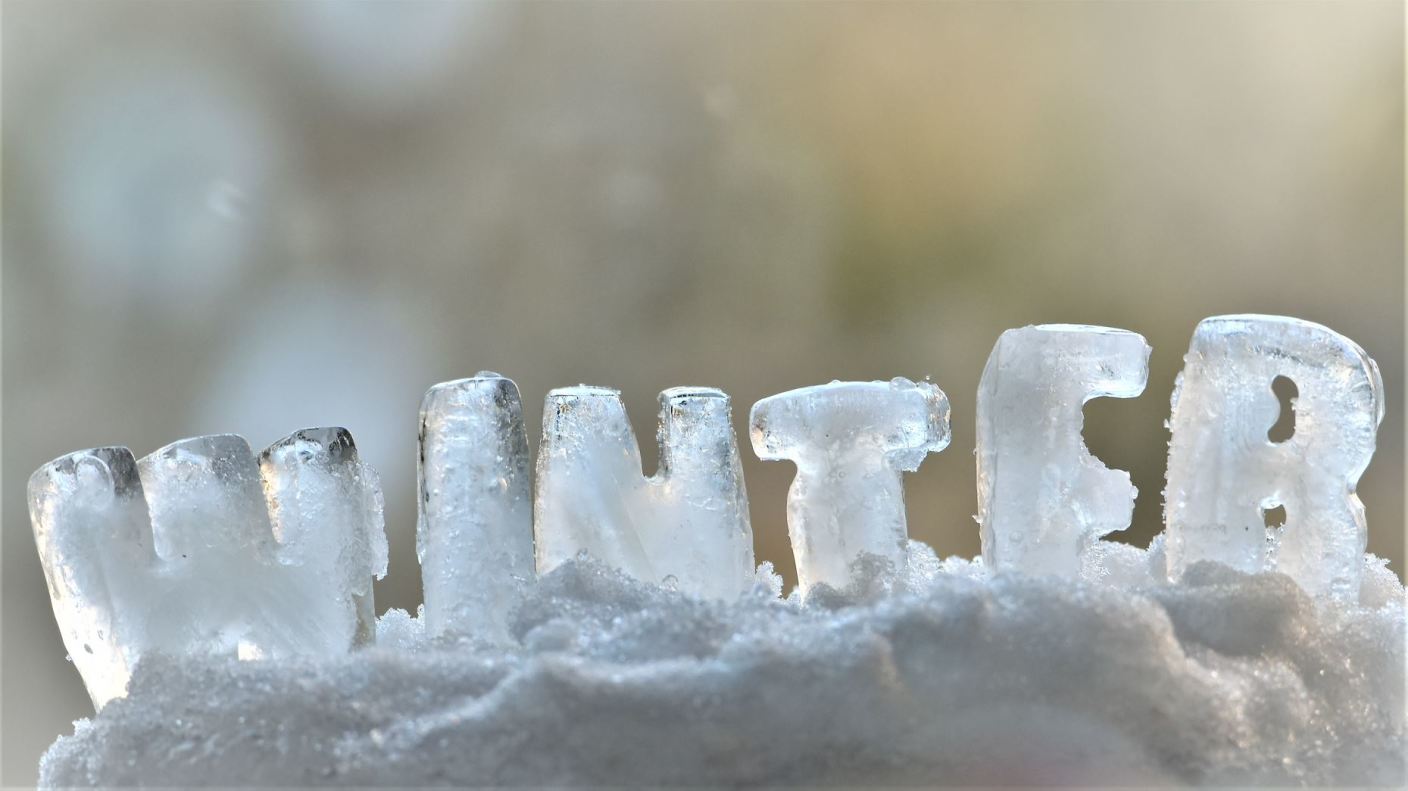
Maandag; Wat eten we vandaag?; Wereld Aids Dag; Waarschuwingsstelsel sirene en NL-alert test; Antarctica Day; Meteorologische winter (noord) / zomer (zuid); Tour de France; Disability Rights Week.

Deze afbeelding heeft een leeg alt-attribuut; de bestandsnaam is dagboek.png

Wat eten we vandaag?:

Klik op afbeelding voor origineel

Knipselkrant:


Agenda:

Weer:

KNMI weerrapport

Links:
In de geschiedenis

European Parliament’s Disability Rights Week 2025


The European Parliament is committed to ensure that all persons with disabilities can live an independent life and be fully integrated into society.

In the wake of a renewed European Disability Strategy 2025-2030 and the next Report of the UNCRPD Committee on the European Union, Parliament will hold its second Disability Rights Week from 2 to 6 December 2024, mainstreaming disability rights throughout all policy fields. EP committees, across all policy fields, as well as lead Members of the European Parliament will be debating and holding events regarding existing and future policies that should be designed to empower persons with disabilities to live on an equal footing and realise their full potential.

Links:
European Parliament’s third Disability Rights Week – from 1 to 5 December 2025

Waarschuwingsstelsel sirene en NL-alert test / #Luchtalarm – dit is een noodgeval! / #Ballenalarm

In heel Nederland klinkt op elke eerste maandag van de maand om 12:00 het luchtalarm van het waarschuwingsstelsel of waarschuwings- en alarmeringssysteem (WAS), behalve op feestdagen, Nationale Dodenherdenking of bij andere speciale gebeurtenissen.

De test duurt 1 minuut en 26 seconden. In juni en december wordt tevens een NL-Alert testbericht verstuurd naar mobiele (GSM) telefoons. Het WAS is een netwerk van 4278 sirenes in Nederland die draadloos en onafhankelijk van elkaar aangezet kunnen worden vanuit de alarmcentrale van de regionale brandweer. De sirenes worden gebruikt om te waarschuwen via een luchtalarm voor (dreigend) gevaar, met name indien er gevaarlijke stoffen in de lucht aanwezig (kunnen) zijn. Het systeem is ontwikkeld door Siemens, en gebruikt elektronische sirenes op basis van de Federal Signal Modulator 2008 en 1004. Het waarschuwingsstelsel is eigendom van het Ministerie van Justitie en Veiligheid, en is op 3 juni 1998 in gebruik genomen. De bevolking is van tevoren geïnstrueerd om in het geval dat de sirene afgaat naar binnen te gaan, ramen en deuren te sluiten en radio of televisie aan te zetten. Op de aangewezen calamiteitenzenders kan de overheid verdere aanwijzingen geven, bijvoorbeeld dat een gebied geëvacueerd zal worden.

Extinction Rebellion maakt er met de actie Luchtalarm – dit is een noodgeval! telkens met kleurrijke vlaggen en banners een mooi maar bloedserieus moment van. Met deze actie wil Extinction Rebellion NL aandacht vragen voor de klimaatcrisis en de biodiversiteitscrisis en duidelijk maken dat het al vijf over twaalf is. Sluit je voor een paar minuten aan bij deze actie en laat zien dat je ook vindt dat de overheid in actie moet komen om een leefbare toekomst voor ons en onze kinderen te waarborgen. Kom langs en doe mee! Iedereen is welkom. Neem borden mee, we delen tijdens de actie ook patches uit waarmee we onze boodschap kunnen uitdragen.

‘Het Ballenalarm‘ is een ludieke actie waarmee de Stichting Zaadbalkanker vraagt om extra aandacht voor zaadbalkanker, ook wel teelbalkanker genoemd. Het idee is dat mannen op de eerste maandag van de maand om 12:00 – als de maandelijkse alarmsirenes loeien – hun teelballen checken, en dit elke maand opnieuw. Dit moet leiden tot de vroegtijdige ontdekking van zaadbalkanker, de meest voorkomende kanker bij mannen tussen de 15 en 40 jaar.

Links:
crisis.nl

Wanneer wordt de sirene getest?

Denk vooruit: voorbereiden op noodsituatie steeds belangrijker

Wereld AIDS dag / World AIDS day 2025

Wereldaidsdag is een jaarlijks terugkerend wereldwijd evenement op 1 december, dat gewijd is aan de bewustwording omtrent aids.

Wereldaidsdag werd in augustus 1987 bedacht door James W. Bunn en Thomas Netter, beide werkzaam als voorlichter bij de Wereldgezondheidsorganisatie in Genève, Zwitserland. Bunn en Netter legden hun idee voor aan Dr. Jonathan Mann, directeur van het Global Programme on AIDS (nu bekend als UNAIDS van de Verenigde Naties). Het concept werd goedgekeurd en op 1 december 1988 vond de eerste Wereldaidsdag plaats. Het doel van Wereldaidsdag is om wereldwijd aandacht te vragen voor de aidsproblematiek en op te roepen tot solidariteit met mensen met hiv en aids. Wereldwijd vinden er vele initiatieven plaats zoals evenementen, congressen en acties. In Nederland organiseert de non-profitorganisatie Aidsfonds (voorheen Aids Fonds en STOP AIDS NOW!) Wereldaidsdag met onder andere een congres en een campagne. In België vraagt Sensoa aandacht voor de aidsbestrijding. Op Wereldaidsdag wordt opgeroepen het rode lintje op te spelden, het symbool voor solidariteit met mensen met hiv. Wereldaidsdag heeft elk jaar een thema. Dat verwijst naar het streefdoel van nul nieuwe besmettingen met hiv, nul doden aan de gevolgen van aids en nul gevallen van discriminatie van mensen met hiv en aids. De bestrijding van hiv/aids, malaria en andere dodelijke ziektes is onderdeel van de millenniumdoelstellingen.

Links:
Wereld AIDS dag

Fast Track Cities 2023

Political Declaration on HIV and AIDS: Ending Inequalities and Getting on Track to End AIDS by 2030 – publication

Al meer dan 145.000 sterfgevallen door schrappen hiv-hulp VS

Antarctica Day 2025

Antarctica Day is an international holiday recognizing the anniversary of the signing of the Antarctic Treaty in 1959 and is celebrated on December 1st each year.

Along with Midwinter Day, it is one of Antarctica’s two principal holidays. Antarctica Day was established by the Foundation for the Good Governance of International Spaces in 2010 as a way to highlight the international cooperation that makes governance of the continent possible and to encourage educators to incorporate Antarctica in their curriculum. Antarctica Day was created following the Antarctic Treaty Summit in 2009 on the 50th anniversary of the Antarctic Treaty. As a relatively recent holiday, Antarctica Day doesn’t have any longstanding traditions. Unlike Midwinter Day, Antarctica Day is more widely celebrated off the continent than on it. Antarctic organizations based outside of the continent, such as National Antarctic Programs or the government of Antarctic gateway cities, will often observe the holiday with public programming such as talks or movie screenings. Individuals with professional or personal interest in Antarctica also celebrate Antarctica Day. Some consume Antarctica-related media, such as documentaries or podcasts. Others make social media posts regarding Antarctica. Flag flying is another common way people observe the holiday.

Links:
4 ways to Celebrate Antarctica Day

The Antarctic Treaty…

Live Call to Antarctica 2025

Subglacial water amplifies Antarctic contributions to sea-level rise – publication

Gaat wielrensport boven zeldzame steenpatrijs? / Non au passage du Tour de France 2026 au col de Sarenne – petition

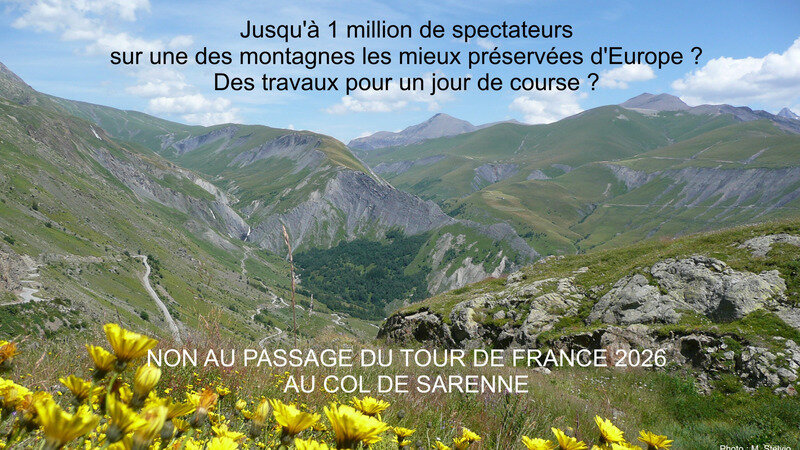
Non au passage du Tour de France 2026 au col de Sarenne

Al meer dan 10.000 mensen willen dat de organisatie van de Tour de France de route van een van de etappes aanpast en tekenden allemaal een petitie, want deze etappe gaat namelijk via de Col de Sarenne die ligt in de bufferzone van het beschermde natuurgebied Nationaal Park Les Écrin.

In dit gebied leven onder meer moerassneeuwhoenders,  alpensneeuwhoenders en steenpatrijzen, drie bedreigde vogelsoorten.  Deze soorten broeden in juli, precies in de periode dat de Tour langskomt. In 2013 ging de Tour de France ook al over de Sarenne. Toen werd er ook een petitie tegen de Touretappe gestart. Die werd 12.000 keer ondertekend. De etappe werd helaas niet aangepast. Initiatiefnemer Matthieu Stelvio liet de moed niet zakken en startte opnieuw een petitie om de etappe van 2026 tegen te houden. Stelvio is bang dat de duizenden toeschouwers, de herrie van helikopters en 16.000 amateurwielrenners die zes dagen voor de Touretappe meedoen aan een evenement, schade toebrengen aan het natuurgebied. In 2023 werd er wel een Tour etappe aangepast. De etappe eindigde op de Puy de Dome, een vulkaan die alleen voor voetgangers toegankelijk is, en op de UNESCO-werelderfgoedlijst staat. De organisatie deed na protest een concessie: bij de laatste vier kilometers van de etappe stond er geen publiek meer langs de weg.

Links:
Gaat wielrensport boven zeldzame steenpatrijs?