Day for the Elimination of Sexual Violence in Conflict 2025

The term “conflict-related sexual violence” refers to rape, sexual slavery, forced prostitution, forced pregnancy, forced abortion, enforced sterilization, forced marriage and any other form of sexual violence of comparable gravity perpetrated against women, men, girls or boys that is directly or indirectly linked to a conflict.

The term also encompasses trafficking in persons when committed in situations of conflict for the purpose of sexual violence or exploitation. A consistent concern is that fear and cultural stigma converge to prevent the vast majority of survivors of conflict-related sexual violence from coming forward to report such violence. Practitioners in the field estimate that for each rape reported in connection with a conflict, 10 to 20 cases go undocumented. On 19 June 2015, the United Nations General Assembly (A/RES/69/293) proclaimed 19 June of each year the International Day for the Elimination of Sexual Violence in Conflict, in order to raise awareness of the need to put an end to conflict-related sexual violence, to honour the victims and survivors of sexual violence around the world and to pay tribute to all those who have courageously devoted their lives to and lost their lives in standing up for the eradication of these crimes. The date was chosen to commemorate the adoption on 19 June 2008 of Security Council resolution 1820 (2008), in which the Council condemned sexual violence as a tactic of war and an impediment to peacebuilding. In response to the rise in violent extremism, the Security Council adopted resolution S/RES/2331 (2016), the first to address the nexus between trafficking, sexual violence, terrorism and transnational organized crime. Acknowledging sexual violence as a tactic of terrorism, it further affirmed that victims of trafficking and sexual violence committed by terrorist groups should be eligible for official redress as victims of terrorism.

Links:
Day for the Elimination of Sexual Violence in Conflict

#Juneteenth 2025

Juneteenth (officially Juneteenth National Independence Day and historically known as Jubilee Day, Black Independence Day, and Emancipation Day) is a federal holiday in the United States (US) commemorating emancipation of enslaved African Americans.

It is also often observed for celebrating African American culture. Originating in Galveston, Texas, it has been celebrated annually on June 19 in various parts of the US since 1866. The day was recognized as a federal holiday on June 17, 2021, when President Biden signed the Juneteenth National Independence Day Act into law. Juneteenth’s commemoration is on the anniversary date of the June 19, 1865, announcement of General Order No. 3 by Union Army general Granger, proclaiming freedom for enslaved people in Texas. President Lincoln‘s Emancipation Proclamation of 1862 had outlawed slavery in Texas and the other states that had rebelled against the Union almost two and a half years earlier. Enforcement of the Proclamation generally relied on the advance of Union troops. Texas, as the most remote of the slave states, had seen an expansion of slavery and had a low presence of Union troops as the American Civil War ended; thus, enforcement there had been slow and inconsistent prior to Granger’s announcement. Although the Emancipation Proclamation declared an end to slavery in the Confederate States, slavery was still legal and practiced in two Union border states – Delaware and Kentucky – until December 6, 1865, when ratification of the Thirteenth Amendment to the Constitution abolished chattel slavery nationwide. Additionally, Indian Territories that had sided with the Confederacy, namely the Choctaw, were the last to release those enslaved, in 1866.

Celebrations date to 1866, at first involving church-centered community gatherings in Texas. It spread across the South and became more commercialized in the 1920s and 1930s, often centering on a food festival. Participants in the Great Migration out of the South carried their celebrations to other parts of the country. During the Civil Rights Movement of the 1960s, these celebrations were eclipsed by the struggle for postwar civil rights, but grew in popularity again in the 1970s with a focus on African-American freedom and African-American arts. As of 2021, South Dakota is the only state that does not recognize Juneteenth, according to the Congressional Research Service; North Dakota approved recognition of Juneteenth on April 13, 2021, with Hawaii becoming the 49th state to recognize the holiday on June 16, 2021. Modern observance is primarily in local celebrations. Traditions include public readings of the Emancipation Proclamation, singing traditional songs such as “Swing Low, Sweet Chariot” and “Lift Every Voice and Sing“, and reading of works by noted African-American writers, such as Ralph Ellison and Maya Angelou. Celebrations include rodeos, street fairscookoutsfamily reunions, park parties, historical reenactments, and Miss Juneteenth contests. Juneteenth is also celebrated by the Mascogos, descendants of Black Seminoles who escaped from US slavery in 1852 and settled in CoahuilaMexico. Juneteenth is the first new federal holiday since Martin Luther King Jr. Day was declared a holiday in 1986.

Links:
Juneteenth History

Essential Reading: Celebrating Juneteenth

Juneteenth: Fact Sheet Congressional Research Service

Juneteenth Encyclopeadia Britannica

2020-06-10, Lief dagboek – Black Lives Matter

Graspop Metal Meeting 2025 (TV Graspop live stream)

Graspop Metal Meeting (ook kortweg Graspop of GMM(xx) genoemd) is een jaarlijks meerdaags metalfestival in Dessel, in de Belgische provincie Antwerpen.

Sinds 2011 is het een vierdaags festival dat, behoudens enkele uitzonderingen, telkens in het voorlaatste weekend van juni plaatsvindt. Het valt meestal samen met het Franse metalfestival Hellfest.

Links:
Graspop Metal Meeting

TV Graspop live stream

Klimaatverandering werkt door in gezondheid van kinderen in Nederland – publicatie

Klimaatverandering vormt een aanzienlijk risico voor de fysieke en mentale gezondheid van kinderen in Nederland en Caribisch Nederland, blijkt uit ons nieuwe onderzoek.

Tijdens de presentatie van het rapport bespraken jongeren, beleidsmakers en wetenschappers hoe kinderen beter tegen klimaatverandering beschermd kunnen worden.

Links:
Klimaatverandering werkt door in gezondheid van kinderen in Nederland

Actualisering monetaire milieuschade : Een verkenning naar de welvaartsverliezen door milieuvervuiling in Nederland in 2022 – publicatie

Volgens de studie ‘Actualisering monetaire milieuschade : Een verkenning naar de welvaartsverliezen door milieuvervuiling in Nederland in 2022‘ veroorzaakt de uitstoot van milieuverontreinigende stoffen schade aan de gezondheid van mens en natuur, die schade bedroeg in 2022 in Nederland 46 miljard euro.

Dat is anderhalf keer zoveel als de berekende milieuschade uit 2015 die het Planbureau voor de Leefomgeving (PBL) in een eerdere studie heeft berekend. Als deel van het bruto nationaal product (bnp) is de milieuschade heel licht gestegen van 4,5 naar 4,6 %. De milieuschade is gestegen ondanks het feit dat de emissie van veel milieuverontreinigende stoffen is gedaald. De hogere schade is te verklaren door nieuwe inzichten over de schadelijkheid van vervuilende stoffen, zoals fijnstof, en een hogere waardering voor een schoon milieu. Ook is de Nederlandse bevolking door de vergrijzing iets kwetsbaarder voor schadelijke stoffen. De broeikasgassen CO2, methaan en N2O zorgen voor iets meer dan de helft van de berekende schade. Luchtverontreinigende stoffen die onder de Europese NEC-richtlijn vallen (NOx, ammoniak, zwaveldioxide, fijnstof en NMVOS) veroorzaken bijna alle andere schade. Andere schadelijke stoffen, waarvan de emissies meestal veel lager liggen, zorgen voor de resterende twee procent van de schade. Mobiliteit is de sector die meeste milieuschade veroorzaakt (30 %, waarvan de helft door wegverkeer), gevolgd door landbouw (27 %; waarvan tweederde door veeteelt) en industrie (21%, vooral door emissies in de chemie, raffinage en basismetaal). Milieuschade zorgt voor een direct welzijnsverlies voor de gemiddelde Nederlander. De hier berekende milieuschade geldt daarbij als een conservatieve schatting. Voor veel milieugevaarlijke stoffen bestaat nog onvoldoende kennis over de omvang van de emissies, de verspreiding door het milieu of de effecten op menselijke gezondheid en ecosystemen om de monetaire milieuschade te kunnen berekenen. Daarnaast is ook de waardering van de milieuschade aan onzekerheid onderhevig. De berekende milieuschade van de in deze studie onderzochte stoffen kennen een bandbreedte in de waardering van 24 tot 61 miljard Euro.

Links:
Actualisering monetaire milieuschade

Stop de bezetting!

Het is tijd: op 18 september 2025 loopt de deadline af die door de Verenigde Naties is gesteld voor het beëindigen van de Israëlische bezetting van Palestina.

Die eis komt voort uit het meest recente oordeel van het Internationaal Gerechtshof in Den Haag. Een oordeel dat glashelder stelt: de bezetting is illegaal en moet stoppen. De nog altijd uitbreidende en illegale bezetting – ongehinderde roof en verwoesting van Palestijns land – is ook de grondoorzaak van de huidige situatie in Palestina-Israël, inclusief de genocide in Gaza. Die moet dus zo snel mogelijk weggenomen worden. Toch gaat Nederland door met (wapen)handel en met diplomatieke steun aan Israël. Nederland is hiermee medeplichtig aan zeer ernstige mensenrechtenschendingen. Dat moet stoppen. Het is tijd om de bezetting zelf aan te pakken. En om de rechten van Palestijnen centraal te stellen. De uitspraak van het Internationaal Gerechtshof hebben we vertaald naar een set eisen aan de Nederlandse regering. Welke dat zijn, lees je op onze site. Het is óók tijd om iedereen ter verantwoording te roepen die bijdraagt – of heeft bijgedragen – aan de illegale bezetting van Palestina en de genocide in Gaza. Bedrijven. Organisaties. Pensioenfondsen. Politici. Iedereen die meewerkt aan bezetting en genocide, handelt niet alleen moreel verwerpelijk, maar ook illegaal. The Rights Forum zal die verantwoording afdwingen. Desnoods bij de rechter. Zoals we nu al rechtszaken voeren tegen de Nederlandse staat en Booking.com (en er meer in voorbereiding hebben). Daarbij hebben we uw steun nodig. Word mede-eiser van een einde aan de bezetting.

Links:
Stop de bezetting!

2025-06-18, Lief dagboek

Woensdag; Wat eten we vandaag?; Glyfosaat; Joint Letter on ProtectEU; Lewotobi; Staking spoorwegpersoneel NS; Landbouw, geen roofbouw!; Dag van de Duurzame Gastronomie; Dag voor het Tegengaan van Haatzaaien; Polluters Pay Pact!; Stop de bezetting!.

Deze afbeelding heeft een leeg alt-attribuut; de bestandsnaam is dagboek.png

Wat eten we vandaag?:

Knipselkrant:


Agenda:

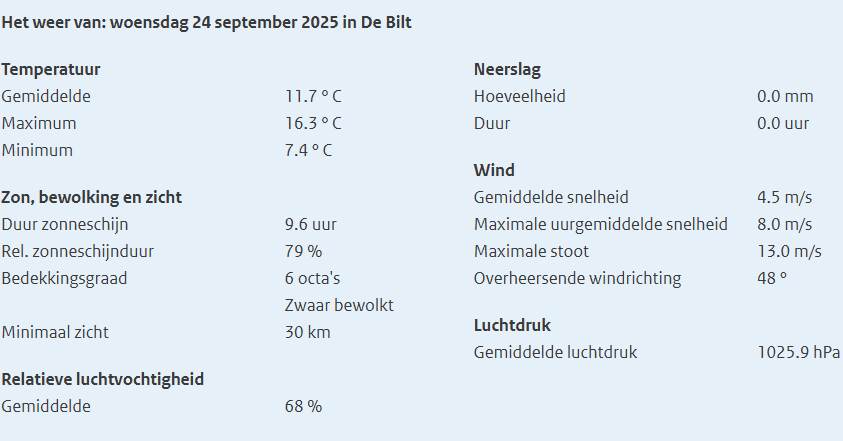
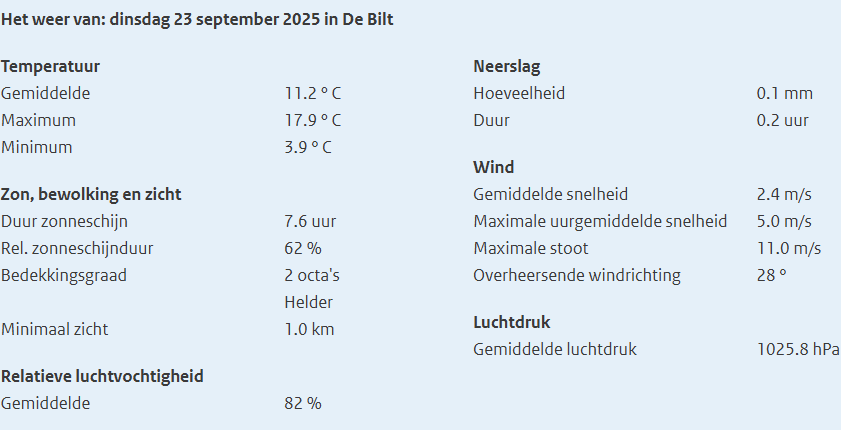
Weer:

Links:
In de geschiedenis

Day for Countering Hate Speech / Dag voor het Tegengaan van Haatzaaien 2025


The devastating effect of hatred is sadly nothing new; however, its scale and impact are amplified today by new technologies of communication, so much so that hate speech, has become one of the most frequent methods for spreading divisive rhetoric and ideologies on a global scale.

If left unchecked, hate speech can even harm peace and development, as it lays the ground for conflicts and tensions, wide scale human rights violations. The United Nations has a long history of mobilizing the world against hatred of all kinds to defend human rights and advance the rule of law. The impact of hate speech cuts across numerous UN areas of focus, from protecting human rights and preventing atrocities to sustaining peace, achieving gender equality and supporting children and youth. In response to the alarming trends of growing xenophobia, racism and intolerance, violent misogyny, antisemitism and anti-Muslim hatred around the world, UN Secretary-General António Guterres launched the United Nations Strategy and Plan of Action on Hate Speech on 18 June 2019. The Plan of Action defines hate speech as any kind of communication in speech, writing or behaviour that attacks or uses pejorative or discriminatory language with reference to a person or a group on the basis of who they are — in other words, based on their religion, ethnicity, nationality, race, color, descent, gender or other identity factor. However, to date there is no universal definition of hate speech under international human rights law. The concept is still under discussion, especially in relation to freedom of opinion and expression, non-discrimination and equality. Online hate speech might seem like an unstoppable tide, but strategies are being employed by governments, civil society, and individuals, to fight back.

Links:
Day for Countering Hate Speech