75th Anniversary of the Refugee Convention / Verdrag betreffende de status van vluchtelingen / Convention relating to the Status of Refugees – ondertekening (1951)

Verdrag betreffende de status van vluchtelingen

Het Verdrag betreffende de status van vluchtelingen of Vluchtelingenverdrag (Convention relating to the Status of Refugees) werd op 28 juli 1951 opgesteld tijdens een door de Verenigde Naties georganiseerde conventie na voorbereidende beraadslagingen in 1950 te New York en in 1951 te Genève.

In 2026 op 28 juli precies 75 jaar geleden spraken landen via dit VN-Vluchtelingenverdrag af dat mensen die vluchten voor oorlog en vervolging bescherming verdienen. Het verdrag definieert wie in aanmerking komt voor de status van vluchteling, het bepaalt dat landen die zijn aangesloten bij het verdrag asiel zullen verlenen aan personen die daar een aanvraag voor indienen en bepaalt dat aan een al dan niet als vluchteling erkende asielzoeker bepaalde rechten worden toegekend. Het verdrag bepaalt de rechten van vluchtelingen uit conflictsituaties voor 1951, terwijl een in 1967 opgesteld protocol bij de conventie ook de rechten van vluchtelingen van na die datum regelt. Basisbeginsel van het verdrag is de regel, dat iemand die is gevlucht niet teruggestuurd mag worden naar het herkomstland als er gegronde vrees voor vervolging bestaat, het zogenaamde non-refoulement principe. Dit beginsel heeft zich in de loop van de decennia nadat het verdrag in werking is getreden, ontwikkeld tot internationaal gewoonterecht, wat betekent dat het overal ter wereld voor alle landen is gaan gelden, ook landen die niet zijn aangesloten bij het verdrag en ongeacht de status als vluchteling of niet. Dit verdrag kwam in de plaats van de gebrekkige regelingen die er voorheen onder de Volkenbond, de voorloper van de VN, tot stand waren gekomen en stond sterk in het teken van de gebeurtenissen in de Tweede Wereldoorlog. Het verdrag (en protocol) is anno 2023 door meer dan 145 staten ondertekend en geratificeerd. Enige landen maakten een voorbehoud.

Links:
The 1951 Refugee Convention and 1967 Protocol relating to the Status of Refugees

Mensen op de vlucht help je. Toen en nu. – zet jouw naam bij dit bericht in de krant

Eén blok eruit en de toren wankelt

Mensen op de vlucht help je. Toen en nu. – zet jouw naam bij dit bericht in de krant

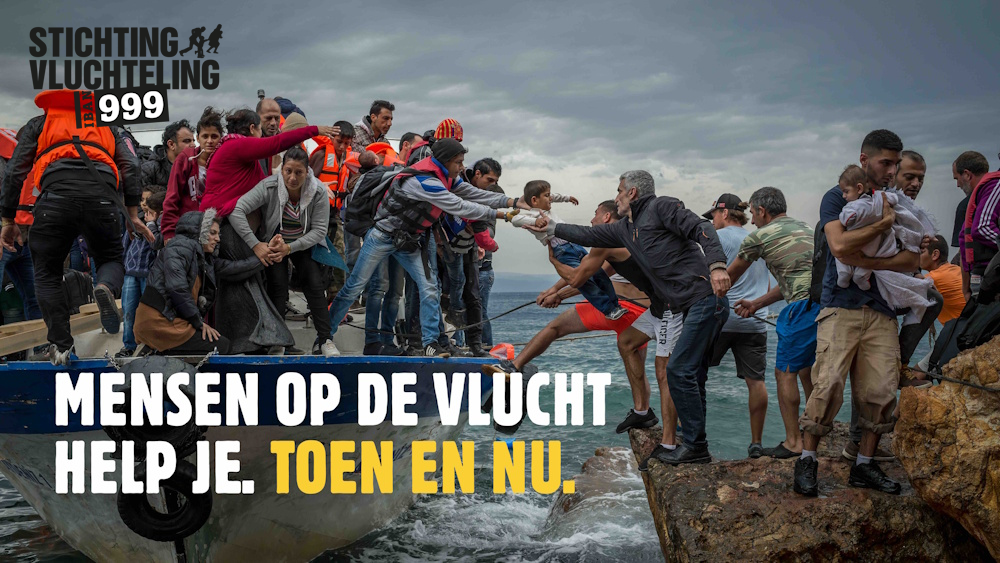
Mensen op de vlucht help je. Toen en nu.

Iemand die vlucht voor oorlog en geweld, die help je.

Precies 75 jaar geleden spraken landen via het VN-Vluchtelingenverdrag af dat mensen die vluchten voor oorlog en vervolging bescherming verdienen. Die afspraak staat vandaag de dag steeds meer onder druk. Daarom komt Stichting Vluchteling in actie! Met 1030 vierkante centimeter komt een advertentie paginagroot op dinsdag 28 juli 2026 in NRC, Volkskrant, AD, Trouw en Het Parool. De boodschap? ‘Mensen op de vlucht help je. Toen en nu’. Help mee dit bericht te verspreiden. Stichting Vluchteling zet jouw voornaam bij dit bericht in een landelijke krant. Het doel: zoveel mogelijk kranten vol met deze boodschap op dinsdag 28 juli, precies 75 jaar na het tekenen van het Vluchtelingenverdrag. Hoe meer mensen steunen, hoe luider onze stem. Help je mee? Meedoen kan tot en met 26 juli 23:59.

Links:
Doneer een vierkante centimeter

Eén blok eruit en de toren wankelt

The State of Food Security and Nutrition in the World 2026

The State of Food Security and Nutrition in the World
Global hunger declined for a third consecutive year in 2025, demonstrating that progress is possible. However, the improvements remain fragile, unevenly distributed and insufficient to achieve the Sustainable Development Goals by 2030, according to The State of Food Security and Nutrition in the World 2026 (SOFI 2026) report, released on Tuesday by five United Nations specialized agencies.

The report estimates that 7.8 percent of the global population faced hunger in 2025, down from 8.1 percent in 2024 and 8.6 percent in 2022, confirming a sustained, albeit slow, improvement. This means that around 645 million people were affected by hunger in 2025, representing a reduction of nearly 14 million compared to 2024 and 43 million compared to 2022. Despite global progress, recovery remains uneven across regions. Asia, together with Latin America and the Caribbean, has recorded steady improvements in recent years. In contrast, Africa is now home to approximately 309 million hungry people, compared with 292 million in Asia. Although Africa’s previously rising trend is beginning to stabilize, with the share of its population facing hunger decreasing from 20.3 percent in 2024 to 20.0 percent in 2025, the continent now has the highest number of hungry people in absolute terms amid a rapidly growing population. Broader measures of food access tell a similar story. In 2025, an estimated 25.8 percent of the global population (around 2.1 billion people) experienced moderate or severe food insecurity, meaning they were at times forced to compromise on the quality or quantity of the food they ate. This is down from 27.1 percent in 2024 and 28.7 percent in 2020 – equivalent to nearly 86 million fewer people than in 2024 and 135 million fewer than in 2020, though still above pre-pandemic levels. Regional disparities remain stark. More than half of Africa’s population (56.6 percent) faced moderate or severe food insecurity in 2025, compared to 20.3 percent in Asia, 22.9 percent in Latin America and the Caribbean, and 8.7 percent in Northern America and Europe. Food insecurity also continues to be more prevalent in rural areas than in peri-urban and urban areas, while women remain disproportionately affected, although the gender gap narrowed slightly in 2025.

Links:
The State of Food Security and Nutrition in the World 2026

Klimaatwake 18-08-2026

Maandelijkse Klimaatwakes om elkaar vast te houden.

Zorgen delen, hoe doe je dat? Al die angstaanjagende berichten over de opwarming van de aarde tot je nemen? Hoe ga je verder met je dagelijks leven, als je weet dat elders op de wereld verschrikkelijke bosbranden gaande zijn? Bosbranden gaande zijn? Kan dat eigenlijk? Niet wegkijken van al die gevolgen van de klimaatcrisis en toch iets van levensgeluk vasthouden? Het leven ondanks alles blijven vieren? Velen van ons hebben besloten om zich in te zetten om de klimaatcrisis aan te pakken. Dat kan zijn door plantaardig te eten, of minder plastic te gebruiken. Anderen gaan het gesprek aan in hun omgeving om bewustwording te vergroten. Of gaan over tot actie, samen met één van de milieu-organisaties als Milieudefensie, Greenpeace of Extinction Rebellion.

Voor zoveel mogelijk mensen die boos, bezorgd of verdrietig zijn over het klimaat en geïnspireerd zijn om iets te veranderen aan de toestand van het klimaat. Activisten, bezorgde mensen, religieus en niet-religieus, jongeren en volwassenen. Bezoekers van de Klimaatwakes zoeken inspiratie om zich actief in te zetten. Samen delen waar je bang voor bent, omdat je niet wilt wegkijken, maar klimaat-rampen onder ogen zien, geeft troost. Soms merk je dat je inzet tegen de klimaatcrisis je kan vervreemden of isoleren van je vrienden of familie. Of je kan je verdrietig en gefrustreerd voelen dat er zo slecht geluisterd wordt door overheid en bedrijven. De Klimaatwakes zijn een plek waar zorgen over de toekomst van de aarde gedeeld kunnen worden.

Links:
Klimaatwake

Viking@50: 50 Years on Mars

Viking
The Viking program consisted of a pair of identical American space probesViking 1 and Viking 2 both launched in 1975, and landed on Mars in 1976.

The mission effort began in 1968 and was managed by the NASA Langley Research Center. Each spacecraft was composed of two main parts: an orbiter spacecraft which photographed the surface of Mars from orbit, and a lander which studied the planet from the surface. The orbiters also served as communication relays for the landers once they touched down. The Viking program grew from NASA’s earlier, even more ambitious, Voyager Mars program, which was not related to the successful Voyager deep space probes of the late 1970s. Viking 1 was launched on August 20, 1975, and the second craft, Viking 2, was launched on September 9, 1975, both riding atop Titan IIIE rockets with Centaur upper stages. Viking 1 entered Mars orbit on June 19, 1976, with Viking 2 following on August 7. After orbiting Mars for more than a month and returning images used for landing site selection, the orbiters and landers detached; the landers then entered the Martian atmosphere and soft-landed at the sites that had been chosen. The Viking 1 lander touched down on the surface of Mars on July 20, 1976, more than two weeks before Viking 2s arrival in orbit. Viking 2 then successfully soft-landed on September 3. The orbiters continued imaging and performing other scientific operations from orbit while the landers deployed instruments on the surface. The program terminated in 1982. The project cost was roughly US$1 billion at the time of launch, equivalent to about $6 billion in 2024 dollars. The mission was considered successful and formed most of the body of knowledge about Mars through the late 1990s and early 2000s.

Links:
Viking Project

50 jaar na landing Viking-missie: nog steeds kans op leven op Mars

World #ChessDay / Wereld Schaakdag 2026

On 12 December 2019, the General Assembly proclaimed 20 July as World Chess Day to mark the date of the establishment of the International Chess Federation (FIDE) in Paris in 1924.

Chess is a two player strategy board game where the aim is to move different types of playing piece, each with a prescribed set of possible moves, around a chequered square board trying to capture the opponents ‘king’ piece. Today there are over 2,000 identifiable variants of the game. One theory is that an early game similar to chess called Chaturanga originated in Northern Indian Subcontinent during the Gupta period (~ 319 – 543 CE) and spread along the Silk Roads west to Persia. Whilst modern Chess is believed to have been derived from Chaturanga means ‘four divisions’ referring either to the divisions of the playing pieces into infantry, cavalry, elephantry and chariotry (pieces which in the modern game became the pawn, knight, bishop and rook), or to the fact that the game was played by four players. Chatrang, and later Shatranj, was the name given to the game when it arrived in Sassanid Persia around 600 CE.

The earliest reference to the game comes from a Persian manuscript of around 600 CE, which describes an ambassador from the Indian Subcontinent visiting king Khosrow I (531 – 579 CE) and presenting him with the game as a gift. From there it spread along the Silk to other regions including the Arabian Peninsula and Byzantium. In 900 CE, Abbasid chess masters al-Suli and al-Lajlaj composed works on the techniques and strategy of the game, and by 1000 CE Chess was popular across Europe, and in Russia where it was introduced from the Eurasian Steppe. The Alfonso manuscripts, also known as the Libro de los Juegos (Book of Games), a medieval collection of texts on three different types of popular game from the 13th century CE describe the game of Chess as very similar to Persian Shatranj in rules and gameplay.

Under initiative of FIDE, July 20 has been observed as International Chess Day by chess players around the world since 1966. The designation of World Chess Day of the UN will not only recognize the important role of the FIDE in supporting international cooperation for chess activity and aiming to improve friendly harmony among all peoples of the world, but also to provide an important platform to foster, dialogue, solidarity and culture of peace.

The United Nations recognizes that sports, the arts and physical activity have the power to change perceptions, prejudices and behaviours, as well as to inspire people, break down racial and political barriers, combat discrimination and defuse conflict, and therefore contribute in promoting education, sustainable development, peace, cooperation, solidarity, social inclusion and health at the local, regional and international levels. Chess is one of the most ancient, intellectual and cultural games, with a combination of sport, scientific thinking and elements of art. As an affordable and inclusive activity, it can be exercised anywhere and played by all, across the barriers of language, age, gender, physical ability or social status.

Chess is a global game, which promotes fairness, inclusion and mutual respect, and noting in this regard that it can contribute to an atmosphere of tolerance and understanding among peoples and nations. Chess also offers important opportunities in the implementation of the 2030 Agenda for Sustainable Development and the Sustainable Development Goals, including strengthening education, realizing gender equality and the empowerment of women and girls and fostering inclusion, tolerance, mutual understanding and respect.

Links:
World Chess Day