
2026-10-28, Lief dagboek
Woensdag; Wat eten we vandaag?; Escapade; ’terugkeerhub’ voor uitgeprocedeerde asielzoekers; Vogelgriep; Mozilla Festival.

Wat eten we vandaag?:

Knipselkrant:
Agenda:
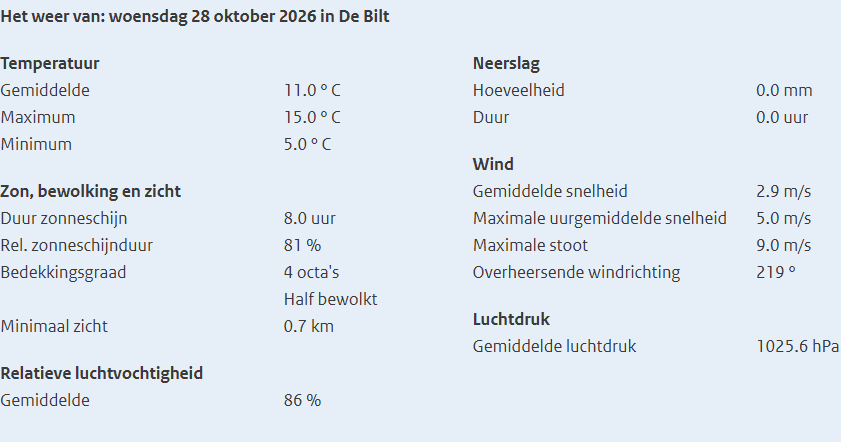
Weer:
Links:
In de geschiedenis

Woensdag; Wat eten we vandaag?; Escapade; ’terugkeerhub’ voor uitgeprocedeerde asielzoekers; Vogelgriep; Mozilla Festival.
Wat eten we vandaag?:
Knipselkrant:
Agenda:
Weer:
Links:
In de geschiedenis
Links:
Wikipedia
Universities depend on academic freedom to create and share knowledge through research, teaching, debate, and dialogue.
Yet this freedom is increasingly under pressure worldwide. Governments are interfering with the content of education and research by banning topics, reshaping curricula, censoring scholars, and closing institutions. The Free to Think 2026 report by global network Scholars at Risk documents 382 attacks on scholars, students, and institutions in 59 countries. The Netherlands is not immune. Academic freedom is also declining here, according to the Academic Freedom Index. The Rectors of the Dutch Universities have sounded the alarm and the KNAW is examining whether academic freedom should be given explicit legal protection in the Dutch Constitution. How can universities, researchers, and society protect academic freedom when it comes under political or societal pressure? A panel of scientists from different fields of research, linguist Joanna Chojnicka, social psychologist Tom Postmes, medical physicist Oleksandra Ivashchenko, and biologist Dirk-Jan Scheffers share their views on how to protect academic freedom. Associate Professor Geography and Psychology of Religion Brenda Mathijsen will lead the discussion. This programme is organised in honour of the 25th anniversary of the Scholars at Risk (SAR) network, of which the University of Groningen is a member.

Through the Global Forum against Racism and Discrimination, UNESCO advances normative and policy approaches to addressing racism and discrimination, creating a space in which international commitments, evidence and policy experience can be examined and translated into institutional responses.
Its role extends beyond convening stakeholders to shaping the substantive agenda, generating and disseminating knowledge, and developing practical frameworks and tools that can inform policy and implementation. Since its inaugural edition in 2021, the Forum has progressively expanded in scope, from rights-based recovery in Mexico and racial equity and justice in São Paulo, to institutional cooperation and global alliances in Barcelona. This evolution is reflected in UNESCO-led initiatives and knowledge products, including the Network of Anti-Racism and Anti-Discrimination Officials, Global Alliance against Racism and Discriminations, Global Outlook against Racism and Discrimination, and Gender-Based Resilience report, which seek to strengthen institutional capacity and support more accountable and effective responses to racism and discrimination.
The 2026 edition, under the theme “From commitment to accountability: change the system, change the future,” will focus on translating commitments into measurable results, with particular attention to accountability mechanisms, inclusive policymaking, systemic inequalities, digital transformations and reparatory justice. It will also give dedicated attention to reparatory justice, connecting historical responsibility with contemporary inequalities and future-oriented solutions, including through the further development of the UNESCO Reparatory Justice Toolkit.
Links:
5th UNESCO Global Forum against Racism and Discrimination
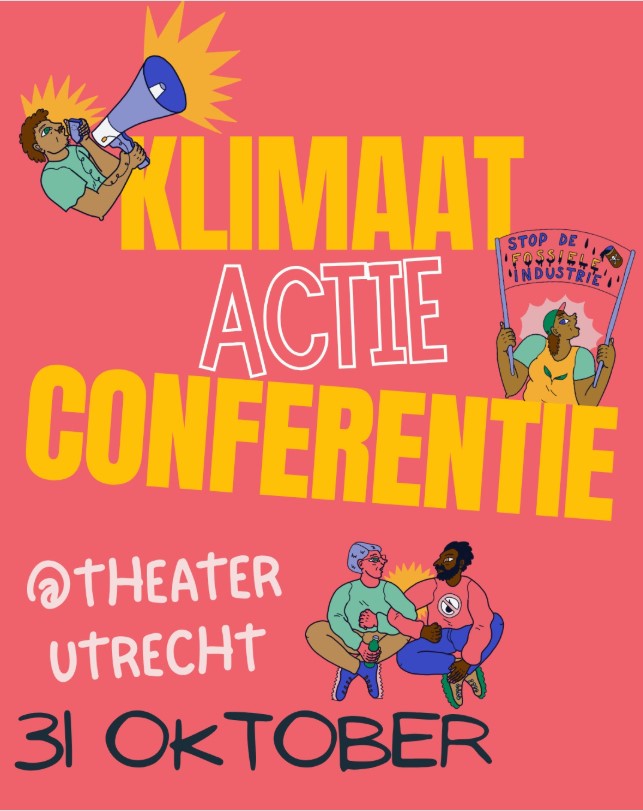
De klimaatactieconferentie 2026 staat gepland: op zaterdag 31 oktober 2026 komt de klimaatbeweging samen in Theater Utrecht voor een dag vol ontmoeting, inspiratie en klimaatactie.
De klimaatactieconferentie brengt de Nederlandse klimaatbeweging samen om strategieën te bespreken, samenwerkingen te versterken en gezamenlijk te reflecteren. Als klimaatbeweging samenkomen om elkaar te ontmoeten, campagnes te verbinden en na te denken over onze volgende stappen. Hoe versnellen we de aanpak van de klimaatcrisis? En welke actiemethoden helpen ons daarbij? Tijdens workshops en panelgesprekken verkennen we onder meer hoe we klimaatdesinformatie herkennen, wat klimaatrechtszaken kunnen bereiken en hoe we de samenwerking met vakbonden en antimilitaristische bewegingen versterken.
Links:
KlimaatActieConferentie
Het creëren van een duurzame en toekomstbestendige gebouwde omgeving vereist de inzet van technologie, innovatie en samenwerking. Technologieën zoals Building Information Modeling (BIM), digitale tweelingen, geografische informatiesystemen (GIS) en Large Language Models (LLMs) veranderen de werkwijze van stedelijke planners. Deze tools maken het mogelijk om gedetailleerde analyses uit te voeren en complexe gegevens overzichtelijk te visualiseren. Dat vraagt ook om het standaardiseren van data en het definiëren van standaarden voor data-uitwisseling. Met behulp van big data en analyse instrumenten kunnen planners beter gefundeerde beslissingen nemen. Ontwikkelaars kunnen daardoor betere scenario’s maken en anticiperen op veranderingen in de markt. Datagedreven planning helpt bij het voorspellen van trends zoals bevolkingsgroei, mobiliteitsbehoeften, voorzieningen en klimaatadaptatie, wat resulteert in effectievere en duurzame stedelijke ontwikkeling. Duurzaamheid krijgt een steeds grotere rol. Planners kunnen beter integreren groene infrastructuur en duurzame oplossingen om klimaatverandering tegen te gaan en de levenskwaliteit in stedelijke gebieden te verbeteren. Ook de betrokkenheid van burgers in het planningsproces groeit. Via participatie en nieuwe communicatietechnologieën kunnen burgers actief bijdragen aan en meebeslissen over de stedelijke ontwikkeling, wat leidt tot inclusievere en effectievere oplossingen. In deze snel veranderende en complexe tijden moeten steden flexibel en adaptief zijn. Planners kunnen beter vooruitdenken en hun plannen beter aanpassen aan nieuwe uitdagingen en kansen. De toekomst van stedelijke planning vereist bovendien samenwerking tussen verschillende disciplines, zoals techniek, sociologie, economie, milieuwetenschappen en technologie, om samen een toekomstperspectief en effectieve stadsontwikkelingsstrategieën te ontwikkelen.

Boektopia is een jaarlijkse boekenbeurs in de Belgische stad Kortrijk, dat sinds 2021 in het najaar wordt georganiseerd in Kortrijk Xpo.
De beurs is een initiatief van verscheidene uitgeverijen en boekendistributeurs, in samenwerking met de stad Kortrijk na het faillissement van de Boekenbeurs Antwerpen.
Links:
Boektopia
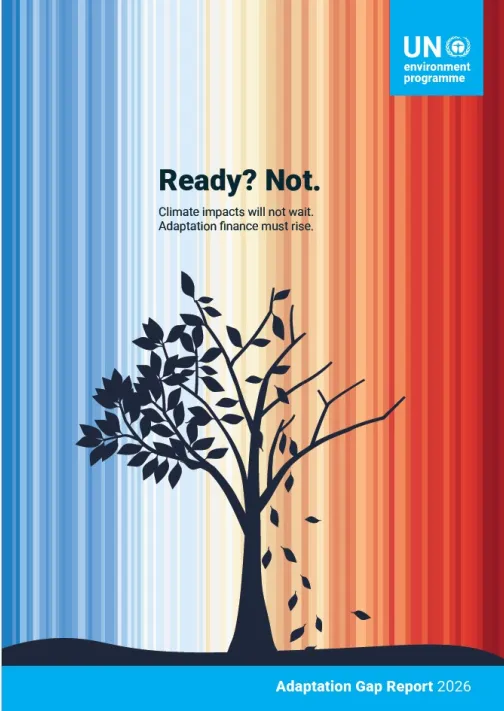
UNEP’s 2026 Adaptation Gap Report: Ready? Not provides the latest assessment of global progress on climate change adaptation, examining trends in adaptation planning, finance and implementation.
UNEP’s 2026 Adaptation Gap Report finds that adaptation finance continues to fall short of needs, implementation remains constrained by institutional barriers, and losses and damages are mounting as climate impacts intensify. With global warming now set to exceed 1.5°C, effective and well-financed adaptation will be crucial to reduce risks and losses and damages, strengthen resilience and support more inclusive development. What’s new in this year’s report? The report finds that international public adaptation finance flows from developed to developing countries reached US$28.2-31.7 billion in 2024, a US$1 billion increase over the previous year. Flows to least developed countries (LDCs) and small island developing states (SIDS) rose in real terms between 2019 and 2024 but declined from a 2022 peak, when they should be increasing. These flows are far below the estimated needs of US$305 billion annually by 2035. Even if the COP30 aspiration to triple international public finance flows to developing countries by 2035 is achieved, this would only cover 20-29 per cent of what is needed. More positively, tripling flows to LDCs and SIDS could meet 49-84 per cent of their needs. Meanwhile, climate-related losses and damages are substantial. Finance for loss and damage is falling short of identified needs, while complex procedures and limited capacity make support difficult to access. The first round of the Fund for responding to Loss and Damage generated requests worth US$2.8 billion, far outstripping the initial funding envelope of US$342 million. The report does point to some positive developments. Efforts under the Glasgow Climate Pact to double finance from 2019 levels to US$40 billion by 2025 could still be met, as Multilateral Development Banks are likely to have increased their financing significantly in 2025. South-South support and private sector adaptation finance are also increasing. Governments are strengthening the institutional factors that help translate adaptation action priorities into implemented measures.
Links:
Adaptation Gap Report 2026
Klimaatfinanciering voor kwetsbare landen blijft tekortschieten, terwijl probleem groeit

Mozilla Festival (MozFest) is where passionate individuals unite to build a better internet.
Whether you create art, code, program or scroll in support of a safer internet—you’re in the right place. Reclaiming the Internet starts with all of us. We unite at Mozilla Festival to share bold ideas and have thoughtful discussions that drive real change. Your voice is power. Join in shaping a digital future that’s more open, inclusive, and firmly grounded in fundamental rights.
Links:
Mozilla Festival
Dinsdag; Wat eten we vandaag?; Palestina; Eurovisie Songfestival: geen Nederlandse deelname; Werelddag voor Audiovisueel Erfgoed; Amsterdam jubileum.
Wat eten we vandaag?:


Knipselkrant:
Agenda:
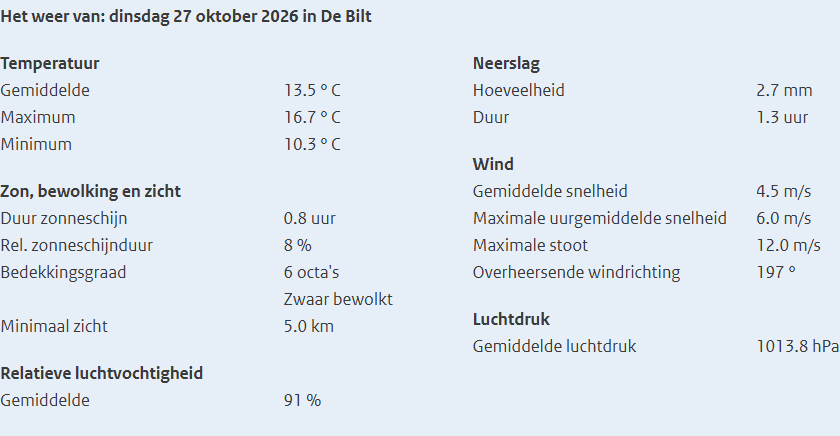
Weer:
Links:
In de geschiedenis