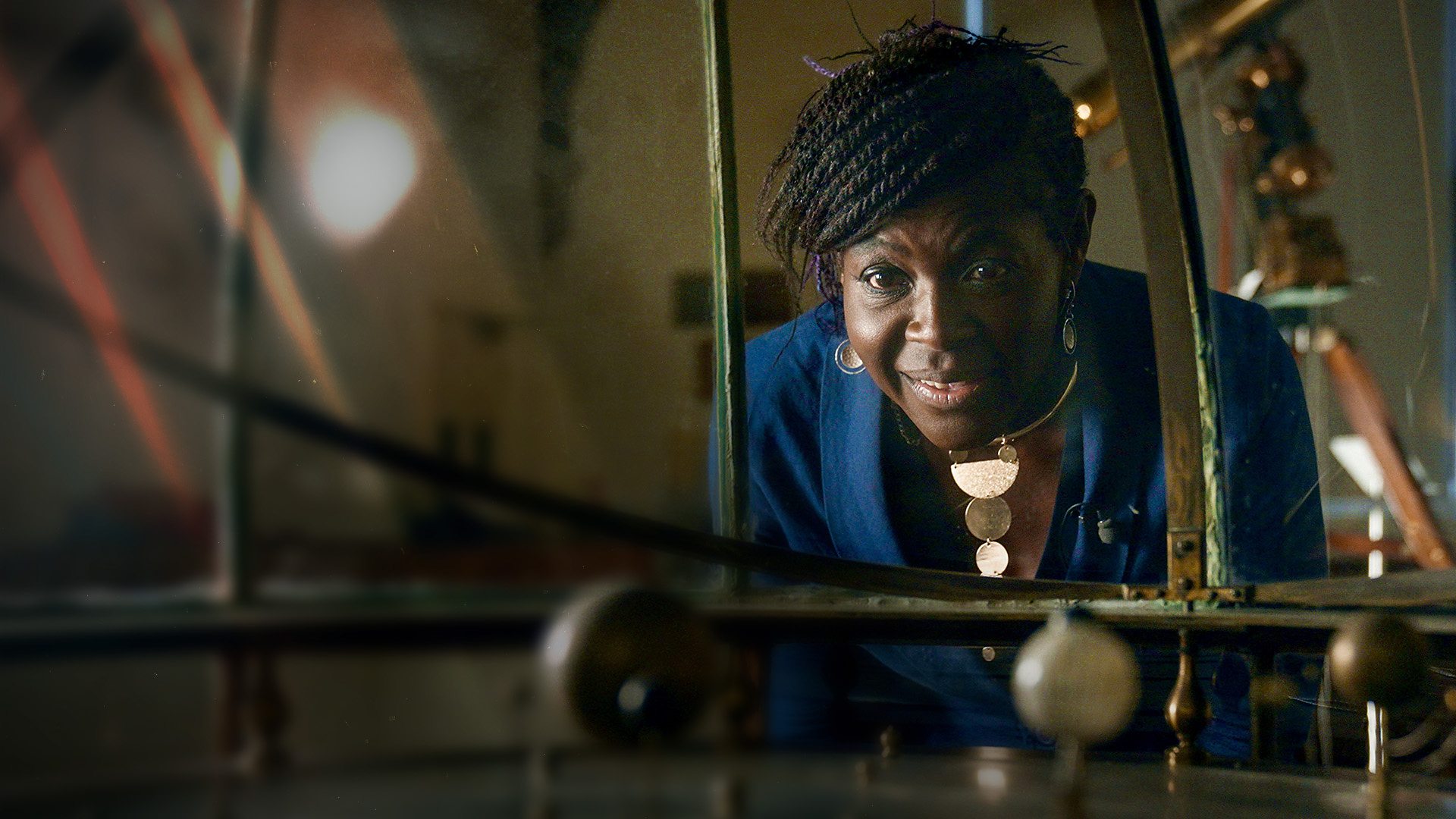
Tag: skyatnight

2025-05-12, Lief dagboek

Maandag; Wat eten we vandaag?; Overstroming en ziekenhuis; Kernwapens; Gaza−Israël oorlog 2023 – …; Vapen; Dag van de Verpleging / Dag van de Zorg / Dag van het Bewustzijn & ME; Day of Plant Health; UN Global Road Safety Week; The Sky at Night.

Deze afbeelding heeft een leeg alt-attribuut; de bestandsnaam is dagboek.png

Wat eten we vandaag?:

Klik op afbeelding voor origineel

Overstroming:

IMG20250603082819

Door een defecte hogedrukkraan aan de cv ketel kwam in de middag een groot deel van de woning van A3 onder een laag water te staan, ook onderliggende verdiepingen hadden nattigheid. Omdat de bewoners op hun werkplek waren, moest de brandweer de deur forceren om de lekkage te kunnen stoppen. Na een best wel snelle reactie door de woningbouwvereniging was het huis aan het begin van de avond alweer leefbaar en was er weer warm water. Het drogen van de vloer zal enige weken duren, ondersteund door machines die vocht opzuigen.

Ziekenhuis:

Klik op afbeelding voor origineel

In verband met het zich nog steeds voortslepende verhaal rond het ontstoken rechteroor van A3 werd hij verwacht in het ziekenhuis voor nogmaals een MRI-scan.

Knipselkrant:


Agenda:

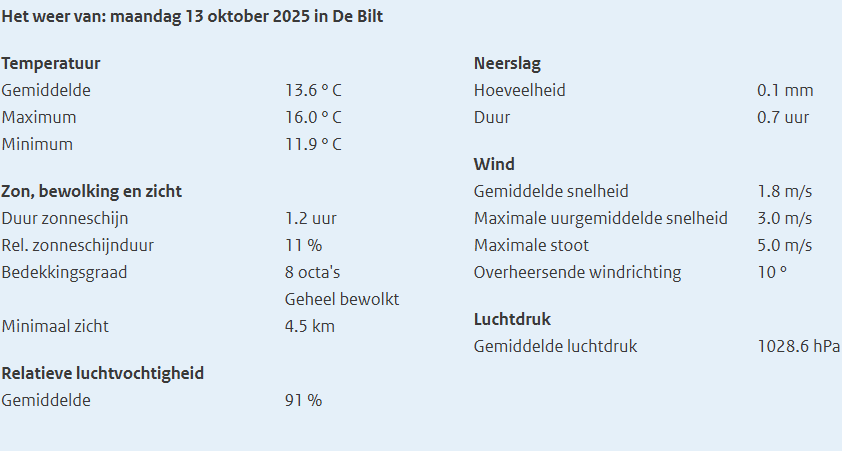
Weer:

Links:
In de geschiedenis

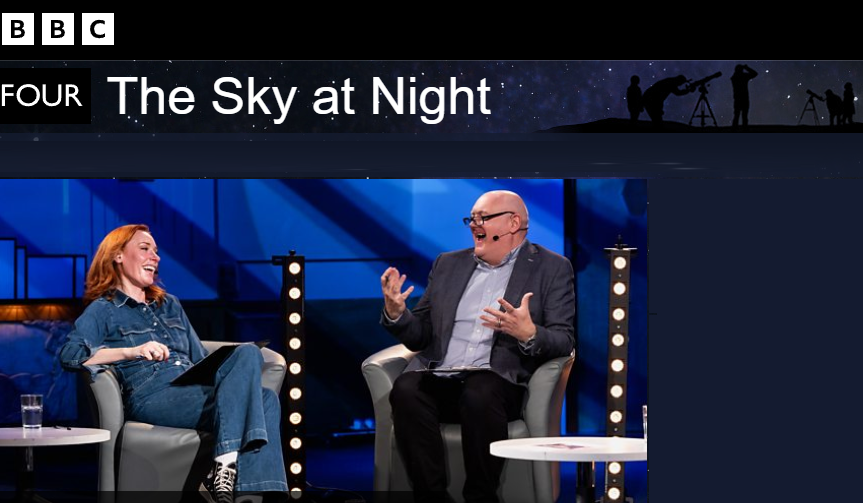
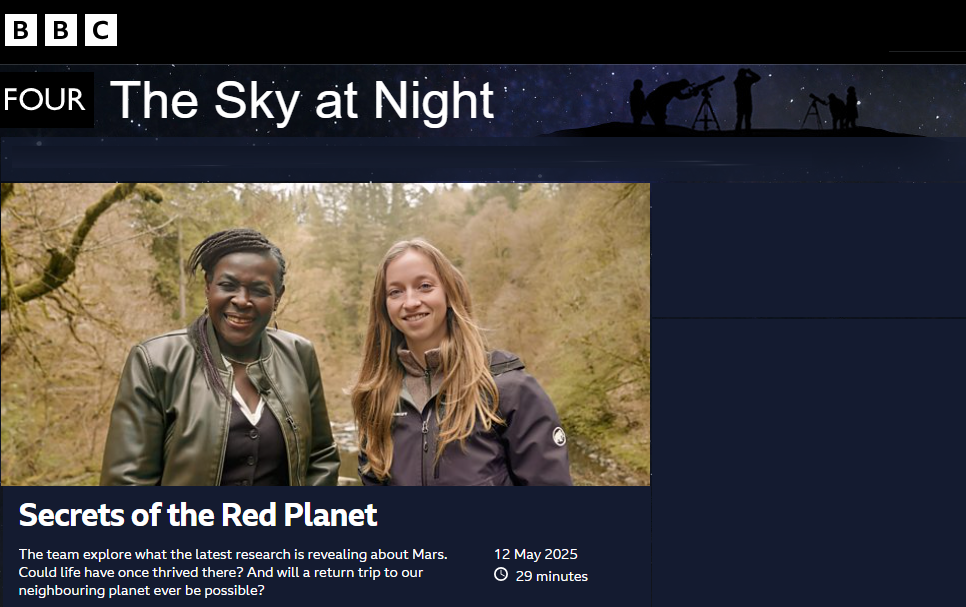
The Sky at Night – Secrets of the Red Planet (TV BBC Four)

The Sky at Night is a monthly documentary television programme on astronomy produced by the BBC.

The show had the same permanent presenter, Patrick Moore, from its first broadcast on 24 April 1957 until 7 January 2013. The latter date was a posthumous broadcast, which followed Moore’s death on 9 December 2012. This made it the longest-running programme with the same presenter in television history. Many early episodes are missing, either because the tapes were wiped, thrown out, or because the episode was broadcast live and never recorded in the first place. Beginning with the 3 February 2013 edition, the show was co-presented by Lucie Green and Chris Lintott. Since December 2013 Maggie Aderin-Pocock has been a presenter. The programme’s opening and closing theme music is “At the Castle Gate”, from the incidental music to Pelléas et Mélisande, written in 1905 by Jean Sibelius, performed by the Royal Philharmonic Orchestra and conducted by Sir Thomas Beecham.

This episode:
The team explores what the latest research is revealing about Mars. Could life have once thrived on Mars? What mysterious force is moving large boulders across its dusty surface today? And will a return trip to our neighbouring planet ever be possible? In this exciting episode, we’re blasting off to uncover what the latest research is revealing about the Red Planet.

It’s been 60 years since Mariner 4 sent back the very first images of another world from space. Since then, a fleet of orbiters and rovers have been exploring Mars, uncovering a dramatic history that may not be so different from our own planet Earth.

In the water-rich landscapes of Scotland, Maggie Aderin-Pocock meets Lonneke Roelofs from Utrecht University, who’s been investigating the puzzling movement of enormous Martian boulders. On Earth, such motion would usually be connected with water – but on Mars, something entirely unexpected is at play. And in studying it, scientists have discovered a brand new geological phenomenon.

Maggie also visits the University of St Andrews to meet Dr Claire Cousins, who is looking at ancient Scottish rocks to help future Mars rovers identify and analyse similar formations – ones that might contain microscopic evidence that life once existed on the Red Planet.

While Maggie has journeyed north, Chris Lintott is on a virtual field trip to Mars itself with Professor Sanjeev Gupta at the Data Observatory at Imperial College London. Dr Gupta takes us on a tour with NASA’s Perseverance rover, and the incredible insights the modern rovers are providing about Mars’s history and surface today.

Meanwhile, guest presenter Dr Mekhi Dhesi talks with Dr James Lambert from Pulsar Fusion about the current propulsion options used for space travel. They discuss a possible alternative approach that could reduce travel times and costs, making a mission to Mars, and back again, one step closer. Return missions to Mars could deliver samples from the Martian surface back to Earth laboratories for in-depth analysis and maybe even permit human travel to Mars one day.

Pete Lawrence is at the Milton Keynes Astronomical Society to talk us through Mars observations and what other cosmic wonders to look out for in the lighter summer night skies.

Take a trip with us to discover the secrets of the Red Planet and how we are getting closer and closer to discovering evidence of life on Mars.

Links:
The Sky at Night

The Sky at Night – Asteroid Strike? (TV BBC Four)

The Sky at Night is a monthly documentary television programme on astronomy produced by the BBC.

The show had the same permanent presenter, Patrick Moore, from its first broadcast on 24 April 1957 until 7 January 2013. The latter date was a posthumous broadcast, which followed Moore’s death on 9 December 2012. This made it the longest-running programme with the same presenter in television history. Many early episodes are missing, either because the tapes were wiped, thrown out, or because the episode was broadcast live and never recorded in the first place. Beginning with the 3 February 2013 edition, the show was co-presented by Lucie Green and Chris Lintott. Since December 2013 Maggie Aderin-Pocock has been a presenter. The programme’s opening and closing theme music is “At the Castle Gate”, from the incidental music to Pelléas et Mélisande, written in 1905 by Jean Sibelius, performed by the Royal Philharmonic Orchestra and conducted by Sir Thomas Beecham.

This episode:
The team explore one of the biggest stories in space news, the ‘city killer’ asteroid 2024 YR4. First observed on 27 December 2024, it soon became one of the biggest threats from an asteroid ever detected, with the potential to cause a heat blast that could vaporise solid rock, wind blasts five times the speed of the strongest hurricane and a shockwave that would flatten buildings and trees for hundreds of miles. This was a potential natural disaster we needed to respond to as a planet. So how well did we do? Our team of presenters are on hand to find out, and while YR4 was later downgraded to a near miss, what has it told us about our ability to react when an asteroid strike is on its way? George Dransfield kicks off, talking us through the damage an asteroid like YR4 could do and why some say we are overdue an asteroid strike of this size. But how will we know if it’s truly on its way? Chris Lintott meets Dr Meg Schwamb at a football pitch – which it turns out is the perfect place to explain how the probability of a strike is calculated. Following the same highs and lows they do when a ball just misses the goal, they explain why the probability of asteroid 2024 YR4 hitting earth first rose so quickly before it fell. It turns out it wasn’t the maths being wrong!

Luckily, next time the numbers say an asteroid impact is on its way, we do have ways of defending ourselves, Maggie Aderin-Pocock takes a tea break to explain some of the options, from nudging it to nuking it – they all have their pros and cons. But to know our best plan of action, we need to understand more about the asteroids, and George meets up with Dr Carly Howett to find out how Nasa’s Lucy Mission could provide us with invaluable information for any future strikes. With this wealth of information about any potential asteroids heading our way, Maggie meets Prof Hugh Lewis in Southampton to discover how the international community is set up to respond to any future threats, and to find out who will decide what action to take and the possible consequences it may have. But the skies and the asteroids in it aren’t just a scary threat to humanity; when we stop and look up, there are some beautiful sights to be seen, and Pete Lawrence is on hand to tell us what to look out for in the coming months. Join us for an exciting episode that looks beyond the headlines, to see what efforts were made to protect us from an asteroid that could have wiped out a city the size of Greater London – and beyond.

Links:
The Sky at Night

The Sky at Night – Ancestral Skies (TV BBC Four)

The Sky at Night is a monthly documentary television programme on astronomy produced by the BBC.

The show had the same permanent presenter, Patrick Moore, from its first broadcast on 24 April 1957 until 7 January 2013. The latter date was a posthumous broadcast, which followed Moore’s death on 9 December 2012. This made it the longest-running programme with the same presenter in television history. Many early episodes are missing, either because the tapes were wiped, thrown out, or because the episode was broadcast live and never recorded in the first place.

Beginning with the 3 February 2013 edition, the show was co-presented by Lucie Green and Chris Lintott. Since December 2013 Maggie Aderin-Pocock has been a presenter. The programme’s opening and closing theme music is “At the Castle Gate”, from the incidental music to Pelléas et Mélisande, written in 1905 by Jean Sibelius, performed by the Royal Philharmonic Orchestra and conducted by Sir Thomas Beecham.

This episode:
This month, The Sky at Night teams up with BBC Ideas to discover the secrets of archaeology and astronomy and to reflect on our ancestral skies. Throughout history and across the world, humanity has looked up and marvelled at the night sky. From ancient civilizations who were guided by the sun, moon and stars, to modern astronomers uncovering the universe’s history, we have always found deep meaning in our dark skies. But is modern civilisation putting this important link at risk? Out on Cornwall’s beautiful Bodmin Moor, George Dransfield meets up with archaeoastronomer Carolyn Kennett at an ancient archaeological site. The Goodaver stone circle is steeped in history, but it has been cut off from the public and researchers like Carolyn for decades. But times are changing. The site will open to the public in November, and Carolyn and fellow archaeoastronomers are finally able to assess the stones against the horizon and understand how they are aligned to the sun, moon and stars.

What new stories about ancient peoples and their relationship to the night sky will be discovered? Chris Lintott and Maggie Aderin-Pocock are also finding out about archaeology in Cambridge – but not necessarily the archaeology you would expect. At the Whipple Museum of the History of Science, Maggie links up with Australian space archaeologist Dr Alice Gorman to look at what we should be preserving of our history in space so far. From satellites to moon landing sites, what will future generations want to see to help them understand our early history of our journey into space? Meanwhile, Chris heads to the Department of Archaeology to find out about the surprising and fascinating field of Galactic Archaeology, which takes inspiration from archaeology to try and solve the mystery of our galaxy’s history – using only what we can see today.

Chris meets anthropologist and evolutionary biologist Professor Robert Foley and astrophysicist Dr Payel Das, who are part of a team that has been using phylogenetic trees – models normally used for evolution – for modelling the evolution of galaxies. Each generation of stars within a galaxy forms from material polluted with elements produced by previous generations, opening up the possibility of understanding their shared history. Finally, Pete Lawrence is at the Exmoor Dark Skies Festival, where he is meeting Jo Richardson. While Pete waits for night to fall, he talks to Jo about the importance of maintaining our view of the night sky and how modern lighting is affecting the health and well-being of humans and other animals. But will the clouds clear and provide the spectacular view dark skies sites can offer? Don’t miss this captivating exploration of our shared history and the stars, as we discover where archaeology and astronomy meet to illuminate the profound connections that shape our understanding of both the universe and ourselves!

Links:
The Sky at Night

The Sky at Night – 2075: Our Place in Space (TV BBC Four)

The Sky at Night is a monthly documentary television programme on astronomy produced by the BBC.

The show had the same permanent presenter, Patrick Moore, from its first broadcast on 24 April 1957 until 7 January 2013. The latter date was a posthumous broadcast, which followed Moore’s death on 9 December 2012. This made it the longest-running programme with the same presenter in television history. Many early episodes are missing, either because the tapes were wiped, thrown out, or because the episode was broadcast live and never recorded in the first place.

Beginning with the 3 February 2013 edition, the show was co-presented by Lucie Green and Chris Lintott. Since December 2013 Maggie Aderin-Pocock has been a presenter. The programme’s opening and closing theme music is “At the Castle Gate”, from the incidental music to Pelléas et Mélisande, written in 1905 by Jean Sibelius, performed by the Royal Philharmonic Orchestra and conducted by Sir Thomas Beecham.

This episode:
The Sky at Night is embarking on a journey into the future, as we explore how space will revolutionise life on Earth over the next 50 years. As humanity’s reach extends into the cosmos, we face unprecedented challenges, from redefining what it means to be an astronaut, to confronting our own space junk, to dealing with the impact of life in space on our earth-adapted bodies. With privileged early access to a groundbreaking new report from the Royal Society on humanity’s future in space, the Sky at Night team are on a mission to find our destiny among the stars – our place in space.

The criteria for becoming an astronaut are famously tough. But if we want more people to go to space, maybe it’s time to start challenging that. That’s what the European Space Agency are doing with their pioneering study Fly!, which aims to figure out if someone with a physical disability can live and work in space. At the European Astronaut Centre in Cologne, presenter Chris Lintott meets one of the newest members of ESA’s astronaut reserve: John McFall. John is already a medal-winning Paralympian and orthopaedic surgeon and – as if that wasn’t enough – he is now the first recruit to the Fly! study. Chris discovers what’s involved in John’s extensive and gruelling training, and finds out what his hopes are for improving access to space.

Training for space travel is one thing, but living on the moon or Mars is a whole new level for humanity. Our bodies are used to gravity, and being in environments with less gravity than Earth can make them go a bit haywire. At the Royal Society in London, Maggie Aderin-Pocock meets up with space medicine expert Professor Kevin Fong to find out all about the challenges of keeping humans healthy in space. What would an astronaut on Mars do in a medical emergency? What happens to our bones, muscles and organs if we are without Earth’s gravity for a long time? And could a baby be born in space?

While Maggie and Kevin unpack those mind-bending questions, George Dransfield heads to Astroscale in Oxfordshire, a company who are coming up with clever ways to take out space trash. There are already 130 million pieces of space debris in orbit around our planet, and that number is ticking up. George meets up with Dr Mekhi Dhesi to learn about Astroscale’s clever missions to clean up space junk – including ELSA-M, a spacecraft which uses magnets to tow defunct satellites out of orbit, and Cosmic, a spacecraft with a robot arm to grab onto debris.

Our increasing dependence on satellites isn’t just producing a lot of space junk though, it’s also becoming a nuisance for amateur astronomers around the world. Thankfully, our resident astronomer Pete Lawrence has some clever tips and tricks for telling satellites and meteors apart, and using smart telescopes to remove satellite trails from deep sky images.

Finally, back at the Royal Society, Maggie sits down with Professor Suzie Imber, planetary scientist and co-chair of the groundbreaking Space: 2075 report. Together, they unpack some of the biggest questions about our journey into the cosmos over the next 50 years. How do we make sure space benefits us all, including those of us still down here on Earth? Should we be concerned about the commercialisation of space travel? And will there really be people on Mars by 2075?

Links:
The Sky at Night

The Sky at Night – Nicky, NASA and the Next Frontier (TV BBC Four)

The Sky at Night is a monthly documentary television programme on astronomy produced by the BBC.

The show had the same permanent presenter, Patrick Moore, from its first broadcast on 24 April 1957 until 7 January 2013. The latter date was a posthumous broadcast, which followed Moore’s death on 9 December 2012. This made it the longest-running programme with the same presenter in television history. Many early episodes are missing, either because the tapes were wiped, thrown out, or because the episode was broadcast live and never recorded in the first place.

Beginning with the 3 February 2013 edition, the show was co-presented by Lucie Green and Chris Lintott. Since December 2013 Maggie Aderin-Pocock has been a presenter. The programme’s opening and closing theme music is “At the Castle Gate”, from the incidental music to Pelléas et Mélisande, written in 1905 by Jean Sibelius, performed by the Royal Philharmonic Orchestra and conducted by Sir Thomas Beecham.

This episode:
In this Sky at Night special, the team talk to Dr Nicola Fox, NASA’s head of science, whose life began in the UK. Presenter Chris Lintott chats to Nicky about her early years growing up in Hitchin in Hertfordshire and discovers how she fell in love with the stars. Maggie Aderin-Pocock takes Nicky on a trip down memory lane. Both women studied physics at Imperial College London from the late 80s to early 90s. As they revisit familiar haunts, they discuss their experiences, and Maggie finds out about Nicky’s love of astrophysics, the challenges she overcame and how she landed a dream job at NASA. Along the way, Maggie and Nicky chat about how the university and science have changed and how new technology and deeper understanding are fuelling the missions for which Nicky is now responsible. As they come across familiar places, nostalgia hits and the two women unleash their inner child. Finally, Chris and Nicky discuss her role as the associate administrator for the science mission directorate at NASA, and Nicky reveals what the exciting plans for future missions may reveal.

Links:
The Sky at Night

2024-07-08, Lief dagboek

Maandag; Wat eten we vandaag?; Ariane 6 rocket; Binnentuin in bloei; Zorgen over Waddenzee; EU Stop de kooien!; Gaza−Israël oorlog 2023 – …; Uitsterven megafauna; The Sky at Night; fietsbrug over het IJ; Vluchtelingenroutes Afrika; Rode Kruis 1 miljoen boodschappenkaarten; De grenzen van de rechtsstaat : Kabinet-Schoof.

Deze afbeelding heeft een leeg alt-attribuut; de bestandsnaam is dagboek.png

Wat eten we vandaag?:

Patat, klik op afbeelding voor origineel

Binnentuin in bloei:

Bloeiende binnentuin, klik op afbeelding voor origineel

In de binnentuin bij de werkplek van A3 groeien en bloeien de planten er lustig op los.

Knipselkrant:


Agenda:


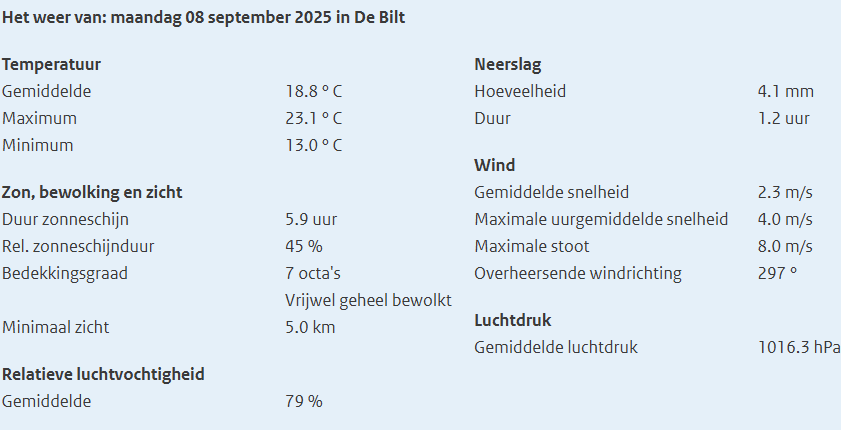
Weer:

Deze afbeelding heeft een leeg alt-attribuut; de bestandsnaam is 50813896361_463cbfec7c.jpg

Links:
In de geschiedenis

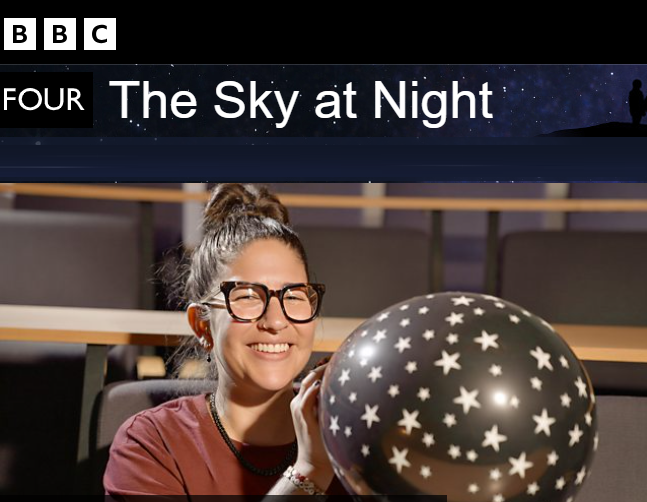
The Sky at Night – Webb Telescope: The Story So Far (TV BBC Four / BBC iPlayer)

The Sky at Night is a monthly documentary television programme on astronomy produced by the BBC.

The show had the same permanent presenter, Patrick Moore, from its first broadcast on 24 April 1957 until 7 January 2013. The latter date was a posthumous broadcast, which followed Moore’s death on 9 December 2012. This made it the longest-running programme with the same presenter in television history. Many early episodes are missing, either because the tapes were wiped, thrown out, or because the episode was broadcast live and never recorded in the first place.

Beginning with the 3 February 2013 edition, the show was co-presented by Lucie Green and Chris Lintott. Since December 2013 Maggie Aderin-Pocock has been a presenter. The programme’s opening and closing theme music is “At the Castle Gate”, from the incidental music to Pelléas et Mélisande, written in 1905 by Jean Sibelius, performed by the Royal Philharmonic Orchestra and conducted by Sir Thomas Beecham.

This episode:
In July 2022, the James Webb Space Telescope (JWST) released its first images. They were visually stunning, and it was clear they provided more detail of stars, galaxies and planets than ever before. But for the scientists waiting on the data, this was just the beginning of their journey to discover what the new telescope would reveal. Since then, they have been working hard and publishing papers on all the data JWST has been sending back.

Two years ago, just after the first images were released, Chris Lintott set off on a road trip to meet some of the scientists that were excitedly waiting on the first data. He wanted to find out what they hoped it could reveal. To mark the second anniversary Chris, along with fellow presenters Maggie Aderin-Pocock and George Dransfield, headed off to meet scientists old and new, to find out what the Webb Telescope has told us so far.

Chris gives us a run-down of the highs and lows the Webb Telescope has been through and the other discoveries it has made. Maggie is off to Bristol University to revisit Dr Hannah Wakeford who has been using JWST data to reveal what interesting chemicals exoplanet atmospheres contain.

George meets Professor Leigh Fletcher at the University of Leicester. When Chris met him two years ago, only one JWST image of Jupiter had been released. Now, he has data from all four of the outer planets of the solar system, and they have all thrown up surprises. JWST has revealed new jet streams on Jupiter and provided a greater understanding of its Galilean moons. Seasonal changes on Saturn have now been documented, and Uranus and Neptune have thrown up quirks that need another few years of work to understand.

Chris also visits the University of Cambridge to meet Dr Sandro Tacchella, who has been part of a team looking back at some of the earliest galaxies. He explains what new light the JWST data can shed on ancient stars, and what that can reveal about how our cosmos formed after the Big Bang.

Finally, our resident astronomer Pete Lawrence guides us through what there is to see in this month’s night sky, and how you too can look at some of the same targets as the James Webb Space Telescope – just not quite in the same level of detail!

Links:
The Sky at Night

The Sky at Night – Cosmic Ghosts (TV BBC Four)

The Sky at Night is a monthly documentary television programme on astronomy produced by the BBC.

The show had the same permanent presenter, Patrick Moore, from its first broadcast on 24 April 1957 until 7 January 2013. The latter date was a posthumous broadcast, which followed Moore’s death on 9 December 2012. This made it the longest-running programme with the same presenter in television history. Many early episodes are missing, either because the tapes were wiped, thrown out, or because the episode was broadcast live and never recorded in the first place.

Beginning with the 3 February 2013 edition, the show was co-presented by Lucie Green and Chris Lintott. Since December 2013 Maggie Aderin-Pocock has been a presenter. The programme’s opening and closing theme music is “At the Castle Gate”, from the incidental music to Pelléas et Mélisande, written in 1905 by Jean Sibelius, performed by the Royal Philharmonic Orchestra and conducted by Sir Thomas Beecham.

This episode:
This month, The Sky at Night has a spooky twist. Across the universe, there are hidden objects that we can’t see, but astronomers and scientists still believe they’re out there. To find out how we know that these mysterious objects exist, the team are going ghost-hunting. Cosmic ghost-hunting.

Prof Chris Lintott and Dr Maggie Aderin-Pocock are at Provan Hall, one of the oldest buildings in Glasgow and the site of several supposed ghost sightings across its 550-year history. But they aren’t looking for anything supernatural. Instead, they’re meeting the scientists and astronomers trying to solve some of the universe’s greatest mysteries by finding new ways to sense what surrounds us in the cosmos.

In the medieval rooms of Provan Hall, Chris meets Dr Olivia Jones from the UK Astronomy Centre and discovers how a tool often employed by ghost hunters is actually great for finding objects hidden in the dust of the cosmos. He also meets Prof Tessa Baker from the University of Portsmouth, who shows him how ripples in space-time are helping scientists to detect new, unseen cosmic events. And while scanning the house for spooky sounds, Maggie hears a voice from the past, which leads her to uncover the wonderful work of Vera Rubin – a trailblazing astronomer who helped to prove the existence of dark matter.

Across the country, and over a kilometre further below the Earth’s surface, guest presenter Prof Chamkaur Ghag is at the Boulby Underground Laboratory. While there, he discovers how the incredible research site has changed since Patrick Moore and The Sky at Night team visited 20 years ago and meets some of the Boulby team who are working on the hunt for ghostly dark matter particles.

Meanwhile, Pete Lawrence is at the Bedford School Observatory to show us how to find and photograph inky, ghost-like objects in the sky known as dark nebulae, and to tell us what to look out for in the night sky over the next month.

Links:
The Sky at Night

The Sky at Night – Hiding in Starlight (TV BBC Four)

The Sky at Night is a monthly documentary television programme on astronomy produced by the BBC.

The show had the same permanent presenter, Patrick Moore, from its first broadcast on 24 April 1957 until 7 January 2013. The latter date was a posthumous broadcast, which followed Moore’s death on 9 December 2012. This made it the longest-running programme with the same presenter in television history. Many early episodes are missing, either because the tapes were wiped, thrown out, or because the episode was broadcast live and never recorded in the first place. Beginning with the 3 February 2013 edition, the show was co-presented by Lucie Green and Chris Lintott. Since December 2013 Maggie Aderin-Pocock has been a presenter. The programme’s opening and closing theme music is “At the Castle Gate”, from the incidental music to Pelléas et Mélisande, written in 1905 by Jean Sibelius, performed by the Royal Philharmonic Orchestra and conducted by Sir Thomas Beecham.

This episode:
Total solar eclipses, like the one seen last month in North America, allow us to see details of the Sun that can’t be seen at any other time. So, this month, The Sky at Night team looks at how scientists are creating eclipses on demand and discovering the secrets that can be revealed hidden in that starlight, including habitable planets like our own. Maggie Aderin-Pocock travels to Belgium, where the European Space Agency’s Proba-3 mission is going through its final testing stages. This groundbreaking mission aims to fly two satellites together in formation, with one satellite acting like the moon during an eclipse, blocking out the central light of the Sun. This allows the other satellite to image the corona, the Sun’s outer atmosphere as seen during an eclipse. Maggie meets Dr Damien Galano from ESA, who tells her all about the challenges of the mission and what it hopes to achieve. Maggie then goes on to meet satellite operations test engineer Marie Beeckman, who takes her up close to the satellites to find out how the testing is going. Meanwhile, Pete Lawrence is out and about in Bristol, meeting a team of scientists and amateur astronomers. He discovers how input from the amateurs was crucial to the discovery of two exoplanets colliding, which had caused the dimming of a star. Finally, Chris Lintott is in Glasgow meeting Professor Beth Biller from Edinburgh University to discover why it is only by creating eclipses of distant stars that we could potentially find exoplanets more like our own. And as ever, our resident astronomer, Pete Lawrence, guides us through what can be seen this coming month, with a particular focus on the rewards of viewing in daylight – but as always, he reminds us of the need to take care when doing this.

Links:

The Sky at Night