Global status report on cancer 2026: the future we choose together – publication

Global status report on cancer 2026

The World Health Organization (WHO) ‘Global status report on cancer 2026: the future we choose together‘ provides a comprehensive assessment of the global burden of cancer, progress in cancer prevention and control, and the systemic challenges that continue to limit equitable outcomes.

Presenting new data on the burden of disease, the capacity of health systems to respond, and the lived experiences of people affected by cancer, the report examines trends in incidence, mortality, survival, risk factors and health system performance, as well as the human, social and economic consequences of cancer. It reviews implementation across the cancer continuum, including prevention, early detection, diagnosis, treatment, palliative care and survivorship, highlighting persistent disparities between and within countries and the gap between ambition and action. The report analyses the factors that drive progress and those that impede effective implementation, emphasizing the importance of integrated, people-centred approaches, universal health coverage, robust monitoring systems and meaningful engagement of affected communities. It highlights the coexistence of scientific advances and persistent inequities in who benefits from them and proposes a framework for future action based on three strategic shifts – better capabilities, better protections and better value. Seven recommendations guide governments, international organizations and other stakeholders in strengthening cancer control and advancing more equitable outcomes worldwide.

Links:
Global status report on cancer 2026: the future we choose together

2026-07-07, Lief dagboek

Dinsdag; Wat eten we vandaag?; Metropech; Amplifying Pacific voices; Tulp Fonds voor academici; Treaty on the Prohibition of Nuclear Weapons; NATO summit; KMI code geel.

Deze afbeelding heeft een leeg alt-attribuut; de bestandsnaam is dagboek.png

Wat eten we vandaag?:

Klik op afbeelding voor origineel

Metropech:

Klik op afbeelding voor origineel

Door een stroomstoring reden er veel minder metro’s op lijn 52 (Noord-zuidlijn), volgens vervoerder GVB om de 20 minuten. Na een half uurtje wachten besloot A3 de tram te pakken.

Klik op afbeelding om te lezen

Knipselkrant:


Agenda:

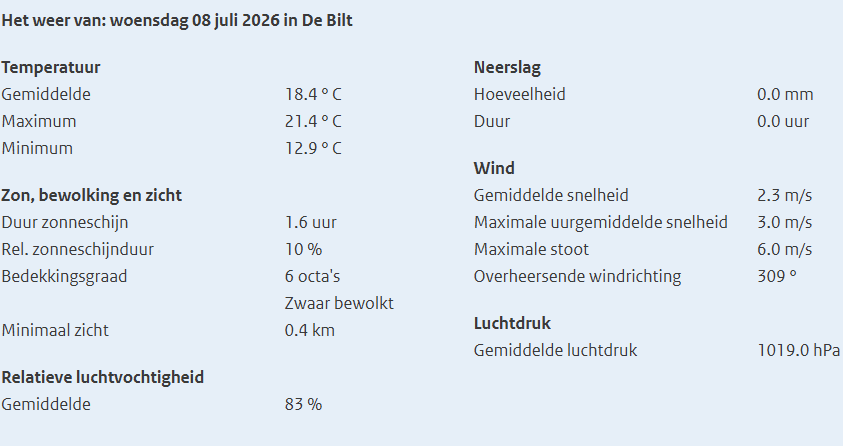
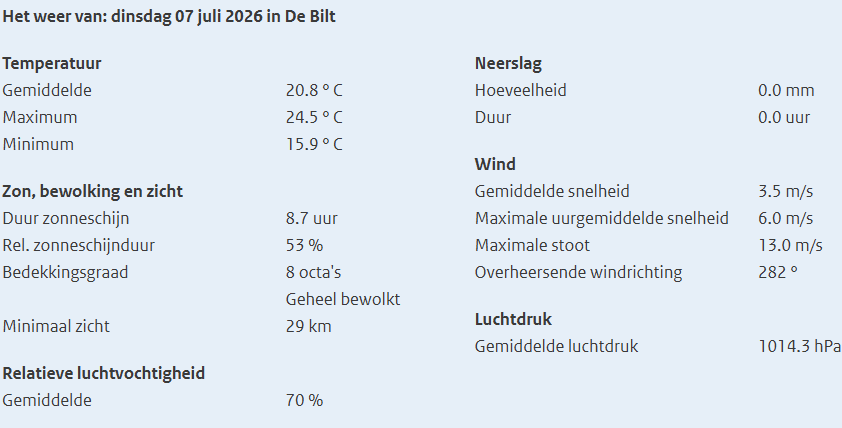
Weer:

Links:
In de geschiedenis

The Sustainable Development Goals Report 2026 – publication

The Sustainable Development Goals Report 2026

The Sustainable Development Goals Report 2026 shows that since their adoption in 2015, the Sustainable Development Goals (SDGs) have delivered results at scale—expanding access to clean water, electricity, health care and digital connectivity for billions of people.

With less than five years remaining to achieve the Goals, the report provides a candid assessment of progress: meaningful gains have been made across the SDGs, but they remain uneven and insufficient in the face of serious headwinds— from escalating conflicts, slowing global economic growth, climate change, rising debt burdens and declining official development assistance. Without a decisive push to rapidly scale up proven solutions, the promise of the 2030 Agenda risks slipping out of reach. The report emphasizes that the SDGs remain the world’s shared blueprint for peace, prosperity and sustainability and must be urgently returned to the centre of global decision-making. It identifies the priority actions needed to accelerate progress, including increased investment, strengthened international cooperation, expanded access to technology and data, a faster energy transition, greater gender equality, and renewed commitments to peace. The report underscores that the choices made over the next four years will determine not only whether the Goals are achieved by 2030, but also the well-being of people and the planet for generations to come.

Links:
The Sustainable Development Goals Report 2026

Burgerinitiatief: Laat Big Tech niet kiezen wat je ziet – petitie

Big Tech censureert het maatschappelijk middenveld

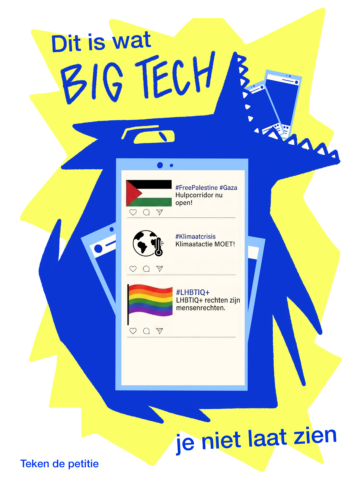
Steeds vaker bepalen een paar grote techbedrijven wat jij online wel en niet te zien krijgt, berichten over onder andere klimaat, mensenrechten, Palestina en queer-acceptatie worden stilletjes weggehaald of nauwelijks nog getoond en haat en desinformatie krijgen tegelijk vaak vrij spel.

Dit heet shadowbanning. Je krijgt er geen melding van. Je kunt het nergens controleren. Dat is geen toeval. Voor platforms als Meta, TikTok en X levert ophef nu eenmaal meer geld op. Maar zo bepaalt een handvol bedrijven welk verhaal Nederland te horen krijgt. En dat raakt onze democratie. Het gekke is: de Europese wet (de Digital Services Act) verbiedt dit eigenlijk al. Alleen handhaaft Nederland nauwelijks. Daarom starten we vandaag een burgerinitiatief. Met 40.000 handtekeningen kan de de Tweede Kamer worden gedwongen om dit probleem op tafel te leggen. Het is tijd om de wet eindelijk te handhaven. COC, Defend Democracy, Hivos, Milieudefensie, Oxfam Novib, Stem op een Vrouw, Transgender Netwerk & DeGoedeZaak geloven dat iedereen het recht heeft om te weten wanneer een platform diens berichten onzichtbaar maakt. Daarom vragen ze de Tweede Kamer om vijf dingen:

  • Echte handhaving door de toezichthouder
  • Openheid over wat onzichtbaar wordt gemaakt
  • Bescherming van organisaties tegen het zomaar verwijderen van accounts
  • Een meldpunt voor digitale censuur
  • Een jaarlijks openbaar overzicht over hoe platforms in Nederland modereren

Hoe meer handtekeningen, hoe sterker ze staan. Teken je mee? Op 1 november 2026 worden de handtekeningen ingediend.

Links:
Big Tech censureert het maatschappelijk middenveld door ‘Shadowbanning’: Nederland moet handhaven

Europarlementariër: ‘Grote techbedrijven nemen Europa niet serieus en verschuilen zich achter Trump’

Eerst onze DigiD, nu onze democratie

31st Session of the International Seabed Authority (part II)

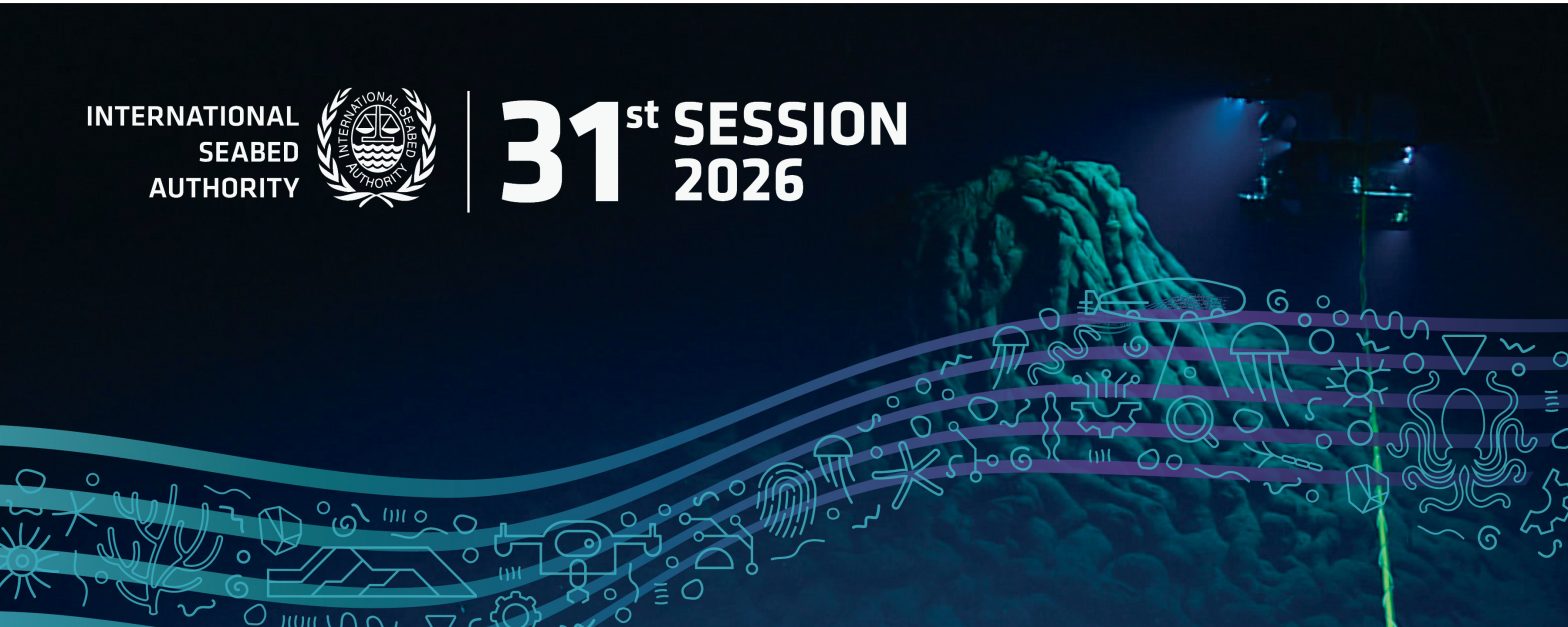
The 31st Session of the International Seabed Authority

The International Seabed Authority (ISA; French: Autorité internationale des fonds marins) is a Kingston, Jamaica-based intergovernmental body of 171 Member States plus the European Union.

It was established under the 1982 UN Convention on the Law of the Sea (UNCLOS) and its 1994 Agreement on Implementation. The ISA’s dual mission is to authorize and control the development of mineral related operations in the international seabed, which is considered the “common heritage of all mankind“, and to protect the ecosystem of the seabed, ocean floor and subsoil in “The Area” beyond national jurisdiction. The ISA is responsible for safeguarding the international deep sea, defined as waters below 200 meters (656 feet), where photosynthesis is hampered by inadequate light. Governing approximately half of the total area of the world’s oceans, the ISA oversees activities that might threaten biological diversity and harm the marine environment. Since its inception in 1994, the ISA has approved over two dozen ocean floor mining exploration contracts in the Atlantic, Pacific and Indian Oceans. The majority of these contracts are for exploration in the Clarion–Clipperton zone between Hawaii and Mexico, where polymetallic nodules contain copper, cobalt and other minerals essential for powering electric batteries. To date, the Authority has not authorized any commercial mining contracts as it continues to deliberate over regulations amid global calls for a moratorium on deep sea mining. Scientists and environmentalists warn that such mining could wreak havoc on the ocean, a crucial carbon sink and home to rare and diverse species. Funded by UNCLOS members and mining contractors, the Authority operates as an autonomous international organization with its own Assembly, Council, and Secretariat. The current secretary-general of the agency is Leticia Carvalho, whose four-year term began on 1 January 2025.

Links:
31st Session of the International Seabed Authority

Part I

Brandbrief aangaande vergunningaanvraag diepzeemijnbouw buiten het kader van de Internationale Zeebodemautoriteit (ISA)

Treaty on the Prohibition of Nuclear Weapons – adopted (2017) 2026

The Treaty on the Prohibition of Nuclear Weapons (TPNW), or the Nuclear Weapon Ban Treaty, is the first legally binding international agreement to prohibit nuclear weapons, with the ultimate goal being their total elimination.

It was adopted on 7 July 2017, opened for signature on 20 September 2017, and entered into force on 22 January 2021. For those states that are party to it, the treaty prohibits the development, testing, production, stockpiling, stationing, transfer, use and threat of use of nuclear weapons, as well as assistance and encouragement to the prohibited activities. For nuclear-armed states joining the treaty, it provides for a time-bound framework for negotiations leading to the verified and irreversible elimination of its nuclear weapons programme. A mandate adopted by the United Nations General Assembly on 23 December 2016 scheduled two sessions for negotiations: 27 to 31 March and 15 June to 7 July 2017. The treaty passed on schedule on 7 July with 122 in favour, 1 against (Netherlands), and 1 official abstention (Singapore). States that have joined the treaty are typically also members of nuclear-weapon-free zones. None of the states that possess nuclear weapons have joined the treaty, nor have any of the states that participate in nuclear sharing or extended nuclear deterrence relationships, including NATO members, Australia, Belarus, Japan, and South Korea.

Links:
United Nations Conference to Negotiate a Legally Binding Instrument to Prohibit Nuclear Weapons, Leading Towards their Total Elimination

Agenda 07-07-2023 – Treaty on the Prohibition of Nuclear Weapons | The ban treaty, two years after: A ray of hope for nuclear disarmament

48th session of the World Heritage Committee 2026

The World Heritage Committee meets once a year for an ordinary session to discuss the management of existing World Heritage Sites, and accept nominations by countries.

Extraordinary meetings can be convened at the request of two-thirds of the state members. Meetings are held within the territory of state members of the World Heritage Committee at their invitation. Rotation between regions and cultures is a consideration for selection and the location for the next session is chosen by the committee at the end of each session. The World Heritage Committee is a committee of the United Nations Educational, Scientific and Cultural Organization that selects the sites to be listed as UNESCO World Heritage Sites, including the World Heritage List and the List of World Heritage in Danger, defines the use of the World Heritage Fund and allocates financial assistance upon requests from States Parties. It comprises representatives from 21 state parties that are elected by the General Assembly of States Parties for a four-year term. These parties vote on decisions and proposals related to the World Heritage Convention and World Heritage List. According to the World Heritage Convention, a committee member’s term of office is six years. However many States Parties choose to voluntarily limit their term to four years, in order to give other States Parties an opportunity to serve. All members elected at the 15th General Assembly (2005) voluntarily chose to reduce their term of office from six to four years. Deliberations of the World Heritage Committee are aided by three advisory bodies, the IUCN, ICOMOS and ICCROM.

Links:
48th session of the World Heritage Committee