
In de geschiedenis
Links:
Wikipedia

Links:
Wikipedia
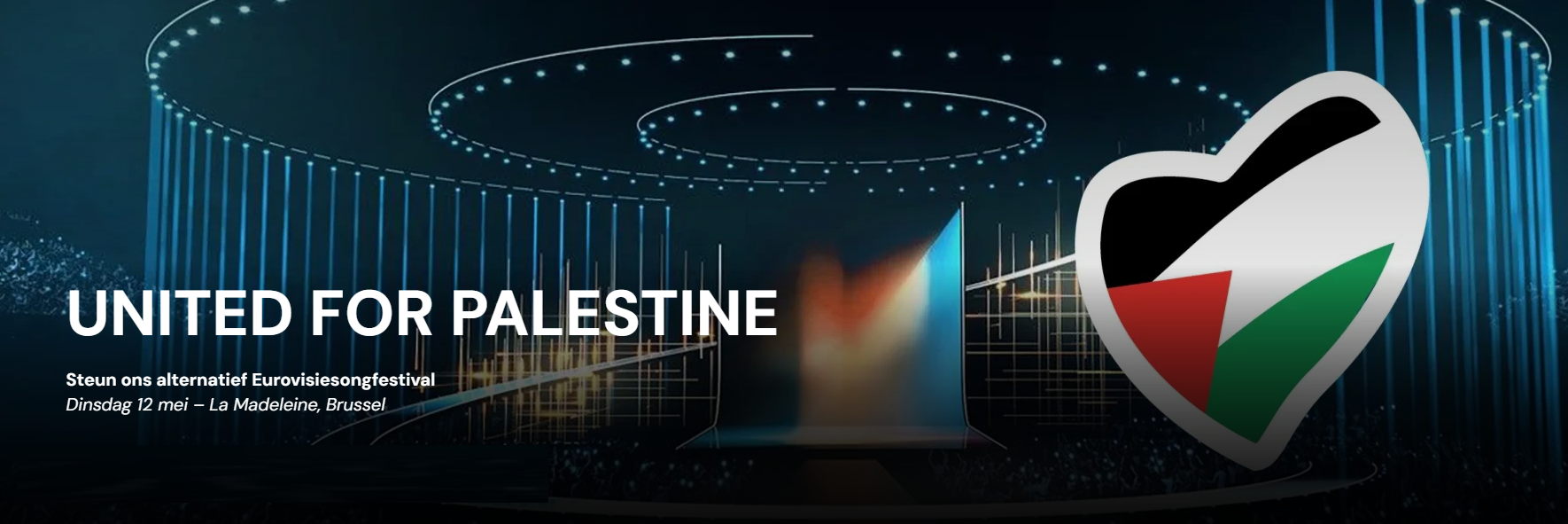
Terwijl België optreedt in de halve finale van het Eurovisiesongfestival, krijgt ook Israël opnieuw een internationaal podium, dat is onaanvaardbaar voor de organisatoren van en deelnemers aan United for Palestine.
United for Palestine is helemaal uitverkocht. Maar je steun is nog hard nodig. Heb je geen ticket of kan je er niet bij zijn? Koop een symbolisch ticket en steun het initiatief. Met jouw gift helpen ze de organisatiekosten van dit evenement dragen, steunen ze Palestijnse artiesten en zetten ze de strijd voor Palestina verder. Elke bijdrage helpt. Geef je stem. Onderteken hieronder onze boodschap ‘Geen podium voor genocide‘. Samen blijven we druk zetten op VRT om het Eurovisiesongfestival niet uit te zenden. Het is nog niet te laat. Woon een Watch Party bij, met de opnames van het United for Palestine festival. Of organiseer er zelf één.
Links:
United for Palestine

Zaterdag 16 mei 2026 gaat extreemrechts op meerdere locaties de straat op.
Hoe méér demonstranten, hoe harder DeGoedeZaak wil werken aan een hoopvol antwoord. Elke ruit die zij ingooien, wordt vertaald in euro’s voor het tegengeluid. Zo wordt het verhaal omgedraaid. De vorige Sponsor een extreemrechtse demonstrant-actie was een overweldigend succes: meer dan 10.000 deelnemers haalden in 5 dagen tijd ruim €110.000 op voor humane opvang en medemenselijkheid. Dat laat zien dat de meerderheid van Nederland wél achter een menselijk vluchtelingenverhaal staat. Doe mee. Sponsor een extreemrechtse demonstrant vanaf €3, en laat zien dat hoop sterker is dan haat. Het geld gaat deze keer naar twee bestemmingen:
1. Het Actiefonds, dat hiermee acties vanuit de migratiebeweging vóór vluchtelingen en demonstraties tegen extreemrechts financiert.
2. De MEER HOOP DAN HAAT Campagne. Dit is een voortzetting van de campagnes Gelukszoekers en Hoopzaaiers van Here to Support en DeGoedeZaak. Het doel van deze campagne is om de breed gedeelde medemenselijkheid tegenover vluchtelingen in Nederland een sterkere stem te geven. Door het ondersteunen van lokale raadsleden en bewoners met het ontwikkelen van hun geluid vóór migratie. Hierbij richten zij zich op waarden zoals solidariteit, rechtvaardigheid, veiligheid en gedeelde toekomst.
Links:
Sponsor een extreemrechtse demonstrant voor een hoopvol geluid
‘Nationaal protest’ tegen asielbeleid in meerdere steden, geen massale opkomst

The United Nations designated 12 May the International Day of Plant Health (IDPH) to raise global awareness on how protecting plant health can help end hunger, reduce poverty, protect biodiversity and the environment, and boost economic development.
Plants are life – we depend on them for 80 percent of the food we eat and 98 percent of the oxygen we breathe. But international travel and trade has been associated with the introduction and spread of plant pests. Invasive pest species are one of the main drivers of biodiversity loss and threaten the delicate web of life that sustains our planet. Pests and diseases have also been associated with rising temperatures which create new niches for pests to populate and spread. In response, the use of pesticides could increase, which harms pollinators, natural pest enemies and organisms crucial for a healthy environment. Pr
2026 Theme: Plant biosecurity for food security. Ninety eight percent of the oxygen we breathe comes from plants. Eighty percent of the food we eat is provided by plants. But we lose as much as 40 percent of crops from pests and diseases every year, impeding efforts to provide food and nutrition for all. Plant biosecurity is like border control and hygiene for plants — checking, protecting and responding to prevent dangerous plant pests and diseases from damaging crops and disrupting their trade. It serves as a safety net, so we have food on our tables and farmers’ jobs are safe. It keeps international trade smooth and preserves precious biodiversity. Biosecurity tools such as international plant health standards applied in their trade underpin the FAO Four Betters by enabling better production, better nutrition, better environment and better lives for all, leaving no one behind.
Links:
D
Op de geboortedag van Florence Nightingale, de grondlegster van het verpleegkundige beroep, wordt internationaal de Dag van de Verpleging gevierd.
Sinds 1964 wordt deze dag ook in Nederland gevierd. De Internationale Raad voor Verpleegkundige
Dag van het Bewustzijn / Awareness Day werd door Thomas Michael Hennessy, Jr. bedacht, de oprichter van Repeal Existing Stereotypes about Chronic Immunological and Neurological Diseases (CIND). De Amerikaanse Tom wilde deze dag niet alleen nationaal lanceren, hij richtte zijn pijlen op de hele wereld. Internationale Dag van Bewustzijn wil met deze dag meer (bewuste) aandacht vragen voor het hele spectrum van chronische immunologische en neurologische ziekten waaronder ook ME/CVS valt. Niet vreemd dat op de geboortedatum van Florence Nightingale, de grondlegger van de moderne verpleegkunde, Dag van Bewustzijn wordt gevierd. In 1992 heeft de Wereldgezondhei
Links:
Dag van de Verpleging
Therapie voor kinderen met uitputtingsziekte ME/CVS in twijfel getrokken
.png)
Salt Awareness Week takes place in the third week of May every year.
Heart attacks and strokes are the biggest causes of death and disability globally, responsible for 17.9 million deaths annually. The strain this is having – not only on the individual and their families – but on healthcare systems cannot be ignored. Most cases are entirely preventable, and so it’s vital we all take measures to improve our health and prevent these events from happening in the first place. It’s a little-known fact that eating less salt is one of the quickest and most effective ways of improving our health, with just 1 less ‘pinch’ a day preventing over 4,000 heart attacks and strokes every year in the UK alone. But how can we cut back on our salt, when everything we buy is full of it? From sliced bread to biscuits, street food to ‘healthy’ salads, everything has added salt. In fact, in many countries, up to 80% of the salt we eat is already in the foods we buy, and it’s impossible to take it out once it’s been added in.
Links:
World Salt Awareness Week
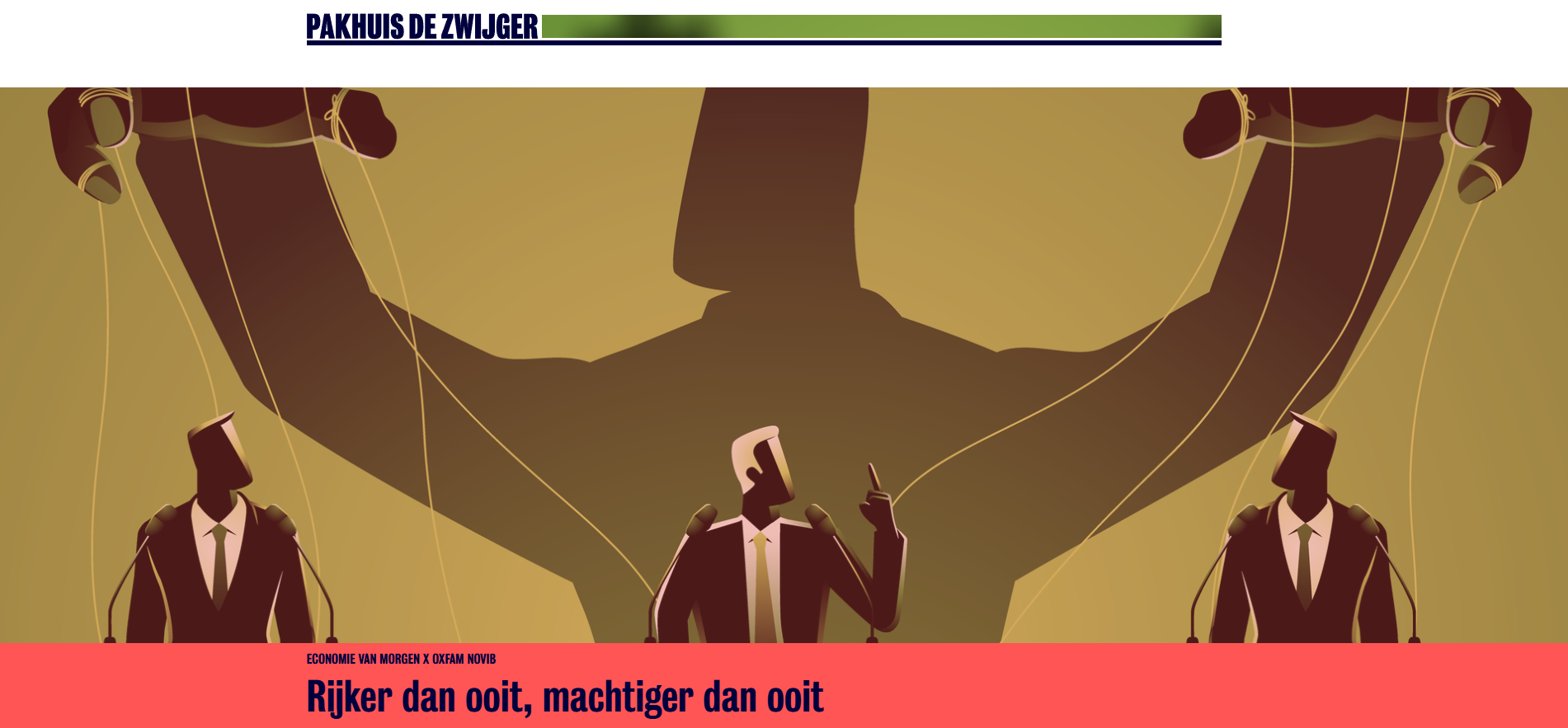
Hoe kunnen we onze democratie beschermen tegen de groeiende vermenging van private belangen in de publieke besluitvorming?
De politieke macht van de superrijken groeit en ondermijnt democratieën wereldwijd, terwijl de ruimte van gewone mensen om een beroep te doen op hun democratische rechten, krimpt. De internationale rule of the rich wakkert verder aan terwijl Trumps pro-miljardairs agenda laat zien hoe de rechtsstaat bezwijkt onder de druk van financiële belangen. Niet alleen in Amerika zien we dit gebeuren; ook Nederland beweegt die kant op. De afgelopen tien jaar is het vermogen van de superrijken hier verdrievoudigd. Deze economische macht vertaalt zich niet alleen in het bezit van huizen en aandelen, maar ook in politieke invloed. Aan de hand van het onderzoeksrapport van Oxfam Novib Rijker dan ooit, machtiger dan ooit, zoomen we in op de warme banden tussen de politiek en de (super)rijken. Welke ‘geld-macht’-spiraal’ zien we? Hoe democratisch is Nederland wanneer politici niet de belangen vertegenwoordigen van de stemmer maar juist die van het kapitaal? En hoe kunnen we onze democratie beschermen tegen de groeiende vermenging van private belangen in de publieke besluitvorming?

The report ‘Growth and formaldehyde degradation of photoheterotrophic Methylobacterium within radiation fogs‘ subscibes fog and an incredible discovery that it’s essentially a complex biosphere.
The atmosphere contains thousands to millions of bacterial cells per cubic meter. However, it remains unclear if microbes are at all active or growing in situ or whether they are merely being transported in an inactive state. Based on the analyses of 32 overland radiation fog events over a 2-year period, we show that fog waters, with bacterial concentrations similar to those in continental or marine bodies of water, contain microbiomes well differentiated in composition from those in the dry aerosol microbiomes that occur locally before, during, or after fog events. They are consistently and strongly enriched in photoheterotrophic Methylobacterium species, suggesting that fog populations may be metabolizing volatile C1 compounds in situ, although phototrophy seems much less important. Indeed, metabolically active bacteria in the fog, and representative isolates of the main field populations, can degrade formaldehyde at unprecedently high rates; most of this activity seems to play a detoxification role. The increase in bacterial aerobiome counts upon intervening fog events, the dependence of microbial concentration on ambient temperature, the increases in cell size and frequency of dividing cells in fog water with respect to cells in interstitial aerosols of fogs, in addition to their metabolic capacity, all suggest that the fog water microbiome is actually growing. Consequently, droplets of atmospheric water should be considered a potential aquatic microhabitat. Our results highlight the fog microbiome’s role in atmospheric chemistry and have implications for fog harvesting as a source of fresh water for human use.
Maandag; Wat eten we vandaag?; EU sancties tegen Israëlische kolonisten; Bob Marley; Ultimatum van vakbonden; Aardbeving Gaswinning Groningen; The Sky at Night.

Wat eten we vandaag?:
Knipselkrant:
Agenda:
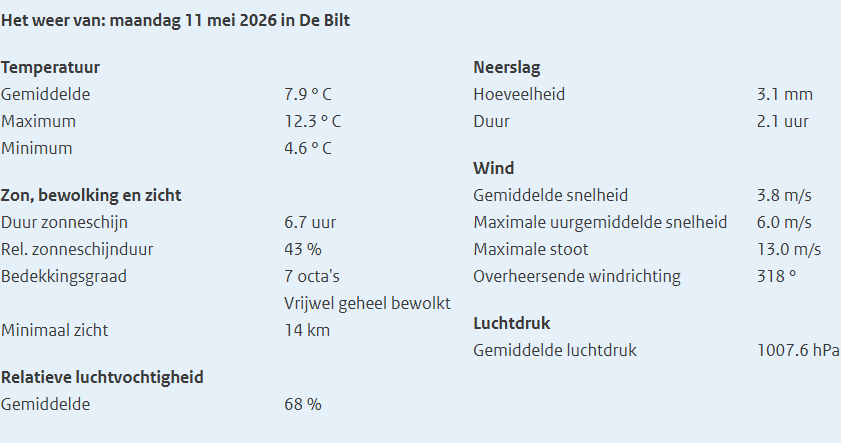
Weer:
Links:
In de geschiedenis
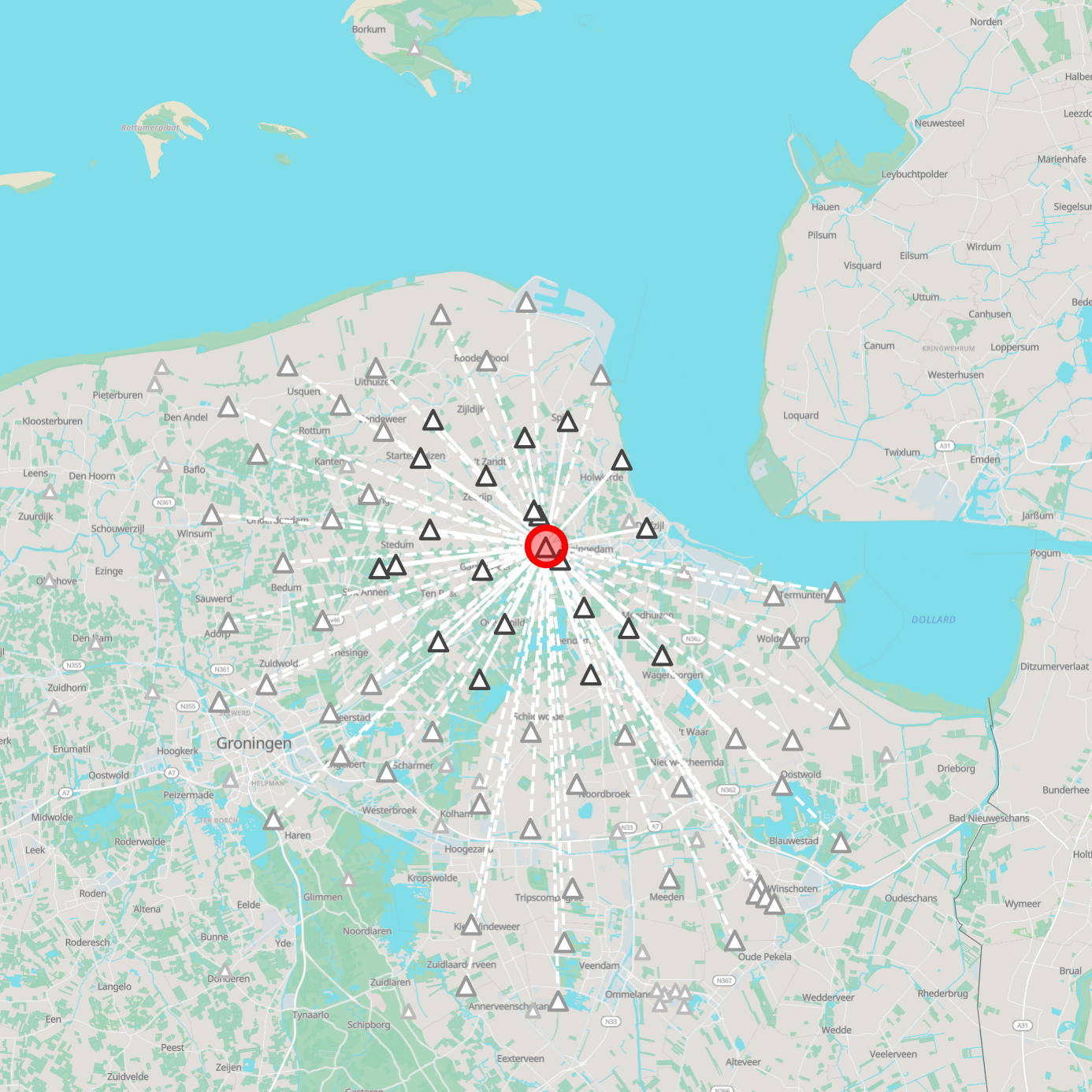
Datum en tijd (UTC):
2026-05-11 04:16:45
Latitude:
53.322 °
Longitude:
6.823 °
Diepte:
3.0 km
Type:
Geïnduceerde aardbeving
Plaats:
Appingedam
Magnitude:
1.9
Links:
KNMI