
In de geschiedenis
Links:
Wikipedia

Links:
Wikipedia

Joint fact finding (JFF) is een handreiking van Voedselpark Amsterdam richting de gemeente Amsterdam om op basis van feiten en transparantie te komen tot een eerlijke afweging over een bestemming voor de Lutkemeerpolder: bedrijventerrein of landbouw.
Op 7 maart 2024 vond er na maanden voorbereiding een gezamenlijke bijeenkomst plaats. Een bijzondere dag waarbij beide partijen hun plannen, onderzoeksresultaten en zorgen deelden. Tien experts op diverse gebieden presenteerden inzichten, waarna er ruimte was voor vragen en aanvullingen. Dankzij deze nieuwe informatie ziet Voedselpark Amsterdam kansen om de hele polder in te zetten voor lokale voedselproductie, ten gunste van de omliggende wijken en om de betrokkenheid van bewoners daarbij te vergroten.
Links:
Joint fact finding

De herdenking van de Nakba, de verdrijving en vlucht van honderdduizenden Palestijnen rondom de vorming van de staat Israël in 1948, wordt onder andere georganiseerd door de Palestijnse Gemeenschap Nederland, de Internationale Socialisten en Students for Palestine.
Links:
Nakba Day
Vreedzaam Pro-Palestinaprotest eindigt met aanval op betogers

Berber van der Woude, board member of The Rights Forum, talks with Palestinian-British doctor Ghassan Abu-Sittah about his time as a surgeon in Gaza and the genocidal war that Israel is waging there.
Recently, Germany imposed an entry and speaking ban on Abu-Sitta, banned the Palästina Kongress, and blocked the bank account of Jüdische Stimme. The Rights Forum provides a platform for speakers from these organisations, as a counterbalance to the suppression of freedom of speech and Palestinian solidarity by the German state. Furthermore, we ask ourselves, are we also heading in this direction in the Netherlands? With a panel of experts we will discuss the situation in Gaza and the attacks on the freedom of expression in Europe. The Rights Forum offers a platform to panelists whose freedom of expression and Palestinian solidarity in Europe are under severe pressure.
Links:
In conversation with Palestinian doctor Ghassan Abu-Sittah
Nederland verbiedt Palestijnse arts Ghassan Abu-Sittah toegang tot het land
Livestream: In conversation with Palestinian doctor Ghassan Abu-Sittah

De Marsili is de grootste onderwatervulkaan van Europa en ligt in het zuiden van de Tyrreense Zee, ten noorden van Sicilië.
Het massief strekt zich uit over 2000 km². De voet ligt 3000 m onder de zeespiegel, de top 500 m. De vulkaan werd in de jaren 1920 ontdekt en vernoemd naar de Italiaanse wetenschapper Luigi Fernando Marsili. De vulkaan wordt permanent bewaakt met seismograaf en magnetometer omdat een uitbarsting of grote aardverschuiving op de flanken een tsunami kan veroorzaken.
Wat is de activiteitsstatus van Marsili, de grootste vulkaan in Europa en de Middellandse Zee? Is het waar dat het actief is? Bestaat er een tsunami-gevaar dat verband houdt met het mogelijke uitlokken van een grote aardverschuiving (laterale instorting)? Het Italiaanse Nationaal Instituut voor Geofysica en Volcanologie (INGV) heeft er in 2015 over gesproken, maar recente studies hebben bijgedragen aan een verdere verdieping van de kennis van de morfologie, de interne structuur en het gevaar dat verband houdt met mogelijke tsunami’s.
Vrijdag; Wat eten we vandaag?; Solar cycle 25; Pro-Palestina studentenprotesten & Songfestival; Wereld Lupus Dag; Monty Python dag; Day of the Argania tree.

Wat eten we vandaag?:

Knipselkrant:
Agenda:
Weer:

Links:
In de geschiedenis

Kappen met Kolen en Extinction Rebellion voeren elke vrijdag actie tegen het gebruik van kolen in Nederland.
Omdat kolen de klimaatopwarming versnellen en we juist zouden moeten stoppen met kolen. Desondanks kiest de overheid ervoor kolencentrales langer open te houden. Extinction Rebellion eist van de Nederlandse overheid dat zo snel mogelijk wordt gestopt met het winnen, transporteren en verstoken van steenkool, de meest schadelijke fossiele brandstof voor het klimaat, het milieu en de gezondheid. De dag begint ’s ochtends om 08:00 een Zoom-meeting om te kijken wat men die dag gaan doen en waar ze naar toe gaan. ‘Kappen met kolen’ is een campagne die zich richt op het beëindigen van het gebruik van steenkool, de meest schadelijke fossiele brandstof voor milieu (bij de winning), klimaat (CO2-uitstoot) en gezondheid (bij verbranding komen PAK’s en fijnstof vrij). Hoewel Nederland nog maar vier kolencentrales heeft, spelen we een grote rol in de doorvoer van steenkool richting Duitsland en Midden-Europa: zo worden via de havens van Rotterdam en Amsterdam megatonnen steenkool – deels bloedkolen afkomstig uit o.a. Colombia – overgeslagen. Regelmatig blokkeert Kappen met kolen daarom kolentreinen richting Duitsland. Daarnaast richten ze zich op Tata Steel IJmuiden, een grootverbruiker van steenkool – waarmee ijzer uit ijzererts wordt gewonnen – en de grootste vervuiler en uitstoter van Nederland. Er wordt samen opgetrokken met activisten en actiegroepen uit onder meer Colombia en Duitsland. Kolen hebben in Nederland het kleinste aandeel in de fossiele energiemix maar veroorzaken de grootste schade. We moeten ergens beginnen, en #kappenmetkolen is een no-brainer!

World Lupus Day wordt georganiseerd door de World Lupus Federation en heeft als doel de levenskwaliteit te verbeteren voor lijders aan de mogelijk fatale auto-immuunziek
Maar wil ook zorgen dat onderwijs, de gezondheidszorg en andere instanties toegankelijk zijn en blijven. En maakt zich hard voor meer onderzoek naar de oorzaken van lupus, eerdere diagnose en behandeling en wereldwijd betere epidemiologisch
*(bron: worldlupusday.o
Links:
World Lupus Day
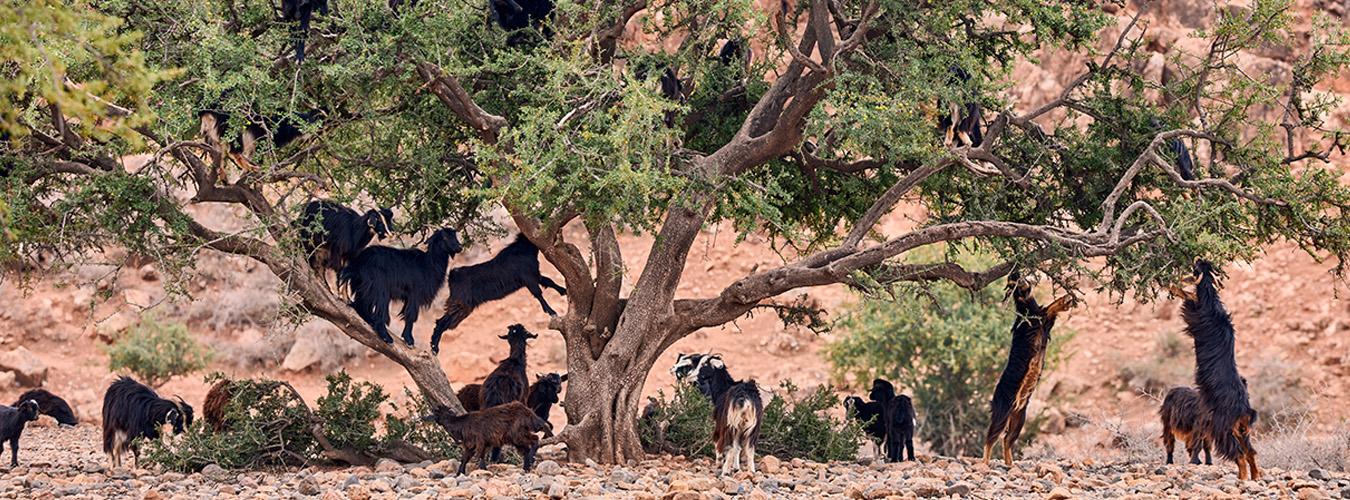
The argan tree (Argania spinosa) is a native species of the sub-Saharan region of Morocco, in the southwest of the country, which grows in arid and semiarid areas.
It’s the defining species of a woodland ecosystem, also known as Arganeraie, which is rich in endemic flora. It is resilient to a harsh environment under water scarcity, risk of erosion and poor soils. This ecosystem of extraordinary beauty is not only important in terms of conservation, but also for research and socio-economic development, due to its forestry, agricultural and livestock use. The argan tree woodlands provide forest products, fruits and fodder. The leaves and the fruits are edible and highly appreciated, as is the undergrowth, and constitute a vital fodder reserve for all herds, even in periods of drought. The trees are also used as fuelwood for cooking and heating. The world-renowned argan oil is extracted from the seeds and has multiple applications, especially in traditional and complementary medicine and in the culinary and cosmetic industries. The United Nations Educational Scientific and Cultural Organization (UNESCO) designated in 1988 the endemic production area as the Arganeraie Biosphere Reserve. Also, all know-how concerning the argan tree was inscribed in 2014 on the UNESCO Representative List of the Intangible Cultural Heritage of Humanity. Moreover, in December 2018, FAO recognized the Argan-based agro-sylvo-pastoral system within the area of Ait Souab – Ait Mansour in Morocco as a Globally Important Agricultural Heritage System. And lastly, in 2021, the United Nations General Assembly proclaimed 10 May the International Day of Argania. The resolution, submitted by Morocco, was co-sponsored by 113 member states of the United Nations and adopted by consensus.
Links:
Day of the Argania tree

International Monty Python Status Day is an annual event intended to raise awareness of how delightfully silly Monty Python is!
Invite your friends to spread the good cheer and delightful humour. Particip
Broadca
Links:
In
Quantifying the benefits of inefficient walking: Monty Python inspired laboratory based experimental study – publication / O