
In de geschiedenis
Links:
Wikipedia

Links:
Wikipedia
Zondag; Wat eten we vandaag?; Smartphones; Amazone; Natuurbeschermingsdag; Vroege Vogels; Zomergasten.

Wat eten we vandaag?:

Knipselkrant:
Agenda:
Weer:

Links:
In de geschiedenis

World Hepatitis Day, 28 July, is an opportunity to step up national and international efforts on hepatitis, encourage actions and engagement by individuals, partners and the public and highlight the need for a greater global response as outlined in the WHO’s Global hepatitis report of 2017.
The date of 28 July was chosen because it is the birthday of Nobel-prize winning scientist Dr Baruch Blumberg, who discovered hepatitis B virus (HBV) and developed a diagnostic test and vaccine for the virus. Low coverage of testing and treatment is the most important gap to be addressed in order to achieve the global elimination goals by 2030. 2024 theme is: “It’s time for action“.
Links:
Wikipedia

World Nature Conservation Day is observed on 28th July all over the world with the objective of increasing awareness about and protecting the natural resources.
On this day, let us make a conscious effort to contribute to the local, national, and global efforts in conserving nature and the benefits they provide for the present and future generations. Wo

Poliovirus that infected a Chinese child in 2014 may have leaked from a lab, samples destined for destruction at a Paris institute trigger a virological “detective story”.
Researchers at the Pasteur Institute in Paris working under strict biosafety conditions recently opened an old box that contained a virological time capsule: four poliovirus samples, each with a handwritten label on the vial, sent to the institute more than 60 years earlier by Albert Sabin, a giant in the field of poliovirus research. The viruses had to be destroyed, as part of a global campaign to get rid of old poliovirus samples. But first, the Pasteur team would sequence them to preserve their genetic information. A paper about those sequences, published in Virus Evolutionin July, has raised an unexpected and troubling possibility: A poliovirus that infected a 4-year old child in China in 2014 may have originated in a research laboratory or a vaccine production facility.
Links:
Poliovirus that infected a Chinese child in 2014 may have leaked from a lab
Links:
Wikipedia
Zaterdag; Wat eten we vandaag?; Europese Commissie : Inbreukenpakket; X & privacy; AI-technologie EU; Wereld Hoofd- en halskankerdag.
Wat eten we vandaag?:
Knipselkrant:
Agenda:
Weer:
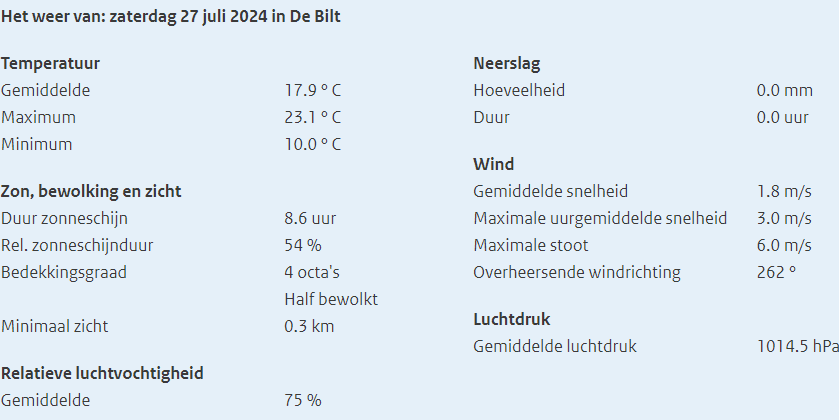
Links:
In de geschiedenis

Hoofd- en hals kanker (HNSCC) is wereldwijd de belangrijkste oorzaak van overlijden en invaliditeit.
En het bizarre is dat de meeste mensen geholpen hadden kunnen worden wanneer zij eerder naar de huisarts waren gegaan. World Head Neck Cancer day voert campagne om deze vorm van kanker onder de aandacht van de mensen te brengen. Hoofd- en halskanker is relatief zeldzaam. In Nederland krijgen jaarlijks ongeveer 3.000 mensen de diagnose dat ze kanker in het hoofd-halsgebied hebben. Staat gelijk aan ongeveer 5% van het totale aantal mensen die jaarlijks de diagnose kanker krijgen.
In België zie je een soort gelijke cijfers, ook daar gaat het om 5% van alle nieuwe gevallen van kanker. Bij elke ziekte geeft het tijdig herkennen van de klachten grotere overlevingskansen, dat is bij hoofd-halskanker niet anders. Hoe eerder je naar de huisarts gaat, hoe sneller je een doorverwijzing krijgt naar een hoofd-hals oncologisch centrum. Dus ga naar een arts wanneer je langer dan 3 weken last hebt van één van onderstaande klachten:
Vrijdag; Wat eten we vandaag?; Diepzeemijnbouw; niet goed voorbereid op storing of ramp; Sabotage Olympische Spelen; Greenwashing luchtvaart; New record daily global average temperature; Systeembeheerdersdag; Dag voor het Behoud van het Mangrovebos; Dag van de Republiek NL; Olympische Zomerspelen; Esperanto Day; Europese Commissie : Inbreukenpakket; Can AI Read Your Mind?.
Wat eten we vandaag?:

Knipselkrant:
Agenda:
Weer:
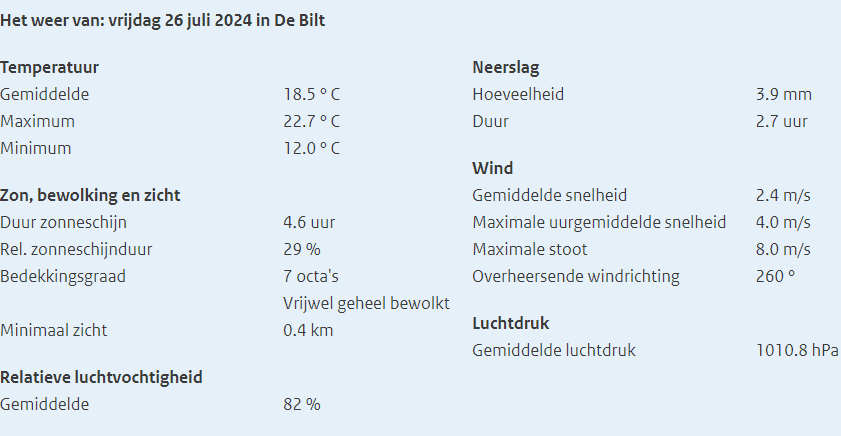
Links:
In de geschiedenis