2024 NATO Summit

The 2024 Washington summit is an meeting of the heads of state and heads of government of the thirty-two members of the North Atlantic Treaty Organization (NATO), their partner countries and the European Union (EU), which is being held in Washington, DC, United States, on 9–11 July 2024.

The summit commemorates the landmark 75th anniversary of NATO, which was founded on 4 April 1949 with the signing of the North Atlantic Treaty in Washington, DC. The summit is the fourth NATO summit to be held in the United States following the 1978 Washington summit, 1999 Washington summit and 2012 Chicago summit. It also marks the first summit since Sweden acceded to NATO and the last for Jens Stoltenberg as Secretary General. The official title of the 2024 Washington summit is “Ukraine and transatlantic security.” It is meant to highlight the focus on NATO’s response to escalating global threats to peace and democracies, with particular attention to Russia’s ongoing invasion of Ukraine and North Korea’s involvement on the side of Russia through weapon supply and troop deployment to the Ukrainian front lines. Following the announcement of Russian and North Korean cooperation agreements, Stoltenberg stated that Ukraine-South Korea cooperation would be discussed at the summit. The alliance is also set to discuss perceived threats posed by China and the security situation in the Indo-Pacific region. Additionally, agenda includes dialog on boosting defence production and reaffirming allies’ commitment to military readiness and the defence of all of NATO’s territory.

Links:
2024 NATO Summit

Ukraine will stop Putin, Biden tells NATO in forceful speech

NAVO en Zelensky over nieuwe militaire hulp: “Het is nog steeds niet genoeg”

NAVO wil militaire krachten bundelen met Japan, Zuid-Korea en Australië

Economische Verkenningen Metropoolregio Amsterdam – publicatie / Woondocu: ‘Regio Amsterdam Kookt Over’ (TV AT5)

Het wordt duurder en drukker in de regio Amsterdam, blijkt uit onderzoek van De Economische Verkenningen Metropoolregio Amsterdam (EVMRA).

De welvaart groeit, maar tegelijkertijd staan we onder grote druk. Zo kampen we volgens het rapport met zowel een tekort aan personeel als aan ruimte. Daarbij nemen de economische verschillen tussen diverse groepen inwoners toe. Hoe komt dit en wat zijn de gevolgen van deze scheefgroei? Bouw Woon Leef van de regionale televisie omroep AT5 zoekt het uit in de nieuwe docu: ‘Regio Amsterdam Kookt Over’.

Links:
Nieuw woondocu: ‘Regio Amsterdam Kookt Over’

2024-07-09, Lief dagboek

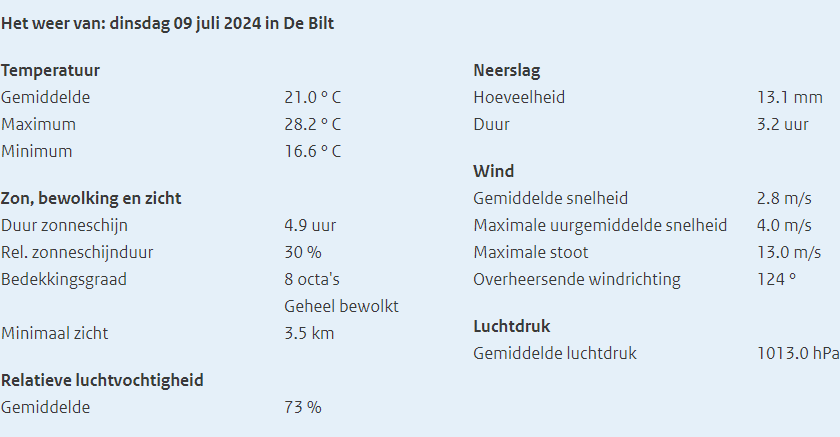
Dinsdag; Wat eten we vandaag?; Ariane 6 rocket; Demonstratierecht in Europa; Dag voor de Vernietiging van Vuurwapens; KNMI Code Oranje.

Deze afbeelding heeft een leeg alt-attribuut; de bestandsnaam is dagboek.png

Wat eten we vandaag?:

Zuurkool. klik op afbeelding voor origineel

Knipselkrant:


Agenda:

Weer:

Deze afbeelding heeft een leeg alt-attribuut; de bestandsnaam is 50813896361_463cbfec7c.jpg

Links:
In de geschiedenis

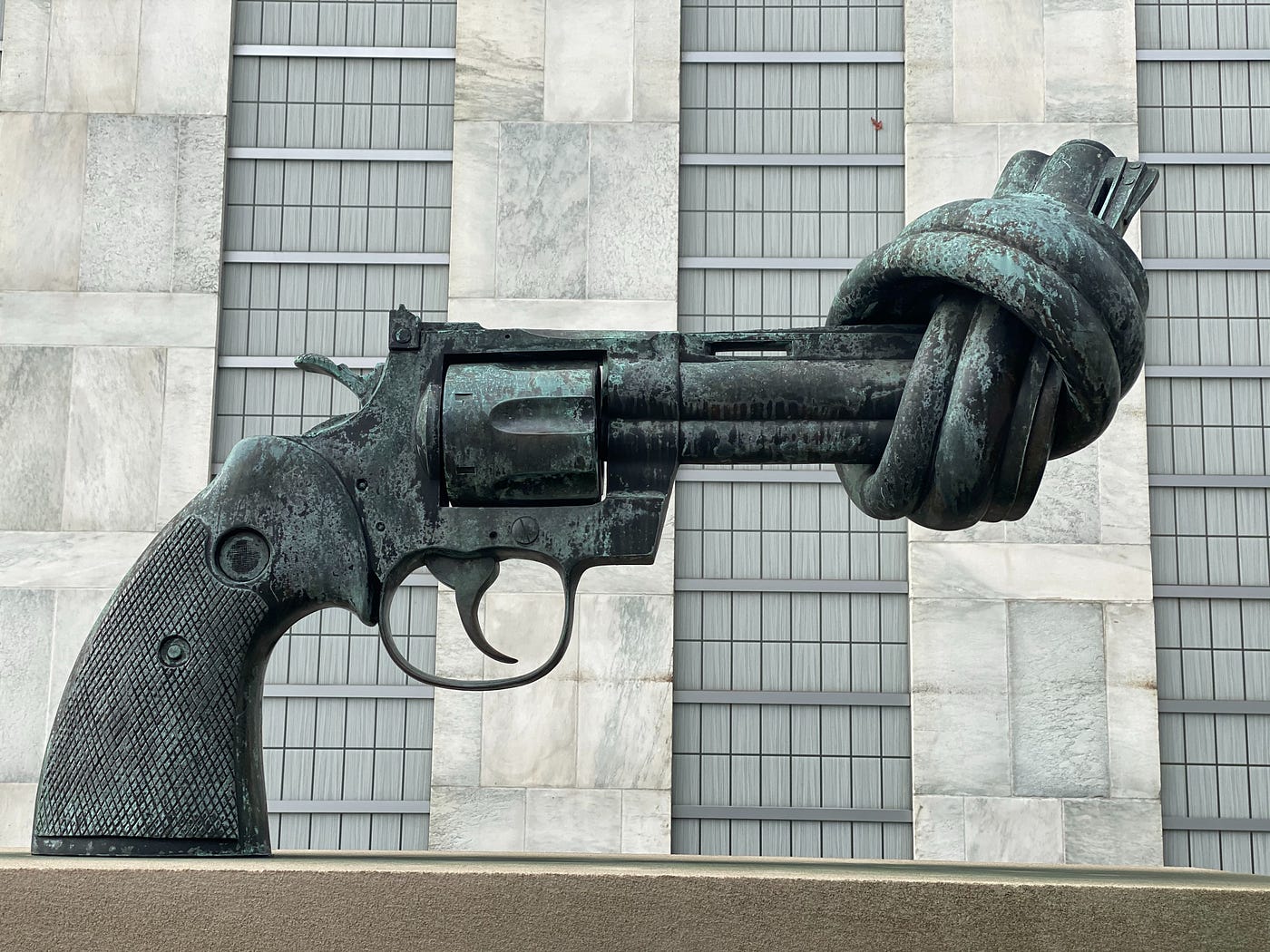
Dag voor de Vernietiging van Vuurwapens / Gun Destruction Day 2024

Op initiatief van de Verenigde Naties wordt sinds 2001 op 9 juli de Dag voor de Vernietiging van Vuurwapens (Gun Destruction Day) gehouden, deze dag is in het leven geroepen om ons bewust te maken van de dreiging en gevaren die slecht beveiligde en (illegale) handvuurwapens vormen voor onze dagelijkse veiligheid.

Ter gelegenheid van de Gun Destruction Day worden in verschillende landen op en rond 9 juli verouderde en in beslag genomen wapens vernietigd. Hoewel er elk jaar gemiddeld 800.000 vuurwapens worden vernietigd, blijft het probleem van illegale vuurwapens enorm. Voor elk wapen dat wordt vernietigd, worden er nog eens 10 vervaardigd en elke dag worden 2.000 mensen gedood door vuurwapens. Het Wapenhandelsverdrag / Arms Trade Treaty (ATT) werd in 2013 ondertekend door 130 landen en op 24 december 2014 door de Verenigde Naties aangenomen waardoor het wereldwijde juridisch bindend ATT in werking trad. De huidige stand van zaken: 104 landen hebben het ATT geratificeerd of zijn toegetreden. Tot deze landen behoren ook het Verenigd Koninkrijk, Frankrijk, Duitsland, Italië en Spanje. Saillant detail: deze vijf staan in de top 10 van grootste wapenproducenten. Nog eens 32 landen hebben het verdrag ondertekend maar niet geratificeerd. Het doel van het ATT is om de export, import, tussenhandel en doorvoer van conventionele (niet nucleaire) wapens beter te controleren en reguleren. De initiatiefnemers, waaronder Oxfam en Amnesty International hopen met het ATT een instrument in handen te hebben dat een einde maakt aan de meest extreme vormen van wapenexport. Volgens schattingen is de VS nu goed voor 34% van alle wereldwijde wapenverkopen, een stijging van 30% ten opzichte van vijf jaar geleden. En vergis je niet de wapenexport van de VS ligt 58% hoger dan die van Rusland, de op één na grootste exporteur van de wereld. De rest van de top 5 wordt gevormd door Frankrijk, Duitsland en China. En Nederland? Nederland staat op de tiende plek.

Links:
Arms Trade

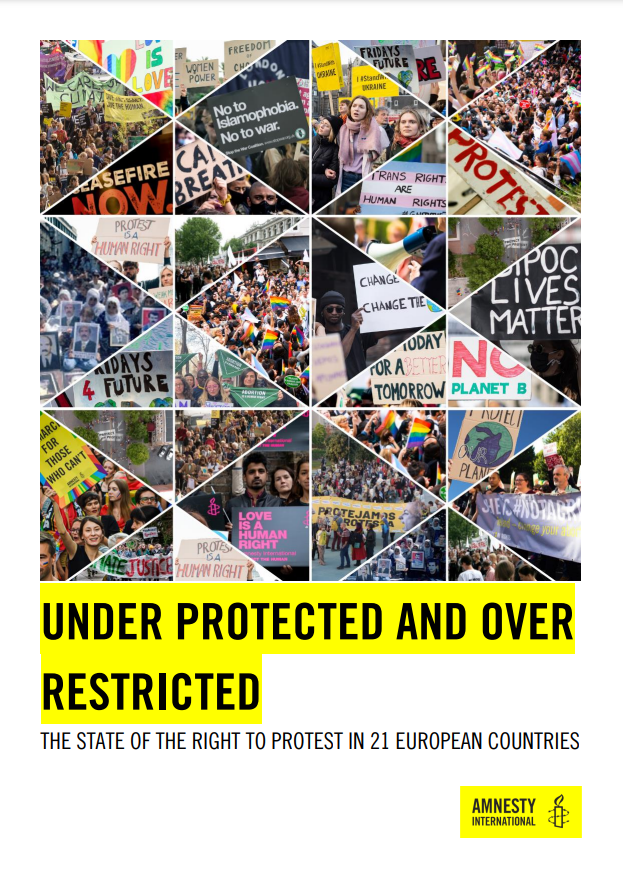
Demonstratierecht in Europa systematisch ondermijnd / Under-protected and over-restricted: The state of the right to protest in 21 countries in Europe – publicatie / publication

Amnesty International rapport: Demonstratierecht in Europa systematisch ondermijnd.

In heel Europa ligt het demonstratierecht zwaar onder vuur. Vreedzame demonstranten worden steeds vaker gestigmatiseerd, gecriminaliseerd en hardhandig aangepakt. Staten leggen demonstranten ongerechtvaardigde en bestraffende beperkingen op en zetten steeds repressievere middelen in om afwijkende meningen de kop in te drukken. Dat stelt Amnesty International in het rapport: ‘Under-protected and over-restricted: The state of the right to protest in 21 countries in Europe‘. Het rapport legt door heel Europa een patroon bloot van repressieve wetten, het gebruik van onnodig of buitensporig geweld, willekeurige arrestaties, vervolgingen, en ongerechtvaardigde of discriminerende beperkingen. Ook neemt het gebruik van indringende bewakingstechnologie toe.

Links:
Demonstratierecht in Europa systematisch ondermijnd

Rondetafelgesprek : Het demonstratierecht in Nederland

Als je demonstreert tegen groot onrecht, pak je dan het onrecht aan of de demonstranten?

2024-07-08, Lief dagboek

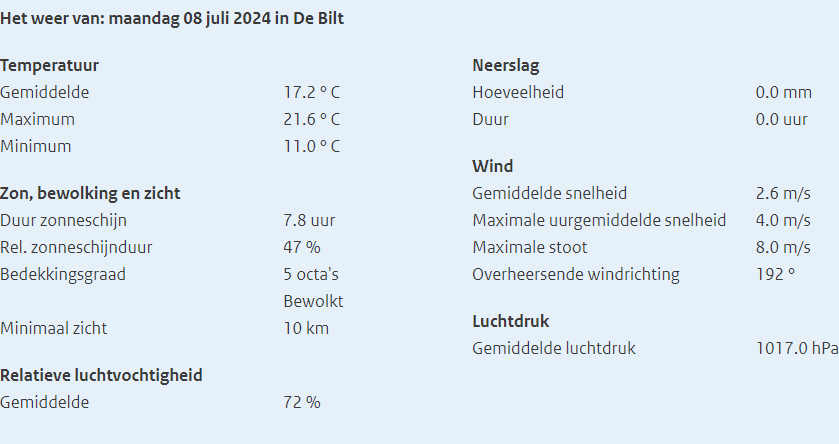
Maandag; Wat eten we vandaag?; Ariane 6 rocket; Binnentuin in bloei; Zorgen over Waddenzee; EU Stop de kooien!; Gaza−Israël oorlog 2023 – …; Uitsterven megafauna; The Sky at Night; fietsbrug over het IJ; Vluchtelingenroutes Afrika; Rode Kruis 1 miljoen boodschappenkaarten; De grenzen van de rechtsstaat : Kabinet-Schoof.

Deze afbeelding heeft een leeg alt-attribuut; de bestandsnaam is dagboek.png

Wat eten we vandaag?:

Patat, klik op afbeelding voor origineel

Binnentuin in bloei:

Bloeiende binnentuin, klik op afbeelding voor origineel

In de binnentuin bij de werkplek van A3 groeien en bloeien de planten er lustig op los.

Knipselkrant:


Agenda:


Weer:

Deze afbeelding heeft een leeg alt-attribuut; de bestandsnaam is 50813896361_463cbfec7c.jpg

Links:
In de geschiedenis

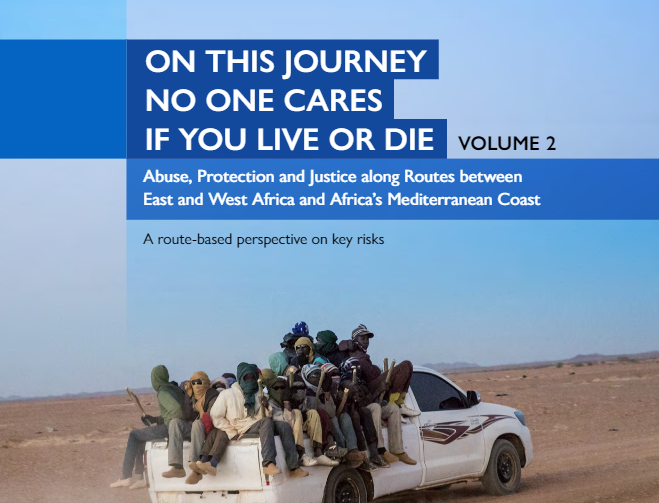
‘On this journey, no one cares if you live or die’ Abuse, protection and justice along routes between East and West Africa and Africa’s Mediterranean Coast: A route-based perspective on key risks Volume 2 – publication

The mixed movement of refugees and migrants on the African continent is often reduced to its more
mediatized aspect – the perilous crossings of the Mediterranean Sea to Europe.

While some of the movements take root in North Africa, many include multiple legs through several countries in an attempt to reach safety and/or better opportunities. The protection risks and extreme forms of violence and exploitation refugees and migrants are confronted with on land are much less documented. The International Organization for Migration (IOM), the Mixed Migration Centre (MMC) and the Office of the United Nations High Commissioner for Refugees (UNHCR) decided to work together to map them out and have an updated and more precise understanding of where these risks and different forms of violence are perceived to be more acute and who are reported to be the perpetrators. To do so, many different sources of information were employed including 4Mi interviews with over 31,000 refugees and migrants between 2020 and 2023 by the MMC, the Missing Migrants Project and Counter Trafficking Data Collaborative of IOM, and UNHCR Protection Monitoring.

The first edition of this report issued in 2020 uncovered patterns of widespread human rights violations and abuses along the routes from East and Horn of Africa and West Africa to North Africa. It highlighted the gap between smugglers’ narratives and the dramatic realities people faced on these dangerous journeys, where human life is just the mere subject of a commercial transaction. It provided clear data for States and their partners to enable them to design routes-based solutions and move services and prevention/response mechanisms to where protection problems occurred. Unfortunately, three years later, the findings of the first report are reconfirmed and in some places surpassed. As the data suggest, the risks and the list of unimaginable horrors people face in some countries along the route have not disappeared, on the contrary. New conflicts erupted in the Sahel, bringing the displaced population to almost 5 million, double from the time of the previous report. In the East and Horn of Africa, droughts and floods generated by climate change are having a dramatic impact on new and protracted emergencies, while the number of displaced people due to the conflict in the Sudan reached 8.8 million as of May 2024.

The deteriorating situation in many countries of origin and host countries is leading an increased number of individuals to embark on dangerous onward journeys towards the southern shores of the Mediterranean Sea, with many of them ending up in extremely vulnerable situations. While there are no comprehensive statistics on land arrivals across the many countries of transit and initial destination, evidence points to an increased number of refugees and migrants moving to North Africa. In Tunisia for instance, UNHCR registered 209 per cent more refugees and asylum-seekers in 2023 than it did in 2020. During this post-COVID period, the presence of refugees and migrants in a number of countries was also politically instrumentalized, leading to more visible expressions of racism, generating protection incidents and fear among refugees and migrants and consequent onward dangerous movements, including across the Mediterranean Sea.

Despite some progress, this second report “On this journey, no one cares if you live or die’ Abuse, protection and justice along routes between East and West Africa and Africa’s Mediterranean Coast: A route-based perspective on key risks” suggests a degraded protection environment along the Central Mediterranean routes with insufficient protection-centred responses. Unfortunately, experience has taught us that increased risks will not prevent refugees and migrants from moving irregularly. The increased risks will continue to be downplayed by smugglers and traffickers, and people will resort to what they think might be the most effective individual risk mitigation strategy. As a young Somali refugee named Saeed said: “They [the smugglers] lie to the youth. They have workers everywhere and make tahriib [the journey to Europe] look easy […], but you will wake up when you face the dangers.”

Sadly, this second version of the report may not be the last documenting violations and abuses of human rights of refugees and migrants along these routes. Critical protection safety nets remain lacking in key areas as highlighted by the second iteration of a report mapping protection services along the routes that will be published in 2024. In addition, many interlocutors have become accustomed to the prevalence of protection risks, abuses and the inexorable erosion of hope, as if nothing can be attempted to address them. A dangerous sense of resignation has paralysed States-led response along these routes despite the commitment to save lives and address vulnerabilities they have assumed under international law and other instruments, such as the Global Compact on Refugees and the Global Compact for Safe, Orderly and Regular Migration.

As data depend on access to refugees and migrants, gaps exist for some locations, especially for the Sahara Desert, and may distort part of the analysis. However, many ultimately move out from these out-of-reach places and tell their story. They include the tens of thousands of refugees and migrants who told their stories upon which this report is based. Accordingly, we will no longer be able to say that we did not know about the extreme and unacceptable forms of violence they face. We hope, and expect, that this report will help to inform increased and concrete routes-based protection responses to reduce the suffering associated with the desperate journeys refugees and migrants undertake. We also hope it will generate a push to address the root causes of displacement and drivers of irregular migration through positive action on peace, climate change, governance, inequality and social cohesion, as well as the creation of safe migration pathways. We should never accept or get used to the horrors experienced by refugees and migrants nor leave unquestioned the significance of the grossly negative human rights indicators emerging from the countries where violations and abuses occur. These violations and abuses will continue to represent a stain on our collective conscience that we cannot afford to ignore.

Links:
De reis van migranten: woestijn twee keer dodelijker dan zee

The late-Quaternary megafauna extinctions: Patterns, causes, ecological consequences and implications for ecosystem management in the Anthropocene – publication

The late-Quaternary megafauna extinctions: Patterns, causes, ecological consequences and implications for ecosystem management in the Anthropocene.

Across the last ~50,000 years (the late Quaternary) terrestrial vertebrate faunas have experienced severe losses of large species (megafauna), with most extinctions occurring in the Late Pleistocene and Early to Middle Holocene. Debate on the causes has been ongoing for over 200 years, intensifying from the 1960s onward. In the article “The late-Quaternary megafauna extinctions: Patterns, causes, ecological consequences and implications for ecosystem management in the Anthropocene“, the scientist outline criteria that any causal hypothesis needs to account for. Importantly, this extinction event is unique relative to other Cenozoic (the last 66 million years) extinctions in its strong size bias. For example, only 11 out of 57 species of megaherbivores (body mass ≥1,000 kg) survived to the present. In addition to mammalian megafauna, certain other groups also experienced substantial extinctions, mainly large non-mammalian vertebrates and smaller but megafauna-associated taxa. Further, extinction severity and dates varied among continents, but severely affected all biomes, from the Arctic to the tropics.

The writers of the article synthesise the evidence for and against climatic or modern human (Homo sapiens) causation, the only existing tenable hypotheses. Their review shows that there is little support for any major influence of climate, neither in global extinction patterns nor in fine-scale spatiotemporal and mechanistic evidence. Conversely, there is strong and increasing support for human pressures as the key driver of these extinctions, with emerging evidence for an initial onset linked to pre-sapiens hominins prior to the Late Pleistocene. Subsequently, they synthesize the evidence for ecosystem consequences of megafauna extinctions and discuss the implications for conservation and restoration. A broad range of evidence indicates that the megafauna extinctions have elicited profound changes to ecosystem structure and functioning. The late-Quaternary megafauna extinctions thereby represent an early, large-scale human-driven environmental transformation, constituting a progenitor of the Anthropocene, where humans are now a major player in planetary functioning. Finally, they conclude that megafauna restoration via trophic rewilding can be expected to have positive effects on biodiversity across varied Anthropocene settings.

Links:
Megafauna overleefde ijstijden, maar niet de speer van de mens

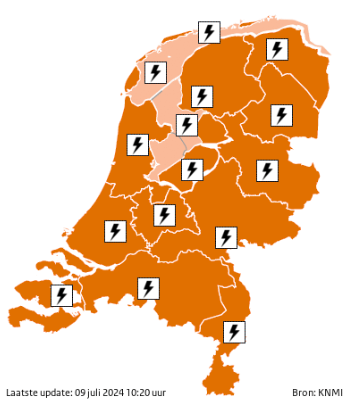
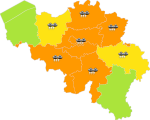
#KMI #KNMI #CodeOranje – Vanaf eind van de middag en vanavond kans op overlast door zware onweersbuien

Nederland:
Vanaf eind van de middag van dinsdag 09-07-2024 in het zuidwesten en vanavond in de rest van het land is er kans op zware onweersbuien die van het zuidwesten naar het noordoosten over het land trekken.

Bij deze buien kunnen er zware windstoten voorkomen en plaatselijk veel regen, veel onweer, grote hagel. Door deze buien kan er plaatselijk veel regen, intensief onweer, grote hagel en zware windstoten optreden. Door blikseminslag, wateroverlast, het omwaaien van voorwerpen en bomen en grote hagelstenen kan er schade en overlast ontstaan. Vooral voor buitenactiviteiten kunnen deze onweersbuien gevaarlijk zijn. De onweersbuien kunnen plaatselijk gepaard gaan met zware windstoten van 75-100 km/uur, hagel van 2-4 cm en veel regen in korte tijd (20-40 mm). In de nacht naar woensdag trekken de onweersbuien naar Duitsland weg.

België:
Een thermische vore trekt vandaag in de latere namiddag en eerste deel van de avond over ons land van zuidwest naar noordoost en veroorzaakt vooral in het centrum en delen van het oosten felle onweders (de hevigste ongeveer tussen de assen Bergen-Sint-Niklaas en Beauraing-Luik), met veel neerslag op korte tijd, met hagel en op sommige plaatsen zeer zware rukwinden die schade kunnen veroorzaken. Het KMI schaalt sommige provincies op naar code oranje, omdat er voldoende kans is dat op meerdere plaatsen de rukwinden meer dan 90 km/u kunnen bereiken. In Namen en Henegouwen is het de combinatie van lokale wind en hagel dat de balans naar oranje doet overhellen. Oost-Vlaanderen wordt geel voor de oostelijke delen van de provincie.

Links:
Wat kan ik verwachten en wat kan ik doen?

Updates zware onweersbuien

Weerstation