Vroege Vogels Radio | 14 juli 2024 (Radio 1 NPO)

Vroege Vogels is een live-radioprogramma, tv-programma en online community van BNNVARA over natuur en milieu.

In het radioprogramma wordt het gesproken woord omlijst door licht klassieke muziek en salonmuziek. Het radioprogramma werd in 1978 voor het eerst uitgezonden door de VARA en is een van de langst lopende en best beluisterde radioprogramma’s van de publieke omroep. Het wordt elke zondagmorgen uitgezonden tussen 07:00 en 10:00 op NPO Radio 1. De beginmuziek is een bewerking van Vivaldi’s “Piccolo Concerto in C major” (RV 443).

Een wolf viel hoogstwaarschijnlijk een hond aan. Moeten we ons zorgen maken? Waarom is de ene bloem geel en de andere rood? In de Amsterdamse Waterleidingduinen staan op sommige stukken hekken om damherten weg te houden. Komt dat de diversiteit ten goede? En we lopen een les mee in schooltuin PlukWad. Verder: wespen, bomenmuseum Gimborn bestat 100 jaar en het boek ‘Buurtbos’van Dik van der Meulen. De column is deze week van Jelle Reumer.

Links:
Vroege Vogels (na afloop terugluisteren)

Wespen kunnen een beetje meer liefde gebruiken!

NPO Radio 1 live stream

Cosmology in Crisis? Confronting the Hubble Tension (TV webcast)

How fast is the universe expanding?

Two prominent approaches are finding different answers, propelling cosmology toward a crisis. Wendy Freedman, a renowned astronomer who has spent decades seeking the expansion rate, joins Brian Greene to discuss the latest thinking on this so-called Hubble Tension. This program is part of the Big Ideas series, supported by the John Templeton Foundation.

Links:
World science festival

2024-07-12, Lief dagboek

Vrijdag; Wat eten we vandaag?; Uit eten; EarthCARE; Asielcrisiswet; Gaza−Israël oorlog 2023 – …/ Olympisch Comité: sluit Israël uit!; Festival Hongerige Wolf; Day of Combating Sand and Dust Storms; Extinction Rebellion blokkeert Frequent Flyer Lounge Schiphol.

Deze afbeelding heeft een leeg alt-attribuut; de bestandsnaam is dagboek.png

Wat eten we vandaag?:

Klik op afbeelding voor origineel

Uit eten:
Samen Belgisch wezen eten in wat men in Vlaanderen frietkot noemt.

Knipselkrant:


Agenda:

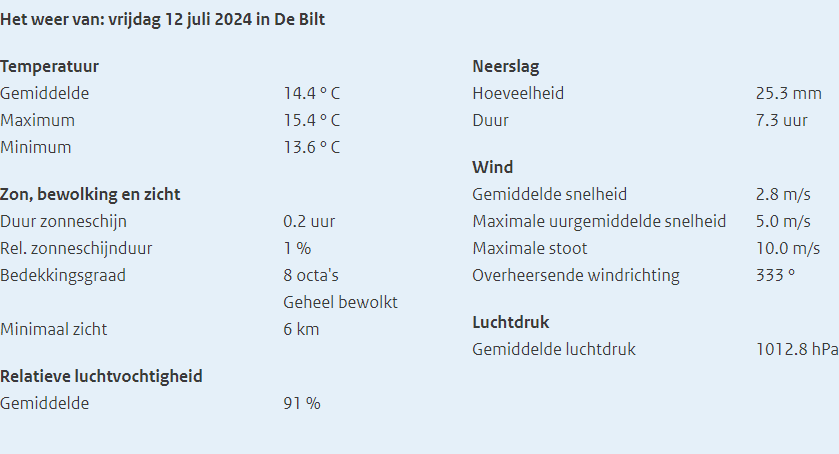
Weer:

Deze afbeelding heeft een leeg alt-attribuut; de bestandsnaam is 50813896361_463cbfec7c.jpg

Links:
In de geschiedenis

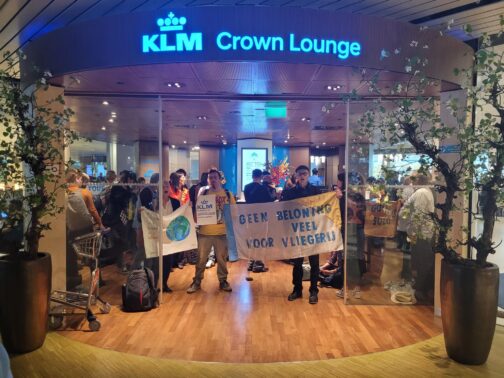
Extinction Rebellion ketent zich wederom vast in Frequent Flyer Lounge Schiphol

Op vrijdag 12 juli 2024 protesteert Extinction Rebellion voor de tweede keer in de Frequent Flyer Lounge van KLM op Schiphol, ongeveer 60 rebellen liepen in een vreedzame protestmars door C-pier richting de lounge, terwijl ze flyers uitdeelden aan passagiers.

Ze blokkeren de ingang van de lounge, waar een aantal demonstranten zich hebben vastgeketend aan de balie. KLM kan de hangsloten losmaken door quizvragen over de klimaatcrisis en Flying Blue te beantwoorden. De wetenschap is duidelijk: doorgaan op de ingeslagen weg betekent dat de opwarming van de aarde ver boven de 2 graden uitkomt. Frequent Flyer Programma’s, waaronder dat van KLM, belonen veelvliegen en zijn daarom hét symbool van een industrie die weigert de realiteit onder ogen te zien.

Links:
Extinction Rebellion ketent zich wederom vast in Frequent Flyer Lounge Schipho

Festival Hongerige Wolf 2024

Festival Hongerige Wolf biedt jonge talentvolle professionele kunstenaars een podium op gebied van muziek, dans, theater, film, beeldende kunst en literatuur, een karakteristiek podium voor eigenzinnige artiesten in het Groningse dorpje met de bijzondere naam: Hongerige Wolf.

Drie dagen lang vinden concerten en voorstellingen plaats in de weidse omgeving van het artistieke dorpje. Muziek op het Schapenveld, theater op de Waddendijk, dans in bloeiende tuinen van bewoners en vergeet de bijzondere buitenbios in het Ambonezenbos niet. Kom langs en geniet van de gastvrijheid van de bewoners, de opzwepende muziek, de inspirerende kunst, de schitterende omgeving, het lekkere eten en de rust en de ruimte van het Groningse platteland.

Links:
Festival Hongerige Wolf

Day of Combating Sand and Dust Storms 2024

Dust Cycle Processes

Recognizing that sand and dust storms and their negative impacts at different scales are issues of international concern, the United Nations General Assembly proclaimed 12 July as the International Day of Combating Sand and Dust Storms (A/RES/77/294).

The United Nations General Assembly, furthermore, stressed the need for cooperation at the global and regional levels, with a view to preventing, managing and mitigating the effects of sand and dust storms through the enhancement of early warning systems and the sharing of climate and weather information to forecast sand and dust storms. The General Assembly affirmed that resilient action to combat and reduce sand and dust storms requires a better understanding of the severe multidimensional impacts of sand and dust storms, including the deterioration of the health, well-being and livelihood of people, increased desertification and land degradation, deforestation, loss of biodiversity and land productivity, threatening food security, and their impact on sustainable economic growth.

Links:
Day of Combating Sand and Dust Storms

Three-dimensional genome architecture persists in a 52,000-year-old woolly mammoth skin sample – publication

A team led by scientists from Baylor College of Medicine, University of Copenhagen, and Centre Nacional d’Anàlisi Genòmica and Centre for Genomic Regulation report discovering fossils of ancient chromosomes in the remains of a woolly mammoth that died 52,000 years ago.

The fossils preserve the structure of the ancient chromosomes down to the nanometer scale – billionths of a meter. Fossil chromosomes are a powerful new tool for studying the history of life on Earth. That’s because typical ancient DNA fragments are rarely longer than 100 base pairs, or 100 letters of the genetic code – far smaller than the full DNA sequence of an organism, which is often billions of letters long. By contrast, fossil chromosomes can span hundreds of millions of genetic letters. Since the fossil chromosomes came from a mammoth, one of the first things the team did was to determine the number of chromosomes that the woolly mammoth possessed. By examining the fossil chromosomes, which derived from the mammoth’s skin, it was possible to see which genes were active. This is because of a phenomenon called chromosome compartmentalization – the fact that active and inactive DNA tends to segregate into two spatial neighborhoods inside the cell nucleus. For most genes, the activity state matches what researchers saw in modern elephant skin. But not always. The researchers saw more than just compartmentalization in the shape of these ancient chromosomes. In fact, the chromosomes shared many structural features with modern chromosomes. The most spectacular of these features was also the tiniest: chromatin loops, structures as small as 50nm that the Baylor team had mapped in humans, for the first time, only 10 years ago.

Links:
Fossils of ancient chromosomes discovered

Het onmogelijke wordt toch mogelijk: gefossiliseerde oude chromosomen ontdekt in de huid van een 52.000 jaar oude wolharige mammoet

Moord op Marokkaans-Nederlandse Hamza el Baghdadi ‘na parkeerruzie’ Stampersgat heeft veel weg van moord uit racistische motieven

Op 11 juli 2024 is in Stampersgat (Noord-Brabant) de 25-jarige Marokkaans-Nederlandse Hamza el Baghdadi voor de deur van zijn woning met meerdere kogels doodgeschoten door zijn buurman, de 55-jarige Gerben van V.

Diverse media spraken direct van een “uit de hand gelopen parkeerruzie” die al langere tijd sleepte. Een inkijkje in de dagelijkse uitingen op sociale media van deze Gerben van V. toont een uitgesproken moslimhater die geweldsfantasieën niet schuwt. Van V. bleek een obsessie te hebben met wapens uit de Tweede Wereldoorlog, waar hij ook twee boeken over heeft gepubliceerd. Een blik op onder andere het X-account van Van V. toont een even obsessieve haat richting moslims en de islam. Moslims zijn volgens Van V. zonder uitzondering “fascisten” en “de nieuwe nazi’s”, ze zijn “een probleem, ongeacht wat ze wel of niet doen”. Verder beschuldigt hij moskeeën van het misbruiken van kleine kinderen en juicht hij meermaals de Israëlische bombardementen op kinderen in Gaza toe.

Links:
Er is een jongen vermoord. Wie heeft dit klimaat gecreëerd? En waarom horen we hen niet?

Man doodgeschoten in Stampersgat, verdachte aangehouden

Man (25) bij zijn huis doodgeschoten: buurman is verdachte

De moord op Hamza moet een wake-up call zijn voor ons allemaal

Zorgen over uitlatingen verdachte Stampersgat, OM onderzoekt alle motieven