Every year, an estimated 236,000 people drown, making drowning a major public health problem worldwide. Drowning is one of the leading causes of death globally for children and young people aged 1-24 years. Drowning is the 3rd leading cause of unintentional injury death, accounting for 7% of all injury-related deaths. The global burden of death from drowning is felt in all economies and regions, however:
low- and middle-income countries account for over 90% of unintentional drowning deaths;
over half of the world’s drowning occurs in the WHO Western Pacific Region and WHO South-East Asia Region;
drowning death rates are highest in the WHO Western Pacific Region, and are 27-32 times higher than those seen in the United Kingdom or Germany, respectively.
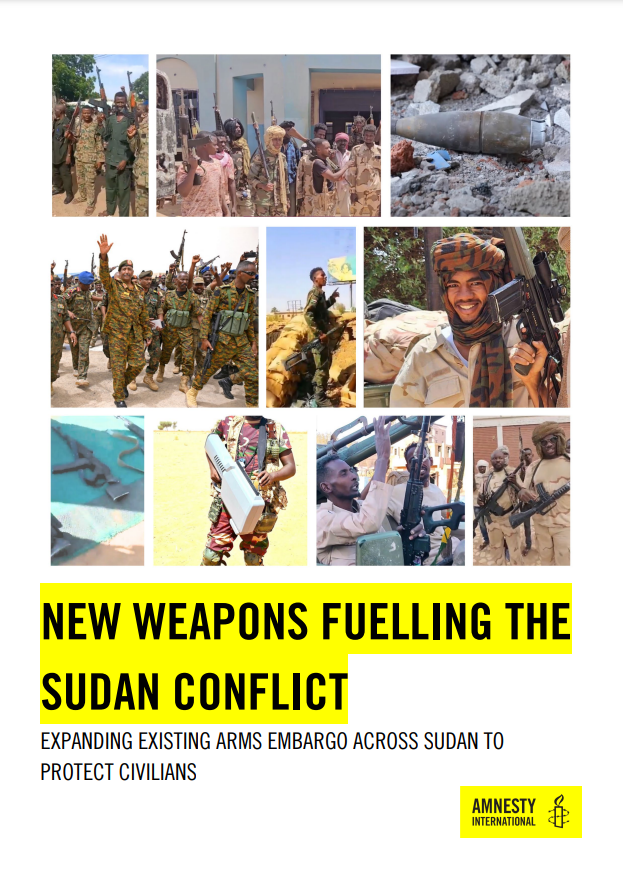
Het onderzoek laat zien hoe recent geproduceerde wapens uit het buitenland Sudan worden binnengebracht, vaak in openlijke overtreding van het bestaande wapenembargo voor Darfur. Amnesty International (AI) kwam er achter dat recent geproduceerde of recent getransporteerde wapens en munitie uit landen als China, Rusland, Servië, Turkije, de Verenigde Arabische Emiraten (UAE) en Jemen in grote hoeveelheden naar Sudan worden geïmporteerd. In sommige gevallen worden ze dan doorgestuurd naar Darfur. Sinds de escalatie in het conflict van april 2023 tussen het Sudanese leger (Sudanese Armed Forces, SAF) en de Rapid Support Forces (RSF) zijn al meer dan 16.650 mensen om het leven gekomen. AI documenteerde eerder burgerdoden bij zowel willekeurge aanvallen als directe aanvallen op burgers. Sommige van de schendingen van het internationale humanitaire recht door de partijen in het conflict zijn mogelijke oorlogsmisdrijven. Naar schatting zijn meer dan 11 miljoen mensen intern ontheemd. Miljoenen anderen lopen direct risico op hongersnood. AI analyseerde meer dan 1.900 scheepvaartgegevens uit verschillende landen van twee verschillende gegevensverstrekkers. Daarnaast onderzocht AI open source- en digitaal bewijs – waaronder zo’n 2.000 foto’s en video’s – die recent geproduceerde of recent geïmporteerde wapens in Sudan lieten zien. AI interviewde ook zeventien regionale experts op het gebied van wapens en Sudan tussen februari en maart 2024. Deze experts bevestigden en onderzochten de data-analyse en toeleveringsketens van de wapens die verschillende groepen gebruiken. Vanwege het huidige conflict konden de onderzoekers van AI geen onderzoek doen in Sudan. Alle betrokken bedrijven en partijen zijn voor publicatie op de hoogte gesteld van de bevindingen en kregen de mogelijkheid daarop te reageren. Indien relevant, zijn deze reacties in het onderzoek verwerkt.
The G20 is composed of most of the world’s largest economies‘ finance ministries, including both industrialised and developing countries; it accounts for around 80% of gross world product (GWP), 75% of international trade, two-thirds of the global population, and 60% of the world’s land area. The G20 was founded in 1999 in response to several world economic crises. Since 2008, it has convened at least once a year, with summits involving each member’s head of government or state, finance minister, or foreign minister, and other high-ranking officials; the EU is represented by the European Commission and the European Central Bank. Other countries, international organizations, and nongovernmental organizations are invited to attend the summits, some permanently. In 2023, during its 2023 summit, the African Union joined as its 21st member. In its 2009 summit, the G20 declared itself the primary venue for international economic and financial cooperation. The group’s stature has risen during the subsequent decade, and it is recognised by analysts as exercising considerable global influence; it is also criticised for its limited membership, lack of enforcement powers, and for the alleged undermining of existing international institutions. Summits are often met with protests, particularly by anti-globalization groups. In the 2024 edition the Brazilian presidency launched the G20 Social, a place where for the first time the organization will bring the civil society into the debate where it can participate and contribute to discussions and policy formulations regarding to the summit.
In the baseline proposal, individuals with more than $1 billion in wealth would be required to pay a minimum amount of tax annually, equal to 2% of their wealth. This standard could be flexibly implemented by participating countries through a variety of domestic instruments, including a presumptive income tax, an income tax on a broad notion of income, or a wealth tax. The report presents evidence that contemporary tax systems fail to tax ultra-high-net-worth individuals effectively, clarifies the case for international coordination to address this issue, analyzes implementation challenges, and provides revenue estimations. The main conclusions are that
(i) building on recent progress in international tax cooperation, such a common standard has become technically feasible;
(ii) it could be enforced successfully even if all countries did not adopt it, by strengthening current exit taxes and implementing “tax collector of last resort” mechanisms as in the coordinated minimum tax on multinational companies;
(iii) a minimum tax on billionaires equal to 2% of their wealth would raise $200-$250 billion per year globally from about 3,000 taxpayers; extending the tax to centimillionaires would add $100-$140 billion;
(iv) this international standard would effectively address regressive features of contemporary tax systems at the top of the wealth distribution;
(v) it would not substitute for, but support domestic progressive tax policies, by improving transparency about top-end wealth, reducing incentives to engage in tax avoidance, and preventing a race to the bottom;
(vi) its economic impact must be assessed in light of the observed pre-tax rate of return to wealth for ultra-high-net-worth individuals which has been 7.5% on average per year (net of inflation) over the last four decades, and of the current effective tax rate of billionaires, equivalent to 0.3% of their wealth.
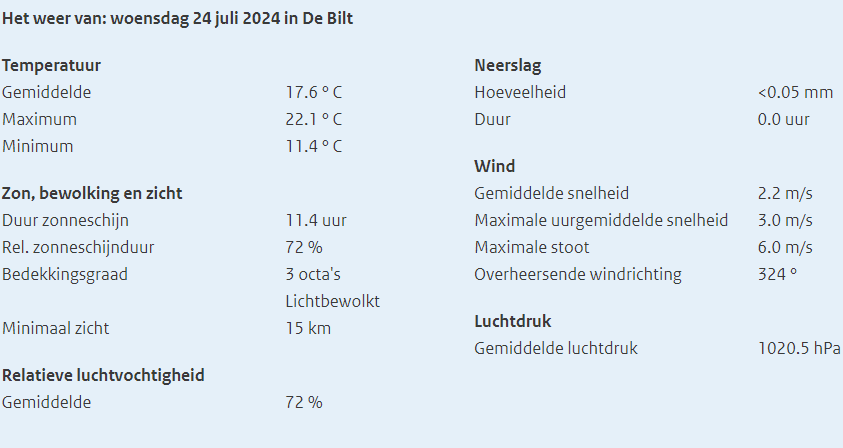
In het kader van de op 24-07-2024 gestarte ‘Oil Kills campagne’ zijn er nog meer wereldwijde acties aangekondigd, waarbij er vliegvelden in heel Europa zullen worden ontwricht, om een einde te eisen aan het gebruik van olie, kolen en gas door ondertekening van het bindend verdrag ‘Fossil Fuel Non-Proliferation treaty‘.
Een groot aantal campagnes en groepen sluiten zich aan bij de opstand en steunen onze gezamenlijke eis. Hieronder vallen Just Stop Oil UK, Letzte Generation Oostenrijk, Extinction Rebellion Nederland, DROP Fossil Subsidies en Act Now Zwitserland, Last Generation Canada en Just Stop Oil Schotland. Ze verzetten ons tegen onze regeringen die tot nu toe hebben gefaald om op te treden tegen de grootste bedreiging die we ooit hebben meegemaakt. Op dit moment sterven duizenden onschuldige mensen en hele landen worden vernietigd als we doorgaan met het winnen en verbranden van fossiele brandstoffen. Dus nemen we geweldloze collectieve actie om de mensheid te verdedigen. Als burgers van rijke, ontwikkelde landen weten we dat onze landen de grootste verantwoordelijkheid dragen voor de klimaatcrisis. Toch neemt geen enkel land zijn verantwoordelijkheid om de koolstofuitstoot te verminderen, zoals afgesproken in het Akkoord van Parijs. Daarom vragen we onze regeringen om samen te werken aan een wettelijk bindend internationaal verdrag om het gebruik van olie, kolen en gas tegen 2030 te beëindigen. Ook willen we dat ze armere landen ondersteunen en financieren om een snelle, eerlijke en rechtvaardige overgang te maken. Dit kan bereikt worden door het Fossil Fuel Non-Proliferation Treaty Initiative [1] te steunen en te streven naar een mandaat om dit verdrag tot stand te brengen.
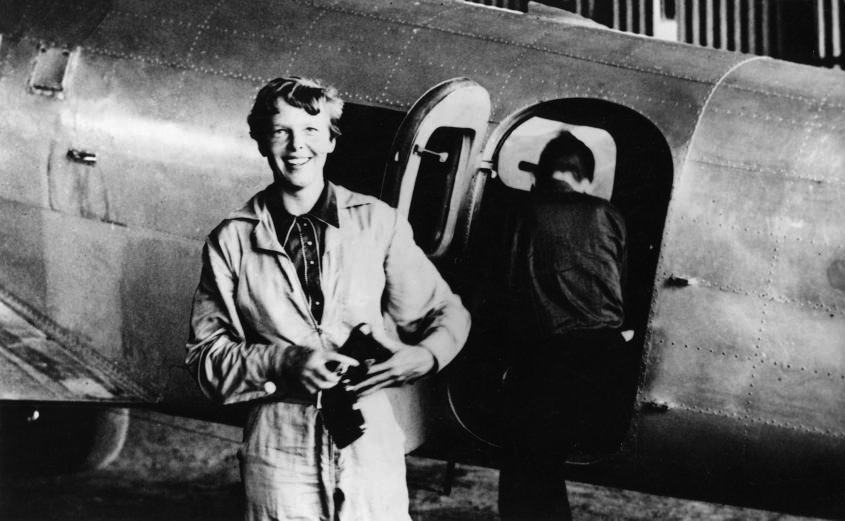
In januari 1935 werd ze de eerste persoon die solo de Grote Oceaan overvloog, maar ze werd vooral bekend doordat ze als eerste vrouw in 1932 als piloot de Atlantische Oceaan overstak. Die tocht legde ze eveneens solo af. In 1928 was ze die oceaan al als passagier overgestoken. Ook daarin was ze de eerste vrouw. Begin juli 1937 begon ze samen met navigator Fred Noonan aan wat de langste vlucht ter wereld moest worden. De eindbestemming van de 47.000 kilometer lange vlucht werd echter nooit bereikt. Wat er zich precies heeft afgespeeld, is tot op heden onbekend.
Immense, strange and infinite, the world of modern physics often feels impenetrable to the undiscerning eye; a jumble of muons, gluons and quarks are impossible to explain without several degrees and a research position at CERN.
But it doesn’t have to be this way! In this livestream, world-renowned theoretical physicist and bestselling author Sean Carroll will guide you through the biggest ideas in the universe. In an elegant and simple way, Carroll unravels a web of theories to get to the heart of the truths they represent about the world around us. Sean delves into the baffling and beautiful world of quantum mechanics. From Schrödinger to Feynman, he travels through the quantum revolution with the twentieth century’s greatest minds. Exploring how several decades of research overturned centuries of convention, he provides a dazzling tour of the most exciting ideas in modern science.
…bij A3veen.nl, sinds 29-04-2003 de webplek van Aaldrik Adrie (A3) van der Veen, met een weBLOG vol weetjes die het delen waard zijn, onder het motto: “Zie de wereld door de ogen van A3…”