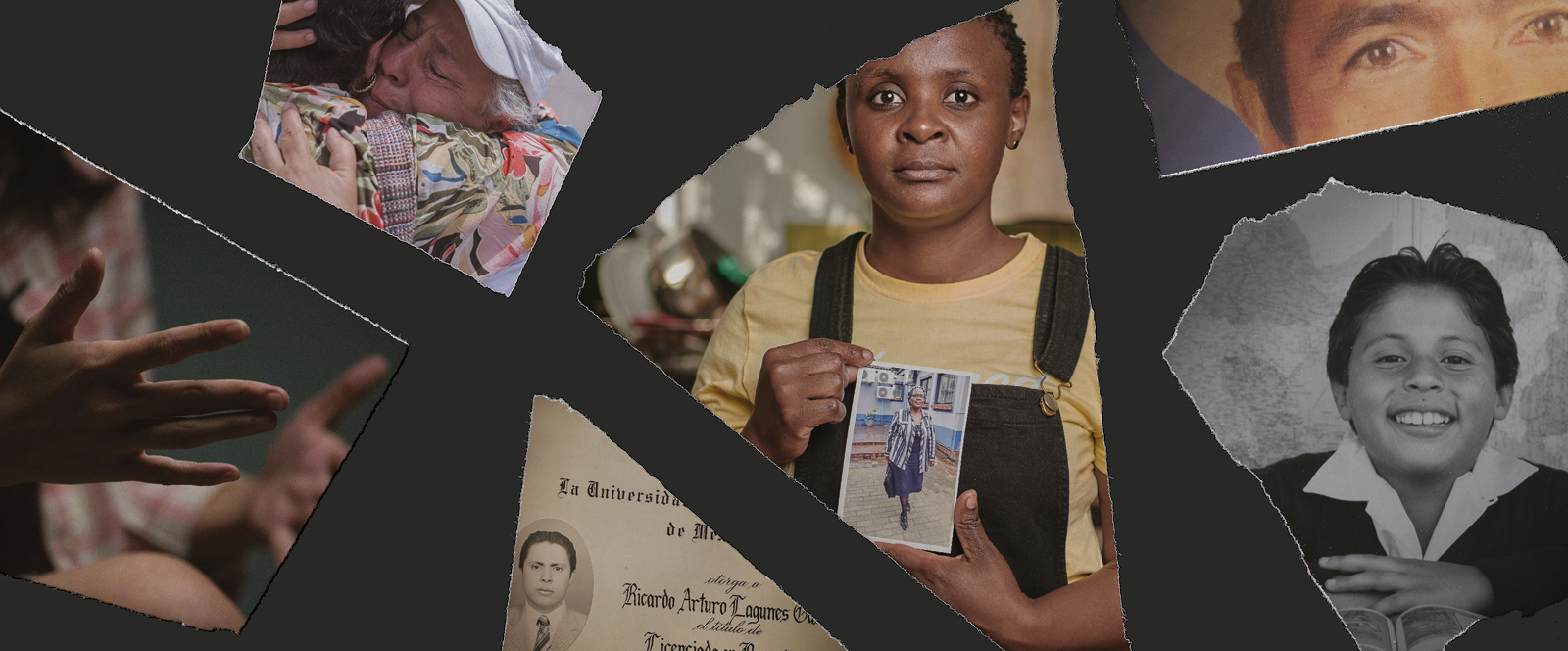
Missing voices – The violent erasure of land and environmental defenders / Global Witness Land and Environmental Defenders 2024 report – publication

The Global Witness Land and Environmental Defenders 2024 report is dedicated to all those individuals, communities and organisations bravely taking a stand to defend human rights, their land, and our environment; in 2023, 196 people were murdered for doing this work.

Links:
Missing voices

Hun strijd voor het milieu werd vorig jaar 196 activisten fataal

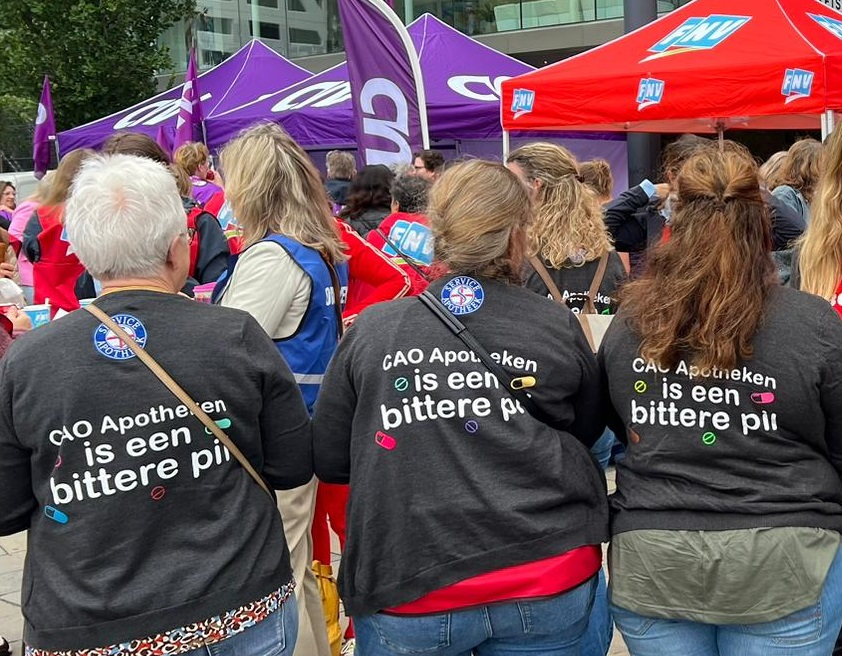
Apotheken in actie : Voor een goede cao! – Estafettestaking apotheekmedewerkers & landelijke staking

Apotheekmedewerkers voeren een estafettestaking voor een goede cao en op 12 november 2024 organiseren vakbonden FNV en CNV een landelijke staking om snel goede afspraken over werkdruk en een beter salaris af te dwingen.

Links:
Apotheken in actie

Staking apotheekmedewerkers – FNV

Cao Apotheken – CNV

Vijfentwintig apotheken dicht door staking: “Voor het eerst in de geschiedenis”

Apothekersassistenten leggen in het hele land het werk neer

2024-09-09, Lief dagboek

Maandag; Wat eten we vandaag?; Walvisteldag; The Sky at Night; Een geldsysteem voor iedereen; Verspillingsvrije Week; Amsterdam : Gratis OV-kaartjes.

Deze afbeelding heeft een leeg alt-attribuut; de bestandsnaam is dagboek.png

Wat eten we vandaag:

Klik op afbeelding voor origineel

Knipselkrant:

Agenda:

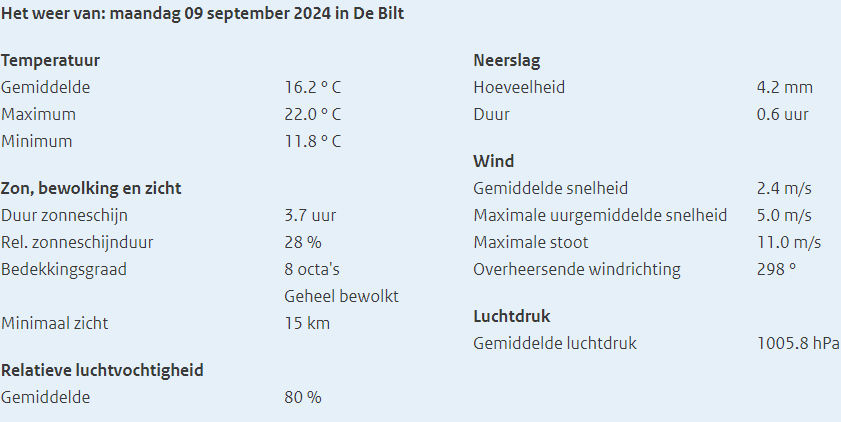
Weer:

Deze afbeelding heeft een leeg alt-attribuut; de bestandsnaam is 50813896361_463cbfec7c.jpg

Links:
In de geschiedenis

The Sky at Night – 2075: Our Place in Space (TV BBC Four)

The Sky at Night is a monthly documentary television programme on astronomy produced by the BBC.

The show had the same permanent presenter, Patrick Moore, from its first broadcast on 24 April 1957 until 7 January 2013. The latter date was a posthumous broadcast, which followed Moore’s death on 9 December 2012. This made it the longest-running programme with the same presenter in television history. Many early episodes are missing, either because the tapes were wiped, thrown out, or because the episode was broadcast live and never recorded in the first place.

Beginning with the 3 February 2013 edition, the show was co-presented by Lucie Green and Chris Lintott. Since December 2013 Maggie Aderin-Pocock has been a presenter. The programme’s opening and closing theme music is “At the Castle Gate”, from the incidental music to Pelléas et Mélisande, written in 1905 by Jean Sibelius, performed by the Royal Philharmonic Orchestra and conducted by Sir Thomas Beecham.

This episode:
The Sky at Night is embarking on a journey into the future, as we explore how space will revolutionise life on Earth over the next 50 years. As humanity’s reach extends into the cosmos, we face unprecedented challenges, from redefining what it means to be an astronaut, to confronting our own space junk, to dealing with the impact of life in space on our earth-adapted bodies. With privileged early access to a groundbreaking new report from the Royal Society on humanity’s future in space, the Sky at Night team are on a mission to find our destiny among the stars – our place in space.

The criteria for becoming an astronaut are famously tough. But if we want more people to go to space, maybe it’s time to start challenging that. That’s what the European Space Agency are doing with their pioneering study Fly!, which aims to figure out if someone with a physical disability can live and work in space. At the European Astronaut Centre in Cologne, presenter Chris Lintott meets one of the newest members of ESA’s astronaut reserve: John McFall. John is already a medal-winning Paralympian and orthopaedic surgeon and – as if that wasn’t enough – he is now the first recruit to the Fly! study. Chris discovers what’s involved in John’s extensive and gruelling training, and finds out what his hopes are for improving access to space.

Training for space travel is one thing, but living on the moon or Mars is a whole new level for humanity. Our bodies are used to gravity, and being in environments with less gravity than Earth can make them go a bit haywire. At the Royal Society in London, Maggie Aderin-Pocock meets up with space medicine expert Professor Kevin Fong to find out all about the challenges of keeping humans healthy in space. What would an astronaut on Mars do in a medical emergency? What happens to our bones, muscles and organs if we are without Earth’s gravity for a long time? And could a baby be born in space?

While Maggie and Kevin unpack those mind-bending questions, George Dransfield heads to Astroscale in Oxfordshire, a company who are coming up with clever ways to take out space trash. There are already 130 million pieces of space debris in orbit around our planet, and that number is ticking up. George meets up with Dr Mekhi Dhesi to learn about Astroscale’s clever missions to clean up space junk – including ELSA-M, a spacecraft which uses magnets to tow defunct satellites out of orbit, and Cosmic, a spacecraft with a robot arm to grab onto debris.

Our increasing dependence on satellites isn’t just producing a lot of space junk though, it’s also becoming a nuisance for amateur astronomers around the world. Thankfully, our resident astronomer Pete Lawrence has some clever tips and tricks for telling satellites and meteors apart, and using smart telescopes to remove satellite trails from deep sky images.

Finally, back at the Royal Society, Maggie sits down with Professor Suzie Imber, planetary scientist and co-chair of the groundbreaking Space: 2075 report. Together, they unpack some of the biggest questions about our journey into the cosmos over the next 50 years. How do we make sure space benefits us all, including those of us still down here on Earth? Should we be concerned about the commercialisation of space travel? And will there really be people on Mars by 2075?

Links:
The Sky at Night

Vervoerregio Amsterdam : Gratis OV-kaartjes voor wie het goed kan gebruiken

Gratis OV-kaartjes voor wie het goed kan gebruiken aanvragen vanaf maandag 9 september 2024 vanaf 09:00 op GratisOV, let op: op is op!

Geen geld voor de bus, tram of metro? En woon je in Amsterdam, of in de gemeenten eromheen? Dan kun je per adres 6 gratis ov-kaarten krijgen van Vervoerregio Amsterdam. De kaartjes worden binnen 2 tot 5 weken na het aanvragen thuisgestuurd. De kaartjes zijn tot 1 september 2025 te gebruiken om 1,5 uur te reizen met de metro, tram of bus van GVB, Connexxion of EBS, 1 kaartje per persoon. De kaartjes zijn niet geldig in de trein. Reizen met de kaartjes kan door alle gemeenten in de Vervoerregio: Aalsmeer, Amstelveen, Amsterdam, Diemen, Edam-Volendam, Haarlemmermeer, Landsmeer, Oostzaan, Ouder-Amstel, Purmerend, Uithoorn, Waterland, Wormerland en Zaanstad.

Links:
Gratis OV-kaartjes voor wie het goed kan gebruiken

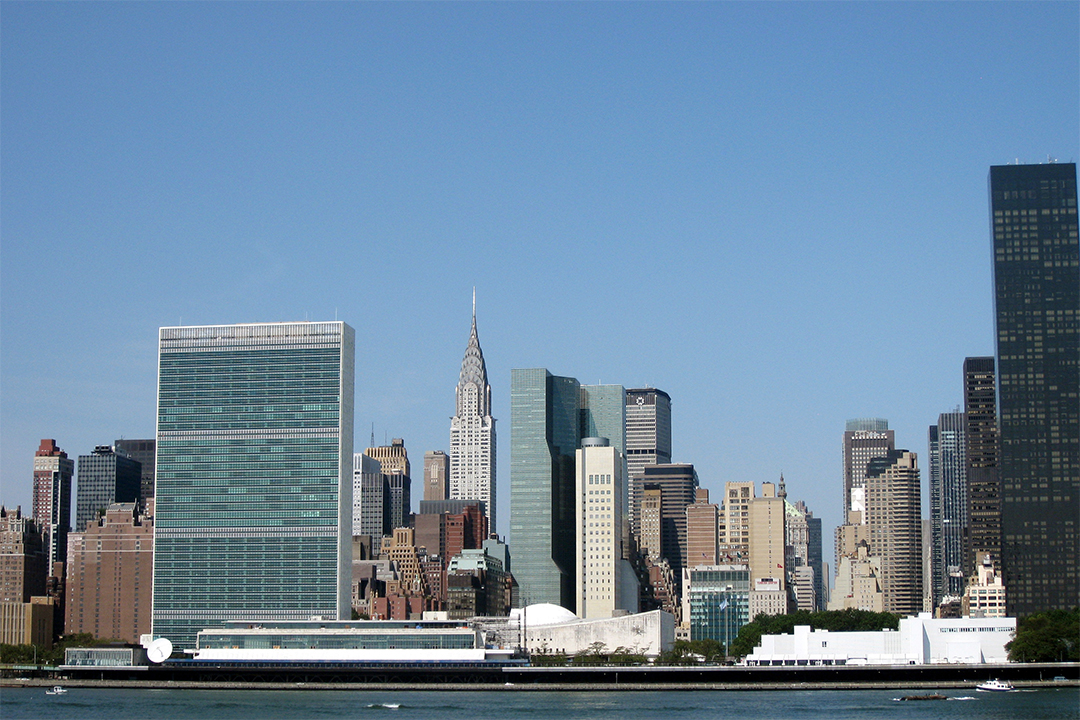
79th Session of the UN General Assembly (#UNGA 79)

The 79th session of the UN General Assembly (UNGA 79) will open on Tuesday, 10 September 2024,  the first day of the high-level General Debate will be Tuesday, 24 September 2024.

UNGA 79 marks a crucial milestone in the global effort to accelerate progress towards the 17 Sustainable Development Goals (SDGs). The highly anticipated Summit of the Future, held during UNGA, underscores the urgent need for enhanced international cooperation to address pressing challenges such as climate change, poverty and inequality, while also tackling the impacts of ongoing conflicts and global health crises.

Links:
79th Session of the UN General Assembly

Agenda of the 79th session

General Assembly High-level Week 2024

What’s going on with the world (and the future) at the UN?

VN worstelt tijdens jaarvergadering met een lijst aan conflicten en met zichzelf

LIVE COVERAGE: Join forces to take ‘more sustainable path’, Guterres tells world leaders

2024-09-08, Lief dagboek

Zondag; Wat eten we vandaag?; Dag voor de bestrijding van laaggeletterdheid; OpenMonumentendag Vlaanderen; CF (Taaislijmziekte) dag; Star Trek Day.

Deze afbeelding heeft een leeg alt-attribuut; de bestandsnaam is dagboek.png

Wat eten we vandaag:

Klik op afbeelding voor origineel

Agenda:

Weer:

Deze afbeelding heeft een leeg alt-attribuut; de bestandsnaam is 50813896361_463cbfec7c.jpg

Links:
In de geschiedenis

#LiteracyDay / Dag van de Geletterdheid / Dag voor de bestrijding van laaggeletterdheid 2024

The 8th of September was proclaimed International Literacy Day by UNESCO in 1966 to remind the international community of the importance of literacy for individuals, communities and societies, and the need for intensified efforts towards more literate societies.

The issue of literacy is a key component of the UN’s Sustainable Development Goals and the UN’s 2030 Agenda for Sustainable Development. The UN’s Sustainable Development Agenda, adopted by world leaders in September 2015, promotes universal access to quality education and learning opportunities throughout people’s lives. Sustainable Development Goal 4 has as one of its targets ensuring all young people achieve literacy and numeracy and that adults, who lack these skills are given the opportunity to acquire them. Since 1967, UNESCO International Literacy Prizes have rewarded excellence and innovation in the field of literacy. Over 500 projects and programmes undertaken by governments, non-governmental organizations and individuals around the world have been recognized. Through these prestigious Prizes, UNESCO seeks to support effective literacy practices and encourages the promotion of dynamic literate societies. Each year the prizes are announced on 7 September.

Links:
Literacy Day