In de geschiedenis
Links:
Wikipedia

Links:
Wikipedia
De Week tegen Eenzaamheid wordt in het kader van het actieprogramma Eén tegen eenzaamheid georganiseerd door het ministerie van VWS, met activiteiten waar mensen elkaar ontmoeten en nieuwe contacten kunnen leggen.
Verbinding staat centraal. Iedereen kan deelnemen aan de Week tegen Eenzaamheid door het organiseren of bezoeken van een activiteit. Of door gewoon iets met iemand in je omgeving te doen. Eenzaamheid is het gevoel alleen te zijn, van geïsoleerd te zijn van ‘de anderen’. Onderzoekers omschrijven eenzaamheid als het ervaren verschil tussen gewenste en aanwezige contacten. Op deze definitie van socioloog Jenny de Jong Gierveld is veel onderzoek naar het vóórkomen van eenzaamheid gebaseerd. In Nederland wordt deze definitie al jarenlang als grondslag gebruikt voor het meten van de mate van eenzaamheid in de bevolking, de zg. prevalentie. Er zijn veel verschillende definities van eenzaamheid in omloop. Wereldwijd zijn er landen waarin eenzaamheid (een emotie) gelijkgesteld wordt aan sociaal isolement (een situatie), of aan ervaren sociaal isolement.
Links:
Week tegen Eenzaamheid
Ontmoetingen in de stad tijdens de Week tegen Eenzaamheid: “Erkenning en herkenning”
Een broodje sprinkhaan, krekel-saté of een vliegenlarvenschotel: is dat de toekomst?
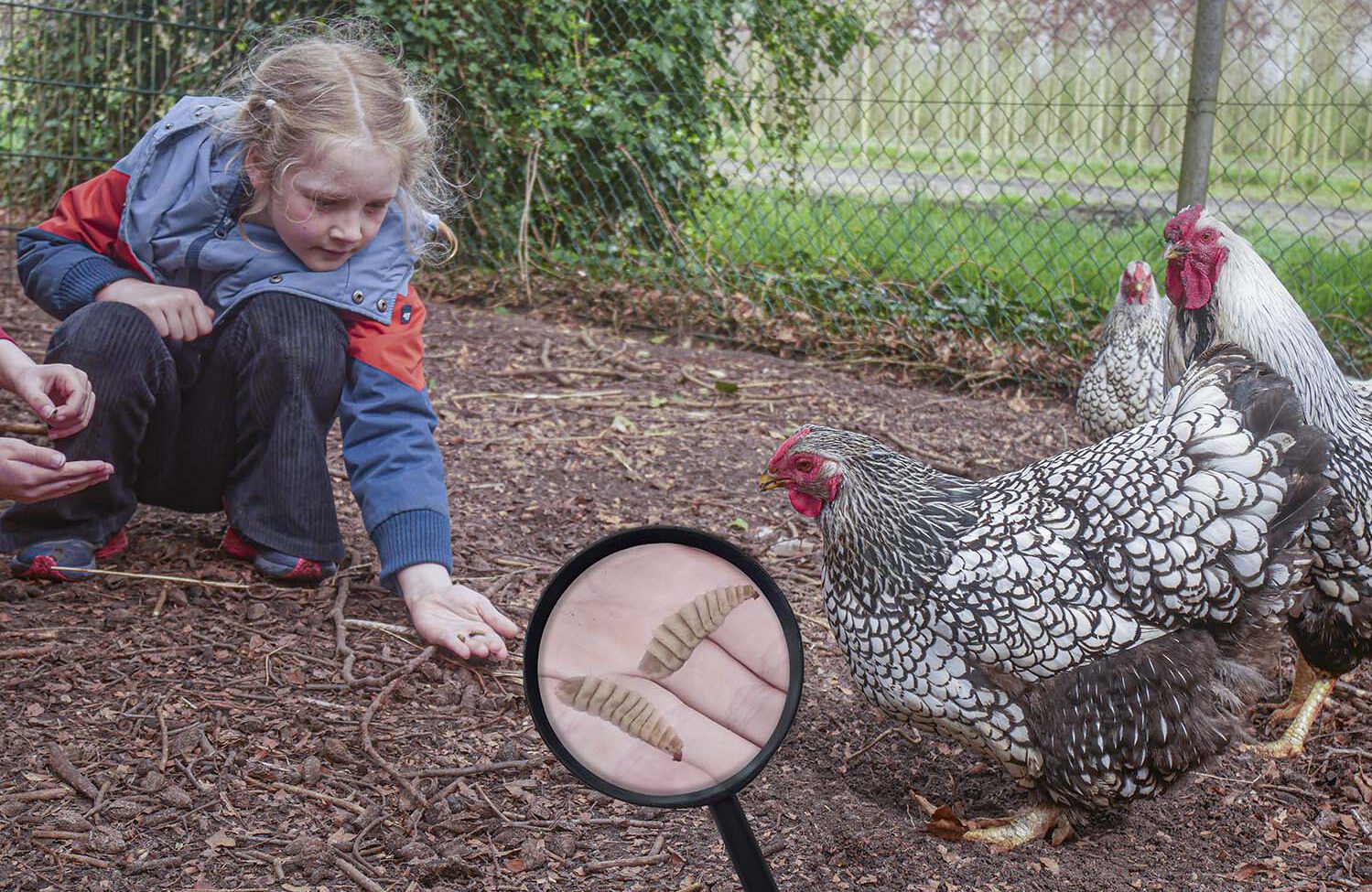
Volgens hoogleraar entomologie Marcel Dicke van de Wageningen Universiteit zou dat zomaar kunnen. Op zaterdag 28 september 2024 organiseert Dicke een groot publieksevenement over het eten van insecten. Als voedsel voor mensen, maar ook voor dieren in de veehouderij, zoals kippen. Niet iedereen wordt blij van dit toekomstbeeld. Martijn van Loon, promovendus in de milieu-en dierethiek, heeft enorme twijfels bij het grootschalig kweken van insecten voor de voedselvoorziening. Zowel Dicke als Van Loon zijn betrokken bij het onderzoeksproject InsectFeed, dat werd geleid door Wageningen University & Research. Hierin is onderzocht in hoeverre insecten een rol kunnen spelen als voedsel voor dieren in de pluimveesector. En of het ethisch wenselijk is. Wat blijkt? De kippen zijn dol op de vliegenlarven, die ze krijgen aangeboden. Volgens Dicke hebben de vogels in vrijwel de hele Nederlandse pluimveesector een vegetarisch dieet, terwijl ze van nature ook insecten eten.
Uit het onderzoek blijkt dat het welzijn van de kippen erop vooruitgaat als er insecten op het menu staan. Het is volgens Dicke ook duurzamer dan de soja en mais, die de dieren meestal voorgeschoteld krijgen: ‘Soja importeren we vooral uit Zuid-Amerika. Dit zorgt voor een grote klimaatvoetafdruk’. Niet iedereen wordt blij van het idee dat we in de toekomst massaal insecten kweken voor vee en mens. Volgens Martijn van Loon is het grootschalig kweken van insecten voor bijvoorbeeld kippen helemaal niet zo duurzaam. Zo moeten die vliegenlarven constant warm gehouden worden om te blijven groeien. Verder vindt hij dat het ook ethisch niet wenselijk is om insecten op grote te schaal te doden voor voedsel. Zeker ook omdat er steeds meer wetenschappelijk bewijs is over de complexiteit van het gedrag van insecten. In 2022 bleek uit een gezamenlijk onderzoek van Britse en Iraanse wetenschappers dat insecten mogelijk ook pijn kunnen ervaren.
Links:
Feeding the Future
Insecten kweken als voedsel voor mens en vee! Is dat een goed idee?
Maandag; Wat eten we vandaag?; Geef haat geen macht!; Week of Deaf People / Day of Sign Languages.

Wat eten we vandaag:

Knipselkrant:
Agenda:
Weer:
Links:
In de geschiedenis
Links:
Wikipedia
Zondag; Wat eten we vandaag?; Summit of the Future; herfst; Autovrije Zondag; Hobbit Day / Tolkien Week; WorldRhinoDay; Dam tot Damloop; Geef haat geen macht!.
Wat eten we vandaag:

Knipselkrant:
Agenda:
Weer:
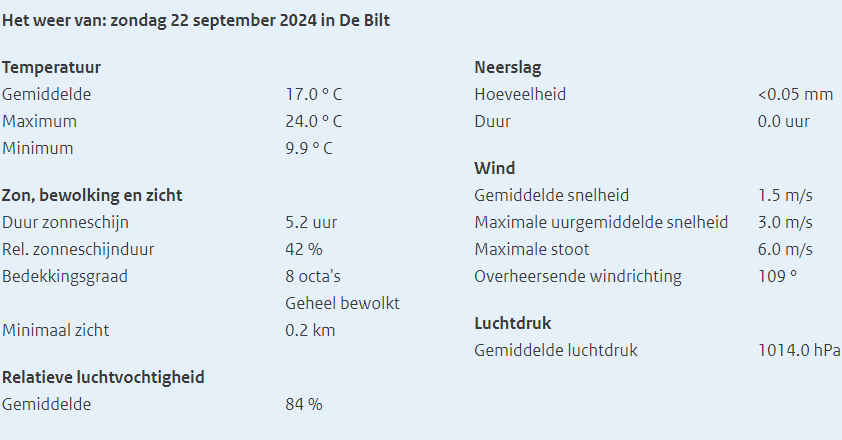
Links:
In de geschiedenis

Een Autovrije Zondag geeft iedereen de kans om de straat opnieuw te beleven: waar auto’s verdwijnen, verschijnen mensen.
Logisch ook want in plaats van motorlawaai en uitlaatgassen voeren gebabbel en gelach, vrolijke muziek en belgerinkel de boventoon. Voor verenigingen is die dag hét moment om naar buiten te komen en hun werking in de kijker te zetten. En als lokaal bestuur pak je uit met je plannen en realisaties op het vlak van duurzame mobiliteit. Autovrije Zondag is bovendien de ideale gelegenheid om mensen duurzame vervoersmiddelen te laten testen: van elektrische (bak)fietsen en e‑steps tot deelmobiliteit en het openbaar vervoer. Een dag zonder koning auto is trouwens niet alleen gezellig en inspirerend, het doet ook gewoon deugd aan de oren, de longen en het hart. Redenen genoeg om als gemeente een Autovrije Zondag te organiseren.
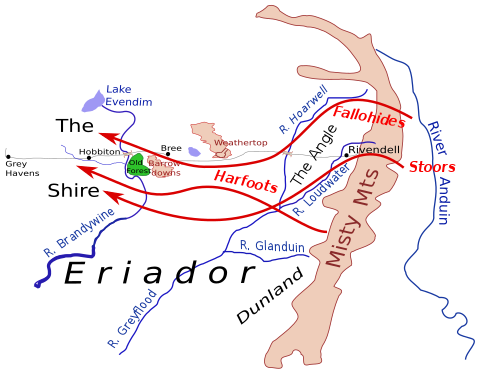
Tolkien Week is observed as the calendar week, starting on Sunday, containing September 22, which is always observed as Hobbit Day.
Both celebrations began in 1978. Hobbit Day in particular, and Tolkien Week as well, have gained some measure of legal dignity through a variety of proclamations, declarations, tributes and similar governmental documents prepared by elected officials who support the Society, its goals and the observance of these holidays. Both events have attracted bipartisan support, from the county courthouse to the White House and U.S. Capitol. Tolkien Week honors J. R. R. Tolkien and his son and editor, Christopher J.R. Tolkien, and celebrates the Middle-earth cycle: The Silmarillion, The Hobbit, The Lord of the Rings (The Fellowship of the Ring, The Two Towers, The Return of the King), Unfinished Tales, and The History of Middle-earth.
Hobbit Day and Tolkien Week fall during the “Back to School” season and can create a bright new interest for students in literature classes and libraries. A number of schools and libraries host seminars and art shows during the week. Those with the facilities and budget sometimes arrange for a showing of one or more of the motion pictures based on the works. A few have even presented marathon showings of the Peter Jackson Lord of the Rings films!
The most popular method of observing Tolkien Week is the library, bookstore or school display. Most libraries have bulletin boards or cases, and some have enclosed display tables and other facilities up to and including display windows of considerable size. Many librarians among our members and friends create displays; other members contact their libraries and assist in preparing displays. The same is certainly true of schools. Tolkien Week displays and seminars have been held in places ranging from distinguished universities to libraries located in prisons, mental institutions, and army bases. If your activities include presentation of research papers or other materials suitable for publication, please consider submitting the available works to the Society for possible publication in Minas Tirith Evening-Star: Journal of the American Tolkien Society.
Hobbit Day, on the other hand, is scheduled to fall on the hobbits Bil
According to the fictional setting, Bilbo was born in the year of 2890 and Frodo in the year of 2968 in the Third Age (1290 and 1368 respectively in Shire-Reckon
Links:
Hobbit Day and Tolkien Week
Links:
Wikipedia
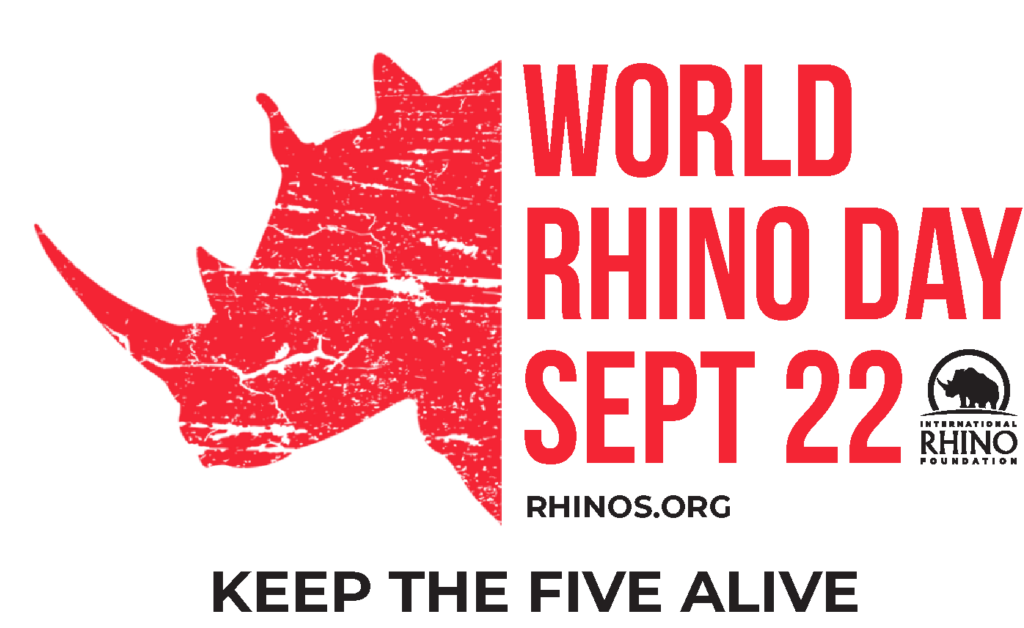
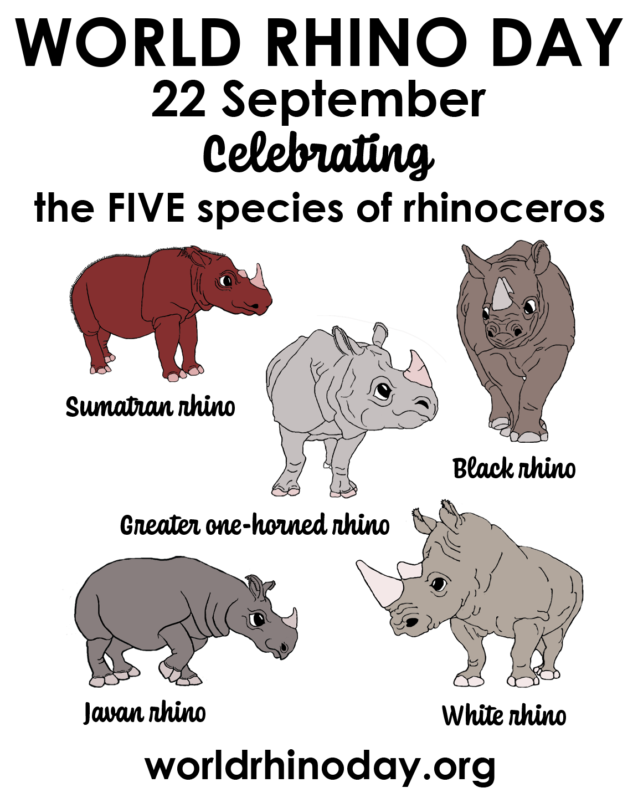
World Rhino Day is a day of awareness for all five rhinoceros (rhino) species and the work being done to save them.
A rhinoceros (/raɪˈnɒsərəs/; from Ancient Greek ῥινόκερως (rhinókerōs) ‘nose-horned’; from ῥίς (rhis) ‘nose’ and κέρας (kéras) ‘horn’; pl.: rhinoceros or rhinoceroses), commonly abbreviated to rhino, is a member of any of the five extant species (or numerous extinct species) of odd-toed ungulates in the family Rhinocerotidae; it can also refer to a member of any of the extinct species of the superfamily Rhinocerotoidea. Two of the extant species are native to Africa, and three to South and Southeast Asia. Rhinoceroses are some of the largest remaining megafauna: all weigh at least one tonne in adulthood. They have a herbivorous diet, small brains 400–600 g (14–21 oz) for mammals of their size, one or two horns, and a thick 1.5–5 cm (0.59–1.97 in), protective skin formed from layers of collagen positioned in a lattice structure. They generally eat leafy material, although their ability to ferment food in their hindgut allows them to subsist on more fibrous plant matter when necessary. Unlike other perissodactyls, the two African species of rhinoceros lack teeth at the front of their mouths; they rely instead on their lips to pluck food. Rhinoceroses are killed by poachers for their horns, which are bought and sold on the black market for high prices, leading to most living rhinoceros species being considered endangered. The contemporary market for rhino horn is overwhelmingly driven by China and Vietnam, where it is bought by wealthy consumers to use in traditional Chinese medicine, among other uses. Rhino horns are made of keratin, the same material as hair and fingernails, and there is no good evidence of any health benefits. A market also exists for rhino horn dagger handles in Yemen, which was the major source of demand for rhino horn in the 1970s and 1980s.