
In de geschiedenis
Links:
Wikipedia

Links:
Wikipedia

De Dag van Overprikkeling bij hersenletsel, is in 2017 gelanceerd door de website Hersenletsel-uitleg.
Hiermee tracht de stichting achter de website meer bewustwording en kennis over overprikkeling als gevolg van hersenletsel te realiseren. Ieder mens heeft het recht om te kunnen deelnemen aan de maatschappij. Het is alleen niet haalbaar voor hen met ernstige vorm van zintuiglijke overprikkeling.
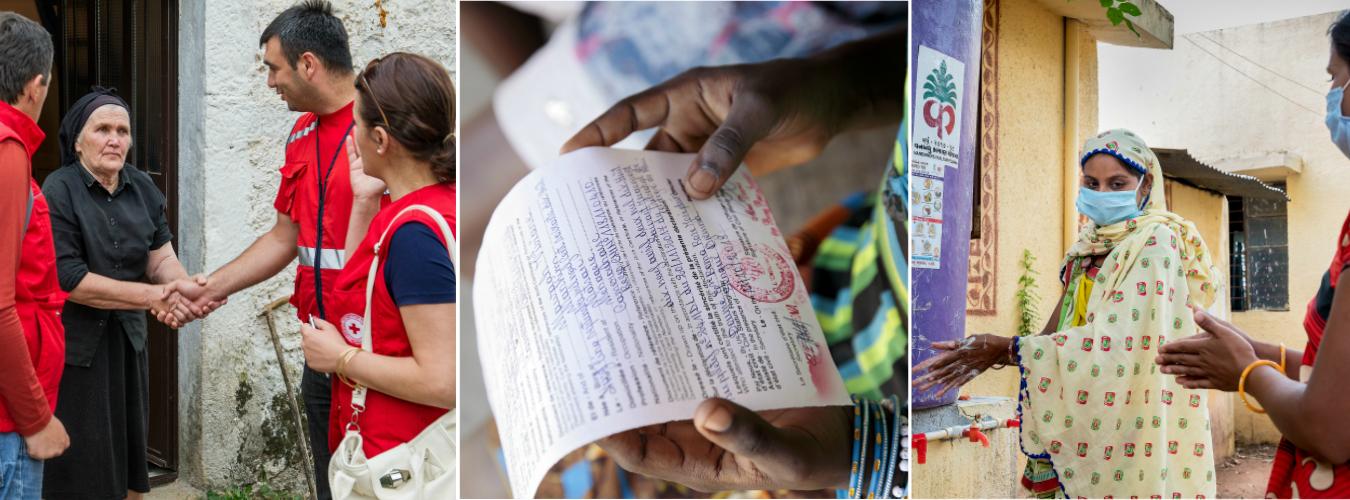
The United Nations Public Service Day is celebrated on June 23 of every year, it was designated by the United Nations General Assembly‘s resolution A/RES/57/277, adopted on December 20th, 2002, to “celebrate the value and virtue of public service to the community”.
The United Nations Economic and Social Council established that the United Nations Public Service Awards be bestowed on Public Service Day for contributions made to the cause of enhancing the role, prestige, and visibility of public service.

The 21st annual meeting of the Internet Governance Forum (IGF 2026) will be held 14-18 December in Nairobi, Kenya.
The Internet Governance Forum (IGF) is a global multistakeholder platform that facilitates the discussion of public policy issues pertaining to Internet governance. The IGF was one of the most important outcomes of the United Nations World Summit on the Information Society (WSIS). The Tunis Agenda, adopted on 18 November 2005, mandated the UN Secretary- General to convene a new forum for multistakeholder policy dialogue.

The European Astronomical Society (EAS) is a learned society, founded under the Swiss Civil Code in 1990, as an association to contribute and promote the advancement of astronomy in Europe, and to deal with astronomical matters at a European level.
It is a society of individual professional astronomers, and all European astronomers can be members independently of their field of work or country of work or origin. The society offers a forum for discussion on all aspects of astronomical development in Europe, and is the organisation that represents the interests of astronomers in discussions of European-wide developments.
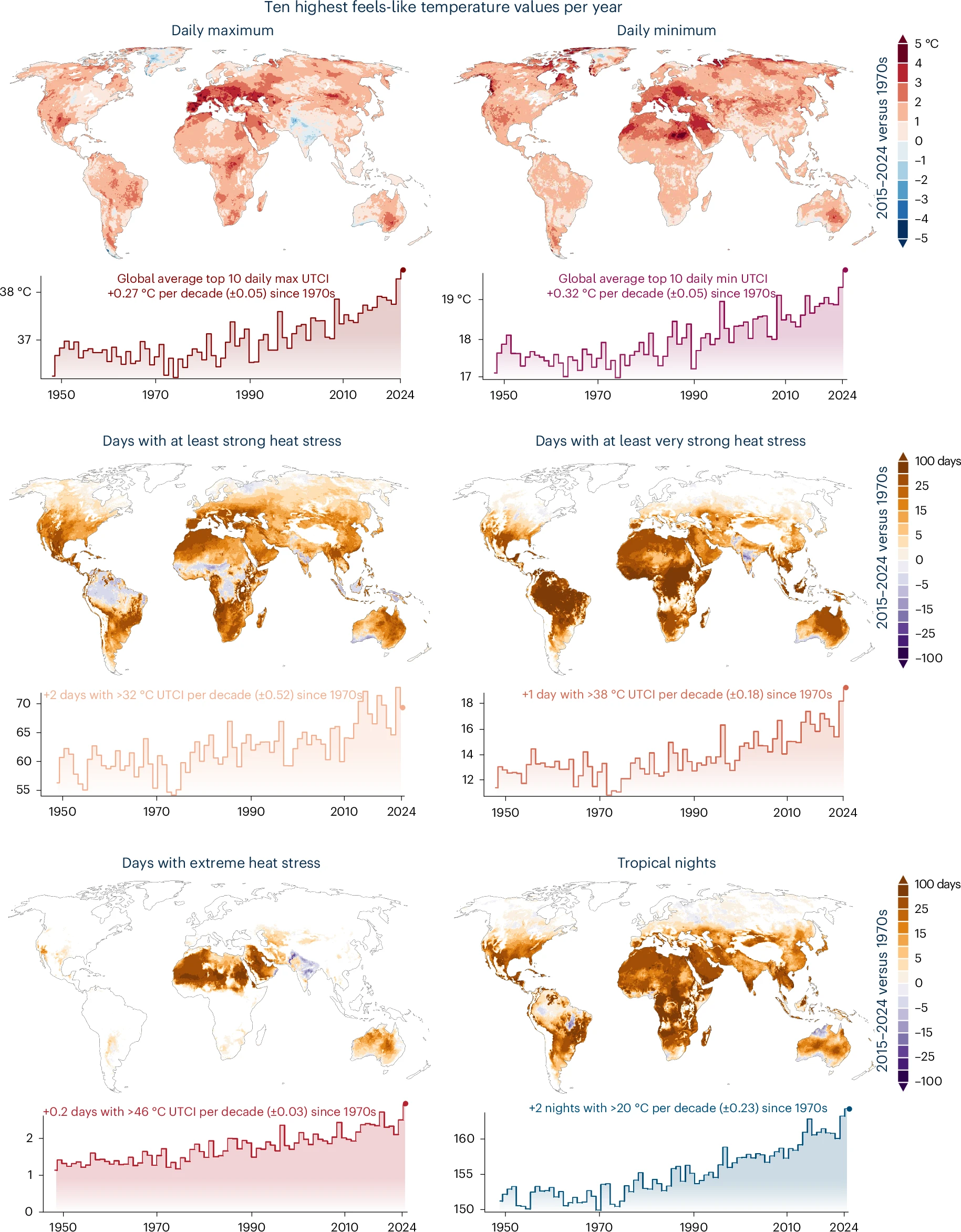
The study ‘Global heat stress intensification and its expanding footprint on the human population‘ uses the Copernicus Climate Change Service’s (C3S) ERA5-HEAT dataset to provide a comprehensive global-scale analysis of how heat stress has evolved since 1950.
Using the Universal Thermal Climate Index (UTCI), the study shows that hazardous heat is becoming more frequent, more intense and more widespread, with hotter nights, longer heat stress seasons and increasing numbers of people exposed to hazardous heat. Heat stress is the leading cause of weather-related mortality worldwide and exacerbates underlying illnesses such as cardiovascular, respiratory and mental health conditions. As climate warming drives more frequent and intense heat extremes, understanding how heat is experienced by the human body has become increasingly important. Trends in heatwaves are well documented, and many people worldwide are exposed to chronic heat; however, less is known about how these changes translate into trends of heat as experienced by the human population, particularly at the global scale. Authored by Rebecca Emerton, Julien Nicolas, Anna Lombardi and Claudia Di Napoli from the European Centre for Medium-Range Weather Forecasts (ECMWF), the study ‘Global heat stress intensification and its expanding footprint on the human population’ addresses this gap using the UTCI, a widely adopted biometeorological thermal stress index that accounts for temperature, humidity, wind and radiation, alongside modelling how the human body responds to the environment. Expressed as a “feels-like” temperature, the UTCI classifies thermal conditions ranging from cold stress to extreme heat stress based on their impact on the human body.
Links:
Global study reveals how heat stress is intensifying worldwide
Maandag; Wat eten we vandaag?; Code oranje hitte; UN Open Source Week.

Wat eten we vandaag?:

Knipselkrant:
Agenda:
Weer:
Links:
In de geschiedenis
Links:
Wikipedia
Op dinsdag 23 juni 2026 vindt op het Beursplein in Amsterdam een manifestatie plaats tegen de plannen van het kabinet voor de sociale zekerheid, de manifestatie is georganiseerd door de vakbonden.
De afbraakplannen van het kabinet op de WW, WIA, AOW en de zorg zijn desastreus. De rekening wordt bij werkend Nederland gelegd. Samen laten we zien dat we dit niet pikken tijdens de manifestatie op 23 juni op het Beursplein in Amsterdam.
Links:
Manifestatie tegen de kabinetsplannen in Amsterdam op 23 juni
Schoonmakers en metaalwerkers staken tegen bezuinigingen sociale zekerheid
Zondag; Vroege Vogels; Jetten biedt Molukkers excuses aan; Zomer (Astronomisch).
Knipselkrant:
Agenda:
Weer:

Links:
In de geschiedenis