VPRO #Tegenlicht – Zo kan economisch nationalisme Europa redden volgens Rana Foroohar (TV internet)

Tegenlicht is een informatief televisieprogramma van de VPRO via het internet.

Door de VPRO wordt het programma bestempeld als documentaire op het vlak van politiek, economie, sociologie en wetenschap. Het programma stelt zich ten doel inzicht in de werking van de samenleving te verschaffen.

Op 2 april 2025, kondigde Donald Trump vanaf het balkon van het Witte Huis Liberation Day af. In een fel nationalistische toespraak verklaarde hij dat Amerika zich “definitief had bevrijd” van de ketenen van globalisering. Nieuwe, torenhoge importtarieven zouden vanaf dat moment gelden voor staal, halfgeleiders, elektrische auto’s en een reeks consumentengoederen uit China en Europa. “From now on,” riep hij, “we build, we buy, we win at home.” De reacties waren onmiddellijk en wereldwijd voelbaar. In Beijing sprak de regering van een “economische oorlogsverklaring.” Europese leiders riepen spoedoverleggen bijeen om een gezamenlijk antwoord te formuleren, terwijl beursvloeren van Frankfurt tot Seoul rood kleurden. De afgelopen maanden is duidelijk geworden dat de globalisering die onze wereld decennialang heeft vormgegeven, scheuren vertoont. Trump heeft de tarieven opnieuw fors verhoogd: staal, halfgeleiders, elektrische auto’s – niets ontsnapt aan zijn handelsoorlog. De boodschap is helder: Amerika wil minder afhankelijk zijn van de rest van de wereld, en de rest van de wereld van Amerika.

Het is precies dit moment dat de Amerikaanse econoom en journalist Rana Foroohar al jaren heeft zien aankomen. In haar boek Homecoming beschreef ze hoe landen en bedrijven steeds meer productie terughalen, hoe veerkracht belangrijker wordt dan efficiency, en hoe er een nieuwe economische geografie ontstaat waarin nabijheid en onafhankelijkheid de boventoon voeren. Voor deze toekomstverkenner sprak Tegenlicht met Foroohar over de vraag wat Liberation Day betekent voor de wereldorde. Is dit het begin van een nieuw tijdperk van economisch nationalisme? Welke kansen en gevaren liggen er voor Europa? En kunnen we deze breuk gebruiken om onze economie menselijker, duurzamer en creatiever te maken? En hoe kan China, in de leegte die Amerika achterlaat, juist zijn economie versterken? Foroohar woont en werkt in New York, midden in het financiële en politieke hart van de VS. Vanuit daar ziet ze hoe Amerika’s poging tot bevrijding niet alleen over handel gaat, maar ook over het herstellen van vertrouwen in een samenleving die zich decennialang heeft overgeleverd aan globalisering.

Links:
Zo kan economisch nationalisme Europa redden volgens Rana Foroohar

2025-09-13, Lief dagboek

Zaterdag; Wat eten we vandaag?; Open Monumentendag; United Nations Declaration on the Rights of Indigenous Peoples; Wereld Sepsis Dag; A12-blokkade.

Deze afbeelding heeft een leeg alt-attribuut; de bestandsnaam is dagboek.png

Wat eten we vandaag?

Klik op afbeelding voor origineel

Knipselkrant:

Agenda:

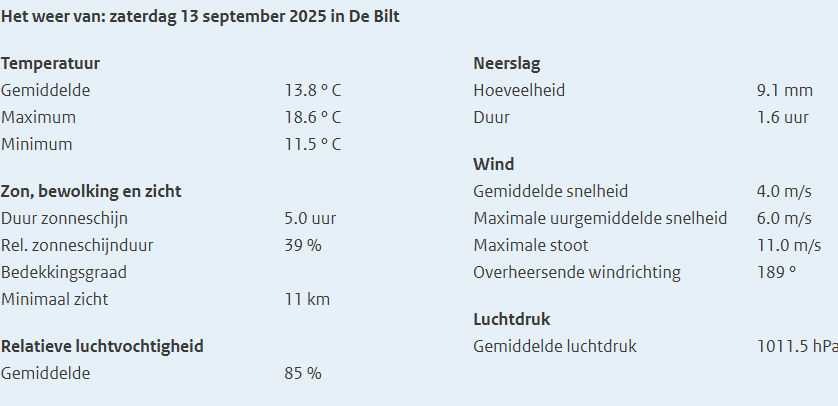
Weer:

Links:
In de geschiedenis

United Nations Declaration on the Rights of Indigenous Peoples / VN-Verklaring van de Rechten van Inheemse Volken 2025

The United Nations Declaration on the Rights of Indigenous Peoples (UNDRIP or DOTROIP) was adopted by the United Nations General Assembly on Thursday, September 13, 2007, by a majority of 144 states in favour, 4 votes against, and 11 abstentions.

The groundwork toward this declaration began in 1923 and 1925 with the works of Haudenosaunee Chief Deskaheh and Māori T.W. Ratana, who attempted to bring issues of Canada and New Zealand’s failure to uphold treaties to the League of Nations, United Nations’ precursor. In May 2016, Canada officially removed its objector status to UNDRIP, almost a decade after it was adopted by the General Assembly. By now the other three objectors have, to varying degrees, also turned their votes. As a General Assembly Declaration, UNDRIP is not a legally binding instrument under international law. According to a UN press release it does “represent the dynamic development of international legal norms and it reflects the commitment of the UN’s member states to move in certain directions”; the UN describes it as setting “an important standard for the treatment of indigenous peoples that will undoubtedly be a significant tool toward eliminating human rights violations against the planet’s 370 million indigenous people, and assisting them in combating discrimination and marginalisation.” UNDRIP codifies “Indigenous historical grievances, contemporary challenges and socio-economic, political and cultural aspirations” and is the “culmination of generations-long efforts by Indigenous organizations to get international attention, to secure recognition for their aspirations, and to generate support for their political agendas.” Canada Research Chair and faculty member at the University of Saskatchewan Ken Coates argues that UNDRIP resonates powerfully with Indigenous peoples, while national governments have not yet fully understood its impact.

Links:
United Nations Declaration on the Rights of Indigenous Peoples

Wereld Sepsis Dag / #WorldSepsisDay 2025

Sepsis is een ontstekingsreactie van het hele lichaam bij een infectie van het bloed of de lymfe.

Soms wordt sepsis ook bloedvergiftiging genoemd, maar die term is enigszins misleidend, omdat sepsis niet alleen in het bloed voorkomt. Het is een ernstig ziektebeeld dat soms een dodelijke afloop heeft, mede doordat de symptomen vaak niet specifiek zijn en soms miskend worden. Het lichaam reageert tijdens sepsis met hoge koorts, een snelle hartslag en bloeddrukdaling. De bloeddruk kan in bepaalde gevallen zo sterk afnemen, dat de lichaamsweefsels beschadigd raken en organen kunnen uitvallen. Meestal gaat het om een infectie door bacteriën, maar ook andere micro-organismen zoals schimmels en virussen, kunnen sepsis veroorzaken. Bij de meeste vormen van sepsis spelen bacteriële toxinen een belangrijke rol bij het starten en aanjagen van de ontstekingsreactie. Sepsis ontstaat vaak als complicatie van longontsteking, urineweginfectie of wondinfectie. De aandoening werd al in de tijd van Hippocrates beschreven. Bacteriële sepsis wordt bestreden met antibiotica. Bloeddrukdalingen worden gecompenseerd door het toedienen van vocht via een infuus, en ook bloeddrukondersteunende medicijnen zijn toepasbaar. Sepsis is een van de belangrijkste oorzaken van intensive care-opname in ziekenhuizen; in Nederland worden jaarlijks meer dan 13 duizend mensen met een septische shock opgenomen op IC-afdelingen. Wereldwijd overlijden er elk jaar vele miljoenen mensen aan.

Links:
Today Is World Sepsis Day: Video Message from Dr. Tedros, WHO Director-General, Photo Booth, WSD Resources, and Much MoreWorld Sepsis Day

2025-09-12, Lief dagboek

Vrijdag; Wat eten we vandaag?; Open Monumentendag; Eurovisie Songfestival; Dag voor Zuid-Zuid samenwerking; Europese Migraine-dag; Eerste IC -chip- gepresenteerd; Steve Biko – sterfdag; EFF Awards Ceremony.

Deze afbeelding heeft een leeg alt-attribuut; de bestandsnaam is dagboek.png

Wat eten we vandaag?

Klik op afbeelding voor origineel

Knipselkrant:


Agenda:

Weer:

Links:
In de geschiedenis

#LightToMigraine European Migraine Day of Action / Europese Migraine-dag 2025

Each year, on September 12, the European Migraine & Headache Alliance (EMHA) celebrates the European Migraine Day.

Migraine is a chronic disease which negatively influences patients’ lives and their ability to fully integrate within society. About 15% of the European population has to deal with this neurological disease . It means that in average, in your country, 1 in 7 people suffer from Migraine. Many of them are silent and seem to live an apparent normal life but the reality is other. Migraine is not just a headache; migraine is a disease that keeps people in the dark for hours, days and years in a whole life. Pain is just one of the many symptoms that patients suffering from migraine face, making them episodically enable to think, to work and/or to perform normal social activities for several times. As a result, migraine has a devastating impact on their life and loved ones.

Links:
European Migraine Day of Action with MEPS in the European Parliamentean Migraine Day of Action

Waarom blijven patiënten met migraine rondlopen? ‘Dit werkt als een tierelier, kost geen drol, maar het wordt weinig voorgeschreven’

Day for South-South Cooperation / Dag voor Zuid-Zuid samenwerking 2025

Day for South-South Cooperation

South-South cooperation is a manifestation of solidarity among peoples and countries of the South that contributes to their national well-being, their national and collective self-reliance and the attainment of internationally agreed development goals, including the 2030 Agenda for Sustainable Development.

South-South cooperation is accelerating progress towards the implementation and achievement of the Sustainable Development Goals (SDGs). South-South cooperation is done through a broad framework of collaboration among countries of the South in the political, economic, social, cultural, environmental and technical domains. Involving two or more developing countries, it can take place on a bilateral, regional, intraregional or interregional basis. Through South-South collaboration, developing countries share knowledge, skills, expertise and resources to meet their development goals through concerted efforts. Triangular cooperation is collaboration in which traditional donor countries and multilateral organizations facilitate South-South initiatives through the provision of funding, training, management and technological systems as well as other forms of support. The United Nations Day for South-South Cooperation celebrates the economic, social and political developments made in recent years by regions and countries in the South and highlights United Nations efforts to work on technical cooperation among developing countries.

Links:
Day for South-South Cooperation – 12 September