World Patient Safety Day / Werelddag voor Patiëntveiligheid 2025
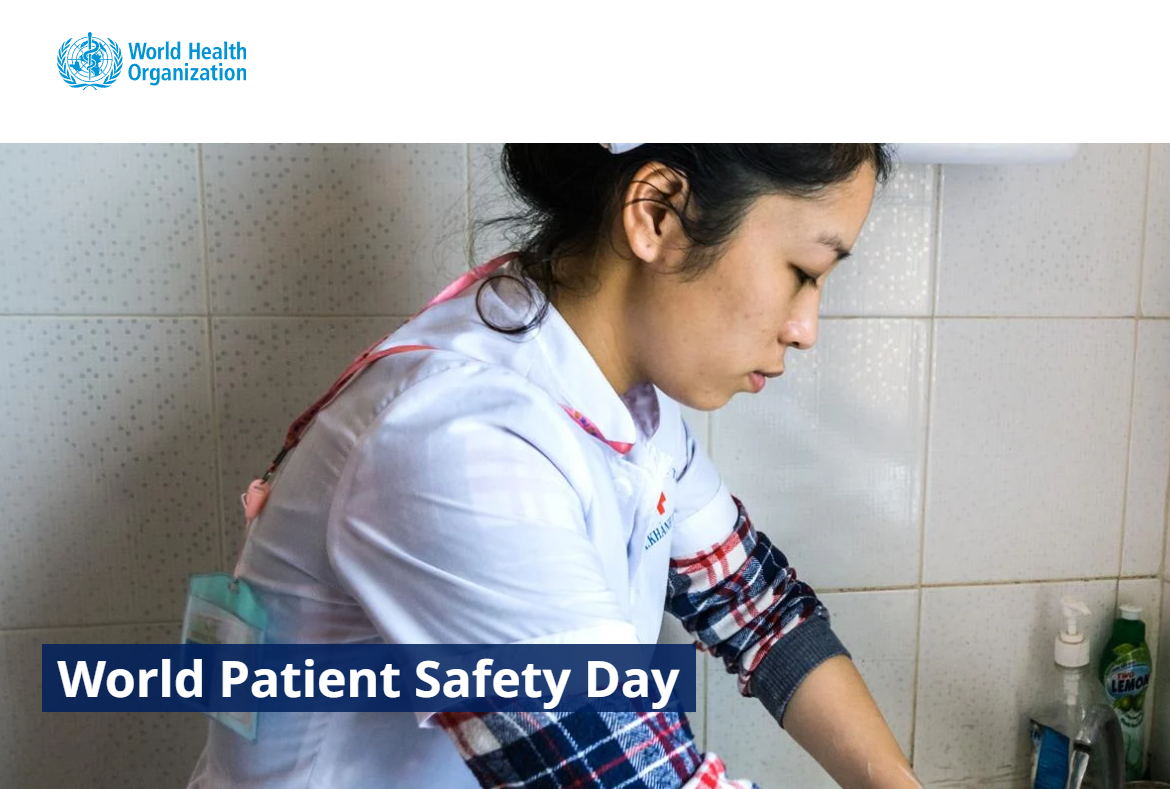
Patient safety is a discipline that emphasizes safety in health care through the prevention, reduction, reporting, and analysis of medical error that often leads to adverse effects.

The frequency and magnitude of avoidable adverse events experienced by patients was not well known until the 1990s, when multiple countries reported staggering numbers of patients harmed and killed by medical errors. Recognizing that healthcare errors impact 1 in every 10 patients around the world, the World Health Organization calls patient safety an endemic concern. Indeed, patient safety has emerged as a distinct healthcare discipline supported by an immature yet developing scientific framework. There is a significant transdisciplinary body of theoretical and research literature that informs the science of patient safety. No one should be harmed in health care. Yet thousands of patients across the world suffer avoidable harm, or are put at risk of injury, while receiving health care every single day. The 72nd World Health Assembly adopted resolution WHA 72.6 ‘Global action on patient safety’ on 25 May 2019. The resolution recognizes patient safety as a global health priority and endorses the establishment of World Patient Safety Day to be observed annually on 17 September. World Patient Safety Day calls for global solidarity and concerted action by all countries and international partners to improve patient safety. Furthermore, the Day brings together patients, families, caregivers, communities, health workers, health care leaders and policy-makers to show their commitment to patient safety. The theme of the very first World Patient Safety Day in 2019 was aimed at establishing the legacy of the day and highlighting the importance of prioritizing and addressing patient safety globally by all stakeholders. From 2020 and in the coming years, a new theme will be selected each year, raising awareness and promoting positive change around patient safety priority areas. 2025 theme: “Safe care for every newborn and every child“.

Links:
World Patient Safety Day

2025-09-16, Lief dagboek

Dinsdag; Wat eten we vandaag?; Virtual Science Symposium; UN: genocide Gaza; Dag voor het Behoud van de Ozonlaag; hoopzaaier; Prinsjesdag / Troonrede.

Deze afbeelding heeft een leeg alt-attribuut; de bestandsnaam is dagboek.png

Wat eten we vandaag?

Klik op afbeelding voor origineel

Knipselkrant:


Agenda:

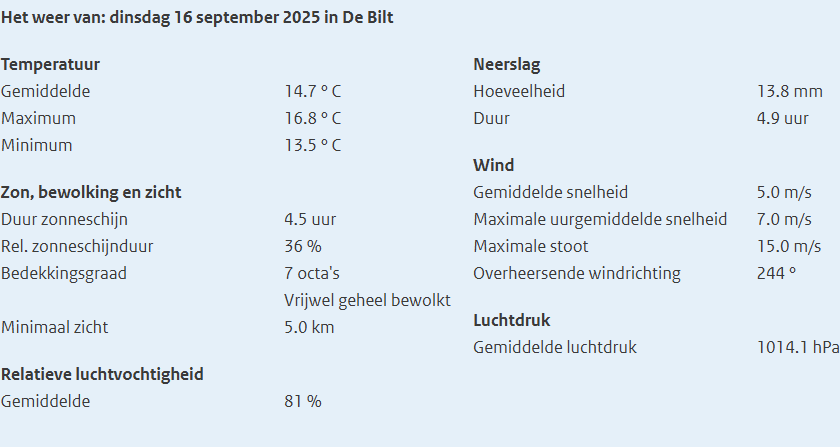
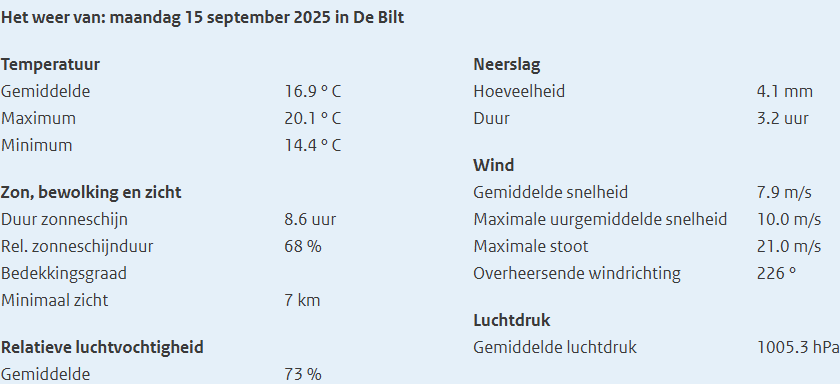
Weer:

Links:
In de geschiedenis

Head and neck cancer awareness week / Hoofd- en Nekkankerweek 2025

Head and neck cancer is a group of cancers that starts in the mouth, nose, throat, larynx, sinuses, or salivary glands.

Symptoms for head and neck cancer may include a lump or sore that does not heal, a sore throat that does not go away, trouble swallowing, or a change in the voice; there may also be unusual bleeding, facial swelling, or trouble breathing. About 75% of head and neck cancer is caused by the use of alcohol or tobacco. Other risk factors include betel quid, certain types of human papillomavirus, radiation exposure, certain workplace exposures, and Epstein-Barr virus. Head and neck cancers are most commonly of the squamous cell carcinoma type. The diagnosis is confirmed by tissue biopsy. The degree of spread may be determined by medical imaging and blood tests. Not using tobacco or alcohol can reduce the risk for head and neck cancer. While screening in the general population does not appear to be useful, screening high risk groups by examination of the throat might be useful.

Head and neck cancer often is curable if it is diagnosed early; however, outcomes are typically poor if it is diagnosed late. Treatment may include a combination of surgery, radiation therapy, chemotherapy, and targeted therapy. Following treatment of one head and neck cancer, people are at higher risk of having a second cancer. In 2015, head and neck cancers globally affected more than 5.5 million people (2.4 million mouth, 1.7 million throat, and 1.4 million larynx cancer), and it has caused over 379,000 deaths (146,000 mouth, 127,400 throat, 105,900 larynx cancer). Together, they are the seventh most-frequent cancer and the ninth most-frequent cause of death from cancer. In the United States, about 1% of people are affected at some point in their life, and males are affected twice as often as females. The usual age at diagnosis is between 55 and 65 years old. The average 5-year survival following diagnosis in the developed world is 42-64%.

Links:
Head and neck cancer

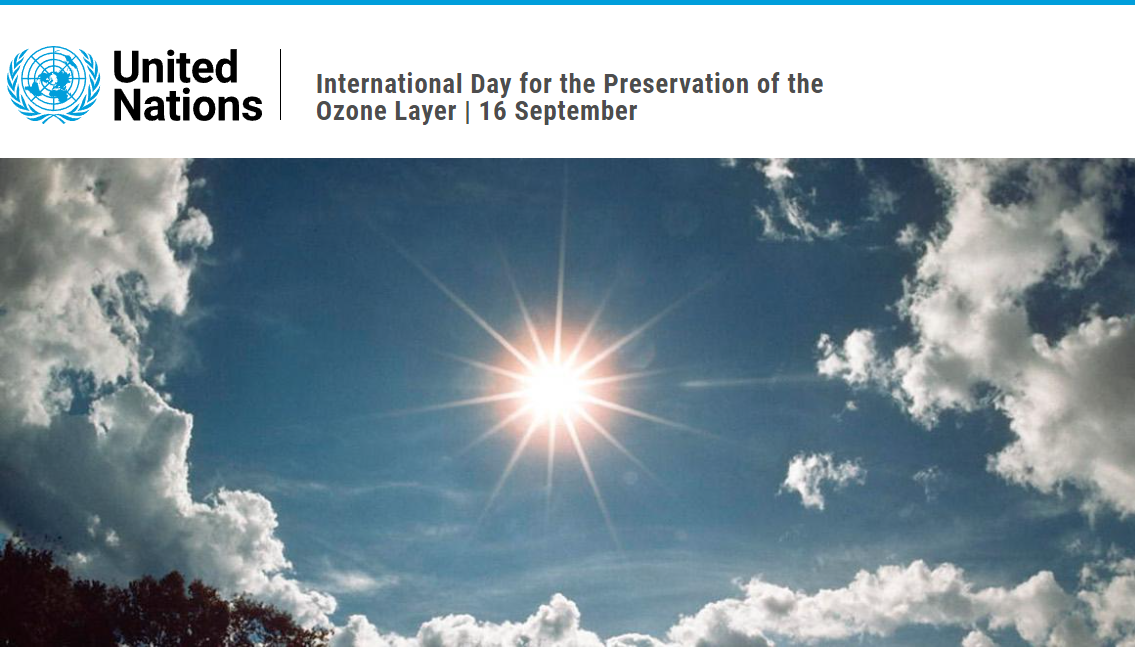
Dag voor het Behoud van de Ozonlaag / Day for the Preservation of the Ozone Layer 2025

De ozonlaag is een dun laagje gas dat ligt tussen de 15 en 50 kilometer hoogte en als een ring om onze aarde zit met als belangrijkste eigenschap; het beschermt ons tegen de schadelijke straling (ultraviolette straling) die afkomstig is van de zon.

Zonder de ozonlaag is leven op aarde niet mogelijk. Door vervuiling wordt de ozonlaag steeds dunner. Hierdoor lopen mensen meer kans op huidkanker en staar. Om gezamenlijk te proberen het ozongat niet groter te laten worden werd op 22 maart 1985 het Verdrag van Wenen aangenomen dat door 28 landen ondertekend. Op 16 september 1987 heeft dit geleid tot het opstellen van het Montrealprotocol (Montreal Protocol on Substances that Deplete the Ozone Layer). Het is geratificeerd door elke lidstaat van de Verenigde Naties (197); de Europese Unie, alle 193 leden van de Verenigde Naties, Vaticaanstad, Cookeilanden en Niue. Het Montrealprotocol laat zien dat mondiaal afspraken maken over het milieubeleid duidelijk zin heeft. We moeten nog wel een tijd wachten voordat de ozonlaag helemaal hersteld is maar vermoedelijk zal tegen 2050 de ozonlaag hersteld zijn tot het niveau van 1960. Plak er nog een 20 tot 30 jaar aan vast en dan moet de ozonlaag toch praktisch hersteld zijn. Ozongat boven Antarctica zal dan ook dicht zijn.

Links:
Day for the Preservation of the Ozone Layer, 16 September

Montreal Protocol is meest succesvolle internationale milieuverdrag ooit

Wereld Ozondag: van wetenschap naar wereldwijde actie

Near-future rocket launches could slow ozone recovery

Potential Ozone Depletion From Satellite Demise During Atmospheric Reentry in the Era of Mega-Constellations

Metals from spacecraft reentry in stratospheric aerosol particles

Legal analysis of the conduct of Israel in Gaza pursuant to the Convention on the Prevention and Punishment of the Crime of Genocide – publication

Israel has committed genocide against Palestinians in the Gaza Strip, the UN Independent International Commission of Inquiry on the Occupied Palestinian Territory, including East Jerusalem, and Israel said in the report ‘Legal analysis of the conduct of Israel in Gaza pursuant to the Convention on the Prevention and Punishment of the Crime of Genocide’.

The Commission urges Israel and all States to fulfil their legal obligations under international law to end the genocide and punish those responsible for it. The Commission has been investigating the events on and since 7 October 2023 for the last two years, and concluded that Israeli authorities and Israeli security forces committed four of the five genocidal acts defined by the 1948 Convention on the Prevention and Punishment of the Crime of Genocide, namely killing, causing serious bodily or mental harm, deliberately inflicting conditions of life calculated to bring about the destruction of the Palestinians in whole or in part, and imposing measures intended to prevent births. Explicit statements by Israeli civilian and military authorities and the pattern of conduct of the Israeli security forces indicate that the genocidal acts were committed with intent to destroy, in whole or in part, Palestinians in the Gaza Strip as a group.

Links:
Israel has committed genocide in the Gaza Strip, UN Commission finds

VN-commissie spreekt nu van genocide in Gaza: ‘Niet ingrijpen maakt medeplichtig’

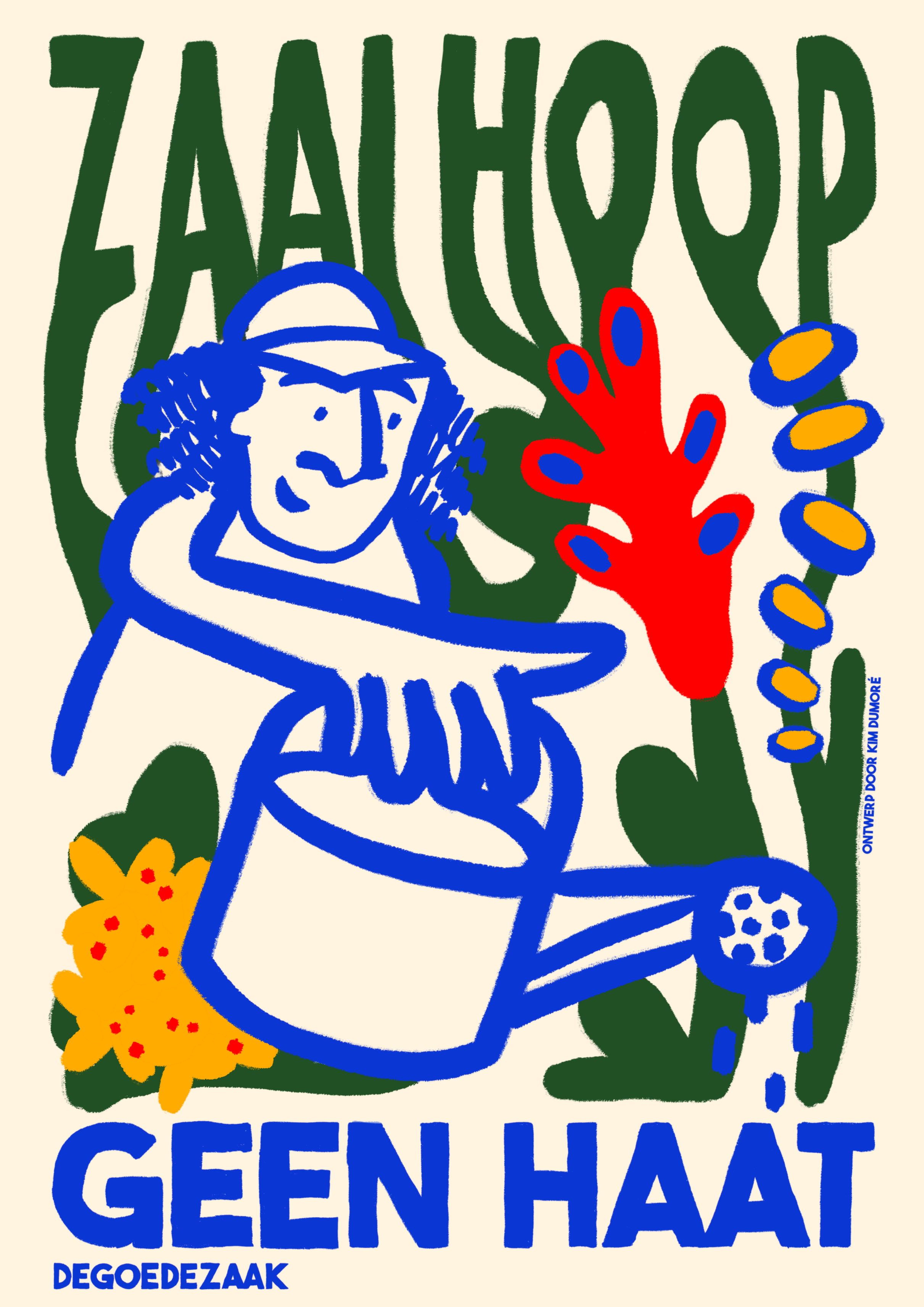
Zaai hoop, geen haat: word #hoopzaaier

Een Nederland waarin iedereen meetelt: zullen we het deze verkiezingen dáár over hebben?

We hebben meer met elkaar gemeen dan ons wordt verteld. Of we nu wit, zwart, nieuwkomer of hier geboren zijn, de meesten van ons willen hetzelfde: een betaalbaar huis, goede zorg en een mooie toekomst voor onze kinderen. Maar politici zoals Wilders en Yesilgöz, gesteund door rijke donateurs, brengen dat in gevaar. Ze maken betaalbaar bouwen onmogelijk en breken onze zorg af. Grote bedrijven kiezen winst boven ons klimaat en vervuilen onze lucht en water. Boodschappen worden elke dag duurder, terwijl de allerrijksten van ons land weigeren om eerlijk bij te dragen aan onze belastingen. De schuld van deze problemen schuiven ze af op minderheden, migranten en mensen zonder papieren. Deze haatzaaiers maken onze democratie zwakker en proberen ons te verdelen, omdat ze weten: samen zijn wij sterker dan zij. Want als we onze verschillen overbruggen, kunnen we een Nederland bouwen waar iedereen meetelt. Betaalbare huizen, eerlijke lonen, een gezonde leefomgeving: het ligt binnen handbereik. Kom in actie. Word #Hoopzaaier.

Vorige generaties hebben samen gestreden voor onze verzorgingsstaat, voor een inperking van de werkweek, tegen kinderarbeid en voor het kiesrecht voor vrouwen, om maar eens wat te noemen. Nu is het onze beurt om samen vooruit te gaan en ons niet langer te laten verdelen. Sluit je aan bij de #Hoopzaaiers en kom in actie!✊ Tijdens de Tweede Kamerverkiezingen van 29 oktober 2025 dwingen we politici het te hebben over oplossingen, ontkrachten we valse frames en desinformatie, verspreiden we online liefde tegen haat, en gaan we het gesprek aan met onze buren, collega’s, familie en vrienden. Op Prinsjesdag 2025 lezen we opnieuw een Miljoenennota zonder oplossingen voor onze problemen, en mét cadeautjes voor vervuilers en de allerrijksten. Dubbel-demissionair kabinet-Schoof beloofde Nederland hoop, lef en trots, maar kreeg helemaal niets voor elkaar en schoof de schuld op minderheden. Het is tijd voor een politiek van hoop boven haat. Laten we het deze verkiezingen hebben over oplossingen voor een Nederland waarin iedereen meetelt:

Links:
Zaai hoop, geen haat

Agenda 12-10-2025 – Mokum Tegen Fascisme : Fascisten niet welkom in Amsterdam!

Wereld #Alzheimer Dag 2025

De Wereld Gezondheid Organisatie (WHO) heeft 21 september uitgeroepen tot Wereld Alzheimer Dag.

Deze internationale dag alarmeert overheden en beleidsbepalers over dementie als een ernstige gezondheidskwestie omdat de wereld vergrijst. De ziekte van Alzheimer is een aandoening waarbij delen van de hersenen verschrompelen, op vele plaatsen “plaque”-vorming optreedt en de patiënt soms in snel tempo dementeert. De aandoening is vernoemd naar Alois Alzheimer, een Duitse psychiater en neuropatholoog. Een harde diagnose is doorgaans pas mogelijk na overlijden, door de hersenen te onderzoeken. iedereen wordt opgeroepen om die dag een Vergeet-mij-nietje te dragen. Thema 2025 is ‘Samen muziek maken’.

Links:
Wereld Alzheimer Dag

Jetske’s race – op weg naar de alzheimerpil (TV NPO 2)

Using APEX and AP-MS proteomics, we mapped Tau interactomes that were modified by neuronal activity and FTD mutations in hiPSC-derived neurons

Type 3 diabetes: Symptoms, causes and treatments

HerinneringenRit 2024

Alzheimer – WHO

World Alzheimer Report 2024

2025-09-15, Lief dagboek

Maandag; Wat eten we vandaag?; Vualta & Gazaprotest; Prinsjesdag / Troonrede; AZC Ter Apel; Dag van de Democratie; Wereld Lymfklierkankerdag; FreeMoneyDay; Mathematics: Hoofd- en Nekkankerweek; The rise of the Machines?

Deze afbeelding heeft een leeg alt-attribuut; de bestandsnaam is dagboek.png

Wat eten we vandaag?

Klik op afbeelding voor origineel

Knipselkrant:


Agenda:

Weer:

Links:
In de geschiedenis