Filmfestival van Cannes / Festival de Cannes 2025

Het Filmfestival van Cannes (Festival de Cannes) is een prestigieus internationaal filmfestival.

Het wordt sinds 1946 elk jaar in de Franse stad Cannes gehouden in het Palais des Festivals et des Congrès op de La Croisette. Het vindt jaarlijks plaats in de derde week van mei. Omdat het festival veel aandacht van de media krijgt, wordt het door veel filmsterren bezocht en is het een populaire gelegenheid voor filmproducenten om hun nieuwe films te presenteren en deze aan distributeurs te verkopen. De meest prestigieuze prijs die in Cannes wordt toegekend is de Palme d’Or (Gouden Palm) voor de beste film; deze wordt soms gedeeld door meerdere films in hetzelfde jaar. De filmsterren worden in luxueuze limousines vervoerd tot aan de beroemde rode loper, waarna zij de trappen bestijgen, om vervolgens aan de blikken van het grote publiek te worden onttrokken.

Links:
Festival de Cannes

The official Live of the Festival de Cannes 2025

Nakba : the Catastrophe (1948) / Nakba 77: Palestinians Call For a Global Day of Action On 15 May 2025

The Nakba (Arabic: النكبة, romanizedan-Nakbah, ’the “disaster”, “catastrophe”, or “cataclysm”‘), also known as the Palestinian Catastrophe, was the destruction of Palestinian society and homeland in 1948, and the permanent displacement of a majority of the Palestinian Arabs.

Approaching the 77th anniversary of the Nakba, the ethnic cleansing and expulsion of most of the Indigenous people of Palestine, your action is needed now more than ever. For almost 20 years, the Boycott, Divestment and Sanctions (BDS) movement has been leading the call for strategic and impactful grassroots solidarity with the Palestinian struggle for justice, freedom and equality. Since the start of Israel’s livestreamed genocide against the people in Gaza, BDS pressure to end international complicity in its regime of settler-colonial apartheid and illegal occupation has risen exponentially. We all know that Israel is only able to continue its genocide, including daily massacres, burning our children, men and women alive, or starving and thirsting them to death, due to the ongoing complicity of states, companies and institutions around the world. Israel announced its genocide against Palestinians is about to get even deadlier, as it prepares for mass ethnic cleansing and total destruction of Gaza. “In our thousands, in our millions, we are all Palestinians,” is a popular slogan of solidarity around the world. Given the ferocity of Israel’s daily massacres and its criminal impunity, we need to escalate pressure. Corporations and governments are feeling the heat and have cut ties of complicity. BDS works but we need more to force Israel to stop its crimes. So in your thousands, and in your millions: Rise up and escalate BDS now! The Palestinian BDS National Committee (BNC), the largest coalition in Palestinian society that is leading the global BDS movement, calls for mass global mobilizations and civil disobedience on 15 May. Let’s show complicit governments, institutions and corporations what real people power can do.

The term Nakba is used to describe both the events of 1948 and the ongoing persecution, displacement, and occupation of the Palestinians, both in the occupied West Bank and the Gaza Strip, as well as in Palestinian refugee camps throughout the region. The foundational events of the Nakba took place during and shortly after the 1948 Palestine war, including 78% of Mandatory Palestine being declared as Israel, the expulsion and flight of 700,000 Palestinians, the related depopulation and destruction of over 500 Palestinian villages by Zionist militias and subsequent geographical erasure, the denial of the Palestinian right of return, the creation of permanent Palestinian refugees and the “shattering of Palestinian society”. The expulsion of the Palestinians has since been described by some historians as ethnic cleansing. In 1998, Yasser Arafat proposed that Palestinians should mark the 50th anniversary of the Nakba declaring 15 May, the day after Israeli independence in 1948, as Nakba Day, formalizing a date that had been unofficially used as early as 1949.The Nakba greatly influenced the Palestinian culture and is a foundational symbol of Palestinian identity, together with “Handala“, the keffiyeh and the symbolic key. Countless books, songs and poems have been written about the Nakba. Palestinian poet Mahmoud Darwish described the Nakba as “an extended present that promises to continue in the future.”

Links:
Nakba 77: Palestinians Call For a Global Day of Action On 15 May 2025

Sta stil bij 77 jaar van voortdurende etnische zuivering

Deze herdenking van de Nakba is geen eindpunt, maar een begin

Rijksambtenaren roepen op tot een staakt het vuren

77 jaar etnische zuivering 77 jaar systematische onderdrukking 77 jaar verzet

Join us for a massive march across our campus at this year’s Tilburg Night University

Protest March for Palestinian Liberation

NEVER AGAIN IS NOW! Elke derde zaterdag van de maand

Sta op voor Palestina

15 May – Commemoration of the 75th anniversary of the Nakba at UN Headquarters in New York

Palestijnen 75 jaar weg uit Israël, herinnering aan de uittocht nog steeds levend

The Long Journey of Palestine Refugees: A Chronology of Palestinian Displacement and Dispossession

Herdenking van 76 jaar Nakba Amsterdam

Nakba Herdenking 2024

XR Justice Now! kleurt fonteinen bloedrood: Nederland heeft bloed aan zijn handen

Herdenk de Nakba – Sta op tegen onrecht

Netbeheer Nederland Scenario’s Editie 2025 – publicatie

Netbeheerders presenteren vier scenario’s voor een toekomstbestendig Nederlands energiesysteem.

Energie-infrastructuur is essentieel voor de Nederlandse economie. De vraag naar duurzame energie stijgt ongekend hard, met de industrie en nieuwe datacentra als grootgebruikers. Optimale wisselwerking tussen elektriciteit, duurzame gassen en warmte is nodig voor een efficiënt, leveringszeker én betaalbaar energiesysteem. Het scenariorapport 2025 van TenneT, Gasunie en de regionale netbeheerders laat in vier scenario’s zien hoe het energiesysteem van Nederland zich kan ontwikkelen als een toekomstbestendig energiesysteem, en welke maatregelen daar eventueel voor nodig zijn.

Links:
Netbeheerders presenteren scenario’s voor toekomstig energiesysteem

Red de Tapanuli-orang-oetans – petitie

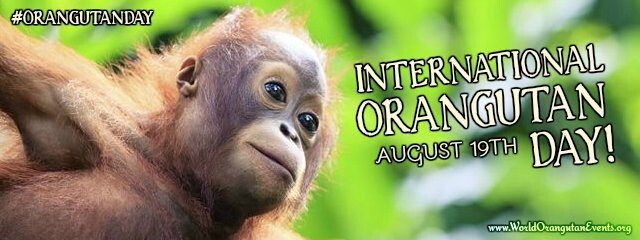
De Tapanuli-orang-oetan is een van de meest intelligente en emotioneel complexe dieren op aarde: ze voelen blijdschap, angst, liefde en rouw.

En deze soort komt op maar één plek voor, in het regenwoud van Sumatra in Indonesië. Hun leefgebied zou binnenkort vernietigd kunnen worden: het miljardenconglomeraat Jardine Matheson is van plan een goudmijn uit te breiden die het enige leefgebied van deze prachtige mensapen voor altijd zou kunnen verwoesten. De bulldozers staan klaar — en als we snel handelen, kunnen we ze nog stoppen. Laten we samen eisen dat de baas van Jardine Matheson al zijn macht gebruikt om deze roekeloze uitbreiding tegen te houden. Met een internationale oproep, slimme acties en een mediacampagne kunnen we hem ervan overtuigen dat deze mijnuitbreiding het risico niet waard is.

Links:
Red de Tapanuli-orang-oetans

2025-05-12, Lief dagboek

Maandag; Wat eten we vandaag?; Overstroming en ziekenhuis; Kernwapens; Gaza−Israël oorlog 2023 – …; Vapen; Dag van de Verpleging / Dag van de Zorg / Dag van het Bewustzijn & ME; Day of Plant Health; UN Global Road Safety Week; The Sky at Night.

Deze afbeelding heeft een leeg alt-attribuut; de bestandsnaam is dagboek.png

Wat eten we vandaag?:

Klik op afbeelding voor origineel

Overstroming:

IMG20250603082819

Door een defecte hogedrukkraan aan de cv ketel kwam in de middag een groot deel van de woning van A3 onder een laag water te staan, ook onderliggende verdiepingen hadden nattigheid. Omdat de bewoners op hun werkplek waren, moest de brandweer de deur forceren om de lekkage te kunnen stoppen. Na een best wel snelle reactie door de woningbouwvereniging was het huis aan het begin van de avond alweer leefbaar en was er weer warm water. Het drogen van de vloer zal enige weken duren, ondersteund door machines die vocht opzuigen.

Ziekenhuis:

Klik op afbeelding voor origineel

In verband met het zich nog steeds voortslepende verhaal rond het ontstoken rechteroor van A3 werd hij verwacht in het ziekenhuis voor nogmaals een MRI-scan.

Knipselkrant:


Agenda:

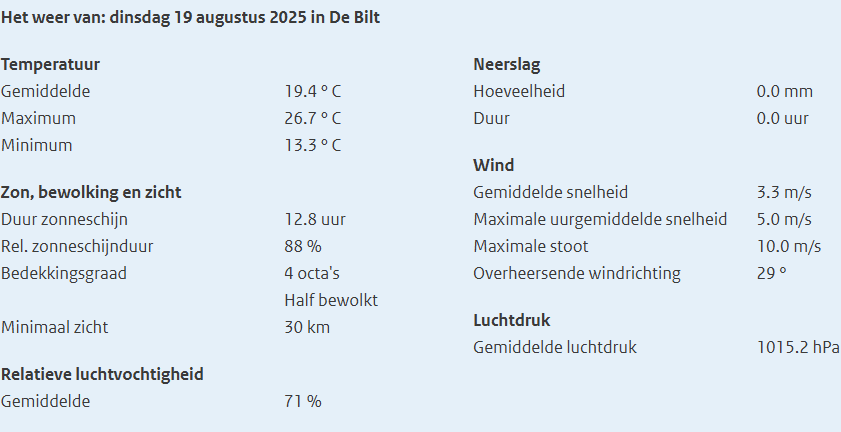
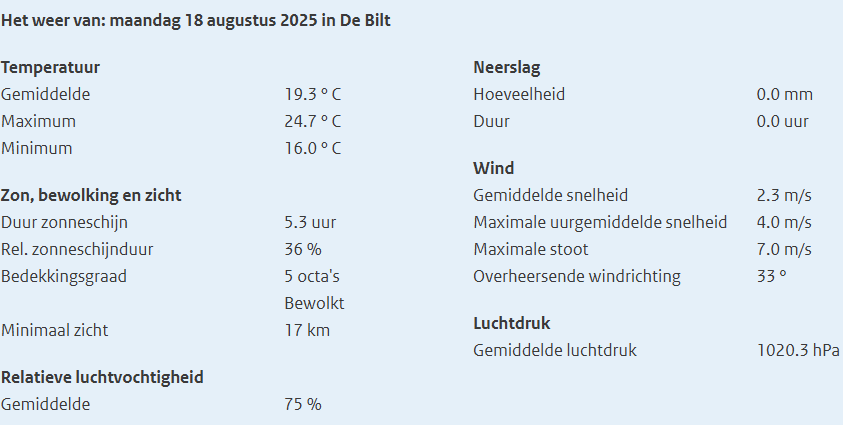
Weer:

Links:
In de geschiedenis

The Sky at Night – Secrets of the Red Planet (TV BBC Four)

The Sky at Night is a monthly documentary television programme on astronomy produced by the BBC.

The show had the same permanent presenter, Patrick Moore, from its first broadcast on 24 April 1957 until 7 January 2013. The latter date was a posthumous broadcast, which followed Moore’s death on 9 December 2012. This made it the longest-running programme with the same presenter in television history. Many early episodes are missing, either because the tapes were wiped, thrown out, or because the episode was broadcast live and never recorded in the first place. Beginning with the 3 February 2013 edition, the show was co-presented by Lucie Green and Chris Lintott. Since December 2013 Maggie Aderin-Pocock has been a presenter. The programme’s opening and closing theme music is “At the Castle Gate”, from the incidental music to Pelléas et Mélisande, written in 1905 by Jean Sibelius, performed by the Royal Philharmonic Orchestra and conducted by Sir Thomas Beecham.

This episode:
The team explores what the latest research is revealing about Mars. Could life have once thrived on Mars? What mysterious force is moving large boulders across its dusty surface today? And will a return trip to our neighbouring planet ever be possible? In this exciting episode, we’re blasting off to uncover what the latest research is revealing about the Red Planet.

It’s been 60 years since Mariner 4 sent back the very first images of another world from space. Since then, a fleet of orbiters and rovers have been exploring Mars, uncovering a dramatic history that may not be so different from our own planet Earth.

In the water-rich landscapes of Scotland, Maggie Aderin-Pocock meets Lonneke Roelofs from Utrecht University, who’s been investigating the puzzling movement of enormous Martian boulders. On Earth, such motion would usually be connected with water – but on Mars, something entirely unexpected is at play. And in studying it, scientists have discovered a brand new geological phenomenon.

Maggie also visits the University of St Andrews to meet Dr Claire Cousins, who is looking at ancient Scottish rocks to help future Mars rovers identify and analyse similar formations – ones that might contain microscopic evidence that life once existed on the Red Planet.

While Maggie has journeyed north, Chris Lintott is on a virtual field trip to Mars itself with Professor Sanjeev Gupta at the Data Observatory at Imperial College London. Dr Gupta takes us on a tour with NASA’s Perseverance rover, and the incredible insights the modern rovers are providing about Mars’s history and surface today.

Meanwhile, guest presenter Dr Mekhi Dhesi talks with Dr James Lambert from Pulsar Fusion about the current propulsion options used for space travel. They discuss a possible alternative approach that could reduce travel times and costs, making a mission to Mars, and back again, one step closer. Return missions to Mars could deliver samples from the Martian surface back to Earth laboratories for in-depth analysis and maybe even permit human travel to Mars one day.

Pete Lawrence is at the Milton Keynes Astronomical Society to talk us through Mars observations and what other cosmic wonders to look out for in the lighter summer night skies.

Take a trip with us to discover the secrets of the Red Planet and how we are getting closer and closer to discovering evidence of life on Mars.

Links:
The Sky at Night

#MakeWalkingSafe #MakeCyclingSafe UN Global Road Safety Week 2025

The UN General Assembly mandated WHO and the UN regional commissions to plan and host periodic UN Global Road Safety Weeks to serve as a platform for global and regional, but mainly national and local, activities to raise awareness about road safety issues and to stimulate and advance responses as appropriate for these settings.

Road traffic injuries are a leading cause of death and disability worldwide, with nearly 1.2 million people killed and as many as 50 million people injured each year. They are the leading killer of young people aged 5-29 years. Globally, more than 1 of every 4 deaths occur among pedestrians and cyclists. The 8th UN Global Road Safety Week offers an opportunity to spur action at national and local levels to make walking and cycling safe, by highlighting concrete and specific interventions that can be taken by different stakeholders – governments, international agencies, civil society, businesses and schools.  These actions will help promote and facilitate a shift to walking and cycling, which are more healthy, green, sustainable and economically advantageous modes of transport. This will also contribute, directly and indirectly, to the attainment of many Sustainable Development Goals.

Links:
UN Global Road Safety Week

Road traffic injuries