Fires Drove Record-breaking Tropical Forest Loss in 2024 – publication
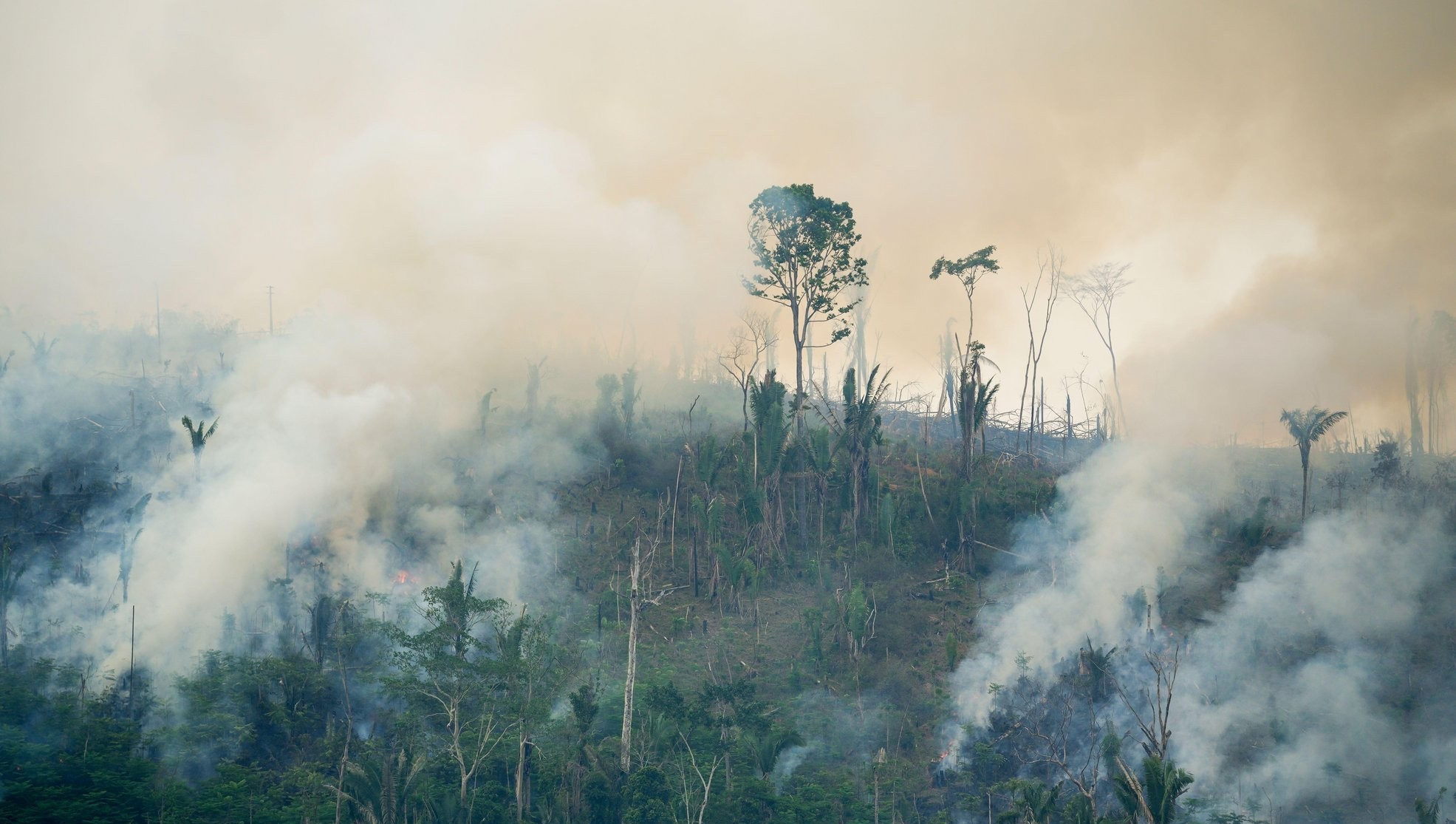
The Forest Pulse draws on the most recent data and analysis to reveal the latest trends in global forest loss and deforestation.

The Forest Pulse is updated annually using annual tree cover loss data, updates are released each year and cover the previous year’s trends. The tropics lost a record-shattering 6.7 million hectares of primary rainforest in 2024, an area nearly the size of Panama. Driven largely by massive fires, that’s more than any other year in at least the last two decades. According to new data from the University of Maryland’s GLAD lab and available on WRI’s Global Forest Watch platform, tropical primary forest disappeared at a rate of 18 football (soccer) fields per minute in 2024 — nearly double that of 2023. These are some of the most important forest ecosystems, critical for livelihoods, carbon storage, water provision, biodiversity and more. Their loss in 2024 alone caused 3.1 gigatonnes (Gt) of greenhouse gas emissions, equivalent to slightly more than the annual CO2 emissions from India’s fossil fuel use.

Links:
Fires Drove Record-breaking Tropical Forest Loss in 2024

Vorig jaar ging tropisch regenwoud ter grootte van Ierland verloren

RELEASE: Global Forest Loss Shatters Records in 2024, Fueled by Massive Fires

Meer tropisch oerbos verloren gegaan in 2024 dan ooit eerder gemeten, branden grootste oorzaak
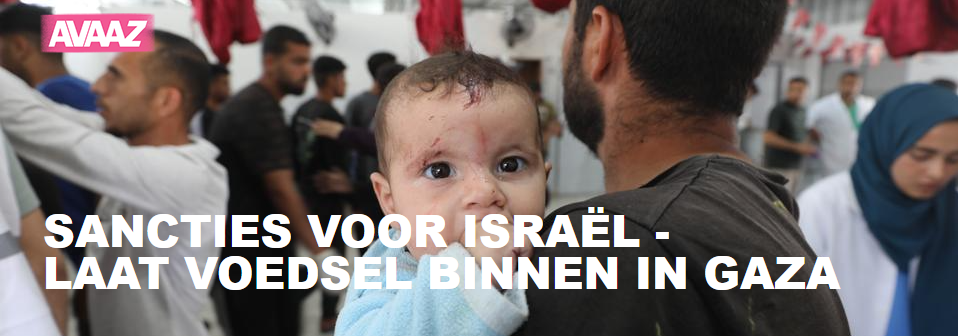
Sancties voor Israël – Laat voedsel binnen in Gaza – petitie

De VN heeft gewaarschuwd dat 14.000 kinderen in Gaza kunnen verhongeren als Israël geen voldoende voedselhulp toestaat.

De situatie is zo ernstig dat het Verenigd Koninkrijk handelsgesprekken met Israël heeft gestaakt; de EU herziet het handelsakkoord met Israël; en Spanje zet stappen om wapenleveringen te stoppen. Als we de druk hoog genoeg opvoeren en duidelijk van ons laten horen, kunnen we Frankrijk, Canada en het Verenigd Koninkrijk zover krijgen dat ze sancties invoeren en Israël dwingen om de grens te openen. Maar dan moeten we echt vanuit alle hoeken van de wereld van ons laten horen!

Links:
Sancties voor Israël – Laat voedsel binnen in Gaza


2025-05-20, Lief dagboek

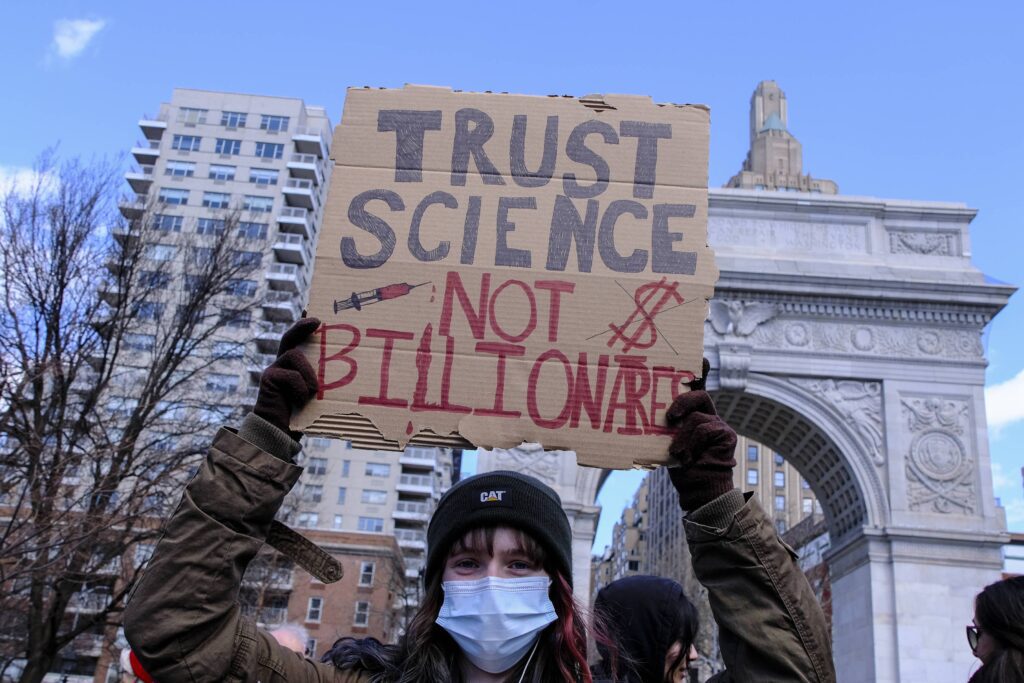
Dinsdag; Wat eten we vandaag?; Gaza−Israël oorlog 2023 – …; voedingsgedrag van wolven in Nederland; Wereld Bijendag; World AUTOimmune & AUTOinflammatory Arthritis Day; Wereld Metrologie Dag; Klimaatwake; De Staat van de Stad; Trump versus Wetenschap.

Deze afbeelding heeft een leeg alt-attribuut; de bestandsnaam is dagboek.png

Wat eten we vandaag?:

Klik op afbeelding voor origineel

Knipselkrant:


Agenda:

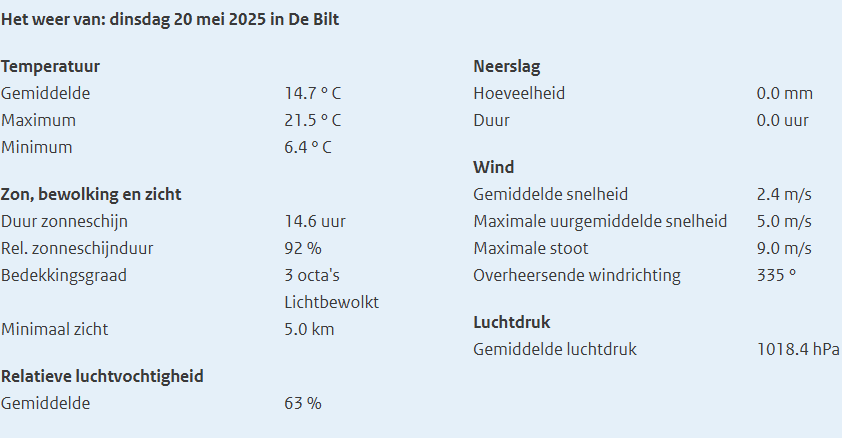
Weer:

Links:
In de geschiedenis

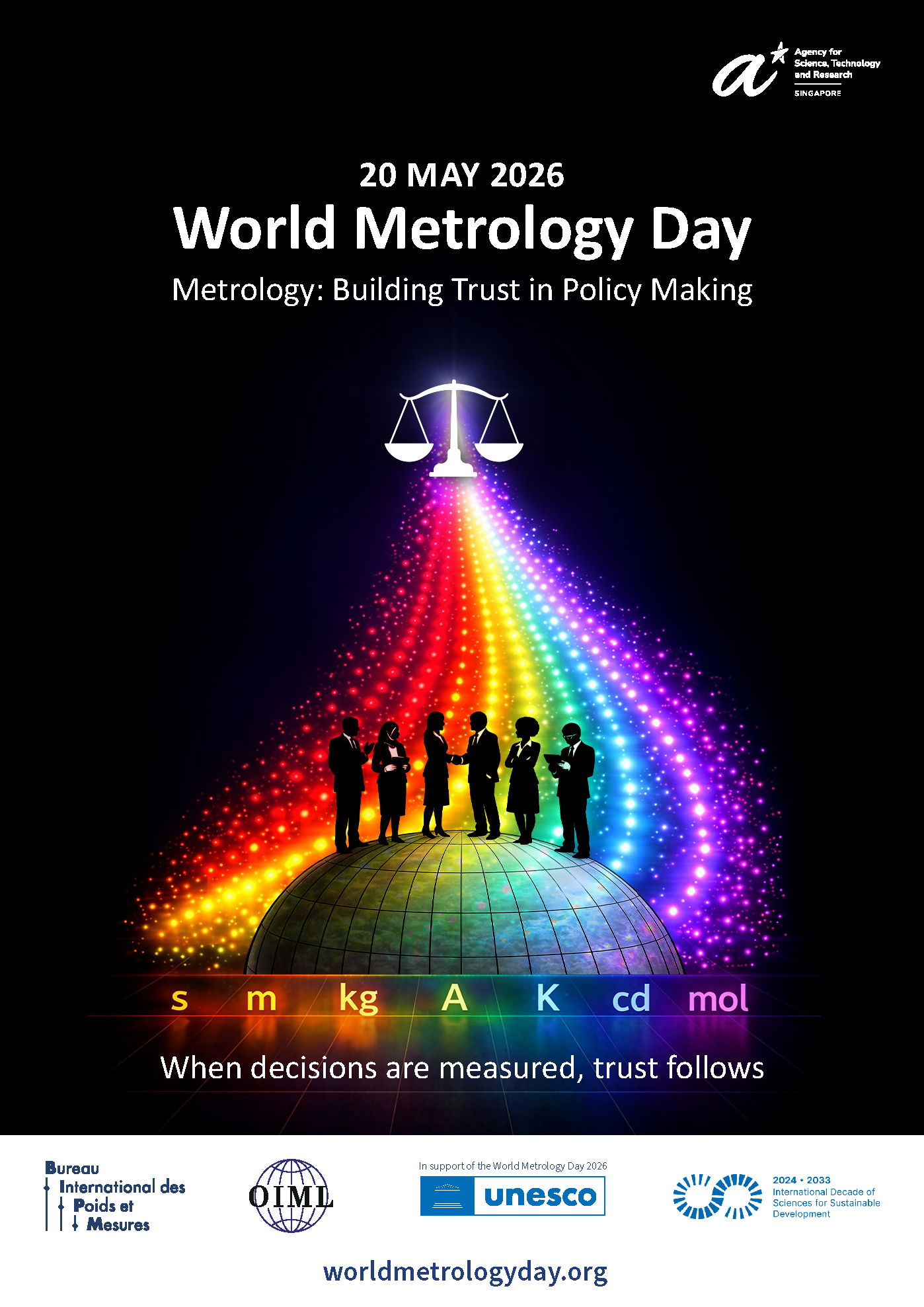
World Metrology Day / Wereld Metrologie Dag 2025

World Metrology Day

World Metrology Day is an annual celebration of the signature of the Metre Convention on 20 May 1875 by representatives of seventeen nations, setting the framework for global collaboration in the science of measurement and in its industrial, commercial and societal applications.

The original aim of the Metre Convention – the world-wide uniformity of measurement – remains as important today as it was in 1875. The SI is now based on a set of definitions each linked to the laws of physics and have the advantage of being able to embrace further improvements in measurement science and technology to meet the needs of future users for many years to come. Indeed more widely metrology, the science of measurement, plays a central role in scientific discovery and innovation, industrial manufacturing and international trade, in improving the quality of life and in protecting the global environment. In 2025, the 150th anniversary of the signing of the Metre Convention – a milestone that underscores a century and a half of international collaboration in measurement science – is celebrated. The recognition of World Metrology Day as a UNESCO International Day represents an extraordinary opportunity to promote the pivotal role of metrology in building a sustainable future

Links:
World Metrology Day

Metrologie (NL)

World AUTOimmune & AUTOinflammatory Arthritis Day 2025

World AUTOimmune & AUTOinflammatory Arthritis Day is organized on May 20th annually.

Lack of awareness leads to relationship conflicts, delayed diagnosis, compromised quality of life, and elevated healthcare costs. Education about these diseases, including the fact they are full body diseases affecting many parts (joints, tissues, organs) is necessary to improve the lives of the 450 million worldwide affected. World AUTOimmune & AUTOinflammatory Arthritis Day was established by our nonprofit in 2012 to raise awareness about the AUTOimmune and AUTOinflammatory diseases that include inflammatory-driven arthritis (AiArthritis) as a major clinical component. This event historically unites thousands of people in 60 + countries worldwide to DRIVE global awareness and education about our diseases. It’s a day for ALL organizations, we just manage it through the official World AiArthritis Day social media pages.  To catch the attention of those who do not understand our diseases, including the type of arthritis associated with them, we use AUTO-themed awareness and education materials.

Links:
World AUTOimmune & AUTOinflammatory Arthritis Day

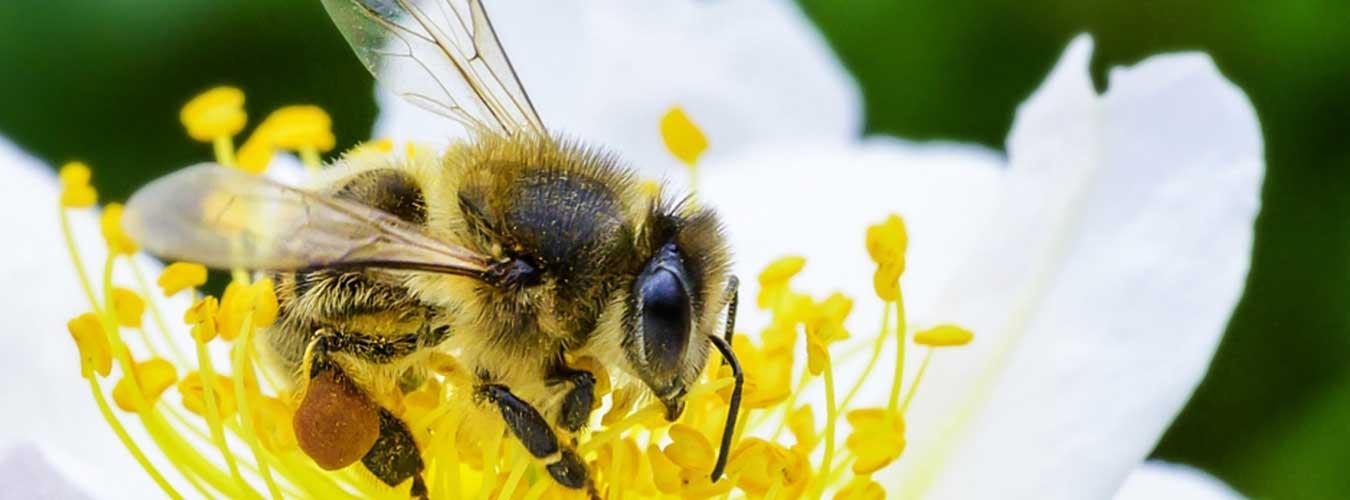
#SavetheBees #WorldBeeDay / Wereld Bijendag 2025

World Bee Day is celebrated on May 20, on this day Anton Janša, the pioneer of beekeeping, was born in 1734.

The purpose of the international day is to acknowledge the role of bees and other pollinators for the ecosystemThe UN Member States approved Slovenia’s proposal to proclaim 20 May as World Bee Day in December 2017. Bees are flying insects closely related to wasps and ants, known for their role in pollination and, in the case of the best-known bee species, the western honey bee, for producing honey and beeswax. Bees are a monophyletic lineage within the superfamily Apoidea and are presently considered a clade, called Anthophila. There are over 16,000 known species of bees in seven recognized biological families. They are found on every continent except Antarctica, in every habitat on the planet that contains insect-pollinated flowering plants. Bees and other pollinators, such as butterflies, bats and hummingbirds, are increasingly under threat from human activities. Pollinators allow many plants, including many food crops, to reproduce. Not only do pollinators contribute directly to food security, but they are key to conserving biodiversity – a cornerstone of the Sustainable Development Goals. They also serve as sentinels for emergent environmental risks, signaling the health of local ecosystems. Invasive insects, pesticides, land-use change and monocropping practices may reduce available nutrients and pose threats to bee colonies. To raise awareness of the importance of pollinators, the threats they face and their contribution to sustainable development, the UN designated 20 May as World Bee Day. 20 May coincides with the birthday of Anton Janša, who in the 18th century pioneered modern beekeeping techniques in his native Slovenia and praised the bees for their ability to work so hard, while needing so little attention.

Links:
World Bee Day 20 May

World Bee Day

Honey bee behaviours within the hive: Insights from long-term video analysis

Bees can remember human faces — and 7 other surprising facts about these important insects

Bijentelling

Ingestible hydrogel microparticles improve bee health after pesticide exposure

Klimaatwake 20-05-2025

Maandelijkse Klimaatwakes om elkaar vast te houden.

Zorgen delen, hoe doe je dat? Al die angstaanjagende berichten over de opwarming van de aarde tot je nemen? Hoe ga je verder met je dagelijks leven, als je weet dat elders op de wereld verschrikkelijke bosbranden gaande zijn? Bosbranden gaande zijn? Kan dat eigenlijk? Niet wegkijken van al die gevolgen van de klimaatcrisis en toch iets van levensgeluk vasthouden? Het leven ondanks alles blijven vieren? Velen van ons hebben besloten om zich in te zetten om de klimaatcrisis aan te pakken. Dat kan zijn door plantaardig te eten, of minder plastic te gebruiken. Anderen gaan het gesprek aan in hun omgeving om bewustwording te vergroten. Of gaan over tot actie, samen met één van de milieu-organisaties als Milieudefensie, Greenpeace of Extinction Rebellion.

Voor zoveel mogelijk mensen die boos, bezorgd of verdrietig zijn over het klimaat en geïnspireerd zijn om iets te veranderen aan de toestand van het klimaat. Activisten, bezorgde mensen, religieus en niet-religieus, jongeren en volwassenen. Bezoekers van de Klimaatwakes zoeken inspiratie om zich actief in te zetten. Samen delen waar je bang voor bent, omdat je niet wilt wegkijken, maar klimaat-rampen onder ogen zien, geeft troost. Soms merk je dat je inzet tegen de klimaatcrisis je kan vervreemden of isoleren van je vrienden of familie. Of je kan je verdrietig en gefrustreerd voelen dat er zo slecht geluisterd wordt door overheid en bedrijven. De Klimaatwakes zijn een plek waar zorgen over de toekomst van de aarde gedeeld kunnen worden.

Links:
Klimaatwake

#DrakeAwards2025

The Drake Awards is a one-of-a-kind celebration at the SETI Institute. Together, we explore one of humanity’s biggest questions—are we alone?

This special hybrid event brings together a vibrant community of scientists, students, industry leaders, and space enthusiasts to celebrate groundbreaking discoveries and spark new ideas. Celebrates exemplary contributions to SETI or astrobiology through scientific research and space exploration. The award honors Frank Drake, whose Drake Equation first identified the specific factors necessary for the emergence of life in the Universe and the evolution of technological civilizations. This honor is given at the discretion of the Board of Trustees of the SETI Institute, based on nominations from its Science Advisory Board. The honoree is presented a cash award and trophy, and is invited to describe their research at a public ceremony. The Award was initially presented to Frank Drake in 2001.

The SETI Institute announced two recipients for the 2025 Drake Award: Dr. David Deamer (University of California, Santa Cruz) and Dr. John Baross (University of Washington, Seattle). Deamer and Baross are known for their pioneering work in astrobiology, focused on understanding the origins of life. However, each approaches the question from a different perspective. Deamer, a biomolecular engineer who focuses on membranes and RNA formation in shallow water environments, is recognized for advancing new theories on the origins and processes of life in the Universe. Baross, a microbiologist, focuses on hydrothermal vents and deep-sea chemistry as the cradle of life and has pioneered research on extremophiles to decipher life’s origins on Earth and beyond.

The Carl Sagan Center Director’s Award is awarded to an outstanding SETI Institute scientist who has demonstrated outstanding achievement in their field. This award honors the impact of SETI Institute former Trustee, Carl Sagan, whose innovation, invention, leadership and collaboration in space science continues to inspire scientists and the public alike. The SETI Institute will recognize Dr. Joseph Twicken, Senior Data Scientist at the SETI Institute, with its 2025 Carl Sagan Center (CSC) Director’s Award. Now serving as the Lead Data Scientist in the TESS (Transiting Exoplanet Survey Satellite) Science Processing Center, Twicken’s contributions to the Kepler Mission included designing, implementing, operating, maintaining and documenting the mission’s Data Processing Pipeline. Kepler revolutionized exoplanet science, discovering and confirming nearly 3,000 exoplanets and fundamentally changing our understanding of planets beyond our solar system.

The SETI Institute, with its partners, particularly Berkeley SETI Research Center, have created an endowment, called SETI Forward Fund, that will support and encourage the next generation of SETI scientists. SETI Forward will increase pathways for undergraduates interested in careers pursuing SETI research. Gabriella Rizzo and Pritvik Sinhadc will be officially honored at this Drake Awards ceremony in 2025

Links:
Drake Awards

SETI Institute’s 2025 Drake Award Recognizes Origins Of Life Research

Is Nederland bestand tegen de Amerikaanse ontmanteling van de wetenschap? (TV De Balie webcast)

De KNAW organiseert samen met De Balie een debatavond over de bedreiging van de academische vrijheid en hoe die in de VS onder steeds meer druk komt te staan.

‘Vrouw’, ‘trauma’, ‘slachtoffer’: het zijn enkele van de woorden die onderzoekers niet meer mogen gebruiken als ze aanspraak willen maken op Amerikaans overheidsgeld. Voor welke dilemma’s komen Nederlandse wetenschappers te staan nu de Verenigde Staten de aanval openen op (wereldwijde) academische vrijheid? Met één theatrale zwaai van zijn pen opende Donald Trump zijn aanval op de academische vrijheid. Complete onderzoeksgebieden zijn taboe verklaard. Deze ontwikkeling vindt niet geïsoleerd plaats. De wetenschap is internationaal nauw verweven in allerlei samenwerkingsverbanden. Op vrijwel alle onderzoeksgebieden liep de Amerikaanse wetenschap voorop, qua prestaties en qua budgetten, met name in de medische wetenschappen. Nu trekt het land zich terug uit internationale samenwerkingen en ontmantelt het doelbewust de wetenschap waar het zo goed in is. Hoe worden Nederlandse onderzoekers door de Amerikaanse sloopkogel geraakt? En wat is de bredere maatschappelijke context waarin dit gebeurt? Met de wereldwijde opkomst van rechts-populisme begint de onafhankelijke universiteit als pijler van de democratische rechtsstaat te wankelen. Hoe kunnen onderzoekers hun werk blijven doen in een wereld waarin intellectualisme steeds vaker als verdacht wordt gezien? En wat kunnen we leren van de kwetsbaarheid van de wetenschap in de VS?

Links:
Is Nederland bestand tegen de Amerikaanse ontmanteling van de wetenschap?

Academische vrijheid in Nederland: reactie op actuele dreigingen – publicatie