2025-11-11, Lief dagboek

Dinsdag; Wat eten we vandaag?; Kwartaalbijeenkomst werk; COP30; Wapenstilstand van 11 november 1918; Sint-Maartenfeest.

Deze afbeelding heeft een leeg alt-attribuut; de bestandsnaam is dagboek.png

Wat eten we vandaag?:

Klik op afbeelding voor origineel

Kwartaalbijeenkomst werk:

Klik op afbeelding voor origineel

De kwartaalbijeenkomst van het werk is verhuisd, op de nieuwe locatie liepen we bijna tegen een muur vol bordspellen.

Knipselkrant:


Agenda:

Weer:
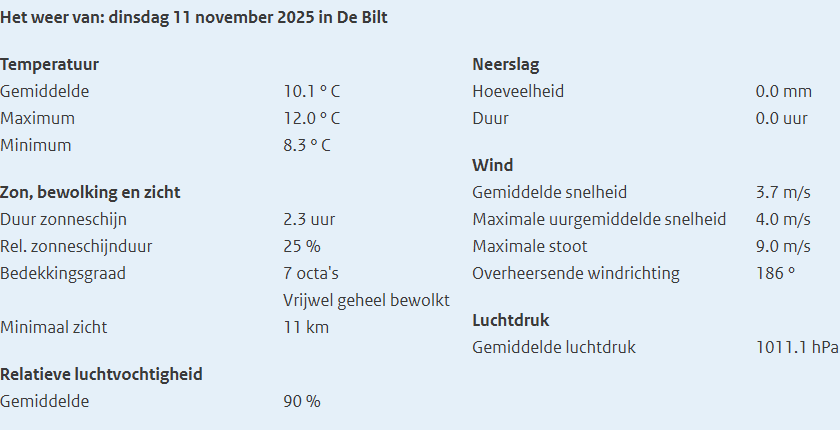
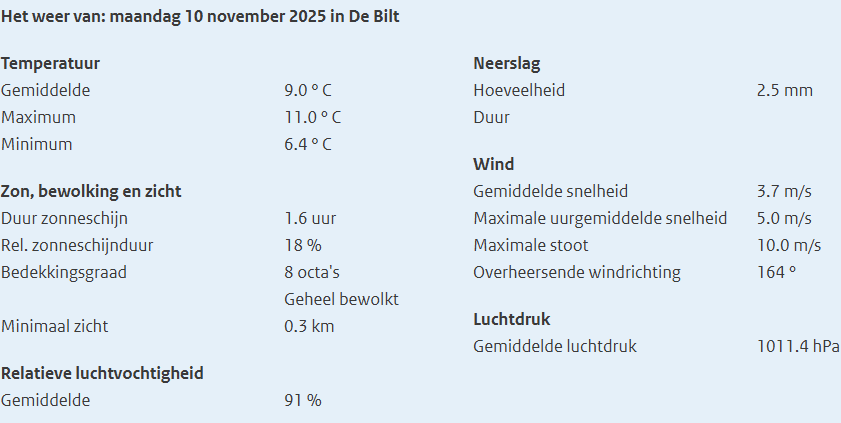
KNMI weerrapport

Links:
In de geschiedenis

Sint-Maartenfeest 2025

Sint-Maartenfeest

Op 11 november, of de avond ervoor, wordt in sommige streken, zowel in Vlaanderen, Noord-Frankrijk als in Nederland, de naamdag van Sint-Maarten (Martinus van Tours) gevierd.

Het Sint-Maartenfeest wordt ook wel “keuvelen”, Sint-Martinus, Sinte-Mette, Saint Martin’s Day, Martinmas,  Old Halloween of Old Hallowmas Eve genoemd. Sint-Maarten wordt niet overal op dezelfde wijze gevierd. In sommige plaatsen worden optochten georganiseerd, in andere worden vreugdevuren ontstoken. Zeer algemeen is de lampionnentocht: De kinderen maken lampionnen of hollen bieten uit en gaan met de lichtjes langs de deuren. Daar zingen ze speciale Sint-Maartensliedjes en krijgen hiervoor snoep of fruit.

Links:
Sint-Maartenfeest

Wapenstilstand van 11 november 1918 – 2025

De Duitse delegatie op weg naar de onderhandelingen, 7 november 1918

De Wapenstilstand van 11 november 1918 werd ondertekend in het wapenstilstandsrijtuig in het Bos van Compiègne tussen de Geallieerden en het Duitse Rijk.

Op die datum kwam er, nadat kort voordien al wapenstilstanden afgesloten waren met Oostenrijk-Hongarije en Bulgarije, een definitief eind aan de gevechten in de Eerste Wereldoorlog. Al ging het strikt gesproken niet om een capitulatie, toch betekende dit door de Duitsers aangevraagde akkoord de totale nederlaag voor het Duitse Keizerrijk. Het formele einde van de oorlog volgde op 28 juni 1919 bij de ondertekening van het vredesverdrag van Versailles.

Links:
Wapenstilstandsdag, het bloederige einde van de Eerste Wereldoorlog

Ondertekening wapenstilstand Eerste Wereldoorlog (1918)

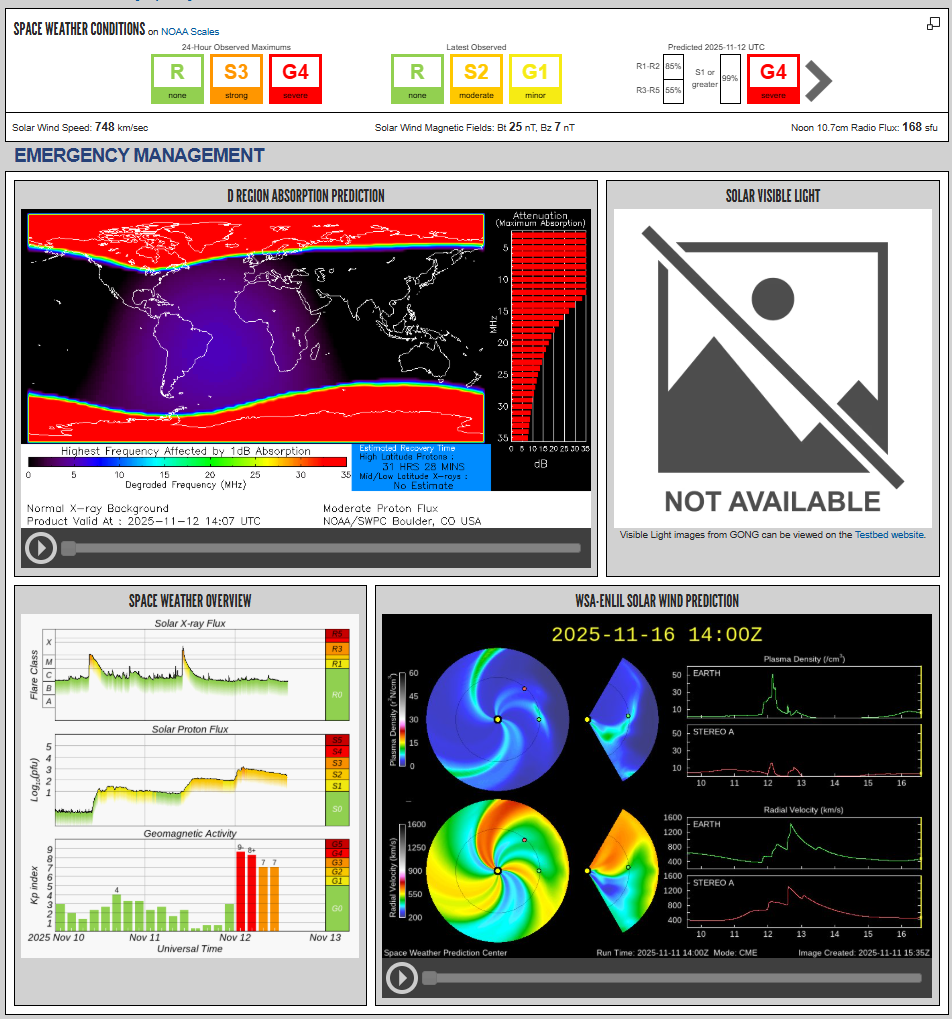
Geomagnetic Storm G4 (Severe)

Geomagnetic Storm G4

The National Oceanographic Atmospheric Administration (NOAA) reported that there are three CMEs heading towards Earth from the Sun.

NOAA measures the strength of these storms and says that there is chance of a Severe G4 geomagnetic storm being triggered especially on Wednesday 11 into Thursday 12 November 2025. Geomagnetic storms are dangerous for astronauts, but not harmful to humans as Earth’s atmosphere protects us from the radiation, but can sometimes disrupt satellites and also different forms of electronic devices, such as phones. This storm is classed as a rare KP8. The KP index is an alternative measure of geomagnetic activity extending from KP1 to KP9. G4 (Severe) storm levels reached on 12 November at 01:20 UTC.

Links:
G4 (Severe) Watch in Effect for 12 November

Noorderlichtkans 11-12 november 2025

G4 (Severe) storm levels reached on 12 November at 0120 UTC

Stormachtig ruimteweer door uitbarstingen op de zon

Solar cycle 25

2025-11-10, Lief dagboek

Maandag; Wat eten we vandaag?; Wereldwetenschapdag voor Vrede en Ontwikkeling; Dag Van De Mantelzorg; Wereld Wezendag; Klimaatweek; COP30; Food Film Festival; Week van de Rechtspraak; Week of Science and Peace; Ogoni9 memorial; The Sky at Night.

Deze afbeelding heeft een leeg alt-attribuut; de bestandsnaam is dagboek.png

Wat eten we vandaag?:

Klik op afbeelding voor origineel

Agenda:

Weer:

KNMI weerrapport

Links:
In de geschiedenis

Wereld Wezendag / UN #WorldOrphansDay 2025

World Orphans Day

Two observances named World Orphans Day have been established to raise awareness of their plight; the first is observed on April 20 and the second on the second Monday of November.

Losing both parents is one of the worst things that can happen to a child. There are hundreds of millions of orphans in the world who need someone to take care of them. In common usage, an orphan is a child who has lost both parents. However, some organizations, including UNICEF and UNAIDS, label children who have lost one parents as orphans, too. The number of double orphans, i.e. those who have lost both parents, is relatively low in developed countries; the highest numbers of orphans exist in countries affected by extreme poverty, wars, and epidemics. Regions with the highest percentage of orphans are Africa (almost 12% of all children), Latin America & the Caribbean (about 7.5% of all children), and Asia (6.5% of all children).

According to statistics, every 19 seconds somewhere in the world, a child is orphaned, and 99% of orphans are never adopted. Most countries with high numbers of orphans usually don’t have a good system in place to support all orphaned children. Thousands of orphans across the globe live as street children devoid of parental care and vulnerable to abuse and exploitation. Orphans raised in orphanages often struggle to adjust to adult life once released from the orphanage because they lack education, resources, and skills to support themselves. As a result, many of them become homeless and commit crimes to survive, or even end up committing suicide.

Since governments of poor countries devastated by wars and epidemics are unable to provide orphans with proper care, international organizations have to step in. There are a lot of organizations and programs supporting orphans worldwide. Two of them have established a World Orphans Day. World Orphans Day celebrated on April 20 was founded by Worldwide Organization for Charity (WOC), previously known as World Orphan Center. The organization is working to support orphans, underprivileged children and widows with the ultimate goal of making them self-reliant through various support schemes, ranging from coverage of living expenses to adoption.

World Orphans Day celebrated on the second Monday of November was launched in 2006 by the Stars Foundation, a Nashville-based organization comprised of the entertainment industry, dignitaries, and media and sports personalities that seeks to raise money to help orphans, children in foster care, street children, and other vulnerable children. Both World Orphans Days aim to raise awareness about orphans worldwide and encourage people to support orphans any way they can. Of course, giving an orphan a new loving family is the best way to change their life for the better, but we realize that adoption isn’t for everyone. There are a lot of other ways to help orphans: you can donate to an organization that supports orphans, volunteer at an orphanage, organize an awareness event in your community, and spread the word on social media with the hashtag #WorldOrphansDay.

Links:
ACT Commemorates World Orphans Day

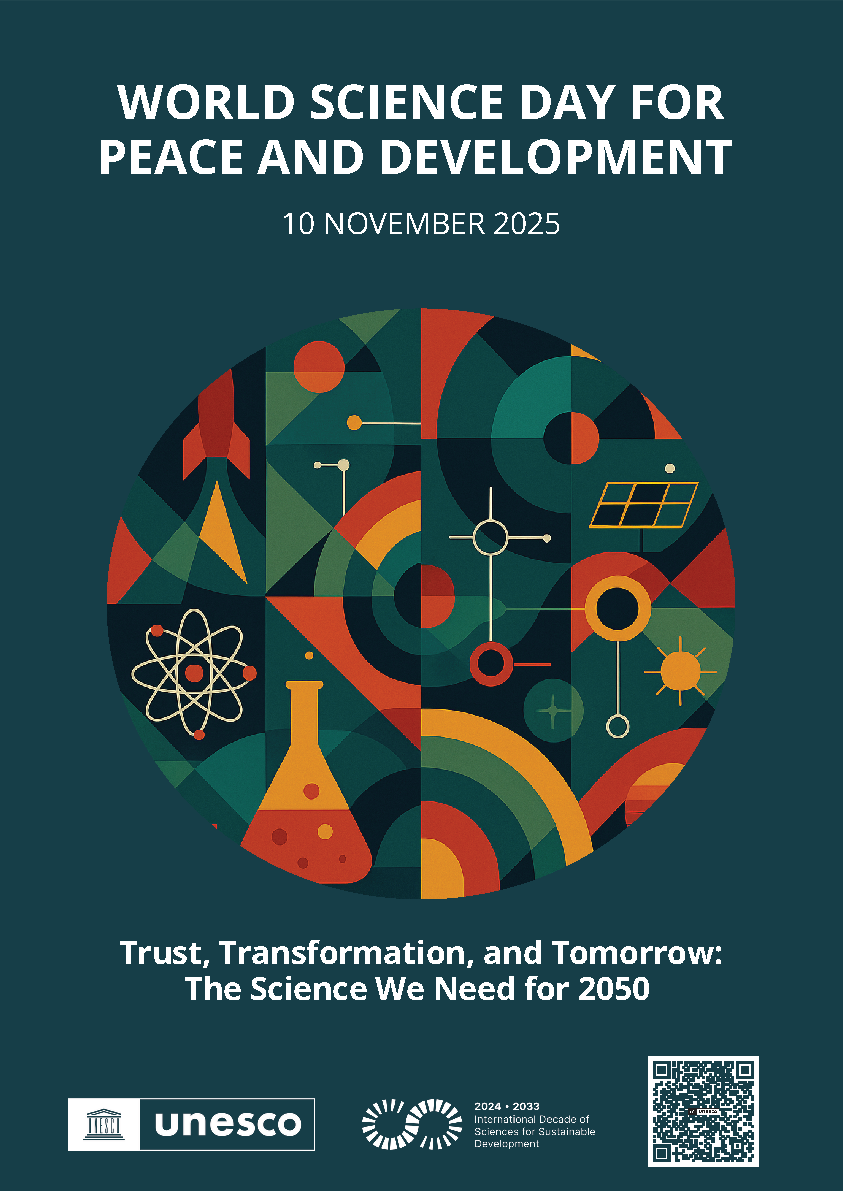
World Science Day for Peace and Development / Wereldwetenschapdag voor Vrede en Ontwikkeling 2025

Wereldwetenschapdag voor Vrede en Ontwikkeling

Celebrated every 10 November, World Science Day for Peace and Development highlights the significant role of science in society and the need to engage the wider public in debates on emerging scientific issues, it also underlines the importance and relevance of science in our daily lives.

By linking science more closely with society, World Science Day for Peace and Development aims to ensure that citizens are kept informed of developments in science. It also underscores the role scientists play in broadening our understanding of the remarkable, fragile planet we call home and in making our societies more sustainable. The Day offers the opportunity to mobilize all actors around the topic of science for peace and development – from government officials to the media to school pupils. UNESCO strongly encourages all to join in celebrating World Science Day for Peace and Development by organizing your own event or activity on the day. The organization of a focused event related to the commitment to science and society was one of the positive outcomes of the 1999 World Conference on Science in Budapest. It was considered an opportunity to reaffirm each year the commitment to attaining the goals proclaimed in the Declaration on Science and the Use of Scientific Knowledge and to follow up the recommendations of the Science Agenda: Framework for Action. Since its proclamation by UNESCO in 2001, World Science Day for Peace and Development has generated many concrete projects, programmes, and funding for science around the world. The Day has also helped foster cooperation between scientists living in regions marred by conflict—one example being the UNESCO-supported creation of the Israeli-Palestinian Science Organization (IPSO). The rationale of celebrating a World Science Day for Peace and Development has its roots in the importance of the role of science and scientists for sustainable societies and in the need to inform and involve citizens in science. In this sense, a World Science Day for Peace and Development offers an opportunity to show the general public the relevance of science in their lives and to engage them in discussions. Such a venture also brings a unique perspective to the global search for peace and development.

Links:
World Science Day for Peace and Development

#DagVanDeMantelzorg 2025

Mantellintje

Jaarlijks op 10 november is er de Dag van de Mantelzorg, dan worden er activiteiten voor mantelzorgers georganiseerd.

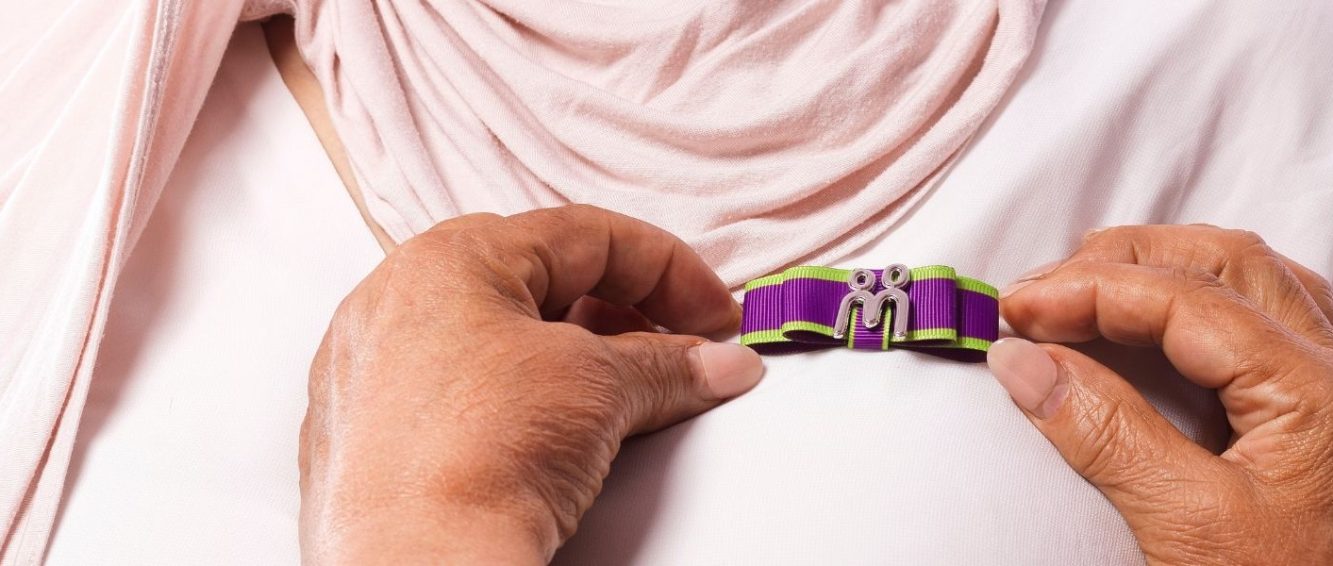
Om mensen die langdurig en onbetaald voor een ander zorgen eens in het zonnetje te zetten en een hart onder de riem te steken. Mantelzorg is de zorg voor chronisch zieken, gehandicapten en hulpbehoevenden door naasten: familieleden, vrienden, kennissen en buren. Kenmerkend is de reeds bestaande persoonlijke band tussen de mantelzorger en zijn of haar naaste. Daarnaast gaat het om langdurige zorg die onbetaald is. 2025 is een bijzonder jaar: Voor het eerst worden Mantellintjes uitgereikt.

Links:
Dag van de Mantelzorg

Advies | Mantelzorg en werk in een zorgzame samenleving: Een integrale aanpak voor een werkende combinatie