2025-11-13, Lief dagboek

Donderdag; Wat eten we vandaag?; Aanslagen in Parijs in november 2015; Zon; International Documentary Film Festival Amsterdam; Sit-in van Rijksambtenaren; EFFecting Change.

Deze afbeelding heeft een leeg alt-attribuut; de bestandsnaam is dagboek.png

Wat eten we vandaag?:

Klik op afbeelding voor origineel

Knipselkrant:


Agenda:

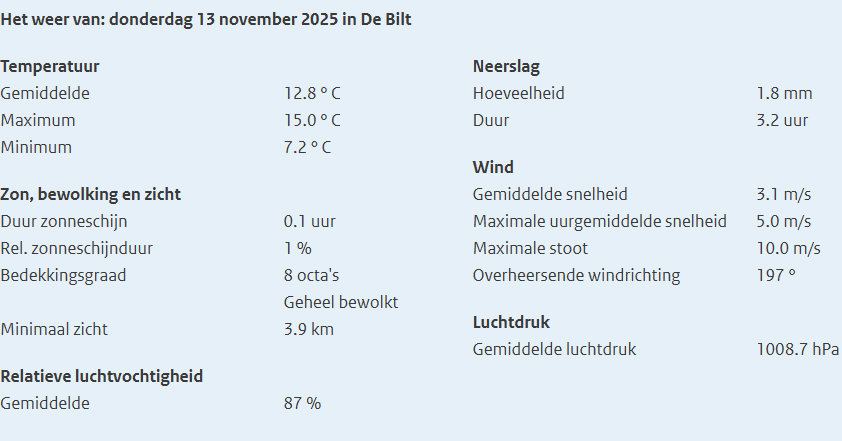
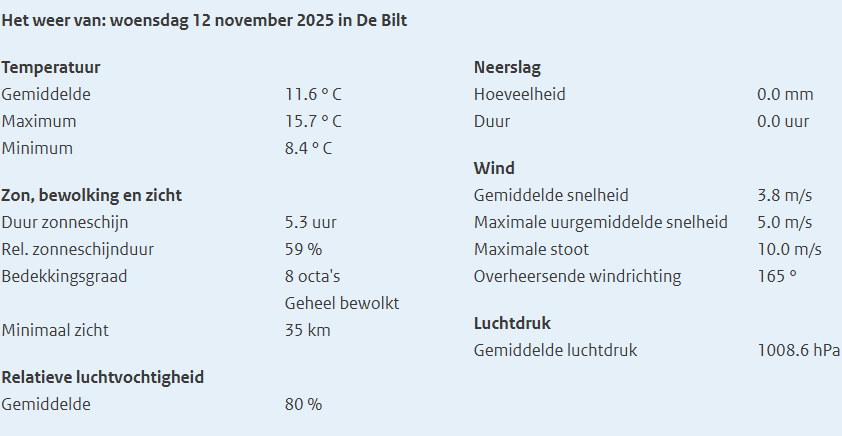
Weer:

KNMI weerrapport

Links:
In de geschiedenis

Sit-in van Rijksambtenaren in Den Haag

Sit-in van Rijksambtenaren in Den Haag

Sit-in door een groep Nederlandse ambtenaren die zich ernstige zorgen maakt over het aanhoudende Israëlische offensief in Gaza – dat volgens het Internationaal Gerechtshof bestempeld werd als plausibele genocide- en het Nederlandse beleid in reactie hierop.

Je kent ze misschien van de sit-ins die elke donderdag om 12:00 plaatsvinden voor het Ministerie van Buitenlandse Zaken. Als ambtenaren zijn zij doordrongen van het belang van internationaal recht. Ze legden een eed af op de Grondwet, inclusief artikel 90 waarin staat dat de regering de internationale rechtsorde bevordert. Het is aan de politiek om het beleid uiteen te zetten, dat klopt. Maar ook de politiek heeft zich te houden aan onze Grondwet en aan internationaal verdragsrechtelijke verplichtingen. Het is aan ambtenaren om de politiek erop te wijzen wanneer beleid het internationaal recht (mogelijk) schaadt. En die taak – die plicht – nemen zij zeer serieus. Zij verwachten van onze regering dat zij zich onvermoeibaar in gaat zetten voor consistente naleving van het internationaal recht. Concreet stellen zij vier eisen aan de Nederlandse regering en verwachten wij van de regering dat alle diplomatieke middelen worden aangewend om onderstaande te bewerkstelligen:

1. Maximale inzet op een onmiddellijk en permanent staakt-het-vuren en volledige humanitaire toegang tot Gaza.

2. ⁠Een eind aan alle vormen van steun voor én rechtvaardiging van Israëls huidige militaire optreden in Gaza en erkenning van het internationale humanitaire en oorlogsrecht;

3. ⁠De onmiddellijke naleving van recente uitspraken van het Internationaal Gerechtshof (ICJ).

4. Een strategie voor duurzame vrede, met garanties voor de mensenrechten en veiligheid van zowel Palestijnen als Israëliërs.

Links:
Ambtenaren en de Grondwet

Nederland: Sluit de genocide geldkraan! – petitie

Native American Heritage Month 2025

On August 3, 1990, President of the United States George H. W. Bush declared the month of November as American Indian Heritage Month, thereafter commonly referred to as Native American Heritage Month.

The bill read in part that “the President has authorised and requested to call upon Federal, State and local Governments, groups and organisations and the people of the United States to observe such month with appropriate programs, ceremonies and activities”. This landmark bill honouring America’s tribal people represented a major step in the establishment of this celebration which began in 1976 when a Cherokee/Osage Indian named Jerry C. Elliott-High Eagle authored Native American Awareness Week legislation the first historical week of recognition in the nation for native peoples. This led to 1986 with then President Ronald Reagan proclaiming November 23–30, 1986, as “American Indian Week”.

Links:
November is American Indian Heritage Month

Native American Heritage Month: Fact Sheet Congressional Research Service

“Native American Heritage Month in the Classroom”

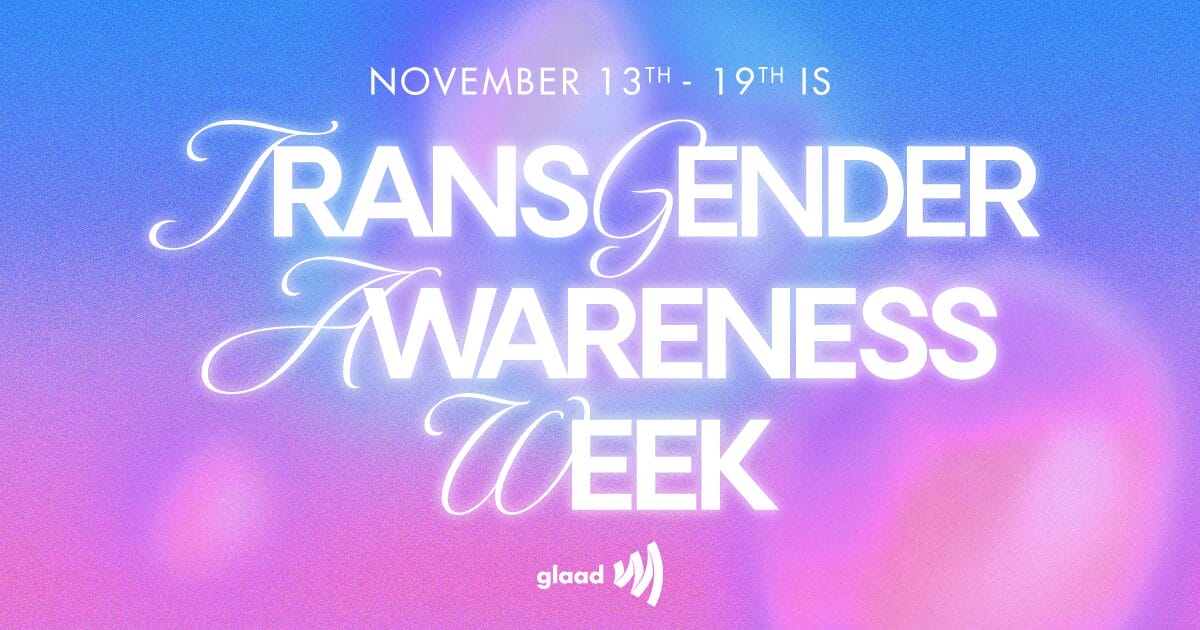
Transgender Awareness Week 2025

Transgender Awareness Week

Each year between November 13 – 19, people and organizations around the country participate in Transgender Awareness Week to help increase understanding about transgender people and the issues members of the community face.

Trans Awareness Week takes place the week before Transgender Day of Remembrance on November 20. Transgender Day of Remembrance (TDOR), is an annual observance on November 20 that honors the memory of the transgender people whose lives were lost in acts of anti-transgender violence that year. At a time when transgender people have become targets of extreme political discrimination and violence, it’s imperative that anyone who is interested in and invested in protecting a free society learn the facts about who trans people are, become educated about the realities trans people face, and understand that our collective equality is connected to the safety and freedom of people who are transgender. Transgender Awareness Week is a week when transgender people and their allies take action to bring attention to the trans community by educating the public about who transgender people are, sharing stories and experiences, and advancing advocacy around issues of prejudice, discrimination, and violence that affect the transgender community.

Links:
Transgender Awareness Week

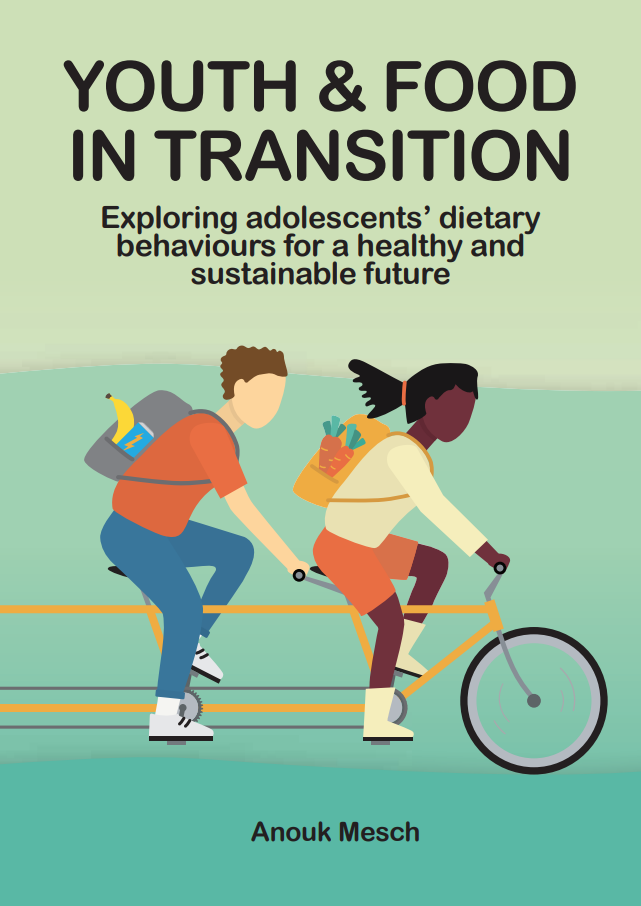
Youth & food in transition : exploring adolescents’ dietary behaviours for a healthy and sustainable future – publication

Youth & food in transition

Youth & Food in Transition: Exploring adolescents’ dietary behaviours for a healthy and sustainable future.

Healthy and sustainable dietary behaviours are of high importance for individual and planetary health; as eating behaviours are largely shaped at a young age, youth are considered a key target group to stimulate such dietary behaviours. There is growing attention worldwide for school food and nutrition programmes, as schools provide a setting to reach a diverse and large number of adolescents. Nevertheless, there is limited knowledge on effective school-based food and nutrition interventions. Hence, this thesis explored how we can better support and empower adolescents to adopt healthy and sustainable diets, within the Dutch secondary school context.

The first objective was to identify factors influencing healthy and sustainable diets among adolescents. First, experts in health, sustainability, and education participated in focus groups and a questionnaire to map and prioritise key factors on a socioecological model. They emphasized the importance of peers, the school food environment, social influences, food availability and autonomy. Next, 305 students from four secondary schools in rural and urban areas were consulted through questionnaires, a food environment mapping assignment, and focus groups. Adolescents described their homes as places where healthy and sustainable eating is easier, but perceived more freedom to make less healthy choices outside the home. They identified 18 factors influencing their food choices, including autonomy, the social function of food among peers, the influence of caregivers, and the offer and price of food. Together, these findings highlight the need for more supportive social and physical environments that promote healthy and sustainable options, while recognizing adolescents’ need to express autonomy.

The second objective was to analyse existing Dutch school food and nutrition programmes. First, interviews with programme representatives showed that many programmes focus on health, with some links to sustainability. Moreover, programmes were mostly designed for the classroom, with only some including other elements of whole school approaches (e.g., the school canteen). Secondly, the interviews revealed that many programmes focus on improving knowledge, skills and awareness. Besides, representatives emphasized the importance of using experiential and activating learning methods, and adjusting to adolescents’ realities. These findings suggest that programmes could be strengthened by integrating health and sustainability, moving beyond knowledge and skills, and using interactive learning methods that fit to adolescents’ realities.

The third objective explored adolescents’ own understanding and perceived importance of healthy and sustainable food, as well as their ideas to facilitate healthy and sustainable eating. Most students understood the concept of healthy eating and perceived it as important, while fewer students valued sustainability. Nonetheless, adolescents proposed many ideas for future interventions, mostly relating to changes in the food environment (e.g., offer, price) and the food system (e.g., more sustainable production, governmental subsidies).

In sum, this this thesis underscores that initiatives aiming to stimulate healthy and sustainable diets among adolescents should prioritise adolescents’ need for autonomy, social interactions, and an appealing and affordable food offer. Redeveloping school food programmes together with adolescents holds particular promise, to ensure engagement, motivation and relevance. Such efforts should involve collaboration with multiple stakeholders, following a whole school approach.

Links:
Gezond en duurzaam eten zonder moeten: wat helpt wel?

Agenda – Sugar-sweetened beverages: consumption, purchasing behaviour, and opinions about policy measures in a nationally representative panel of Dutch secondary school adolescents – publication

#StopPneumonia #EveryBreathCounts World Pneumonia Day / Wereld Longontstekingsdag 2025

Wereld Longontstekingsdag

World Pneumonia Day (12 November) provides an annual forum for the world in the fight against pneumonia, more than 100 organizations representing the interests of children joined forces as the Global Coalition against Child Pneumonia to hold the first World Pneumonia Day on 12 November 2009.

The fight to reduce deaths from the single, biggest infectious killer of adults and children has never been more urgent. In 2023, pneumonia claimed the lives of 2.5 million, including 610,000 children under five, according to the Global Burden of Disease. With aging populations, urbanization, and air pollution increasing the burden of respiratory infections, and the risk of another COVID-like pandemic high, there is a pneumonia crisis across the life course killing millions now and placing many more at risk of death when the next pandemic strikes. Tragically, it is the very young and the very old who are at greatest risk. Children living in areas with low vaccination rates and malnutrition, and in homes that use polluting fuels for cooking and heating, are particularly vulnerable. Sixty percent of all child pneumonia deaths are attributable to malnutrition. Older adults exposed to outdoor air pollution – most significantly from burning fossil fuels – and smoking are also at risk. More than one in four pneumonia deaths among adults aged over 70 are attributable to air pollution and smoking. To focus the world’s attention on vital issues, each year Every Breath Counts Coalition members vote on a theme. Child Survival is the theme for World Pneumonia Day 2025 in recognition that pneumonia is the leading infectious cause of child death. Many countries will not achieve the Sustainable Development Goal for child survival without ensuring that all of their children are protected from pneumonia with good nutrition, clean air, vaccination, and access to speedy diagnosis and treatment, including with antibiotics and oxygen if necessary.

Links:
World Pneumonia Day 12 November

Week of Science and Peace 2025

The annual observance of the Week of Science and Peace is making an important contribution to the promotion of peace, the Week encourages greater academic exchanges on a subject of universal importance while also generating greater awareness of the relationship of science and peace among the general public.

Based on observances of Science and Peace Week to date, it may be expected that participation each year will increase, contributing to greater international understanding and opportunities for co-operation in the applications of science for the promotion of peace throughout the year. The Week of Science and Peace was first observed during 1986 as part of the observance of the International Year of Peace. The organization of events and activities for the week was undertaken as a non-governmental initiative; the secretariat for the International Year of Peace was informed of the preparatory activities and the final summary of events that occurred during the week. The organizers sought to encourage the broadest possible international participation in the observance. Based on the success of the 1986 observance, the organizers continued their efforts in successive years. In recognition of the value of the annual observance, the General Assembly adopted resolution 43/61 in December 1988, which proclaims the “International Week of Science and Peace”, to take place each year during the week in which 11 November falls. The General Assembly urged Member States and intergovernmental and non-governmental organizations to encourage relevant institutions, associations and individuals to sponsor events and activities related to the study and dissemination of information on the links between progress in science and technology and maintenance of peace and security; urged Member States to promote international co-operation among scientists and required the Secretary-General to report to the General Assembly as its forty-fifth session on the activities and initiatives of Member States and interested organizations in connection with the week.

Links:
Week of Science and Peace

World Science Day for Peace and Development / Wereldwetenschapdag voor Vrede en Ontwikkeling 2024

Open science