World Sustainable Energy Days 2026

The World Sustainable Energy Days will take place from 24 to 27 February 2026 in Wels, Austria. This conference will focus on how the energy transition can lead to energy independence and affordable energy.

The World Sustainable Energy Days will take place from 24 to 27 February 2026 in Wels, Austria. This conference will focus on how the energy transition can lead to energy independence and affordable energy.
Links:
Wikipedia
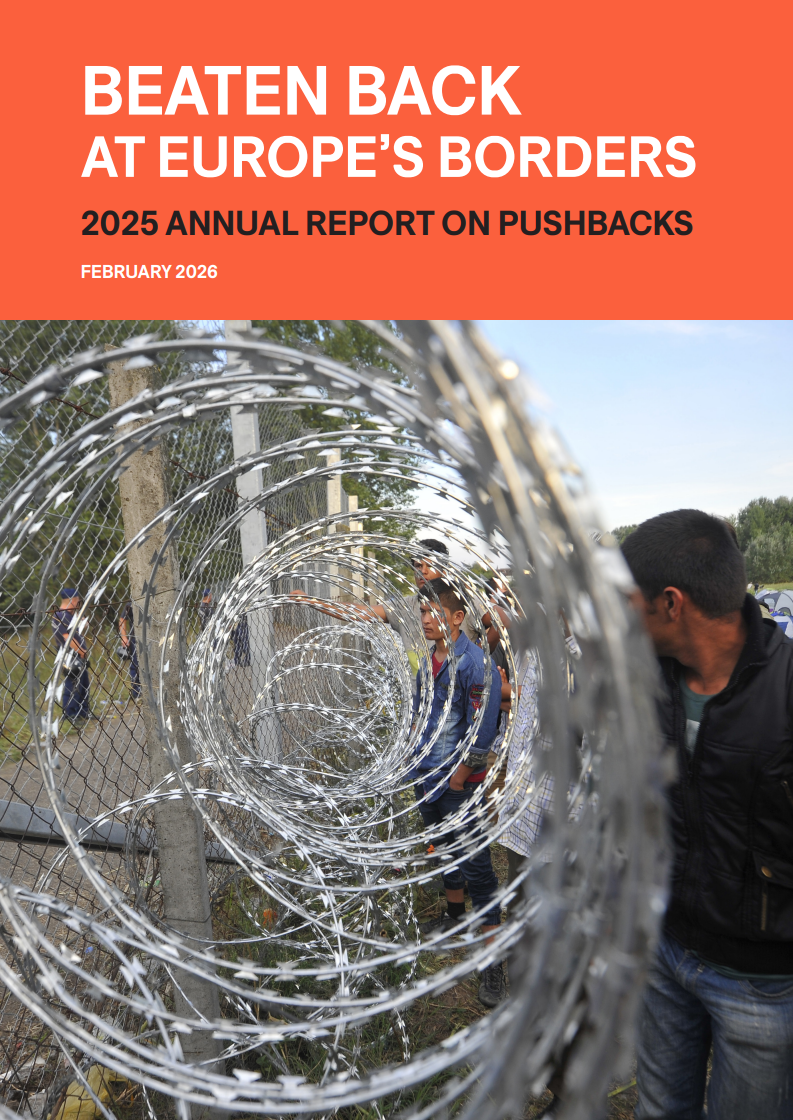
The report ‘Pushbacks Report 2025‘ documents pushbacks from EU Member States to third countries in 2025, highlighting ongoing violations of international and EU law.
It draws from NGO reports, research groups, human rights organizations, UN agencies, government services and interviews with organizations active in Hungary, Latvia, Lithuania, Greece, Poland, Croatia, Bulgaria and Romania. In total, 80,865 pushbacks were recorded. Overall, the normalization of pushbacks persists, requiring stronger enforcement and greater accountability from both Member States and EU institutions. At the same time, 2025 has witnessed a trend towards externalization of border management. The EU finances third countries to prevent people seeking protection to reach EU borders, resulting in offshoring human rights violations. The result is an increase in pullbacks and a decrease in pushbacks on certain routes. In 2025, the Libyan coast guard, financially and logistically supported by the EU, prevented 27,116 people from reaching EU borders. Poland pushed back 14,754 asylum seekers, followed by Bulgaria whose authorities have executed 13,568 pushbacks. The report concludes with recommendations for the EU, its Member States, Frontex and NHCR to address these ongoing human rights violations.
Links:
80.000 illegale ‘pushbacks’ aan Europese buitengrenzen: “ICE-geweld komt ook hier voor”
Geschokt door de praktijken van ICE? Kijk dan eens naar wat Europa zelf doet
Migranten opsluiten in een kooi in Albanië: Italië doet het, Nederland wil het – publicatie
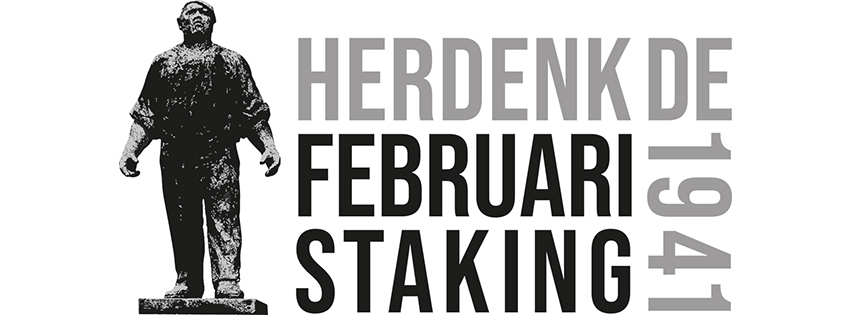
De Februaristaking van 1941 was een staking op 25 en 26 februari 1941 die begon in Amsterdam en zich uitbreidde naar de Zaanstreek,
De staking was het enige massale en openlijke protest tegen de Jodenvervolg
Links:
Herdenking Februaristaking
Februaristaking was uniek, maar de nazi’s sloegen keihard terug
Oproep herdenking februaristaking in 2026
Kleinzoon een van de leiders Februaristaking eert zijn opa door niet naar herdenking te gaan
The United Nations Human Rights Council (UNHRC) is a United Nations body whose mission is to promote and protect human rights around the world, the Council has 47 members elected for staggered three-year terms on a regional group basis.
The headquarters of the Council are at the United Nations Office at Geneva in Switzerland. The Council investigates allegations of breaches of human rights in United Nations member states and addresses thematic human rights issues like freedom of association and assembly, freedom of expression, freedom of belief and religion, women’s rights, LGBT rights, and the rights of racial and ethnic minorities. The Council was established by the United Nations General Assembly on 15 March 2006 to replace the United Nations Commission on Human Rights (UNCHR, herein CHR). The Council works closely with the Office of the High Commissioner for Human Rights (OHCHR) and engages the United Nations special procedures. The Council has been strongly criticized for including member countries that engage in human rights abuses. The UNHRC holds regular sessions three times a year, in March, June, and September. The UNHRC can decide at any time to hold a special session to address human rights violations and emergencies, at the request of one-third of the member states.
61st session of the Human Rights Council (23 February – 31 March 2026)
Maandag; Wat eten we vandaag?; Plastic verdrag; 4 jaar Russisch-Oekraïense oorlog; Kabinet-Jetten I; Stan Laurel.

Wat eten we vandaag?:

Knipselkrant:
Agenda:
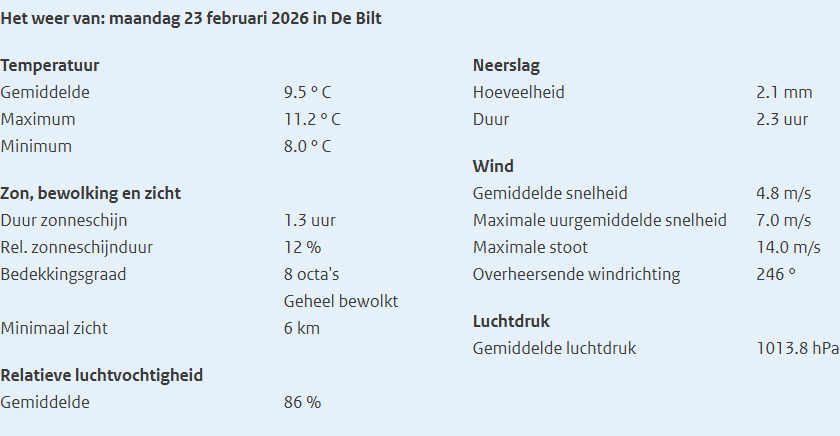
Weer:
Links:
In de geschiedenis
Links:
Wikipedia

Understanding the potential health implications of living near nuclear power plants is important given the renewed interest in nuclear energy as a low-carbon power source.
The study ‘National analysis of cancer mortality and proximity to nuclear power plants in the United States‘ shows that United States (U.S.) counties located closer to operational nuclear power plants have higher cancer mortality rates than those farther away. Using nationwide mortality data from 2000-2018, the researchers assess long-term spatial patterns of cancer mortality in relation to proximity to nuclear facilities while accounting for socioeconomic, demographic, behavioral, environmental, and healthcare factors. Cancer mortality is higher across multiple age groups in both males and females, with the strongest associations among older adults, males aged 65–74 and females aged 55–64. While the findings cannot establish causality, they highlight the need for further research into potential exposure pathways, latency effects, and cancer-specific risks, emphasizing the importance of addressing these potentially substantial but overlooked risks to public health.