
In de geschiedenis
Links:
Wikipedia

Links:
Wikipedia
Beleef de Lente is sinds 2007 de gratis website van Vogelbescherming Nederland waar iedereen ongeveer tussen 1 maart en 1 juli met webcams live kan kijken naar vogels in hun nest.
Links:
Beleef de Lente

Vroege Vogels is een live-radioprogramma, tv-programma en online community van BNNVARA over natuur en milieu.
In het radioprogramma wordt het gesproken woord omlijst door licht klassieke muziek en salonmuziek. Het radioprogramma werd in 1978 voor het eerst uitgezonden door de VARA en is een van de langst lopende en best beluisterde radioprogramma’s van de publieke omroep. Het wordt elke zondagmorgen uitgezonden tussen 07:00 en 10:00 op NPO Radio 1. De beginmuziek is een bewerking van Vivaldi’s “Piccolo Concerto in C major” (RV 443).
De leukste natuursoap van het jaar gaat weer van start: Beleef de Lente, ofwel Big Broeder, slingert live in de uitzending de camera’s aan. In Amsterdam nemen we een kijkje bij de organisatie van een duurzame, vegetarische iftar. En in zeehondencentrum Pieterburen wordt de communicatie tussen jonge zeehonden onderzocht. Verder in de uitzending: waterpiepers, sleedoornpage, dierenkooien, lepelaarmigratie, gemeenteraadsverkiezingen in Texel en mummiekelkjes. De column is van Dolf Jansen. Vroege Vogels Radio gepresenteerd door Menno Bentveld vanuit het Groene Huis te Amersfoort.
Links:
Vroege Vogels Radio

Na vijf jaar woonprotesten is er nog steeds niks verbeterd, en als we het regeerakkoord moeten geloven blijft dat zo.
In Amsterdam zijn 11.000 mensen dakloos, waaronder 1.500 kinderen en staan tegelijkertijd 22.000 woningen leeg. Dat de wooncrisis nog niet is opgelost, komt door het falen van de gemeente en de overheid. Die stimuleren liever de woningmarkt dan betaalbare woningen. Ondertussen betalen studenten €1000 voor een kamer van 6m² en groeien gezinnen op in huizen met één slaapkamer. Dit kan niet langer.
Op 18 maart 2026 zijn de gemeenteraadsverkiezingen. De wooncrisis wordt bovenaan de agenda gezet! Daarom wordt een Wooncrisis City Sightseeing Tour georganiseerd langs ontruimde leegstand, dure yuppenhokken en uitgemolken huisjes. Het is tijd dat verhuurders hun huren verlagen, dat woningcorporaties stoppen met het verkopen van sociale huurwoningen, en dat huizen weer voor mensen zijn in plaats van voor de winst.
Links:
Woonprotest: 1 maart 13:00 demonstratie in Amsterdam
Groot woonprotest neemt je mee langs ‘dure yuppenhokken en uitgemolken huisjes’
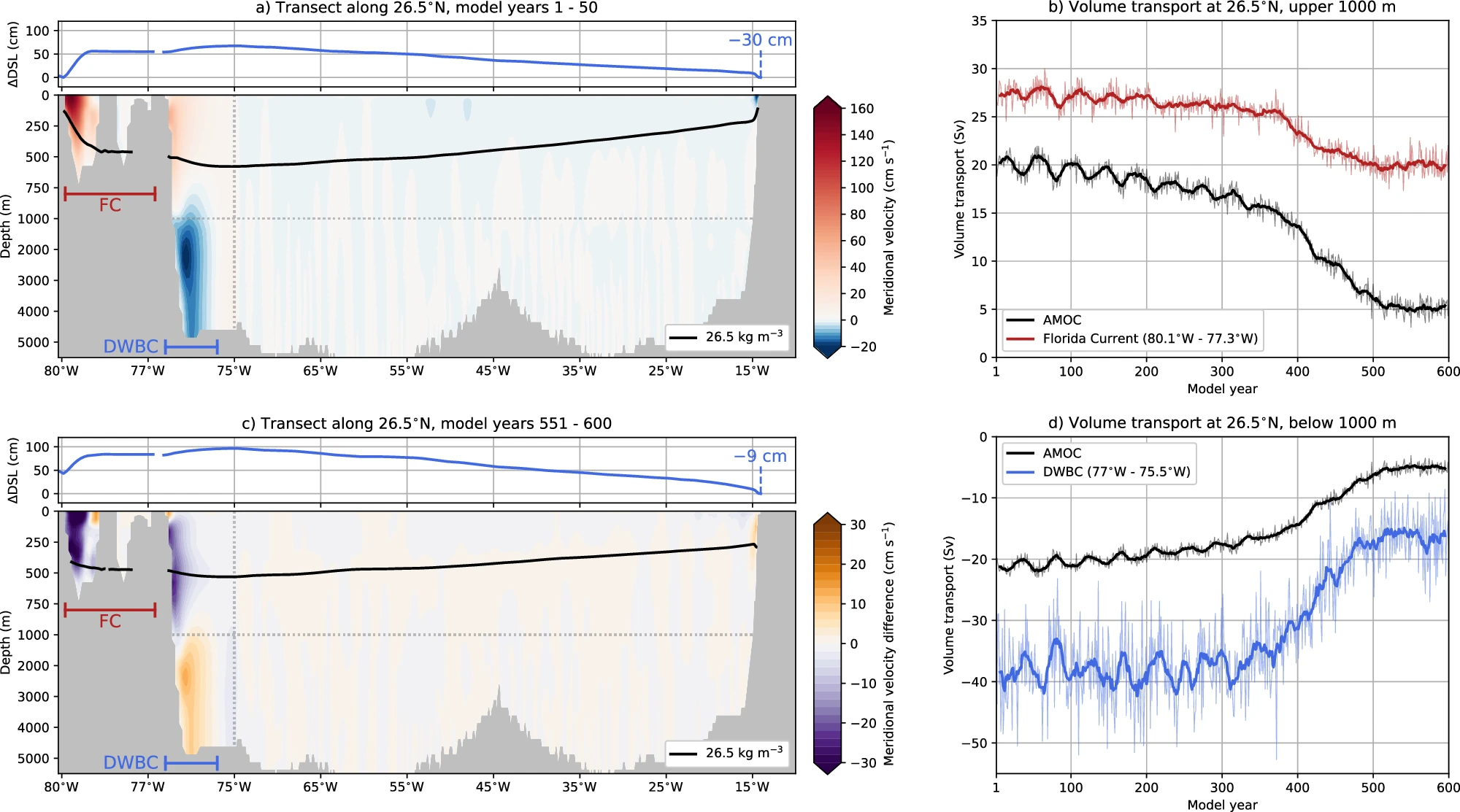
The Gulf stream is moving north – and it could be an early warning sign; while this isn’t “The Day After Tomorrow,” it’s still cause for concern.
The Gulf Stream, that vital ribbon of warmth surging across the North Atlantic, appears to be drifting northward. If this trend continues, it could provide further evidence that the Atlantic Meridional Overturning Circulation (AMOC) is losing strength and nearing collapse as global temperatures rise. The Gulf Stream is just one piece of the AMOC, although the two terms are often used interchangeably in casual conversation. The latter is the mother of ocean current systems in the Atlantic, sometimes known as the “conveyor belt of the ocean,” that transports warm, salty water from the tropics northward towards Europe. Meanwhile, the Gulf Stream is a western boundary current system that’s part of the upper and northward-flowing branch of this oceanic engine. Scientists are becoming increasingly concerned that warming ocean temperatures and melting ice from Greenland could be pushing the AMOC toward a catastrophic standstill. Evidence already indicates a 15 percent reduction in the circulation’s strength since the 1950s, fueling fears of a total collapse. While this collapse wouldn’t instantly trigger the frozen apocalypse depicted in The Day After Tomorrow, it would starve Europe of heat, leading to plummeting temperatures and shifted weather patterns across the hemisphere. However, researchers have not been certain how the Gulf Stream, one arm of this beast, might play a role in the AMOC collapse.
To find out, climatologists at Utrecht University in the Netherlands used computer modeling and real-world data to study how two ocean current systems interact. The findings indicate that the movement of the Gulf Stream could be a “canary in the coal mine” for the AMOC’s collapse. According to their analysis of satellite data, the Gulf Stream has already been nudged northwards from the coast near Cape Hatteras, North Carolina, since the early 1990s. This is likely to be the result of the AMOC dwindling and losing its grip. Looking ahead, the models forecast that further weakening of the AMOC will shift the Gulf Stream even further. At one key longitude (71.5°W), the current slowly drifts north by about 133 kilometers over several centuries, followed by a sudden jump northward of about 219 kilometers within just two years in the model. This abrupt change is much larger than the normal year-to-year variation in the current’s position. In a punchline: the study ‘Abrupt Gulf Stream path changes are a precursor to a collapse of the Atlantic Meridional Overturning Circulation‘ concludes that a noticeable shift in the Gulf Stream’s position could signal that the AMOC is approaching a tipping point. While the scientific community remains divided on whether a total collapse is imminent, monitoring the movement of the Gulf Stream could be an invaluable way to predict a terminal decline in the AMOC and our planet’s climate.
Woensdag; Wat eten we vandaag?; Kabinet-Jetten I; AI Digitale Autonomie; Record press members killed; Sit-ins op stations in heel Nederland; Sit-in van Rijksambtenaren in Den Haag.

Wat eten we vandaag?:

Knipselkrant:
Agenda:
Weer:
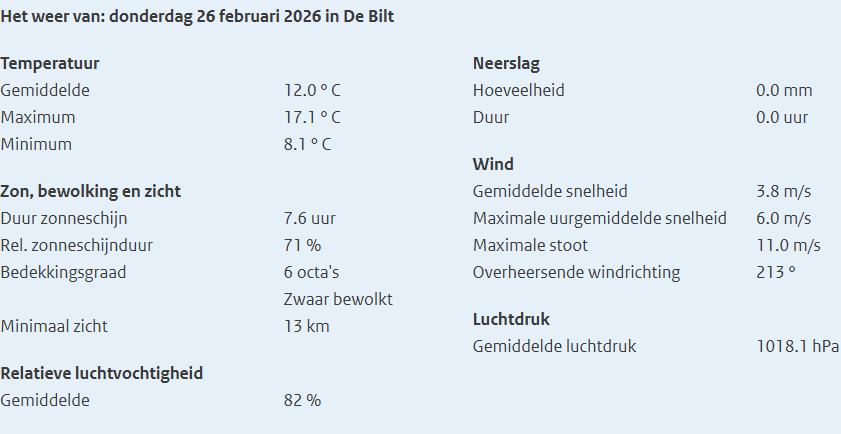
Links:
In de geschiedenis
Wekelijkse Sit-ins op Stations op donderdag voor Gaza door heel Nederland: neem een pan en lepel mee om luid te zijn, bordjes met je boodschap of beelden, en oordoppen om je gehoor te beschermen.
Sit-in door een groep Nederlandse ambtenaren die zich ernstige zorgen maakt over het aanhoudende Israëlische offensief in Gaza – dat volgens het Internationaal Gerechtshof bestempeld werd als plausibele genocide- en het Nederlandse beleid in reactie hierop.
Je kent ze misschien van de sit-ins die elke donderdag om 12:00 plaatsvinden voor het Ministerie van Buitenlandse Zaken. Als ambtenaren zijn zij doordrongen van het belang van internationaal recht. Ze legden een eed af op de Grondwet, inclusief artikel 90 waarin staat dat de regering de internationale rechtsorde bevordert. Het is aan de politiek om het beleid uiteen te zetten, dat klopt. Maar ook de politiek heeft zich te houden aan onze Grondwet en aan internationaal verdragsrechtelijke verplichtingen. Het is aan ambtenaren om de politiek erop te wijzen wanneer beleid het internationaal recht (mogelijk) schaadt. En die taak – die plicht – nemen zij zeer serieus. Zij verwachten van onze regering dat zij zich onvermoeibaar in gaat zetten voor consistente naleving van het internationaal recht. Concreet stellen zij vier eisen aan de Nederlandse regering en verwachten wij van de regering dat alle diplomatieke middelen worden aangewend om onderstaande te bewerkstelligen:
1. Maximale inzet op een onmiddellijk en permanent staakt-het-vuren en volledige humanitaire toegang tot Gaza.
2. Een eind aan alle vormen van steun voor én rechtvaardiging van Israëls huidige militaire optreden in Gaza en erkenning van het internationale humanitaire en oorlogsrecht;
3. De onmiddellijke naleving van recente uitspraken van het Internationaal Gerechtshof (ICJ).
4. Een strategie voor duurzame vrede, met garanties voor de mensenrechten en veiligheid van zowel Palestijnen als Israëliërs.
Links:
Ambtenaren en de Grondwet
Links:
Wikipedia

Pink Shirt Day is an annual event against bullying held in Canada, participants wear pink shirts and attend or host informative events to raise awareness about bullying, particularly in schools Pink Shirt Day was started in 2007 in Canada, where it is held on the last Wednesday of February each year.
The original event was organized in 2007 by two grade 12 students named David Shepherd and Travis Price of Berwick, Nova Scotia, who bought and distributed 50 pink shirts after a ninth-grade student Chuck McNeill was bullied for wearing a pink polo shirt during the first day of school at Central Kings Rural High School in Cambridge, Nova Scotia. That year, former Nova Scotia Premier Rodney MacDonald proclaimed the second Thursday of September (aligning with the start of each school year) as “Stand Up Against Bullying Day” in recognition of these events. In 2008, then-Premier of British Columbia, Gordon Campbell proclaimed February 27 to be the provincial Anti-Bullying Day. In 2009, the Boys & Girls Clubs of Canada worked on pink t-shirts that say “Bullying Stops Here.” and “Pink Shirt Day” for Anti-Bullying Day. It was adopted in New Zealand in 2009 and is observed annually on the third Friday of May. In 2012, the United Nations declared May 4 as U.N. Anti-Bullying Day. Similarly, UNESCO declared the first Thursday of November as the International Day against Violence and Bullying at School Including Cyberbullying.
Links:
Pink Shirt Day

