World Colorectal Cancer Day / Darmkanker Dag 2026
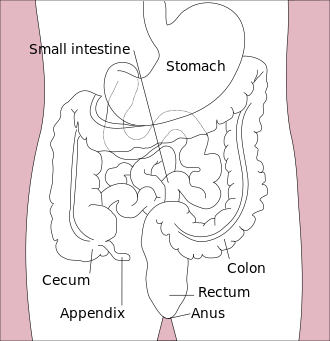
darmen

Colorectal cancer (CRC), also known as bowel cancer, colon cancer, or rectal cancer, is the development of cancer from the colon or rectum (parts of the large intestine); signs and symptoms may include blood in the stool, a change in bowel movements, weight loss, and fatigue.

On the occasion of World Colorectal Cancer Day March 31, CIBBIM-Nanomedicine. Biomedical Research in Digestive Tract Tumors of the Institut de Recerca Vall d’hebron (VHIR) wants to raise awareness among the population about the importance of early diagnosis and the acquisition of healthy habits to prevent its appearance.

Links:
Darmkanker

Darmkanker (Maag Lever Darm stichting)

Darmkankermaand Maart 2024

Meneer de Uil waarschuwt 50-plussers voor darmkanker in nieuwe campagne: “Doe de test”

Darmkanker komt steeds vaker op jonge leeftijd voor: deze voeding helpt je darmen beschermen

Mysterious Virus Hiding Inside Common Gut Bacterium Linked to Colorectal Cancer
World Seagrass Day 2026

Seagrass

In May 2022, the United Nations General Assembly adopted A/RES/76/265 proclaiming 1 March as World Seagrass Day.

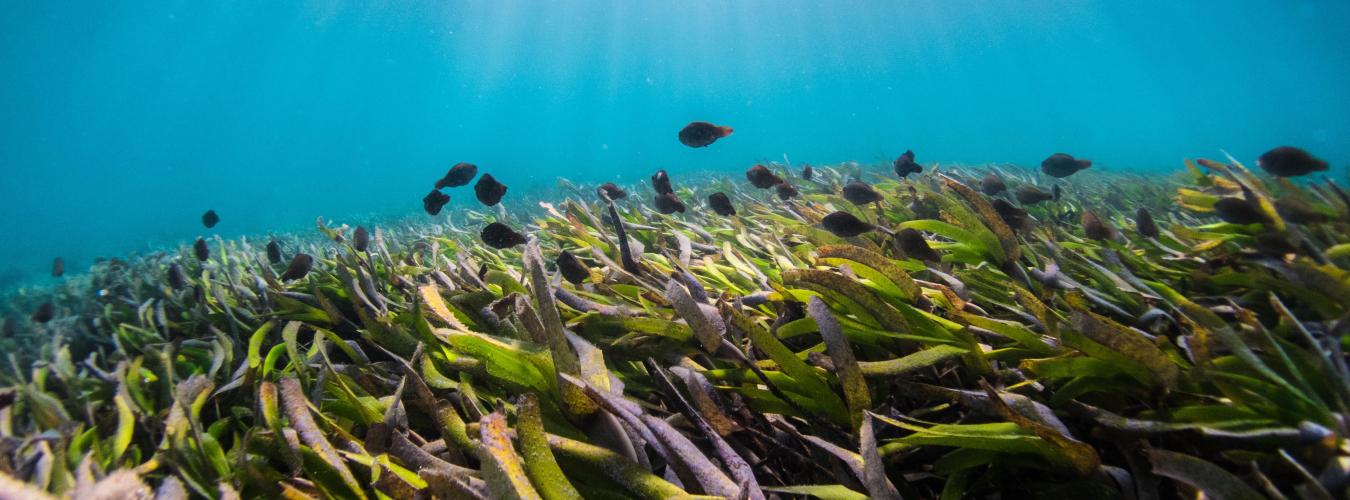
The resolution highlights the urgent need to raise awareness at all levels and to promote and facilitate actions for the conservation of seagrasses in order to contribute to their health and development, bearing in mind that enhancing ecosystem services and functions is important for the achievement of the Sustainable Development Goals. Seagrasses are marine flowering plants that are found in shallow waters in many parts of the world, from the tropics to the Arctic circle. They form extensive underwater meadows, creating complex, highly productive and biologically rich habitats. Covering only 0.1% of the ocean floor, these seagrass meadows provide food and shelter to thousands of species of fish, seahorses, turtles, etc. and sustain some of the world’s largest fisheries. They improve water quality by filtering, cycling and storing nutrients and pollutants, reducing contamination in seafood. Highly efficient carbon sinks, they can store up to 18% of the world’s oceanic carbon, making them a powerful nature-based solutions to tackle climate change impacts. Because they buffer ocean acidification, they contribute to the resilience of the most vulnerable ecosystems and species, such as coral reefs. And to the coastal populations, they act as the first line of defense along coasts by reducing wave energy, protecting people from the increasing risk of floods and storms. Despite its important contribution to sustainable development and climate change mitigation and adaptation, this core component of marine biodiversity is in danger and only about a quarter of all meadows fall within marine protected areas.

Seagrasses have been declining globally since the 1930s, with the most recent census estimating that 7% of this key marine habitat is being lost worldwide per year. It was recently noted that 21% of seagrass species are categorized as Near Threatened, Vulnerable and Endangered Species under the International Union for Conservation of Nature Red List of Threatened Species. The combined pressures of coastal development, pollution, including land-based run-off, climate change, dredging and unregulated fishing and boating activities are key drivers of the degradation of seagrasses and their associated ecosystems. Despite a general global trend of seagrass loss, some areas have shown abating declines or substantial recovery of seagrasses. These recoveries can often be attributed to human interventions reducing the effect of human-caused stressors. Seagrasses are critical for life underwater, but also provide wide-ranging benefits to people on land. Raising awareness about their importance for community well-being, whether through food security from fish production, improved quality of water filtered by seagrasses, protection of coasts from erosion, storms and floods, or carbon sequestration and storage will drive efforts around the world to conserve, better manage and restore these ecosystems. Ultimately, the protection and restoration of seagrass meadows will help countries achieve multiple economic, societal and nutritional objectives, aligning with and supported by policies implemented at the national, regional or global levels. For example:

Inclusion of seagrass management, conservation and restoration should be a critical component of sustainable blue economy strategies in the future. Projects are already underway in various countries, and a few have even been selected as World Restoration Flagships initiatives. Chosen as best examples of large-scale and long-term ecosystem restoration, these projects embody the 10 restoration principles  of the United Nations Decade on Ecosystem Restoration.

#ZeroDiscriminationDay 2026

Zero Discrimination Day is an annual day celebrated by the United Nations (UN) and other international organisations, the day aims to promote equality before the law and in practice throughout all of the member countries of the UN.

The day was first celebrated on March 1, 2014, and was launched by UNAIDS Executive Director Michel Sidibé on 27 February of that year with a major event in Beijing. In February 2017, UNAIDS called on people to “make some noise around zero discrimination, to speak up and prevent discrimination from standing in the way of achieving ambitions, goals and dreams.” The day is particularly noted by organisations like UNAIDS that combat discrimination against people living with HIV/AIDS. “HIV related stigma and discrimination is pervasive and exists in almost every part of the world including our Liberia”, according to Dr. Ivan F. Camanor, Chairman of the National AIDS Commission of Liberia. The UN Development Programme also paid tribute in 2017 to LGBTI people with HIV/AIDS who face discrimination. Campaigners in India have used this day to speak out against laws making discrimination against the LGBTI community more likely, especially during the previous campaign to repeal the law (Indian Penal Code, s377) that used to criminalise homosexuality in that country, before that law was overturned by the Indian Supreme Court in September 2018. In 2015, Armenian Americans in California held a ‘die-in’ on Zero Discrimination Day to remember the victims of the Armenian Genocide.

In 2026 is the theme ‘People first‘.

Links:
Zero Discrimination Day

#SIAD #Selfinjury #Selfharm #SelfHarmAwarenessDay Self-Injury Awareness Day / Dag van de Zelfverwonding 2026

Self-injury Awareness Day (SIAD) (also known as Self-Harm Awareness Day) is a grassroots annual global awareness event / campaign on March 1, where on this day, and in the weeks leading up to it and after, some people choose to be more open about their own self-harm, and awareness organizations make special efforts to raise awareness about self-harm and self-injury.

Some people wear an orange awareness ribbon, write “LOVE” on their arms, draw a butterfly on their wrists in awareness of “the Butterfly Project” wristband or beaded bracelet to encourage awareness of self-harm. The goal of the people who observe SIAD is to break down the common stereotypes surrounding self-harm and to educate medical professionals about the condition.

Links:
Self Harm Awareness Day

2026-02-28, Lief dagboek

Zaterdag; Wat eten we vandaag?; Fur Free Europe; Zeldzameziektendag; Werelddag zonder Facebook; Operation Epic Fury Iran.

Deze afbeelding heeft een leeg alt-attribuut; de bestandsnaam is dagboek.png

Wat eten we vandaag?:

Klik op afbeelding voor origineel

Knipselkrant:


Agenda:

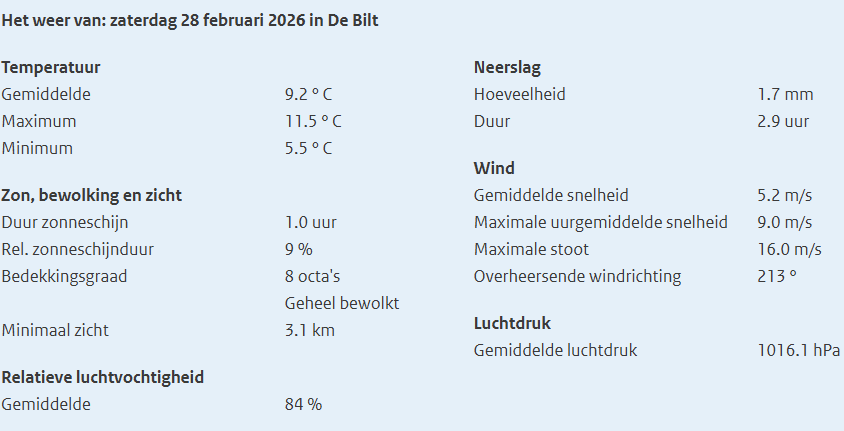
Weer:

Links:
In de geschiedenis

Rare Disease Day / Zeldzameziektendag 2026

Rare Disease Day takes place on the last day of February each year, the main objective of Rare Disease Day is to raise awareness amongst the general public and decision-makers about rare diseases and their impact on patients’ lives.

The campaign targets primarily the general public and also seeks to raise awareness amongst policy makers, public authorities, industry representatives, researchers, health professionals and anyone who has a genuine interest in rare diseases. Building awareness of rare diseases is so important because 1 in 20 people will live with a rare disease at some point in their life. Despite this, there is no cure for the majority of rare diseases and many go undiagnosed. Rare Disease Day improves knowledge amongst the general public of rare diseases while encouraging researchers and decision makers to address the needs of those living with rare diseases.

Links:
Rare Disease Day