Wie bezit onze digitale democratie?

Wie bezit onze digitale democratie?

Onze digitale autonomie staat onder druk, hoe kan beschermd eigenaarschap bedrijven weerbaar maken tegen geopolitieke druk?

Onder Trump II wordt pijnlijk zichtbaar hoe gevaarlijk onze afhankelijkheid van big tech is. Het beeld van Trump’s inauguratie, met de grote tech-CEO’s prominent op de eerste rij, staat velen nog scherp op het netvlies. Recent schrok Nederland wakker toen bekend werd dat Solvinity – de clouddienst waarop onder andere MijnOverheid en DigiD draaien – mogelijk wordt overgenomen door het Amerikaanse IT-bedrijf Kyndryl. Deze ontwikkeling raakt aan fundamentele vragen over democratie en autonomie. Waarom kunnen leveranciers van vitale digitale diensten in buitenlandse handen vallen? De sancties die Trump oplegde aan rechters en aanklagers van het Internationaal Strafhof laten zien hoe geopolitieke macht directe gevolgen kan hebben voor onafhankelijke instituties. Deze avond wordt onderzocht, in het licht van strategische autonomie, hoe de IT-sector anders kan worden ingericht. Hoe ontwerpen we bedrijfsstructuren die weerbaarder zijn? Welke rol kan steward-ownership spelen in het beschermen van onze vitale digitale infrastructuur? En hoe kunnen overheden zelf meer sturen op weerbare bedrijven als norm voor het leveren van die cruciale infrastructuur? Dit programma is zowel fysiek als live online te volgen. Kies bij jouw reservering tussen een fysieke plek in de zaal of een online livecast reservering.

Links:
Wie bezit onze digitale democratie?

Employee Appreciation Day 2026

Employee Appreciation Day

Employee Appreciation Day is an event, observed on the first Friday in March, meant for employers to give thanks or recognition to their employees.

Employee Appreciation Day was created by Dr. Bob Nelson who was a founding member of Recognition Professionals International in 1995, initially to celebrate the publication of his book 1,001 Ways to Reward Employees and to remind employers to thank their employees when they do good work. Dr. Bob did his doctoral dissertation on why managers do or do not recognize their employees and has since helped thousands of companies create a Culture of Recognition in their organization with significant impacts on employee retention, performance and the ability to attract talent. Though the holiday is still gaining in adoption in the US and abroad, like Boss’s Day, Employee Appreciation Day has become an opportunity for managers, company leadership, and HR to remember the importance of appreciating employees. Companies often celebrate by letting employees leave early, offering gifts, meals, events or special recognition for workers. Such publications as Inc. magazine, Forbes, and Boston.com, have written about the holiday to remind employers to recognize and reward employee effort and to offer tips on building a stronger corporate culture through appreciation. Studies show that recognition and appreciation are growing in importance as drivers of employee happiness and engagement. Showing employees appreciation can result in a company’s higher retention rate, not only increasing the productivity of employees but the company as a whole. This has resulted in more and more companies and organizations using the day to thank their employees.

Links:
Employee Appreciation Day

British Science Week 2026

British Science Week

British Science Week is a ten-day celebration of thousands of events running throughout the whole of the UK with the aim of celebrating science, engineering, technology and maths.

With no restrictions on who can organise events, the topics on which they are focused, the audience or the venue, the resulting programme is a hugely varied and eclectic mix suitable for people of all ages and abilities. British Science Week usually takes place in March every year. British Science Week is coordinated by the British Science Association and is funded by UK Research & Innovation (UKRI). British Science Week events can be organised by anyone. Organisers are people from all walks of life: teachers, community group leaders, researchers, parents, students, professionals and many more. The continuing success of the Week depends entirely on the incredible efforts of our event organisers and the enthusiasm of participants. The idea behind the programme is to raise awareness, spark enthusiasm and celebrate science, engineering, technology and maths with people of all ages and from all walks of life. Each event targets different audiences – it’s up to event organisers to decide. There are no strict rules, and any format of event is welcome, the event only needs a connection with science, engineering, technology or maths theme or sub-theme.

Links:
British Science Week

Vroege Vogels Radio | 8 maart 2026 (Radio 1 NPO)

Vroege Vogels

Vroege Vogels is een live-radioprogramma, tv-programma en online community van BNNVARA over natuur en milieu.

In het radioprogramma wordt het gesproken woord omlijst door licht klassieke muziek en salonmuziek. Het radioprogramma werd in 1978 voor het eerst uitgezonden door de VARA en is een van de langst lopende en best beluisterde radioprogramma’s van de publieke omroep. Het wordt elke zondagmorgen uitgezonden tussen 07:00 en 10:00 op NPO Radio 1. De beginmuziek is een bewerking van Vivaldi’s “Piccolo Concerto in C major” (RV 443).

Vroege Vogels reikt de Frater Willibrordusprijs 2026 uit en viert meteen dat de fenolijn maar liefst 25 jaar bestaat! Waterpiepers trekken in het voorjaar van noord naar zuid, in plaats van andersom. En wat bloeit er al rondom het Groene Huis in het vroege voorjaar? Verder in de uitzending: D66 Veenendaal wil het groenste winkelcentrum van Europa, scholieren zetten zich in voor rechten voor de natuur op Veur-Lent, steenuilenkast en extra veel fenolijn. De column is van Jocelyn de Kwant. Vroege Vogels Radio gepresenteerd door Menno Bentveld vanuit het Groene Huis te Amersfoort.

Links:
Vroege Vogels Radio

Wie wint dit jaar ‘De Frater Willibrordus Prijs’?

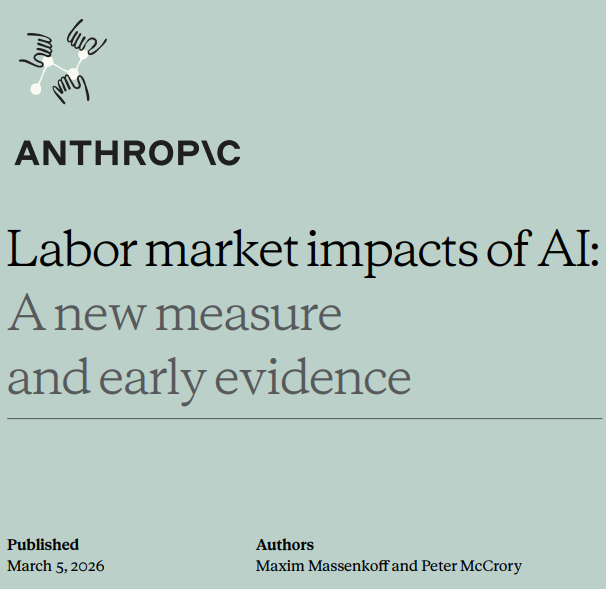
Labor market impacts of AI: A new measure and early evidence – publication

Labor market impacts of AI

The rapid diffusion of AI is generating a wave of research measuring and forecasting its impacts on labor markets.

But the track record of past approaches gives reason for humility. For example, a prominent attempt to measure job offshorability identified roughly a quarter of US jobs as vulnerable, but a decade on, most of those jobs maintained healthy employment growth. The government’s own occupational growth forecasts, while directionally correct, have added little predictive value beyond linear extrapolation of past trends. Even in hindsight, the impact of major economic disruptions on the labor market is often unclear. Studies on the employment effects of industrial robots reach opposing conclusions, and the scale of job losses attributed to the China trade shock continues to be debated. In the paper ‘Labor market impacts of AI: A new measure and early evidence‘, a new framework for understanding AI’s labor market impacts is presented, and is tested against early data, finding limited evidence that AI has affected employment to date. Our goal is to establish an approach for measuring how AI is affecting employment, and to revisit these analyses periodically. This approach won’t capture every channel through which AI could reshape the labor market, but by laying this groundwork now, before meaningful effects have emerged, we hope future findings will more reliably identify economic disruption than post-hoc analyses.It is possible that the impacts of AI will be unmistakable. This framework is most useful when the effects are ambiguous—and could help identify the most vulnerable jobs before displacement is visible.

Links:
Labor market impacts of AI: A new measure and early evidence

2026-03-05, Lief dagboek

Donderdag; Wat eten we vandaag?; Kunstmatige intelligentie; Staat van de Waddenzee; Gaswinning Groningen; OV Amsterdam: Red de Zorg; XR blokkeert deuren middelbare scholen; Sit-in van Rijksambtenaren; Jongerendebat gemeenteraadsverkiezingen; Sit-ins op stations.

Deze afbeelding heeft een leeg alt-attribuut; de bestandsnaam is dagboek.png

Wat eten we vandaag?:

Klik op afbeelding voor origineel

Knipselkrant:


Agenda:

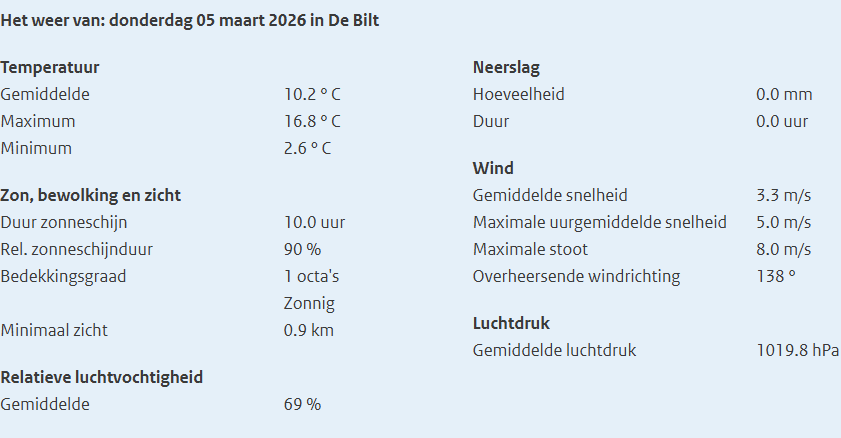
Weer:

Links:
In de geschiedenis

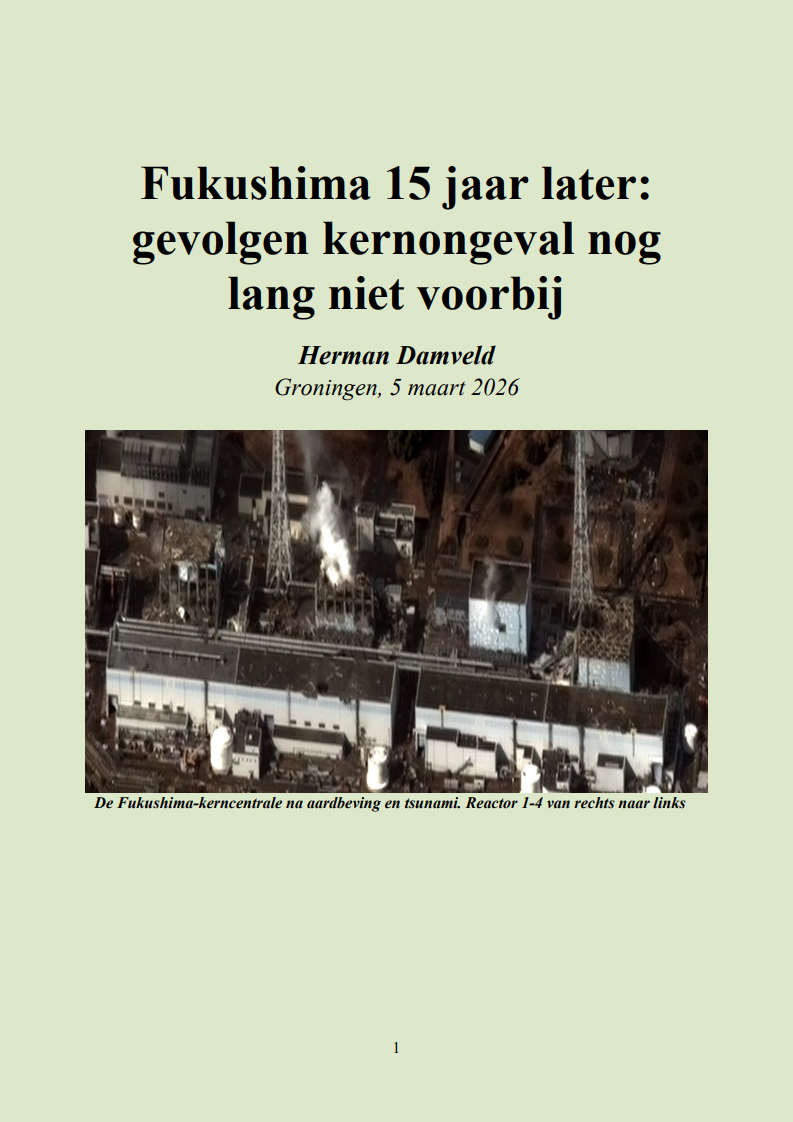
Fukushima 15 jaar later: gevolgen kernongeval nog lang niet voorbij – publicatie

Fukushima 15 jaar later: gevolgen kernongeval nog lang niet voorbij

Verschillende politieke partijen willen nieuwe kerncentrales: Borssele, de Maasvlakte en ook de Eemshaven staan al vele jaren op de lijst.

Ook al zou de kans op een kernongeval klein zijn, de gevolgen zijn groot. Dat concludeerde het Duitse overheidsorgaan Bundesamt für die Sicherheit der nuklearen Entsorgung op 21 januari 2026 uit een in hun opdracht gemaakt rapport ‘Der World Nuclear Industry Status Report 2025 zur internationalen Atomenergie‘ over het ongeluk met de Japanse kerncentrale Fukushima, nu vijftien jaar geleden. Daarom is het rapport ‘Fukushima 15 jaar later: gevolgen kernongeval nog lang niet voorbij‘ gemaakt.

Links:
11 maart: 15 jaar Fukushima; gevolgen duren voort

Geef onze tieners een reden om naar school te gaan!

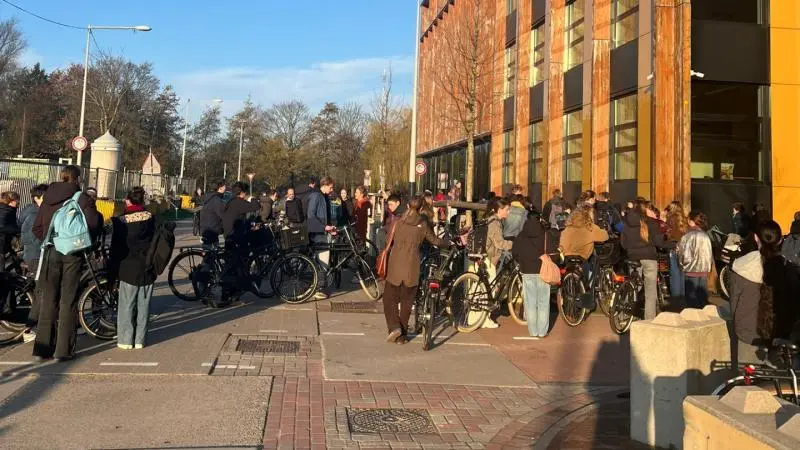
XR blokkeert deuren middelbare scholen

Extinction Rebellion lijmt 35 Amsterdamse middelbare scholen binnen ringweg A10 dicht, oproep aan  kabinet Jetten: “Geef onze tieners een reden om naar school te gaan!”

In de nacht van 4 op 5 maart 2026 hebben rebellen van Extinction Rebellion de deuren van zo’n 35 Amsterdamse middelbare scholen binnen de ring dichtgelijmd, waardoor de scholen ontoegankelijk zijn. Ook gebruikten zij kettingen om de schoolhekken af te sluiten. Bij iedere school lieten ze een boodschap achter: “Het is 2026, klimaatdoelen worden niet gehaald en in de kerndoelen voor het onderwijs komt de urgentie van de klimaat- en ecologische crisis niet naar voren. We stevenen af op een catastrofe. Nederland, kom in opstand! Geef onze tieners een reden om naar school te gaan!” Volgens Unicef misten in 2024 tenminste 242 miljoen kinderen in 85 landen onderwijs door hittegolven, stormen, overstromingen en droogtes veroorzaakt door de klimaatcrisis. De Wereldbank kwam, ook in 2024, tot vergelijkbare conclusies. Zuid-Azië werd het zwaarst getroffen: 128 miljoen kinderen kregen te maken met schoolstoringen. In Europa ging het om ongeveer een miljoen kinderen. Naast deze verstoringen zijn er miljoenen kinderen die helemaal geen onderwijs krijgen. In 2023 berekende Unicef dat in de zes jaar ervoor 43.1 miljoen kinderen op de vlucht hebben moeten slaan voor extreem weer door de klimaatcrisis.

Links:
Extinction Rebellion lijmt 35 Amsterdamse middelbare scholen binnen ringweg A10 dicht

XR blokkeert deuren middelbare scholen: lesuitval bij IVKO, Halsema noemt actie ‘belachelijk’