World Engineering Day for Sustainable Development / Wereld Techniek Dag voor Duurzame Ontwikkeling / World Federation of Engineering Organizations Hackathon 2026
Engineering has always had an essential role in development and human welfare, ensuring that future generations of engineers and scientists will be able to design solutions for local and global challenges is critical.

UNESCO’s General Conference proclaimed the 4 March World Engineering Day for Sustainable Development during its 40th session in November 2019 (40 C/64), to raise awareness of the role of engineering in modern life, which is essential to mitigate the impact of climate change and advance sustainable development, especially in Africa and the small island developing states (SIDS). In spite of the importance of engineering for our life and future, women have been historically underrepresented in engineering fields, typically making up only 10 – 20% of the engineering work force.  Even in countries where the numbers of women studying STI have increased, this trend has not translated into more women entering the workplace. Too many female students who graduate do not go into the engineering profession. The barriers are often connected to persistent gender stereotypes in this field, inadequate policies or educational environments that do not meet their needs and aspirations. UNESCO is placing a high priority on activities that promote awareness of engineering as a career, as well as on those that demonstrate the importance of youth studying science, technology, engineering and mathematics (STEM). The theme of World Engineering Day for Sustainable Development 2026 is “Smart engineering for sustainable future through innovation and digitalization”.

The World Federation of Engineering Organizations (WFEO) Hackathon is a key celebration of World Engineering Day for Sustainable Development, bringing together engineering students and young engineers from around the world to solve real-world challenges. It is the largest international competition for engineering students globally. Participants collaborate across disciplines to design solutions that advance the UN Sustainable Development Goals (SDGs) — harnessing engineering, innovation, and emergent digital technologies to drive social progress and environmental sustainability.
Links:
World Engineering Day for Sustainable Development

World Engineering Day

Focus op industriële lozingen – publicatie

Focus op industriële lozingen

Concentratie schadelijke industriële stoffen in oppervlaktewater na twaalf jaar amper verbeterd.

De Algemene Rekenkamer heeft de ontwikkeling onderzocht van de concentratie van vijftien (zeer) schadelijke industriële stoffen in ons oppervlaktewater, stoffen die worden geassocieerd met een risico voor de gezondheid van mensen en het milieu. Het kabinet heeft in EU-kader afgesproken om de aanwezigheid van deze stoffen voor 2027 terug te dringen. De vijftien onderzochte stoffen behoren tot de meest schadelijke uit de totale lijst van 122 schadelijke stoffen die volgens de Kaderrichtlijn Water (KRW) uiterlijk 2027 onder de afgesproken norm moeten worden gebracht. Uit het onderzoek ‘Focus op industriële lozingen‘ blijkt dat voor de meeste van deze vijftien stoffen de afgelopen jaren geen vooruitgang is geboekt.

Links:
Concentratie schadelijke industriële stoffen in oppervlaktewater na twaalf jaar amper verbeterd

Rekenkamer kritisch op toezicht vervuilende lozingen: ‘Ontoereikend en zorgwekkend’

Risicobeoordeling van opkomende stoffen in oppervlaktewater voor drinkwater (2017-2020)

PFAS-aandachtlocaties in 2025 – publicatie

PFAS

Op zo’n zestig plekken in Nederland is duidelijk dat de PFAS-vervuiling zo ernstig is dat daar zo snel mogelijk moet worden schoongemaakt, blijkt uit het rapport ‘PFAS-aandachtlocaties in 2025‘ van het ministerie van Infrastructuur en Waterstaat over de PFAS-inventarisatie door gemeenten en provincies.

De verwachting is dat dit aantal nog sterk gaat toenemen. Het gaat nog jaren duren en veel geld kosten voordat deze locaties zijn gesaneerd. Veel overheden noemen het niet kunnen afdwingen van bodemonderzoek als belangrijke belemmering bij de inventarisatie. Zij lopen ertegenaan dat bedrijven weigeren om hiervoor toestemming te verlenen. Staatssecretaris Bertram van Infrastructuur en Waterstaat wil in 2028 een “scherper beeld hebben” van de PFAS-locaties die snel gesaneerd moeten worden en hoeveel dat gaat kosten. Na 2030 begint het ministerie met een “programmatische aanpak”.

Links:
Tientallen gevaarlijk vervuilde PFAS-locaties ontdekt, maar is ’topje van ijsberg’

Meerjarenstrategie Digitale Autonomie 2026-2030 – publicatie

Meerjarenstrategie Digitale Autonomie 2026-2030

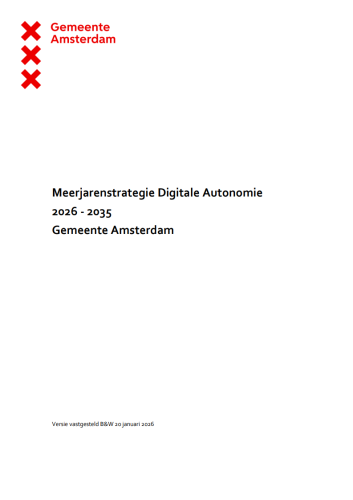
Digitale systemen zijn onmisbaar om de gemeente Amsterdam elke dag te laten draaien: uitkeringen, vergunningen, zorg en de opslag en bescherming van gegevens van Amsterdammers zijn volledig van deze systemen afhankelijk.

Om ervoor te zorgen dat de gemeente zelf in de hand kan houden wat er met deze digitale systemen en data gebeurt, komt er een stappenplan naar meer digitale onafhankelijkheid. Net als andere overheden is Amsterdam sterk afhankelijk geworden van een klein aantal grote, Amerikaanse technologiebedrijven. Dat is niet wenselijk, zeker niet nu de internationale verhoudingen regelmatig op scherp staan. Op 12 februari 2026 heeft de gemeenteraad de Meerjarenstrategie Digitale Autonomie 2026-2030 vastgesteld, waarmee de gemeente ervoor zorgt dat de data veilig zijn en ze er zelf over kan beslissen.

Links:
Amsterdam pakt de regie over digitale systemen en de gegevens van Amsterdammers

Streven naar Digitale Autonomie in Amsterdam / Amsterdam zet eerste stap naar digitale onafhankelijkheid – publicatie

‘Gemeenten moeten ICT landelijk organiseren’

2026-03-03, Lief dagboek

Dinsdag; Wat eten we vandaag?; Iran; Kunstmatige intelligentie; gemeenteraadsverkiezingen; Suiker; Cruiseschepen; Music Freedom Day; Dag van het Gehoor; United Nations World Wildlife Day; Stop De Nullijn; Totale maansverduistering; Red de zorg; InScience Film Festival.

Deze afbeelding heeft een leeg alt-attribuut; de bestandsnaam is dagboek.png

Wat eten we vandaag?:

Knipselkrant:


Agenda:

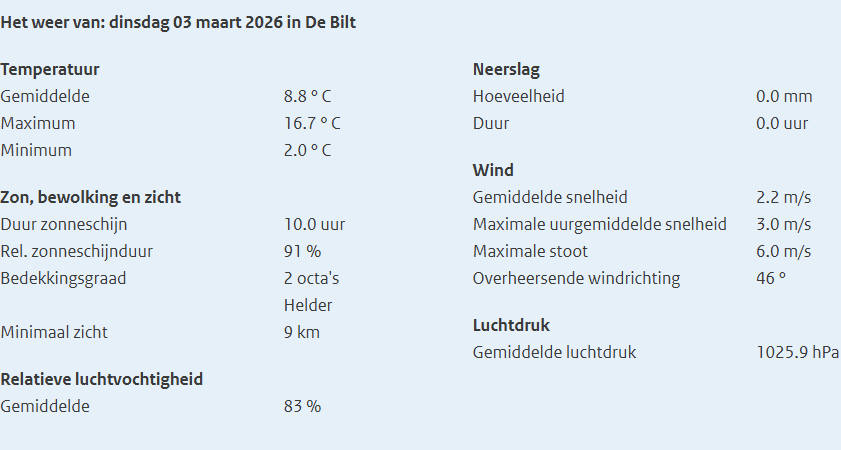
Weer:

Links:
In de geschiedenis

Music Freedom Day 2026

Music Freedom Day

Music Freedom Day, held annually on 3 March, founded by Freemuse in 2007, honours persecuted musicians and reminds us that musical expression is a human right.

Music Freedom Day is a global celebration of the human right to musical expression, with artists and organisations uniting to support musicians who simply insist on their right to express themselves. The sad reality is, censorship, persecution, prosecution and imprisonment rob many of these artists of this basic human right.

Links:
Music Freedom Day

Music Freedom Day – Vrije Geluiden

Wissel ‘ns Wat! 2026

Wissel 'ns Wat!

Wissel ’ns Wat! is een landelijke, jaarronde campagne die Nederlanders uitnodigt om vaker plantaardig te kiezen — op hun eigen manier.

Geen ‘alles of niets’, maar kleine, haalbare wissels in het dagelijks eten. De campagne bouwt voort op het succes van de Nationale Week Zonder Vlees en sluit aan bij wat consumenten vandaag nodig hebben: flexibiliteit, positiviteit en inspiratie. De Week Zonder Vlees was en is zeer succesvol, maar onderzoek laat zien dat duurzame gedragsverandering vraagt om meer dan één actieweek per jaar. Met Wissel ’ns Wat! wordt ingespeeld op de behoefte aan jaarronde inspiratie en wordt het voor een bredere groep Nederlanders makkelijker gemaakt om vaker plantaardig te eten. De Nationale Week Zonder Vlees zoals je die kent, maakt plaats voor Wissel ’ns Wat!. De vertrouwde timing in week 10 blijft behouden, maar wordt nu het startmoment van een bredere, doorlopende campagne.

Links:
Wissel ‘ns Wat!

Heel Nederland vegan

Minder vlees en zuivel: wat doet dat met onze uitstoot?

Renewing Injustice? – publication

Rapport: Hernieuwd onrecht?

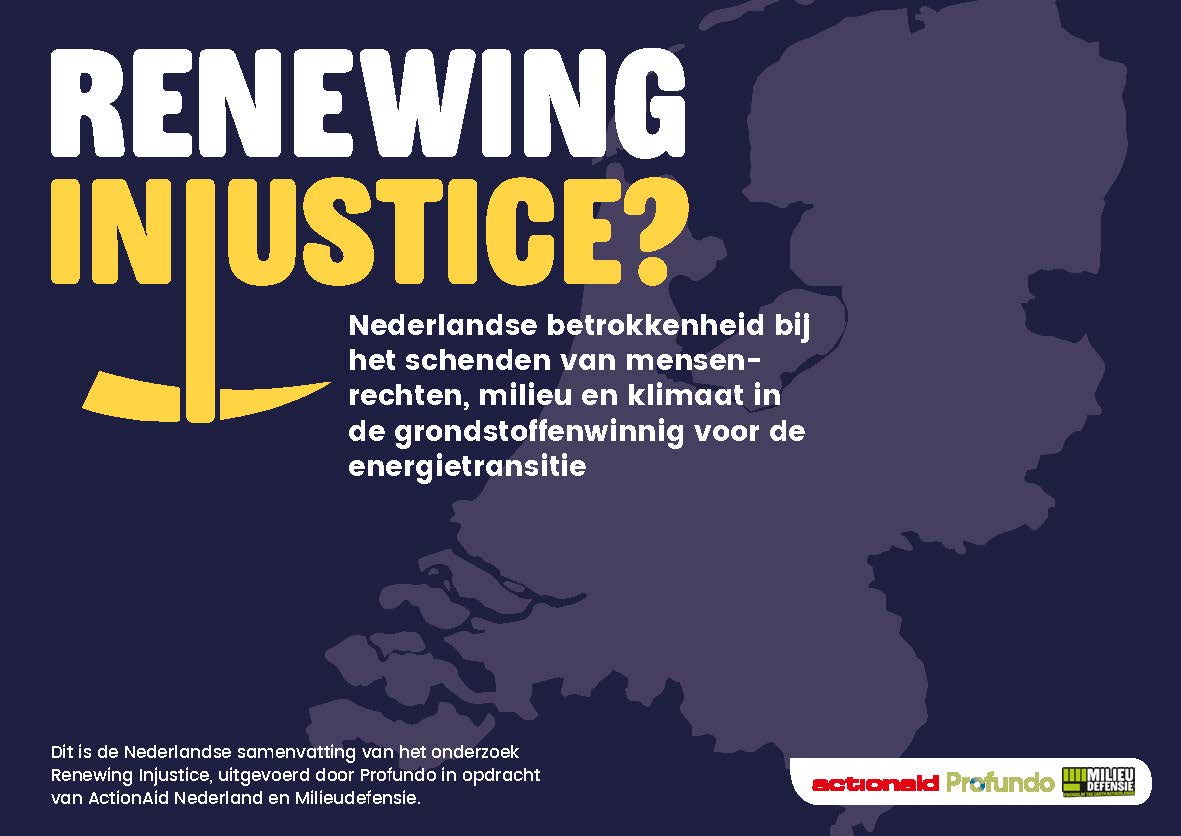
Clean energy technologies such as solar panels, wind turbines, batteries, energy grids and electric vehicles (EVs) are important for the shift to fossilfree renewable energy.

Such technologies rely on so-called ‘transition minerals’, like lithium and nickel, the extraction of which is accelerating rapidly worldwide. Many transition minerals are being mined in the Global South, often in the territories of Indigenous and rural peoples. In Argentina, Indonesia, Brazil and South Africa, among other countries, cases of transition mineral mining and processing resemble the worst injustices of the fossil fuel era, with evidence of human rights abuses, and social and environmental harms. The report ‘Renewing Injustice?‘ examines the role of 23 Dutch companies and 7 Dutch financiers in transition mineral supply chains by mapping their links to mining in the Global South, specifically the four cases above. By connecting supply chains and financial flows with their human rights, social and environmental impacts in  transition mining communities, we aim to increase transparency and show how companies and financiers avoid accountability. This research reveals that Dutch companies and financiers are actively involved in global mineral supply chains. They can be linked to human rights, social and environmental abuses in their value chains, and are failing to abide by international standards of business and human rights. The need to transition to renewable energy and low carbon economies is as important as the need to create a more inclusive and equitable world, now and for the future. The authors call on policymakers, companies, and financiers to change course to prevent repeating the injustices of the past. They must take action to ensure a just energy transition that is grounded in the full protection of human rights and the environment.

Links:
Rapport: Hernieuwd onrecht?

World Hearing Day / Dag van het Gehoor 2026

World Hearing Day is a campaign held each year by Office of Prevention of Blindness and Deafness of the World Health Organization (WHO), activities take place across the globe and an event is hosted at the World Health Organization on March 3rd.

The campaign’s objectives are to share information and promote actions towards the prevention of hearing loss and improved hearing care. The first event was held in 2007. Each year, the WHO selects a theme, develops educational materials, and makes these freely available in several languages. It also coordinates and reports on events around the globe.

Links:
World Hearing Day

2016-07-15, Halfdoof