Excess Oil Profits in Times of War : An EU-wide snapshot of higher margins on the sale of diesel and petrol since the beginning of the Iran war – publication
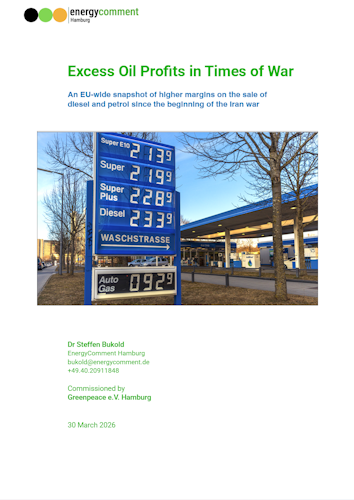
Excess Oil Profits in Times of War

Shortly after the outbreak of the Iran war on 28 February 2026, fuel prices at petrol stations across the EU rose steeply, the analysis ‘Excess Oil Profits in Times of War‘ shows that this increase cannot be explained by higher crude oil prices alone.

In addition, the oil companies significantly widened their profit margins, thereby generating excess profits. During the first three weeks of the war, the average excess profits across all 27 EU member states amounted to €81.4 million per day. The largest share of these excess profits was attributable to diesel fuel. Margins were expanded predominantly in countries with high purchasing power: the Netherlands, Sweden, Denmark, Austria and Germany. At the same time, there were a number of mostly smaller markets in which margins actually shrank. When the higher margins are combined with fuel consumption volumes, the data show that roughly 30 per cent of all EU-wide excess profits in the petrol station market were borne by Germany.

Links:
Onderzoek naar de oorlogswinsten van oliebedrijven: 3 conclusies

Belast de oorlogswinst van oliebedrijven! – petitie

Iran-Krise: Erste Ölkonzerne melden sprudelnde Gewinne

Het graaiflatiespook is terug

Week van de Teek 2026

Week van de Teek

De Week van de Teek wordt jaarlijks georganiseerd door landelijke samenwerkende organisaties.

Teken (Ixodida) kunnen ziektes overbrengen, onder andere de ziekte van Lyme en tekenencefalitis. Daarom is het belangrijk dat je weet hoe je een tekenbeet voorkomt en wat je moet doen als je toch gebeten bent. Teken vormen een orde van geleedpotige parasieten die behoren tot de klasse der spinachtigen. Samen met de mijten vormen zij de onderklasse der Acari. Teken zijn nauw verwant aan mijten, maar de precieze relatie is onduidelijk. Teken leven van het bloed van gewervelde dieren; ze bijten zich vast in de huid en laten zich na een bloedmaaltijd, die enige uren tot dagen duurt, weer vallen. Het dier waarop de teek leeft, wordt de gastheer genoemd. Bekende gastheren van teken zijn vogelsreptielen en verschillende zoogdieren. Teken kunnen verschillende ziekten overbrengen en worden daarom vectoren genoemd. Na de steekmuggen zijn teken de belangrijkste verspreiders van pathogenen. De bekendste Europese teek, die tevens een overbrenger is van lymeziekte, FSME en het alfa-galsyndroom, is de schapenteek (Ixodes ricinus).

Links:
Week van de Teek

2026-03-30, Lief dagboek

Maandag; Wat eten we vandaag?; glysofaat; paraquat, weedkiller linked to Parkinson’s disease; VS: dubieuze zorgdeals; anti-Aziatisch racisme; Parlement Israël stemt voor omstreden doodstrafwet; Vrijheid; World Bipolar Day / Vincent van Gogh; Day of Zero Waste; Wie mag er nog de opvang in?

Deze afbeelding heeft een leeg alt-attribuut; de bestandsnaam is dagboek.png

Wat eten we vandaag?:

Klik op afbeelding voor origineel

Knipselkrant:


Agenda:

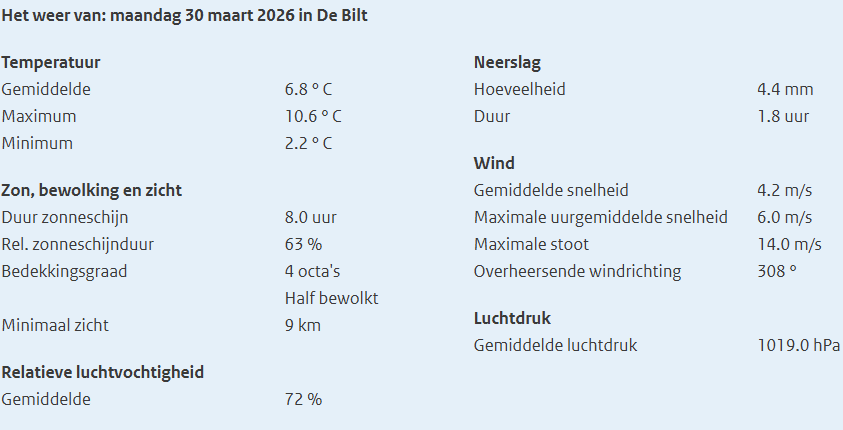
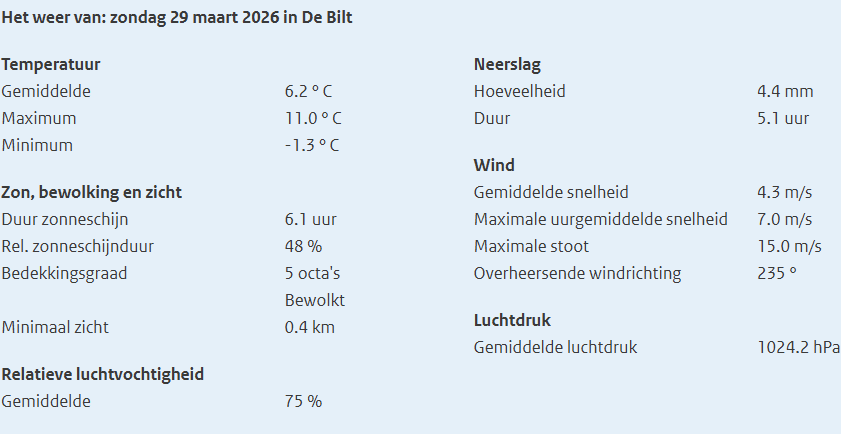
Weer:

Links:
In de geschiedenis

World Bipolar Day / Vincent van Gogh – geboortedag – birthday (1853) 2026

World Bipolar Day

Elk jaar op 30 maart, de geboortedag van Vincent van Gogh, is het World Bipolar Day.

Vincent van Gogh werd postuum gediagnosticeerd als mogelijk een bipolaire stoornis te hebben gehad. De boodschap van World Bipolar Day is om wereldwijd aandacht te vragen voor de bipolaire stoornis en stigma tegen te gaan. Door internationale samenwerking is het doel om wereldwijd informatie te geven over de bipolaire stoornis om zo meer begrip voor en kennis over de stoornis te creëren.

Links:
ISBD World Bipolar Day

World Bipolar Day

World Bipolar Day / Vincent van Gogh

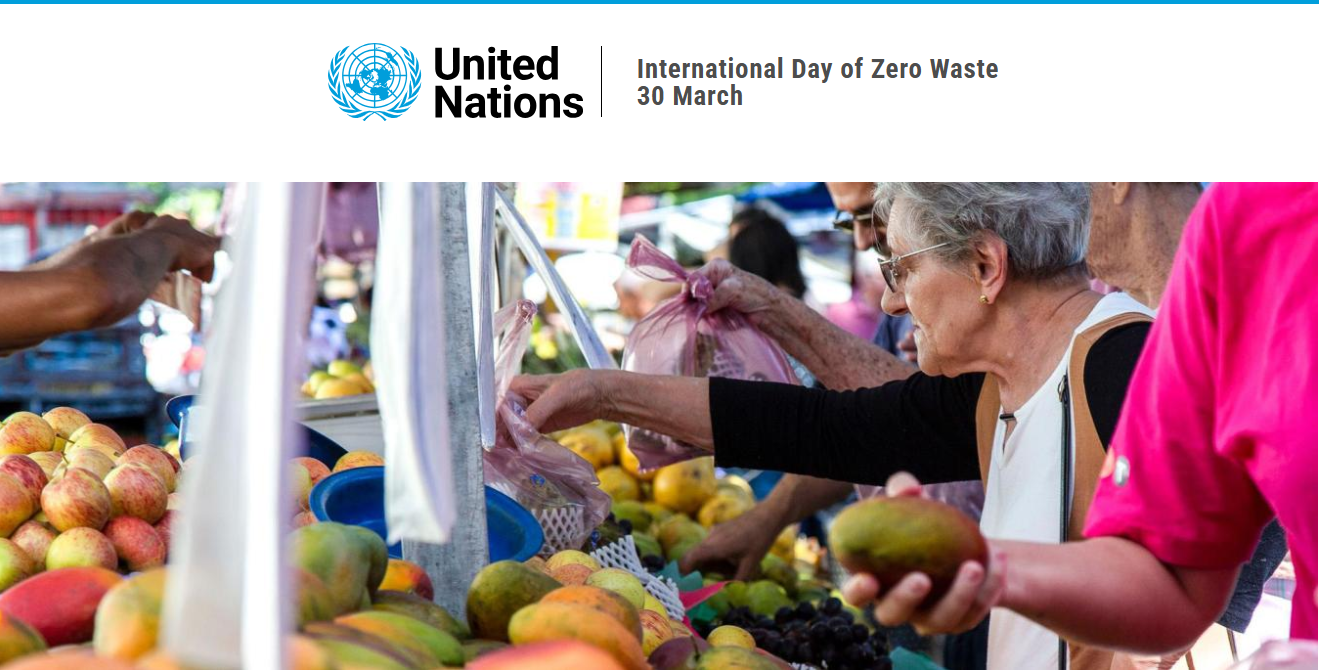
Day of Zero Waste 2026

Day of Zero Waste

On 14 December 2022, the United Nations General Assembly adopted a resolution at its seventy-seventh session to proclaim 30 March as International Day of Zero Waste, to be observed annually.

Türkiye, with 105 other countries, put forward the resolution, following other high-level decisions focused on pollution, such as the UN Environment Assembly resolution “End plastic pollution: towards an internationally legally binding instrument”. The United Nations Environment Programme (UNEP) and the United Nations Human Settlements Programme (UN-Habitat) jointly facilitate the observance of International Day of Zero Waste. As part of this campaign, Member States, organizations of the United Nations system, civil society, the private sector, academia, women, youth and other stakeholders are invited to engage in activities aimed at raising awareness of national, subnational, regional and local zero-waste initiatives and their contribution to achieving sustainable development. Promoting zero-waste initiatives through this international day can help advance all the goals and targets in the 2030 Agenda for Sustainable Development, including Sustainable Development Goal 11 and Sustainable Development Goal 12. These goals address all forms of waste, including food loss and waste, natural resource extraction and electronic waste.

2026 Theme: Zero Waste Starts on Your Plate. For this year’s International Day of Zero Waste, the focus is on food – what we eat, what we waste, and how we can move towards a more circular future. The world wastes food on a staggering scale. Every year we throw away about 1 billion tonnes of edible food, nearly one-fifth of all food available to consumers. This impacts both people and the environment. Around 60 per cent of food waste happens at the household level. The rest comes mostly from food service and retail, the result of inefficient food systems – including production, distribution and consumption. Tackling this issue requires redesigning these systems, transitioning towards a more sustainable, circular approach grounded in efficiency, resilience and sustainability. For this transition to succeed, we all have a role to play.

Governments can:

  • Advance food waste prevention through climate and biodiversity plans and national policies on circularity, waste, food systems, agriculture and urban development and promote measurement and monitoring.
  • Strengthen public–private partnerships.
  • Signal leadership and take action by joining the Food Waste Breakthrough.

Businesses can:

  • Set measurable food waste reduction targets and integrate them into existing sustainability commitments.
  • Innovate to transition to circular food systems and improve efficiency across supply chains.
  • Join the Food Waste Breakthrough to scale solutions and share progress.

Consumers can:

  • Plan, buy, store and prepare food mindfully to cut waste and save resources.
  • Support food recovery, redistribution and composting initiatives.
  • Help make food waste socially unacceptable through everyday action.

A zero-waste future is possible when we all work together – do your part by consuming thoughtfully, recovering surplus food, and working to build circular food systems. Let’s ensure our food is valued, not wasted.

Links:
Day of Zero Waste

#WorldBackupDay Wereld Back-Up Dag 2026

Wees voorbereid tegen data verlies, diefstal en misbruik, 31 maart is de dag om jouw data beter te beschermen.

Een back-up is een kopie van al je belangrijke bestanden – bijvoorbeeld familiefoto’s en video’s, belangrijke documenten en e-mails. In plaats van je bestanden op één plaats te bewaren (zoals op je PC of Smartphone) maak je een kopie en sla je die op een veilige plaats op. Omdat je bestanden kwijt raken, vaker gebeurd dan je denkt. Een ongeluk zit in een klein hoekje: één kleine fout kan genoeg zijn om veel belangrijke data waar je om geeft, te wissen. Maak tenminste één Backup op World Backup Day!

Links:
World Backup Day

Vandaag is het World Backup Day

Investico x PDZ : Wie mag er nog de opvang in?

Wie mag er nog de opvang in?

Hoe zorgen we voor de honderdduizend mensen in Nederland zonder huis?

Nederland heeft een escalerend daklozenprobleem. Vorig jaar berichtte het CBS dat het aantal daklozen sinds 2009 is verdubbeld naar 33.000. Een zware onderschatting, bleek uit een nieuwe telling afgelopen najaar, die liet zien dat het aantal daklozen twee tot drie keer zo hoog ligt. De daklozenopvang zit overvol. Gemeenten weren mensen die een plek zoeken steeds hardvochtiger, met alle gevolgen van dien. Één procent van de bevolking van Amsterdam is dakloos. Vijf onderzoeksjournalisten van Investico deden een half jaar lang onderzoek naar dakloosheid en zagen: elke levensgebeurtenis kan tegenwoordig leiden tot dakloosheid. En ze zagen welke wereld er ontstaat als je een probleem tien jaar lang laat escaleren. Tijdens deze avond praten we verder over hun onderzoek en dakloosheid in Nederland. Wie zijn er in Nederland dakloos, en waarom? Waar lopen zij dagelijks tegenaan en hoe zitten ze vast in het grotere systeem? Waar moeten we beginnen met het oplossen van dit gigantische probleem?

Links:
Investico x PDZ : Wie mag er nog de opvang in?