#CitizenScience Month 2026

Citizen Science Month

SciStarter established an annual Citizen Science Month in April to celebrate and bring greater awareness to the valuable contributions of the public to scientific research and data collection endeavors.

Citizen science (similar to community science, crowd science, crowd-sourced science, civic science, participatory monitoring, or volunteer monitoring) is research conducted with participation from the general public, or amateur/nonprofessional researchers or participants for science, social science and many other disciplines. There are variations in the exact definition of citizen science, with different individuals and organizations having their own specific interpretations of what citizen science encompasses. Citizen science is used in a wide range of areas of study including ecology, biology and conservation, health and medical research, astronomy, media and communications and information science. There are different applications and functions of citizen science in research projects. Citizen science can be used as a methodology where public volunteers help in collecting and classifying data, improving the scientific community’s capacity. Citizen science can also involve more direct involvement from the public, with communities initiating projects researching environment and health hazards in their own communities. Participation in citizen science projects also educates the public about the scientific process and increases awareness about different topics. Some schools have students participate in citizen science projects for this purpose as a part of the teaching curriculums.

Links:
Citizen Science Month
Citizen Science Month – USGS

April is Citizen Science Month

Kennis Burgerwetenschap

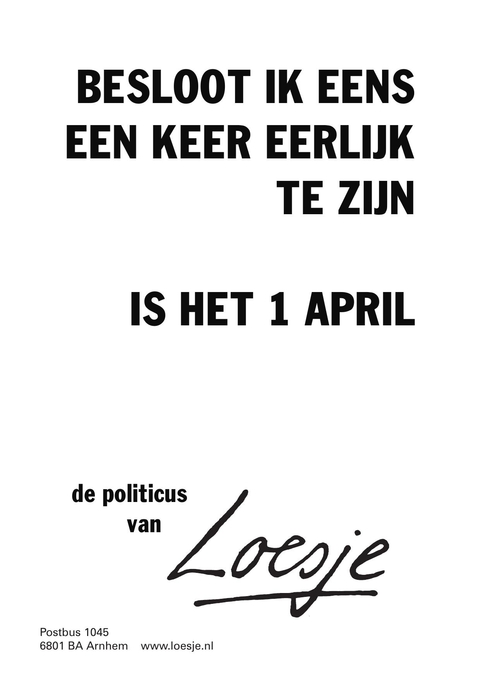
1 April / April Fools’ Day / Grappendag 2026

Een 1 aprilgrap (ook wel aprilgrap of aprilvis genoemd) is een traditie waarbij mensen elkaar op 1 april voor de gek proberen te houden.

In Frankrijk spreekt men van poisson d’avril (Aprilvis). In Engelstalige landen wordt de dag April Fools’ Day (April dwazendag) genoemd, en de Russen hebben het over День Дурака (Den Doeraka, dag van de dommerik). In sommige Vlaamse streken spreekt men over verzenderke(n)sdag, de dag waarop je iedereen tracht ergens heen te zenden om ze beet te nemen. Door de strijd tegen fake news worden 1 aprilgrappen wereldwijd minder populair, onder andere de VRT heeft aangegeven dit niet meer te doen. Uit sommige bronnen blijkt dat de bijzondere betekenis van 1 april ontstaan is bij de Franse wijziging naar de gregoriaanse kalender, zoals opgedragen door Paus Gregorius XIII in 1582. Voor die tijd werd Nieuwjaar gevierd van 25 maart tot 1 april. Met de verandering van het kalendersysteem werd Nieuwjaar verplaatst naar 1 januari. Mensen die dit vergaten of die het nieuwe kalendersysteem weigerden te aanvaarden, kregen uitnodigingen voor niet-gehouden feestjes, grappige presentjes enzovoort. Deze verklaring is echter onwaarschijnlijk: de 1 aprilgrap wordt namelijk al eerder vermeld in een Franse bron uit 1508, dus ruim voor die tijd. De eerste vermelding in een Nederlandstalige bron dateert uit ca. 1560 te Brugge, een gedicht van de rederijker Eduard de Dene. Het is een parodie op ‘1 april’ waarin een knecht het plan van zijn heer om hem te verzenden, doorziet. De geschiedenis gaat dus ten minste terug tot het begin van de zestiende eeuw.

De wijde verspreiding van het verschijnsel wijst echter op een oudere oorsprong. De 1 aprilgrap is volgens een andere theorie ontstaan uit een vroeger middeleeuws festival: het feest van de zotten. La fête des fous was vooral in Frankrijk van de 5e tot de 16e eeuw erg populair. Het werd gevierd omstreeks 1 januari door het kiezen van een valse paus of bisschop en ging gepaard met allerlei rituelen en festiviteiten waarbij de geestelijkheid werd geparodieerd. Aan de basis hiervan lagen dan weer naar alle waarschijnlijkheid vroegere heidense saturnalia. Er zijn verklaringen gezocht in het wisselvallige aprilweer en parallellen gezien met de Germaanse mythologie (Loki) en met de Bijbelse geschiedenis. In verschillende landen zijn ook wel nationale gebeurtenissen aangevoerd als begin van de traditie. Deze verklaringen, die waarschijnlijk ooit zelf als aprilgrap zijn verzonnen, leiden soms tot op de dag van vandaag een hardnekkig leven. Zo denkt men in Nederland nog vaak dat de grappenmakerij begonnen is met de inname van Den Briel door de watergeuzen op 1 april 1572, zoals blijkt uit een bekend gezegde: Op 1 april verloor Alva zijn bril. Het feit dat ook buiten Nederland 1 aprilgrappen worden gemaakt, wordt daarbij over het hoofd gezien. 1 aprilgrappen worden vaak al eind maart per persbericht bekendgemaakt.

Links:
Waar komen 1 aprilgrappen vandaan?

Waarom maken we grappen op 1 april?

Hoe is 1 april ontstaan?

#EarthDay #EarthActionDay #OurPowerOurPlanet Dag van de Aarde / Mother Earth Day 2026

De Dag van de Aarde (Engels: Earth Day) is een jaarlijks terugkerend evenement op 22 april dat plaatsvindt in alle landen.

De dag heeft als doelstelling mensen te laten nadenken over hun consumentengedrag en de invloed hiervan op de aarde. De Dag van de Aarde is sinds 1970 vooral in de Verenigde Staten en sommige Spaanstalige landen een populair fenomeen. Vrijwel alle tv-stations daar besteden er aandacht aan. Ieder jaar wordt de periode vanaf 22 april tot eind mei uitgeroepen tot Maand van de Aarde met als hoogtepunt de Dag van de Aarde op 22 april. De activiteiten worden wereldwijd gecoördineerd door de Earth Day Network. In 2026 is het thema ‘Our Power Our Planet‘.

Links:
Earth Day

De Dag van de Aarde is veel te lief voor ons

Go Short Festival – International Short Film Festival Nijmegen 2026

Go Short – International Short Film Festival Nijmegen is een Nijmeegs filmfestival dat de korte film promoot.

Het programma, bestaande uit verschillende Europese korte animatiefilmsdocumentaires, experimentele films, onafhankelijke films en studentenfilms, wordt voor het grootste deel in LUX vertoond. Zaterdag is VPRO-dag, waarop Noa Johannes een unieke dwarsdoorsnede van het competitieprogramma laat zien en in gesprek gaat met de makers.

Links:
Go Short Festival

2026-03-31, Lief dagboek

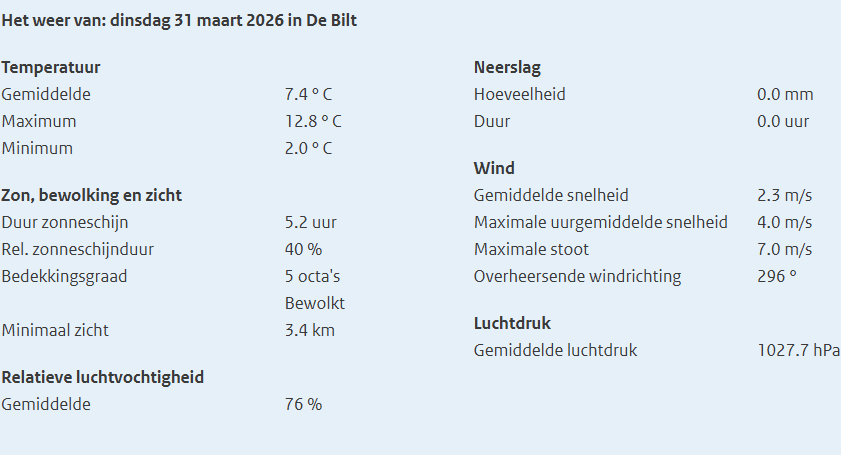
Dinsdag; Wat eten we vandaag?; Israeli Apartheid Week; Boycott Chevron; Transgender Day of Visibility; Darmkanker Dag; Wereld Back-Up Dag; Groningers vaker angstig en somber door aardbevingen; The Panama Papers at 10.

Deze afbeelding heeft een leeg alt-attribuut; de bestandsnaam is dagboek.png

Wat eten we vandaag?:

Klik op afbeelding voor origineel

Knipselkrant:


Agenda:

Weer:

Links:
In de geschiedenis

Transgender Day of Visibility 2026

International Transgender Day of Visibility (often referred to as TDOV or Trans Day of Visibility) is an annual event occurring on March 31 dedicated to celebrating transgender people and raising awareness of discrimination faced by transgender people worldwide, as well as a celebration of their contributions to society.

The event was created by transgender activist Rachel Crandall of Michigan in 2009 as a reaction to the lack of LGBTQ+ recognition of transgender people, citing the frustration that the only well-known transgender-centered day was the Transgender Day of Remembrance, which mourned the murders of transgender people, but did not acknowledge and celebrate living members of the transgender community. The first International Transgender Day of Visibility was held on March 31, 2009. It has since been spearheaded by the U.S.-based youth advocacy organization Trans Student Educational Resources. On February 6, 2025, President Donald Trump issued the executive order “Eradicating Anti-Christian Bias“, citing the previous year’s Transgender Day of Visibility as a reason for the order’s creation.

Links:
Transgender Day of Visibility

Transgender Day of Visibility – GLAAD

Transgender Day of Visibility – GLSEN

The impact of mining-induced earthquakes on mental health: Evidence from the Dutch Lifelines Cohort Study and Biobank – publication

The geographic distribution of accumulated peak ground acceleration in Groningen

A large body of literature demonstrates that exposure to major adverse events such as natural disasters affects physical and mental health, less is known about health consequences of long-term exposure to smaller, recurring shocks such as mining-induced earthquakes.

Leveraging data from the Dutch Lifelines Cohort Study and Biobank and the Royal Netherlands Meteorological Institute, the report ‘The impact of mining-induced earthquakes on mental health: Evidence from the Dutch Lifelines Cohort Study and Biobank‘ examines mental health effects of frequent earthquakes generated by the extraction of natural gas, which was a major source of economic revenue for the Netherlands. Long-term exposure is captured by the accumulated peak ground acceleration. The scientists employ individual-level fixed effects models to deal with selective exposure and find that exposure increases depression and anxiety symptoms. The results are robust to selective migration and to varying the exposure indicator and support a reassessment of the societal costs of the mining of natural gas.

Links:
Meer angst- en depressieklachten in Groningen door aardbevingen

Groningers zijn volgens studie vaker angstig en somber door aardbevingen

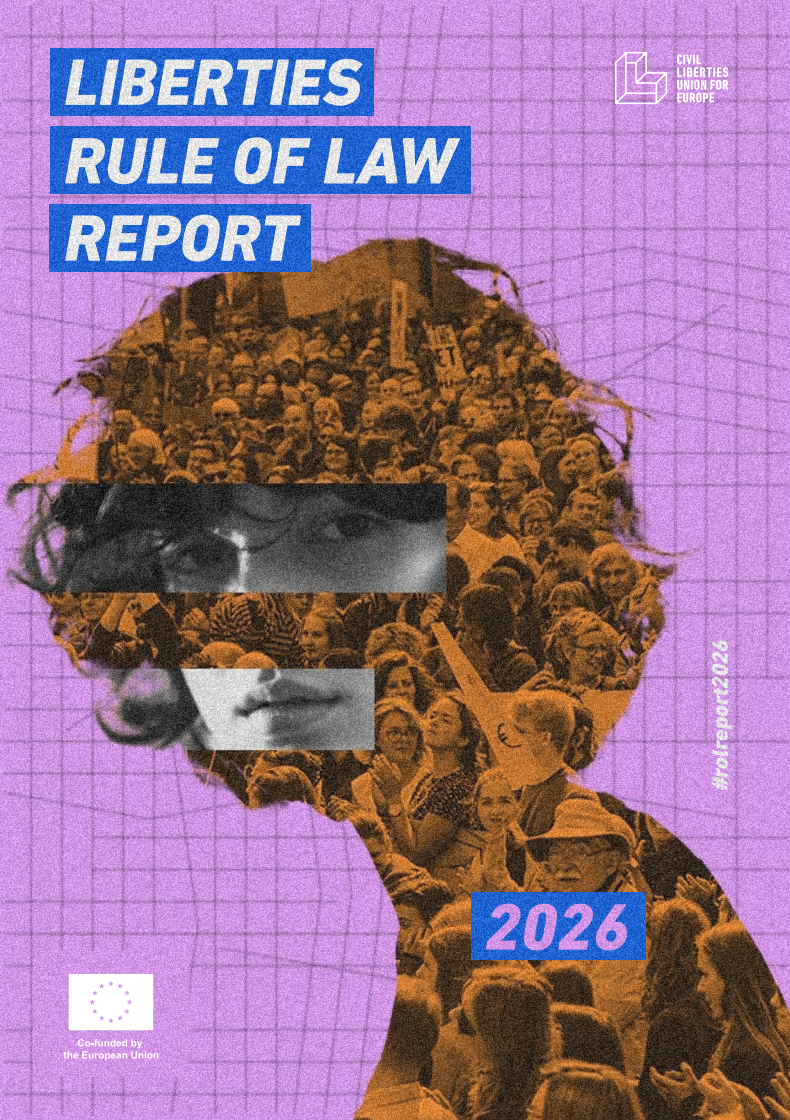
Liberties Rule of Law Report 2026 – publication

Liberties Rule of Law Report 2026

The Liberties Rule of Law Report 2026 is the seventh annual report on the state of rule of law in the European Union (EU) published by the Civil Liberties Union for Europe (Liberties).

Liberties is a non-governmental civil society organisation promoting the civil liberties of everyone in the EU, and it is built on a network of national civil liberties groups from across the EU. Currently, we have member organisations in Belgium, Bulgaria, the Czech Republic, Croatia, Denmark, Estonia, France, Germany, Hungary, Ireland, Italy, Latvia, Lithuania, Malta, the Netherlands, Poland, Romania, Slovakia, Slovenia, Spain and Sweden, as well as a contributing partner organisation in Greece. Liberties, together with its members and partner organisations, carries out advocacy, campaigning and public education activities to explain what the rule of law is, what the EU and national governments are  going to protect or harm it, and gathers public support to press leaders at EU and national level to fully respect, promote and protect our basic rights and values. Drafted by Liberties and its member and partner organisations, the 2026 report covers the situation during 2025 with the purpose of providing the European Commission with reliable information and analysis from the ground to feed its own rule of law reports, and to provide an independent analysis of the state of the rule of law in the EU in its own right. Liberties’ report represents the most in-depth reporting exercise carried out to date by a civil society network to map developments in a wide range of areas connected to the rule of law in the EU. The 2026 report includes EU-wide trend analysis in the justice system, anti-corruption framework, media freedom, checks and balances, based on 22 country reports that follow a common structure, mirroring and expanding on the priority areas and indicators identified by the European Commission for its annual rule of law monitoring cycle. Nearly 40 organisations contributed to the compilation of these country reports. The 2026 report places particular emphasis on the recommendations made by the European Commission and how, in the assessment of Liberties’ members, they have been implemented. Specific gaps were identified alongside new issues that arose in 2025.

Links:
Rapport: Nederlandse rechtsstaat in gevaar, overheid breekt demonstratierecht en sociale advocatuur af