
Auteur: a3veen

Wil je bijna alles over A3 weten? Klik op "Profiel" in de navigatiebalk!

#Coronavirus SARS-CoV-2 / coronapandemie / coronacrisis / COVID-19-pandemie : Epiloog(?)

Maken vaccins een einde aan de Covid-19 pandemie? En een overzicht van varianten.

Index:

Introduction
EMA recommends first COVID-19 vaccine for authorisation in the EU
SARS-CoV-2 Varianten
Engelse variant
Deense nertsenvariant
Zuid-Afrikaanse variant 501Y.V2
Braziliaanse / Amazone variant
Duitse variant
California variant
Zuidafrikaanse Variant B.1.1.529
Corona-vaccinatie programma NL
Avondklok in NL
Wie koopt eigenlijk welke vaccins? En hoe verdeel je die dan ‘eerlijk’?
COVAX
Invloed op de zorgvoorzieningen
Vaccins – zin en onzin

Links

Introductie:
Een COVID-19-vaccin is een vaccin tegen het SARS-CoV-2-virus, dat de ziekte COVID-19 veroorzaakt.

Zodra het virus bekend was heeft de Wereldgezondheidsorganisatie (WHO) experts samengeroepen om een profiel voor een vaccin op te stellen waarmee de pandemie kon worden bestreden en waaraan een vaccin minimaal en idealiter zou moeten voldoen. Dat gaat zowel over de doeltreffendheid en de veiligheid als over praktische zaken, die van belang zijn voor het effectief toedienen van een vaccin op wereldschaal. Echter, de WHO kon deze eisen niet afdwingen. Producenten gingen met bestaande technologieën aan de slag om zo snel mogelijk een vaccin op de markt te kunnen brengen.

In november 2020 meldden farmaciebedrijven de eerste succesvolle resultaten en kondigden aan de vaccins binnenkort op de markt te zullen brengen.

SARS-CoV-2 Varianten:
SARS-CoV-2 heeft vele varianten (Overzicht in het Engels). Het virus, dat voluit Severe acute respiratory syndrome coronavirus 2 heet, kan bij mensen de ziekte COVID-19 veroorzaken. Het gaat om genetische varianten die ontstaan door mutaties. Sommige werden belangrijk geacht omdat zij mogelijk besmettelijker, virulenter of beter bestand tegen vaccins zijn.

Engelse variant:

Deense nertsenvariant:

Zuid-Afrikaanse variant:

Braziliaanse / Amazone variant:

Duitse variant:

California variant:

Vaccins – zin en onzin:

Corona-vaccinatie programma NL:

Avondklok in NL:

Wie koopt eigenlijk welke vaccins? En hoe verdeel je die dan ‘eerlijk’?:

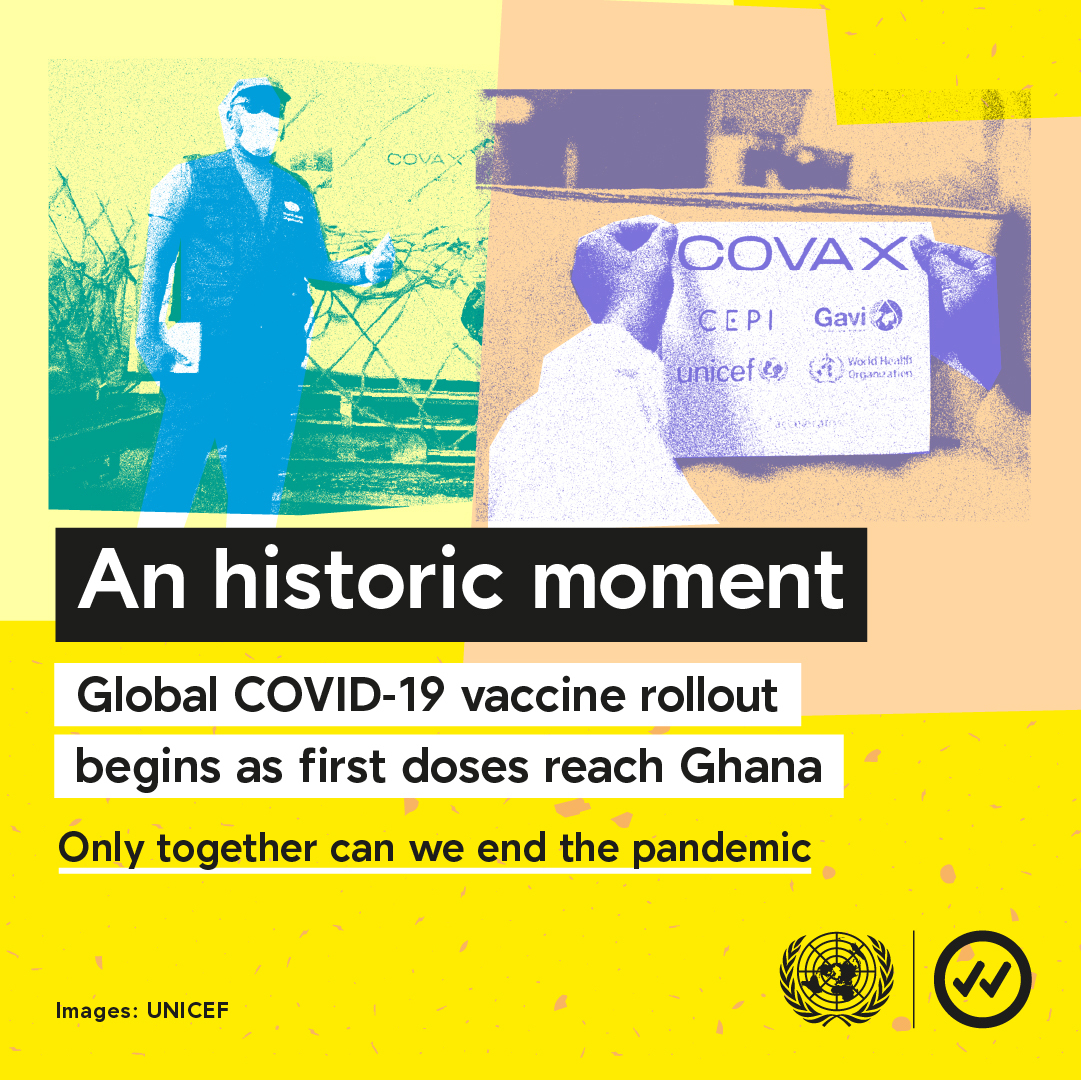
COVAX:
COVID-19 Vaccines Global Access, abbreviated as COVAX, is a global initiative aimed at equitable access to COVID-19 vaccines led by Gavi, the Vaccine Alliance (formerly the Global Alliance for Vaccines and Immunization, or GAVI), the World Health Organization (WHO), the Coalition for Epidemic Preparedness Innovations (CEPI), and others. It is one of the three pillars of the Access to COVID-19 Tools Accelerator, an initiative begun in April 2020 by the World Health Organization (WHO), the European Commission, and the government of France as a response to the COVID-19 pandemic. COVAX aims to coordinate international resources to enable the equitable access of COVID-19 diagnostics, treatments, and COVID-19 vaccines.[1]

By 15 July 2020, 165 countries – representing 60% of the human population – had joined COVAX.
Invloed op de zorgvoorzieningen:

Coronacertificaat EU:

Links:
European Medicines Agency – Coronavirus disease (COVID-19)

ReliefWeb COVID-19 Global

Indiase variant : Dubbele mutatie van coronavirus ontdekt

#Coronavirus SARS-CoV-2 / coronapandemie / coronacrisis / COVID-19-pandemie

#Coronavirus SARS-CoV-2 / coronapandemie / coronacrisis / COVID-19-pandemie : De tweede golf

2020-12-21, Lief dagboek

Maandag, Vierde vakantiedag, Samenstand van Jupiter en Saturnus, Astronomische Winter, Mozilla News Beat, Tweede Kamerverkiezing & DeGoedeZaak, Aardbeving Groningen, DalekDay.

Deze afbeelding heeft een leeg alt-attribuut; de bestandsnaam is dagboek.png

Vierde vakantiedag:
In verband met de maatregelen als gevolg van de Corona lockdown is A3 door de opdrachtgever naar huis gestuurd en is de eindejaarsvakantie iets eerder begonnen.

Social:

Agenda:

Weer:

Links:
In de geschiedenis

2020-12-18, Lief dagboek

Vrijdag, Eerste vakantiedag, Eerste vaccinatie in NL op 8 januari 2021 tegen corona, Dag van de Migrant, Chang’e 5, 3FM Serious Request.

Deze afbeelding heeft een leeg alt-attribuut; de bestandsnaam is dagboek.png

Eerste vakantiedag:
In verband met de maatregelen als gevolg van de Corona lockdown is A3 door de opdrachtgever naar huis gestuurd en is de eindejaarsvakantie iets eerder begonnen. Daarom was dit al de eerste verlofdag.

Social:

Agenda:

Weer:

Links:
In de geschiedenis

Whole brain emulation / Mind uploading

Mind uploading / whole brain emulation (WBE), is the hypothetical futuristic process of scanning a physical structure of the brain accurately enough to create an emulation of the mental state (including long-term memory and “self”) and copying it to a computer in a digital form. The computer would then run a simulation of the brain’s information processing, such that it would respond in essentially the same way as the original brain and experience having a sentient conscious mind.

Index:

Introduction
Hersenen, wat te kopieren?
To the brain, reading computer code is not the same as reading language
Artificial intelligence / Mind uploading – afspeellijst
Artificial intelligence / Kunstmatige intelligentie
Neuroplasticity
Brain–computer interface

Links

Introduction:
Substantial mainstream research in related areas is being conducted in animal brain mapping and simulation, development of faster supercomputers, virtual reality, brain–computer interfaces, connectomics, and information extraction from dynamically functioning brains. According to supporters, many of the tools and ideas needed to achieve mind uploading already exist or are currently under active development; however, they will admit that others are, as yet, very speculative, but say they are still in the realm of engineering possibility.

Mind uploading may potentially be accomplished by either of two methods: Copy-and-upload or copy-and-delete by gradual replacement of neurons (which can be considered as a gradual destructive uploading), until the original organic brain no longer exists and a computer program emulating the brain takes control over the body. In the case of the former method, mind uploading would be achieved by scanning and mapping the salient features of a biological brain, and then by storing and copying, that information state into a computer system or another computational device. The biological brain may not survive the copying process or may be deliberately destroyed during it in some variants of uploading. The simulated mind could be within a virtual reality or simulated world, supported by an anatomic 3D body simulation model. Alternatively the simulated mind could reside in a computer inside (or either connected to or remotely controlled) a (not necessarily humanoid) robot or a biological or cybernetic body.

Among some futurists and within the part of transhumanist movement, mind uploading is treated as an important proposed life extension technology. Some believe mind uploading is humanity’s current best option for preserving the identity of the species, as opposed to cryonics. Another aim of mind uploading is to provide a permanent backup to our “mind-file”, to enable interstellar space travels, and a means for human culture to survive a global disaster by making a functional copy of a human society in a computing device.

Whole brain emulation is discussed by some futurists as a “logical endpoint” of the topical computational neuroscience and neuroinformatics fields, both about brain simulation for medical research purposes. It is discussed in artificial intelligence research publications as an approach to strong AI (Artificial general intelligence) and to at least weak superintelligence. Another approach is seed AI, which wouldn’t be based on existing brains. Computer-based intelligence such as an upload could think much faster than a biological human even if it were no more intelligent. A large-scale society of uploads might, according to futurists, give rise to a technological singularity, meaning a sudden time constant decrease in the exponential development of technology. Mind uploading is a central conceptual feature of numerous science fiction novels, films, and games.

https://a3veen.tumblr.com/post/685977020233056256/what-is-neuromorphic-computing-university-of

Hersenen, wat te kopieren?:

To the brain, reading computer code is not the same as reading language:

Artificial intelligence / Mind uploading – afspeellijst:

Neuroplasticity:

Brain–computer interface:

A brain–computer interface (BCI), sometimes called a brain–machine interface (BMI), is a direct communication link between the brain’s electrical activity and an external device, most commonly a computer or robotic limb. BCIs are often directed at researching, mapping, assisting, augmenting, or repairing human cognitive or sensory-motor functions. They are often conceptualized as a human–machine interface that skips the intermediary of moving body parts (hands…), although they also raise the possibility of erasing the distinction between brain and machine. BCI implementations range from non-invasive (EEG, MEG, MRI) and partially invasive (ECoG and endovascular) to invasive (microelectrode array), based on how physically close electrodes are to brain tissue.

Research on BCIs began in the 1970s by Jacques Vidal at the University of California, Los Angeles (UCLA) under a grant from the National Science Foundation, followed by a contract from DARPA. Vidal’s 1973 paper introduced the expression brain–computer interface into scientific literature. Due to the cortical plasticity of the brain, signals from implanted prostheses can, after adaptation, be handled by the brain like natural sensor or effector channels. Following years of animal experimentation, the first neuroprosthetic devices were implanted in humans in the mid-1990s. Studies (1 / 2 / 3) in human-computer interaction via the application of machine learning to statistical temporal features extracted from the frontal lobe (EEG brainwave) data has achieved success in classifying mental states (relaxed, neutral, concentrating), mental emotional states (negative, neutral, positive), and thalamocortical dysrhythmia.

Links:
AI en de hersenziekten technologie van de toekomst: ‘Je krijgt een stukje vrijheid terug’

Europese AI-wet van kracht / Artificial Intelligence Act / AI Act Day 2024

Using artificial intelligence to document the hidden RNA virosphere – publicatie

Artificial Intelligence (AI) Action Summit 2025

Leiden Declaration on Artificial Intelligence and Mathematics – publication

Artificial Intelligence (AI) – ECOSOC Special Meeting (TV UN)

IT Artificial Intelligence

2020-12-15, Lief dagboek

Dinsdag, werklunch, Our future is ours to decide, Tea Day. Klimaatstrijd in Crisistijd, Klimaatzaak van Milieudefensie tegen Shell, Woord van het Jaar 2020, Aardbeving Groningen.

Deze afbeelding heeft een leeg alt-attribuut; de bestandsnaam is dagboek.png

Werklunch:

Lunchpakket, klik op afbeelding voor origineel

Op gepaste wijze tijdens de lockdown wegens corona werd bij een beeldscherm en een bescheiden aantal collega’s aan de tafel een werklunch verorberd.

Lunchpakket aangebroken, klik op afbeelding voor origineel

Social:

Agenda:

Weer:

Links:
In de geschiedenis