2026-06-26, Lief dagboek

Vrijdag; Wat eten we vandaag?; Day Against Drug Abuse and Illicit Trafficking; Werelddag voor steun aan slachtoffers van foltering; Dag van het Handvest van de Verenigde Naties; Fossil fuel emissions have worsened European heatwaves; Stop Transport Suffering; Code rood hitte.

Deze afbeelding heeft een leeg alt-attribuut; de bestandsnaam is dagboek.png

Wat eten we vandaag?:

Klik op afbeelding voor origineel

Knipselkrant:

Agenda:

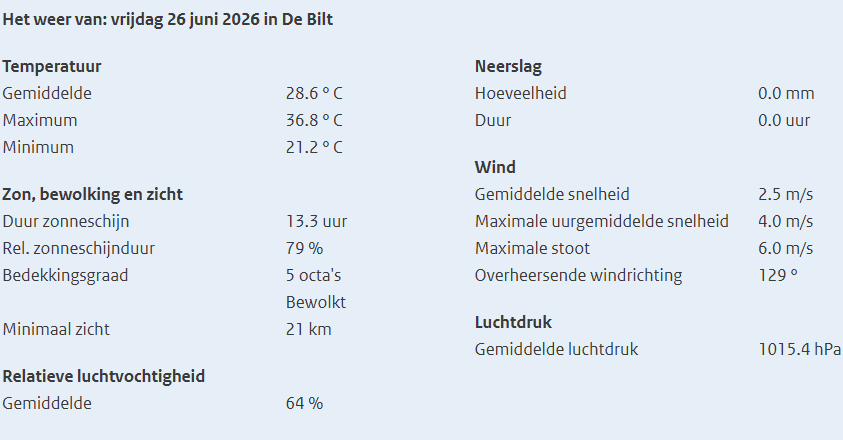
Weer:


Links:
In de geschiedenis
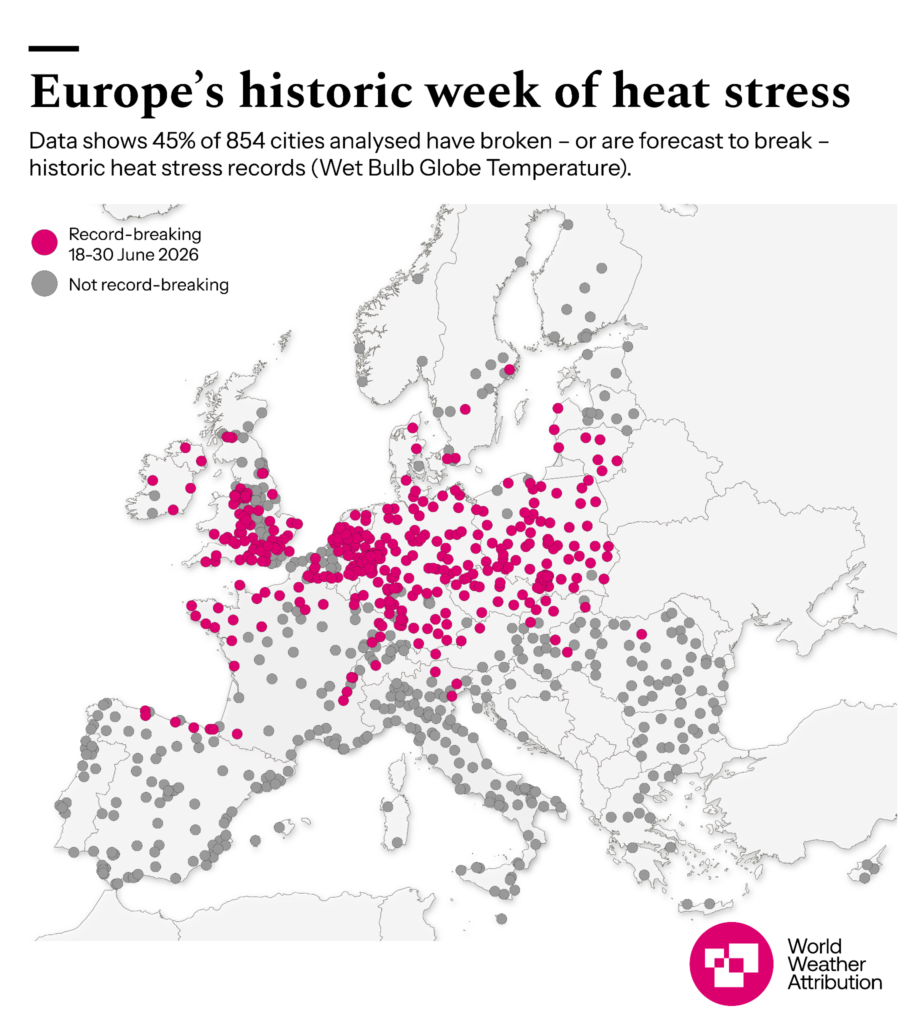
Fossil fuel emissions have rapidly worsened European heatwaves in just a few decades – publication

The cities (EU + Switzerland + UK + Norway urban regions with a population of over 50,000) where WBGT records were broken (or forecast to be broken) during this heatwave. A record was broken in approximately 45% of urban regions.

Researchers from Sweden, Denmark, the United States, the Netherlands, Ireland and the United Kingdom collaborated to assess to what extent human-induced climate change altered the likelihood and intensity of the extreme heat in Western Europe; the analysis ‘Fossil fuel emissions have rapidly worsened European heatwaves in just a few decades‘ focuses on the 3 hottest days and nights over the most affected area, and additional analysis of the 19 capitals of the affected countries.

Just weeks after a severe heatwave that broke all-time May records, Europe is experiencing another major heatwave that is breaking June and annual records. This is particularly remarkable given that June is not historically the hottest month in Western Europe. Across France, Germany, Italy, Spain, and southern England, temperatures are reaching 5–12°C above seasonal averages, driven by a persistent high-pressure system. This pattern has transported hot air from North Africa into the region while also bringing clear skies and strong sunshine, which have further intensified the heat. Heatwaves pose a serious threat to human health and have profound impacts on ecosystems. During the summer of 2022, more than 60,000 people across Europe died as a result of extreme heat. Even in the following summer, which was significantly cooler, over 47,000 heat-related deaths were recorded (Gallo et al., 2024). Last year, the first heatwave in Europe, also hitting at the end of June, cost an estimated 2,300 people their lives in only 12 European cities (Grantham Institute, 2025). In addition to the direct impact on mortality, extreme heat affects ecosystems, infrastructure services and daily life. The high temperatures are pushing cooling demand to its highest level in at least 45 years while significantly increasing wildfire risk, particularly in Spain and France (Straits Times, 2026). France has been among the hardest-hit countries, already reporting at least 40 fatalities, widespread school closures, cancelled outdoor events, and major rail disruptions as extreme heat leads to thermal expansion of tracks and disruption to overhead power lines (Guardian, 2026). Dry conditions are intensifying, with soil moisture approaching record seasonal lows and emergency medical calls rising by 20% (Joubioux, 2026; Peseckyte, 2026a; Reuters, 2026; Straits Times, 2026). In the UK, East Surrey Hospital declared a critical incident due to surging demand, restricting services to life-threatening emergencies only (Peseckyte, 2026b). Italy has experienced heat-related deaths, increased emergency-room admissions, and power outages linked to soaring air-conditioning use, while healthcare and transport systems in Belgium and the Netherlands have faced growing strain and service disruptions. In Belgium, wildlife rescue centres have also reported a sharp rise in heat-stressed animals, particularly young birds (Reuters, 2026). Meanwhile, Spain is confronting heightened drought and water-stress conditions as reservoir levels come under increasing pressure. The heatwave is also placing stress on European energy systems, with concerns over reduced output from French nuclear power plants cooled by the Rhône and Garonne rivers. As France forms a key part of the continent’s electricity network, generation restrictions could tighten regional power supplies and contribute to higher electricity prices and worsen Europe’s growing summer energy poverty (Straits Times, 2026; European Commission, n.d.).

Links:
Fossil fuel emissions have rapidly worsened European heatwaves in just a few decades

Wetenschappers: huidige hitte was halve eeuw geleden ‘onmogelijk’

#WorldDrugDay Day Against Drug Abuse and Illicit Trafficking / World Drug Report – publication 2026

World drug day

By resolution 42/112 of 7 December 1987, the General Assembly decided to observe 26 June as the International Day against Drug Abuse and Illicit Trafficking as an expression of its determination to strengthen action and cooperation to achieve the goal of an international society free of drug abuse.

Supported each year by individuals, communities, and various organizations all over the world, this global observance aims to raise awareness of the major problem that illicit drugs represent to society. Global drug use and the number of drugs on the market have been increasing in the past decades. The century-long dominance of heroin in illicit global opioid markets is increasingly being challenged by changes in the illegal supply of opioids. Production, seizures and use of cocaine continue to rise, while low costs of manufacture and reduced risks of detection of synthetic drugs are contributing to their increase on illicit drug markets. Drug trafficking groups are seeking out technological innovation to target new audiences and ensure that drugs increasingly reach their users and help boost their billion-dollar businesses. Illicit drug markets have always been adapting, and organized crime has always been looking to exploit gaps in governance and regulation. In response to these challenges, this year’s campaign will showcase how the international community, local and national governments, civil society and the public is working together on innovative responses to reduce demand for and supply of illicit drugs and thus mitigate threats. Every year, UNODC issues the World Drug Report, full of key statistics and factual data obtained through official sources, a science-based approach and research. UNODC continues to provide facts and practical solutions to address the current world drug problem and remains committed to attaining health for all. Health and justice sectors are under pressure and access to services and support is obstructed when we can least afford it.

Links:
Day Against Drug Abuse and Illicit Trafficking

World drug problem: persisting issues, new challenges, innovative responses

World Day in Support of Victims of Torture / Werelddag voor steun aan slachtoffers van foltering 2026

Torture

Torture seeks to annihilate the victim’s personality and denies the inherent dignity of the human being.

Despite the absolute prohibition of torture under international law, torture persist in all regions of the world. Concerns about protecting national security and borders are increasingly used to allow torture and other forms of cruel, degrading and inhuman treatment. Its pervasive consequences often go beyond the isolated act on an individual; and can be transmitted through generations and lead to cycles of violence. The United Nations has condemned torture from the outset as one of the vilest acts perpetrated by human beings on their fellow human beings. Torture is a crime under international law. According to all relevant instruments, it is absolutely prohibited and cannot be justified under any circumstances. This prohibition forms part of customary international law, which means that it is binding on every member of the international community, regardless of whether a State has ratified international treaties in which torture is expressly prohibited. The systematic or widespread practice of torture constitutes a crime against humanity. On 12 December 1997, by resolution 52/149, the UN General Assembly proclaimed 26 June the United Nations International Day in Support of Victims of Torture, with a view to the total eradication of torture and the effective functioning of the Convention against Torture and Other Cruel, Inhuman or Degrading Treatment or Punishment. 26 June is an opportunity to call on all stakeholders including UN Member States, civil society and individuals everywhere to unite in support of the hundreds of thousands of people around the world who have been victims of torture and those who are still tortured today.

Links:
Day in Support of Victims of Torture – 26 June

International Day in Support of Victims of Torture, 26 June

26 June Virtual Brochure

Dag van het Handvest van de Verenigde Naties 2026

Het Handvest van de Verenigde Naties (Charter of the United Nations) is het oprichtingsverdrag van de Verenigde Naties en werd op 26 juni 1945 in San Francisco ondertekend door 50 van de 51 oorspronkelijke lidstaten van de VN. Polen, het andere oorspronkelijke lid, was niet vertegenwoordigd op de conferentie, maar tekende twee maanden later.

Het Handvest werd van kracht op 24 oktober 1945, toen de vijf permanente leden van de Veiligheidsraad – China, de Sovjet-Unie, Frankrijk, het Verenigd Koninkrijk en de Verenigde Staten van Amerika – en een meerderheid van de overige 46 lidstaten het verdrag hadden geratificeerd. Op basis van art. 103 VN-Handvest gaan de bepalingen uit het Handvest boven de verplichtingen die lidstaten hebben op basis van andere verdragen. Sinds de toetreding van Zuid-Soedan in 2011 zijn 193 staten partij bij het Handvest (198 ondertekenende landen, waarvan er enkele niet meer bestaan).

Links:
Handvest

#StopTransportSuffering – open letter

EU’s live transport

Sign the open letter from Eurogroup for Animals calling on Members of the European Parliament to prioritise key animal welfare measures as they update the EU’s live transport laws.

Every year, billions of animals suffer in unacceptable conditions during transport. They endure extreme temperatures, very long journeys, and filthy, overcrowded conditions. From being transported in temperatures as high as 50°C to being stranded at sea, the volume and frequency of incidents reported prove these kinds of welfare issues are not anomalies in the trade, but evidence of clear systemic suffering. This is a systemic failure, and it has to end.

Links:
Stop Transport Suffering – open letter

A data dump of suffering: the EU’s long-distance trade in farm animals exposed – publication

Hitte, drukte en stress: meer regels nodig voor diertransport in Europa

Aardbevingen Yaracuy / Venezuela earthquakes 2026

De aardbevingen Yaracuy 2026 waren twee krachtige bevingen die op 24 juni 2026 vlak na elkaar plaatsvonden in Yaracuy, een deelstaat van Venezuela, de bevingen hadden een kracht van 7,2 en 7,5 op de schaal van Richter en er volgden vele naschokken.

In de hoofdstad Caracas zijn meerdere gebouwen ingestort. De Amerikaanse geologische dienst USGS zei direct te vrezen voor veel slachtoffers. Interim-president Rodríguez riep de noodtoestand uit. De aardbevingen werden gevoeld tot op Curaçao, maar er zou volgens de berichten geen kans zijn op een tsunami. Het Nederlandse reddingsteam USAR.NL vertrekt vrijdag 26 juni naar het rampgebied. Naast de honderden doden en vele gewonden, wordt het aantal vermiste personen geschat op 49.500 (26-06-2026). Caracas werd in 1967 ook getroffen door een zware aardbeving (type IX), toen met een kracht van 6,6 op de magnitudeschaal. Op zaterdag 27 juni heeft nogmaals een aardbeving plaatsgevonden, ongeveer in hetzelfde gebied als waar de twee verwoestende aardbevingen van woensdag waren, deze nieuwste beving had een kracht van 5.6, meldt het Europees-Mediterraans Seismologisch Centrum (EMSC).

Links:
M 7.2 – 23 km SE of Yumare, Venezuela USGS (24 juni 2026)

M 7.5 – 28 km SE of Yumare, Venezuela USGS (24 juni 2026)

Twee zware aardbevingen in Venezuela, vrees voor duizenden slachtoffers, NOS (25 juni 2026)

Reddingsteams zoeken in puin Venezuela, internationale hulp komt op gang NOS (25 juni 2026)

Zware aardbevingen treffen Venezuela, vrees voor hoog dodental, NU.nl (25 juni 2026)

Nederlands reddingsteam naar Venezuela na aardbevingen, dodental loopt op NU.nl (25 juni 2026)

Sit-in van Rijksambtenaren in Den Haag

Sit-in van Rijksambtenaren in Den Haag

Sit-in door een groep Nederlandse ambtenaren die zich ernstige zorgen maakt over het aanhoudende Israëlische offensief in Gaza – dat volgens het Internationaal Gerechtshof bestempeld werd als plausibele genocide- en het Nederlandse beleid in reactie hierop.

Je kent ze misschien van de sit-ins die elke donderdag om 12:00 plaatsvinden voor het Ministerie van Buitenlandse Zaken. Als ambtenaren zijn zij doordrongen van het belang van internationaal recht. Ze legden een eed af op de Grondwet, inclusief artikel 90 waarin staat dat de regering de internationale rechtsorde bevordert. Het is aan de politiek om het beleid uiteen te zetten, dat klopt. Maar ook de politiek heeft zich te houden aan onze Grondwet en aan internationaal verdragsrechtelijke verplichtingen. Het is aan ambtenaren om de politiek erop te wijzen wanneer beleid het internationaal recht (mogelijk) schaadt. En die taak – die plicht – nemen zij zeer serieus. Zij verwachten van onze regering dat zij zich onvermoeibaar in gaat zetten voor consistente naleving van het internationaal recht. Concreet stellen zij vier eisen aan de Nederlandse regering en verwachten wij van de regering dat alle diplomatieke middelen worden aangewend om onderstaande te bewerkstelligen:

1. Maximale inzet op een onmiddellijk en permanent staakt-het-vuren en volledige humanitaire toegang tot Gaza.

2. ⁠Een eind aan alle vormen van steun voor én rechtvaardiging van Israëls huidige militaire optreden in Gaza en erkenning van het internationale humanitaire en oorlogsrecht;

3. ⁠De onmiddellijke naleving van uitspraken van het Internationaal Gerechtshof (ICJ).

4. Een strategie voor duurzame vrede, met garanties voor de mensenrechten en veiligheid van zowel Palestijnen als Israëliërs.

Links:
Ambtenaren en de Grondwet

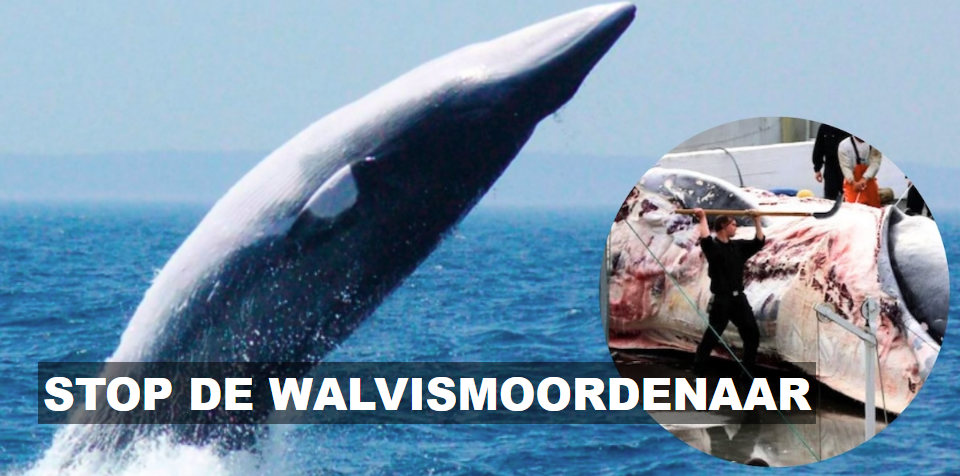
Stop de walvismoordenaar – petitie

Stop de walvismoordenaar

De IJslandse multimiljonair Kristján Loftsson heeft zijn gruwelijke jacht hervat — en kan dit seizoen wel 150 vinvissen doden.

Deze walvissen worden beschoten met explosieve harpoenen, waarna ze tot twee uur lang kunnen lijden voordat ze sterven. Maar multimiljonair Kristján Loftsson is niet van plan ermee te stoppen. En omdat niemand hem tegenhoudt, wordt gevreesd nog tientallen vinvissen zullen worden gedood, want de jachtquota voor Loftsson gelden nog altijd. De gewone vinvis is een ontzagwekkend dier dat al zingend communiceert, diepe sociale banden heeft en liefde, rouw en pijn ervaart. Teken nu! Kom in opstand en help voor altijd een einde te maken aan Kristján Loftssons jachtpartijen. De IJslandse regering treuzelt al te lang. Laten we allen ervoor zorgen dat onze stem Reykjavik en de bloedrode havens van Loftsson bereikt.

Links:
Stop de walvismoordenaar – petitie

IJsland hervat walvisjacht na twee jaar: eerste walvissen gedood (BNR)

Walvisvaarder in IJsland vaart na 2 jaar opnieuw uit voor commerciële walvisjacht (VRT)

IJslandse walvisjagers varen weer uit, demonstrant klampt zich vast aan mast (NU)

Iceland kills first whales since 2023, resuming whaling (Euronews)

Two fin whales dead as Iceland’s controversial hunt returns (Oceanographic)

First Fin Whales Caught After Two-Year Hiatus (Iceland Review)

Can the EU End Iceland’s Whaling Corruption? (Ocean Rising)