The No State Solution: A Dialogue with Palestinian Mohammed Bamyeh and Israeli Uri Gordon

On January 28, 2024, a large event was hosted by a number of local institutions in Victoria, Canada, to discuss a “no-state solution” to the area between the Jordan river and the Mediterranean Sea.

The idea of no-state was understood to foreground the virtues of free association, multiple loyalties, and uncoerced order — all as counterweights to centralized control, militarized states, fanatic loyalties, and permanent mobilization of populations. The no-state approach to solutions was presented as being more faithful to historical patterns of life in the region, and also to be no less realistic than state-based approaches — all of which have demonstrably failed, repeatedly and catastrophically.

Links:
The No-State Solution

EU: plak geen groen label op vliegtuigen en (cruise)schepen – petitie

Europa heeft een groene lijst, de taxonomie: pensioenfondsen en banken kunnen daarop zien wat een groene investering is en wat niet.

Zo moet er geld vrijkomen voor klimaatoplossingen, zoals snelle treinen. Maar de lucht- en scheepvaartlobby heeft de EU bespeeld: nieuwe vliegtuigen en schepen komen ook op de lijst. Zo promoot de EU groei van de lucht- en scheepvaart, terwijl dat juist een leefbare toekomst om zeep helpt. Als het aan de Europese Unie ligt, komen de nieuwste vliegtuigen en schepen op hun groene lijst. Zo moedigen ze pensioenfondsen en banken aan om ons geld in een vervuilende, fossiele vloot te stoppen. Dit is greenwashing op het hoogste niveau. Een coalitie van klimaat- en juridische organisaties en mensen door heel Europa komt in actie en starten een procedure om de Europese Commissie te dwingen opnieuw naar hun besluit te kijken. Schrappen ze vliegtuigen en schepen niet van de lijst? Dan deinzen ze er niet voor terug om een rechtszaak te starten bij het Europees Hof.

Links:
EU: plak geen groen label op vliegtuigen en (cruise)schepen

Geen groen geld naar vliegtuigen en schepen

Vliegtuigen en schepen groen? Klimaatzaak tegen de EU

Ground penetrating radar observations of the contact between the western delta and the crater floor of Jezero crater, Mars – publication

The delta deposits in Jezero crater contain sedimentary records of potentially habitable conditions on Mars, NASA’s Perseverance rover is exploring the Jezero western delta with a suite of instruments that include the RIMFAX ground penetrating radar, which provides continuous subsurface images that probe up to 20 meters below the rover.

As Perseverance traversed across the contact between the Jezero crater floor and the delta, RIMFAX detected a distinct discontinuity in the subsurface layer structure. Below the contact boundary are older crater floor units exhibiting discontinuous inclined layering. Above the contact boundary are younger basal delta units exhibiting regular horizontal layering. At one location, there is a clear unconformity between the crater floor and delta layers, which implies that the crater floor experienced a period of erosion before the deposition of the overlying delta strata. The regularity and horizontality of the basal delta sediments observed in the radar cross sections indicate that they were deposited in a low-energy lake environment.

Links:
Ground penetrating radar observations of the contact between the western delta and the crater floor of Jezero crater, Mars

Krater op rode planeet was ooit een meer, bevestigt Marsrover

Mars 2020 Perseverance Rover – landing (TV NASAtv)

Perseverance, nicknamed Percy, is a car-sized Mars rover designed to explore the Jezero crater on Mars as part of NASA‘s Mars 2020 mission.

It was manufactured by the Jet Propulsion Laboratory and was launched on 30 July 2020 and is scheduled to land on Mars at around 21:55 on 18 February 2021. Perseverance carries seven scientific instruments to study the Martian surface at Jezero crater. It carries several cameras and two microphones. The rover is accompanied by the helicopter Ingenuity, which will help Perseverance to scout for locations to study.

Links:
Mars 2020

Mars 2020 Perseverance Rover – landing

Mars Helicopter

Missions to #Mars in the 21st century / #Moon2Mars #JournyToMars NASA Mars Exploration Program

Perseverance Mars Rover Pre-Landing News Conference (TV YouTube)

Missions to #Mars in the 21st century / #Moon2Mars #JournyToMars NASA Mars Exploration Program

Moon2Mars

NASA’s Moon to Mars Plans – Youtube playlist

NASA Mars Exploration Program

List of Missions to Mars

Summer of Mars Webinar (TV YouTube webcast)

NASA Artemis Lunar Program

30 days until NASA’s Perseverance Mars Rover touch down on Mars

NASAtv live stream

NASA’s Ingenuity Mars Helicopter Succeeds in Historic First Flight

Agenda – Ground penetrating radar observations of the contact between the western delta and the crater floor of Jezero crater, Mars – publication

What We Learned from Flying a Helicopter on Mars

Mars rover snaps a selfie near skyscraper-sized boulders

Vroege Vogels Radio | 28 januari 2024 (Radio 1 NPO)

Vroege Vogels is een live-radioprogramma, tv-programma en online community van BNNVARA over natuur en milieu.

In het radioprogramma wordt het gesproken woord omlijst door licht klassieke muziek en salonmuziek. Het radioprogramma werd in 1978 voor het eerst uitgezonden door de VARA en is een van de langst lopende en best beluisterde radioprogramma’s van de publieke omroep. Het wordt elke zondagmorgen uitgezonden tussen 07:00 en 10:00 op NPO Radio 1. De beginmuziek is een bewerking van Vivaldi’s “Piccolo Concerto in C major” (RV 443).

Onder andere in de uitzending: liefde voor klapeksters, hoogwater, Speciocide, smienten en natuurlijk de Tuinvogeltelling.

Links:
Vroege Vogels (na afloop terugluisteren)

Doe ook mee met de Nationale Tuinvogeltelling!

NPO Radio 1 live stream

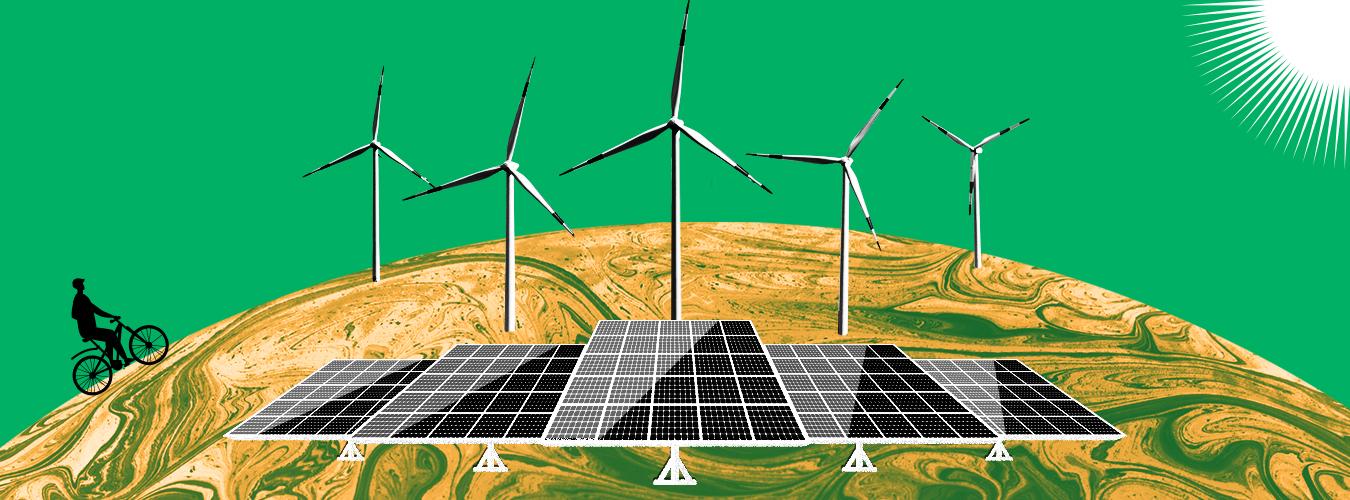
Day of Clean Energy 2024

The International Day of Clean Energy on 26 January was declared by the General Assembly (resolution A/77/327) as a call to raise awareness and mobilize action for a just and inclusive transition to clean energy for the benefit of people and the planet, 26 January is also the founding date of the International Renewable Energy Agency (IRENA), a global intergovernmental agency established in 2009 to support countries in their energy transitions, serve as a platform for international cooperation, and provide data and analyses on clean energy technology, innovation, policy, finance and investment.

Energy lies at the core of a double challenge: leaving no one behind and protecting the Planet. And clean energy is crucial to its solution. In a world grappling with climate change, clean energy plays a vital role in reducing emissions, and can also benefit communities lacking access to reliable power sources. Still today, 675 million people live in the dark – 4 in 5 are in Sub-Saharan Africa. The connection between clean energy, socio-economic development, and environmental sustainability is crucial in addressing issues faced by vulnerable communities worldwide. For populations without clean energy access, the lack of reliable power hinders education, healthcare, and economic opportunities, and many of these developing regions still rely heavily on polluting fossil fuels for their daily life, perpetuating poverty. If current trends continue, by 2030 one in four people will still use unsafe, unhealthy and inefficient cooking systems, such as burning wood or dung. Although this situation has been improving, the world is not on track to achieve Sustainable Development Goal 7 (SDG7), which aims to ensure access to affordable, reliable, sustainable and modern energy for all by 2030.

The General Assembly will hold a Global Stocktaking on SDG7 in April 2024 to assess progress and recommend solutions. But adopting clean energy is integral to the fight against climate change, as well. A large chunk of the greenhouse gases that blanket the Earth and trap the Sun’s heat are generated through energy production, by burning fossil fuels (oil, coal, and gas) to generate electricity and heat. The science is clear: to limit climate change, we need to end our reliance on fossil fuels and invest in alternative sources of energy that are clean, accessible, affordable, sustainable, and reliable. Renewable energy sources – which are available in abundance all around us, provided by the sun, wind, water, waste, and heat from the Earth – are replenished by nature and emit little to no greenhouse gases or pollutants into the air. At the same time, improving energy efficiency is key. Using less energy for the same output – through more efficient technologies in the transport, building, lighting, and appliances sectors for instance: saves money, cuts down on carbon pollution, and helps ensure universal access to sustainable energy for all.

Links:
Day of Clean Energy

2024-01-26, Lief dagboek

Vrijdag; Wat eten we vandaag?; Global Climate Highlights; Gaza−Israël oorlog van 2023; Australia Day / Invasion Day / Day of Mourning; glyfosaat; De aarde beeft; Day of Clean Energy.

Deze afbeelding heeft een leeg alt-attribuut; de bestandsnaam is dagboek.png

Wat eten we vandaag?:

Rijst, klik op afbeelding voor origineel

Knipselkrant:


Agenda:

Weer:

Deze afbeelding heeft een leeg alt-attribuut; de bestandsnaam is 50813896361_463cbfec7c.jpg

Links:
In de geschiedenis
