Company says it successfully implanted a implantable brain–computer interface in a human

On January 29, 2024, Musk announced that Neuralink had successfully implanted a implantable brain–computer interface in a human, on the day prior.

Musk reported that the unknown (unidentified) patient was recovering well from the surgery. Musk also stated that intial results were showing “promising neuron spike detection”. Neuralink received FDA approval for human clinical trials in May 2023. The FDA had previously rejected a 2022 application to pursue human clinical trials citing “major safety concerns involving the device’s lithium battery; the potential for the implant’s tiny wires to migrate to other areas of the brain; and questions over whether and how the device can be removed without damaging brain tissue.” In September 2023, Neuralink opened up its first human trials for recruitment under an investigational device exemption by the FDA.

Links:
Human testing

Bedrijf Musk plaatst hersenimplantaat in mens

Eerste Solvayraad : conferentie

De Solvayraad is een internationale conferentie voor natuurkundigen, voor het eerst georganiseerd door Ernest Solvay en tegenwoordig door de door hem opgerichte organisatie, het Internationaal Instituut voor Fysica en Chemie.

De Solvay-conferenties zijn meer dan waarschijnlijk de meest bekende conferenties van chemie en fysica ter wereld. Al vanaf het begin komen er de beroemdste wetenschappers naartoe. Zonder deze conferenties zou de wereld van vandaag er waarschijnlijk anders hebben uitgezien. De basis van het enorme succes is de organisatie. Een wetenschappelijk comité heeft de leiding over de keuze van het thema en de voorzitter. Je mag alleen aan de conferentie meedoen als je een uitnodiging hebt ontvangen. Buiten de genodigden die gekozen zijn door de voorzitter, mogen ook enkele Belgische wetenschappers die onderzoek voeren naar hetzelfde onderwerp als dat van de bijeenkomst, als toehoorders de conferentie bijwonen. De eerste Solvay-conferentie werd in de herfst van 1911 gehouden. Het was de allereerste mondiale conferentie over fysica. Hiervoor nodigde Solvay de grootste chemici en fysici van die tijd uit. De bekendste aanwezigen waren: Marie Curie, Albert Einstein, Max Planck, Ernest Rutherford, en Maurice de Broglie. De 24 aanwezigen waren samen goed voor tien Nobelprijzen. De conferentie werd voorgezeten door Hendrik Antoon Lorentz.

Links:
Eerste solvayraad

Road to Net Zero : Bridging the green investment gap – publication

Benefits from the climate transition will be only unlocked if public expenditure across Europe doubles to €510 billion a year, Institut Rousseau research finds, economists say ongoing reform of EU fiscal rules should exclude investments in decarbonisation, such as clean transportation and building renovation.

A Institut Rousseau study, involving more than 150 experts, researchers and volunteers from 20+ organisations across Europe, including economists, engineers and public policy experts from across Europe, reveals that €40 trillion investment is needed to put Europe on the path to climate neutrality, while keeping Europe in the global race for competitiveness, in line with the EU’s strategic autonomy agenda. The study assesses both public and private investments (and extra-investments, compared to a baseline scenario extending current trends and policies) needed for the EU to meet its climate targets. Seven major countries are studied in detail: France, Germany, Italy, Spain, the Netherlands, Poland and Sweden. These countries represent approximately three-quarters of EU-27 GDP and domestic emissions. The research team analysed 37 decarbonisation levers and 70+ public policies. All modelling outputs (emissions reductions, public and private investments and extra-investments) are computed both at the country scale (for each of the 7 countries) and at the EU-27 scale.

Links:
Road to Net Zero : Bridging the green investment gap

Onderzoek: EU komt jaarlijks 360 miljard tekort voor groene plannen

KNMI van start

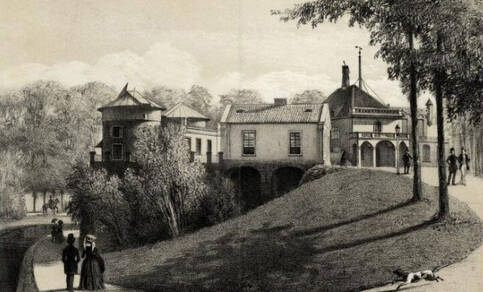
Meteoroloog professor Christophorus Buys Ballot (1817-1890) diende begin jaren vijftig van de 19e eeuw bij het Ministerie van Binnenlandse Zaken een voorstel in om een instituut te beginnen dat het weer in de gaten houdt, op 15 september 1853 werd de eerste steen gelegd van het weercentrum bij sterrenwacht Sonnenborgh in Utrecht, waarna het Koninklijk Nederlands Meteorologisch Instituut (KNMI) op 31 januari 1854 officieel van start ging.

Schepen op zee werden vaak overvallen door fikse stormen waarbij deze met man en muis verging. Door rekening te houden met het weer kunnen zulke stormdepressies worden omzeild en kan een ramp worden voorkomen. Bovendien kunnen lange geldverslindende zeereizen worden ingekort wat ook de economie ten goede komt. Buys Ballot zag met de vooruitziende blik van een meteoroloog mogelijkheden om weersverwachtingen te maken op wetenschappelijke basis. Dat was een revolutie in een tijd waarin de weersvoorspellingen nog waren gebaseerd op volkswijsheden en de stand van sterren, planeten en de maan. De toen al beroemde wetenschapper wist de politiek te overtuigen van het belang van weersverwachtingen en stormwaarschuwingen. Het allereerste ‘Early Warning Centre’ was meteen bij oprichting koninklijk. Gewoonlijk krijgt een onderneming die status pas als het minstens een eeuw bestaat. Dat er een uitzondering werd gemaakt zegt genoeg over het belang dat de regering hiervan inzag.

Links:
Early Warning Centre avant la lettre

KNMI

2023 Corruption Perceptions Index – publication

The Corruption Perceptions Index (CPI) is an index which ranks countries “by their perceived levels of public sector corruption, as determined by expert assessments and opinion surveys.”

The CPI generally defines corruption as an “abuse of entrusted power for private gain”. The index is published annually by the non-governmental organisation Transparency International since 1995. The 2023 CPI, published in January 2024, currently ranks 180 countries “on a scale from 100 (very clean) to 0 (highly corrupt)” based on the situation between 1 May 2022 and 30 April 2023.  Denmark, Finland, New Zealand, Norway, Singapore, and Sweden are perceived as the least corrupt nations in the world, ranking consistently high among international financial transparency, while the most apparently corrupt are Syria, South Sudan, and Venezuela (scoring 13), as well as Somalia (scoring 11). Although the CPI is currently the most widely used indicator of corruption globally, it is worth emphasizing that there are some limitations. First, the CPI does not distinguish between individual types of corruption (some are not even included in the index) and people’s perceptions do not necessarily correspond to the actual level of corruption. To get a more comprehensive picture, the CPI should be used alongside other assessments. Furthermore, the CPI is better suited for analyzing long-term trends, as perceptions tend to change slowly.

Links:
Corruption Perceptions Index

Corruption Perceptions Index: Nederland krijgt laagste score ooit

Bodemprocedure over vliegtuighinder Schiphol : Rechtszaak tegen de overheid over terugdringen geluidsoverlast Schiphol (TV de Rechtspraak live stream)

Rechtspraak

Inhoudelijke behandeling van de rechtszaak die Stichting Recht op Bescherming tegen Vlieghinder heeft aangespannen tegen de Nederlandse Staat.

De Stichting vertegenwoordigt omwonenden van Schiphol. Ze eisen onder meer dat de overheid ze beter beschermt tegen geluidshinder van Schiphol en willen dat de overheid maatregelen neemt zoals het verlagen van het aantal vliegbewegingen. Op 20 maart 2024 verwacht de rechtbank uitspraak te doen.

Links:
Rechtszaak tegen de overheid over terugdringen geluidsoverlast Schiphol

Schendt de Staat mensenrechten met geluidshinder Schiphol?

Agenda – Hoger beroep kort geding – uitspraak : De Staat mag voorgenomen maatregelen nemen in verband met geluidshinder van Schiphol

Staat waarschuwt rechtbank: bevel tot krimp Schiphol gaan we niet uitvoeren

Tweede Kamer zet definitief een streep door vakantievluchten via Lelystad Airport

Uitspraak – Staat handelt onrechtmatig: belang omwonenden Schiphol stelselmatig ondergeschikt aan luchtvaart

Schiphol terug naar 400.000 vluchten zónder balanced approach

Aangifte vanwege mishandeling tegen de directies van KLM, Transavia en Schiphol

2024-01-30, Lief dagboek

Dinsdag; Wat eten we vandaag?; vogeltelling; KNMI; Werelddag Verwaarloosde Tropische Ziekten; (School) Day of Non-violence and Peace; Bodemprocedure over vliegtuighinder Schiphol.

Deze afbeelding heeft een leeg alt-attribuut; de bestandsnaam is dagboek.png

Wat eten we vandaag?:

Bruine bonen, klik op afbeelding voor origineel

Knipselkrant:


Agenda:

Weer:

Deze afbeelding heeft een leeg alt-attribuut; de bestandsnaam is 50813896361_463cbfec7c.jpg

Links:
In de geschiedenis

(School) Day of Non-violence and Peace / Mahatma Gandhi – sterfdag 2024

The School Day of Non-violence and Peace (or DENIP, acronym from Catalan–Balearic: Dia Escolar de la No-violència i la Pau), is an observance founded by the Spanish poet Llorenç Vidal Vidal in Majorca in 1964 as a starting point and support for a pacifying and non-violent education of a permanent character.

Different as the first proposed by the UNESCO “Armistice Day” in 1948, the “School Day of Non-violence and Peace” (DENIP) is observed on January 30 or thereabouts every year, on the anniversary of the death of Mahatma Gandhi, in schools all over the world. In countries with a Southern Hemisphere school calendar, it can be observed on 30 March. Its basic and permanent message is: “Universal love, non-violence and peace. Universal love is better than egoism, non-violence is better than violence, and peace is better than war”.

Links:
School Day of Non-violence and Peace

#BeatNTDs #WorldNTDDay Werelddag Verwaarloosde Tropische Ziekten / World Neglected Tropical diseases Day 2024

On 31 May 2021, the World Health Assembly (WHA) recognized 30 January as World Neglected Tropical Diseases (NTDs) Day through decision WHA74(18), an awareness day for addressing neglected tropical diseases.

January 30 is the anniversary of the landmark 2012 London Declaration on NTDs, which unified partners across sectors, countries and disease communities to push for greater investment and action on NTDs. 2020 was a special year for the global health response to NTDs, with WHO announcing new goals during the year to guide progress against NTDs until 2030. 30 January 2024 is the fourth annual World NTD Day. The theme serves as a rallying call-for-action and builds on a call to action from President Embaló of Guinea-Bissau in July 2023 in a piece published in Health Policy Watch. World NTD Day wants to end neglected tropical diseases (NTDs). To achieve this, we need sustainable financing for NTDs. Investing in NTDs is a global health and development success story. So far, 50 countries have eliminated an NTD, showing progress is possible. In 2020, 600 million fewer people required interventions against NTDs than in 2010. Yet, for some time, a lack of resources has been seen as a significant barrier to the control, elimination, and eradication of NTDs. This challenge has only been intensified by COVID-19 which has caused severe delays and disruption to NTD programmes, as well as a massive repurposing and diversion of resources.

On World Neglected Tropical Disease Day 2024, WHO is calling on everybody, including leaders and communities, to unite and act to address the inequalities that drive neglected tropical diseases (NTDs) and to make bold, sustainable investments to free the estimated 1.62 billion people, in the world’s most vulnerable communities, from a vicious cycle of disease and poverty. The purpose of World Neglected Tropical Diseases Day is to raise the profile of neglected tropical diseases, the suffering they cause and to garner support towards their control, elimination and eradication, in line with the programmatic targets set out in the NTD road map 2021−2030 and the commitments of the 2022 Kigali declaration on neglected tropical diseases. On 31 May 2021, the Seventy-fourth World Health Assembly recognized 30 January as World Neglected Tropical Diseases Day through the unanimous approval of decision WHA74(18)  by WHO Member States. This Day is now one of the 11 Global Health Days and 2 Global Health Weeks recognized by WHO.

Links:
World Neglected Tropical diseases Day

World NTD Day 2024